Skip to content

ADVOCATETANMOY LAW LIBRARY

Research & Library Database

Primary Menu
  • News
  • Opinion
  • Countries198
    • National Constitutions: History, Purpose, and Key Aspects
  • Judgment
  • Book
  • Legal Brief
    • Legal Eagal
  • LearnToday
  • HLJ
    • Supreme Court Case Notes
    • Daily Digest
  • Sarvarthapedia
    • Sarvarthapedia (Core Areas)
    • Systemic-and-systematic
    • Volume One
07/04/2026
  • Judicial Dictionary

What is Acquiescence and Waiver ?

Inaction in every case does not lead to an inference of implied consent or acquiescence
advtanmoy 11/08/2018 3 minutes read

© Advocatetanmoy Law Library

  • Share on WhatsApp (Opens in new window) WhatsApp
  • Share on X (Opens in new window) X
  • Share on Facebook (Opens in new window) Facebook
  • Share on Telegram (Opens in new window) Telegram
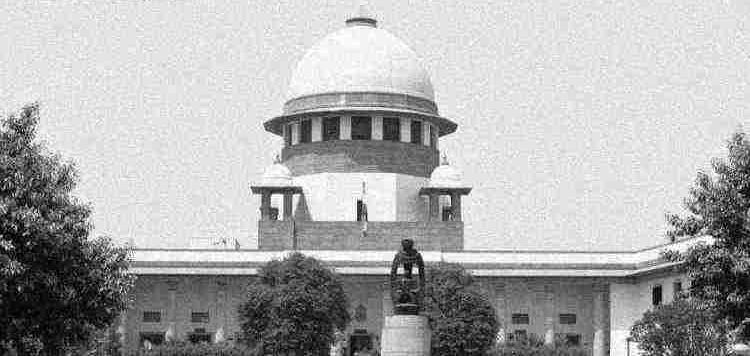
Supreme court of india

Home » Law Library Updates » Law Library » Judicial Dictionary » What is Acquiescence and Waiver ?

In M/s. Power Control Appliances and Ors. v. Sumeet Machines Pvt. Ltd., (1994) 2 SCC 448 this Court held as under:

Acquiescence is sitting by, when another is invading the rights. It is a course of conduct inconsistent with the claim… It implies positive acts; not merely silence or inaction such as involved in laches… The acquiescence must be such as to lead to the inference of a licence sufficient to create a new right in the Defendant….

Inaction in every case does not lead to an inference of implied consent or acquiescence as has been held by this Court in P. John Chandy and Company (P) Ltd. v. John P. Thomas, AIR 2002 SC 2057. Thus, the Court has to examine the facts and circumstances in an individual case.

Read Next

  • Necessary
  • Abolition
  • ‘Unable to maintain herself’

Waiver is an intentional relinquishment of a right. It involves conscious abandonment of an existing legal right, advantage, benefit, claim or privilege, which except for such a waiver, a party could have enjoyed. In fact, it is an agreement not to assert a right. There can be no waiver unless the person who is said to have waived, is fully informed as to his rights and with full knowledge about the same, he intentionally abandons them. (Vide: Dawsons Bank Ltd. v. Nippon Menkwa Kabushihi Kaish, AIR 1935 PC 79; Basheshar Nath v. Commissioner of Income-tax, Delhi and Rajasthan and Anr., AIR 1959 SC 149; Mademsetty Satyanarayana v. G. Yelloji Rao and Ors., AIR 1965 SC 1405; Associated Hotels of India Ltd. v. S.B. Sardar Ranjit Singh, AIR 1968 SC 933; Jaswantsingh Mathurasingh and Anr. v. Ahmedabad Municipal Corporation and Ors., (1992) 1 Suppl. SCC 5; M/s. Sikkim Subba Associates v. State of Sikkim, AIR 2001 SC 2062; and Krishna Bahadur v. Purna Theatre and Ors., AIR 2004 SC 4282).

This Court in Municipal Corporation of Greater Bombay v. Dr. Hakimwadi Tenants’ Association and Ors., AIR 1988 SC 233 considered the issue of waiver/acquiescence by the non-parties to the proceedings and held:

In order to constitute waiver, there must be voluntary and intentional relinquishment of a right. The essence of a waiver is an estoppel and where there is no estoppel, there is no waiver. Estoppel and waiver are questions of conduct and must necessarily be determined on the facts of each case….

There is no question of estoppel, waiver or abandonment. There is no specific plea of waiver, acquiescence or estoppel, much less a plea of abandonment of right. That apart, the question of waiver really does not arise in the case. Admittedly, the tenants were not parties to the earlier proceedings. There is, therefore, no question of waiver of rights, by Respondents 4-7 nor would this disentitle the tenants from maintaining the writ petition.
Read Next

  • Necessary
  • Abolition
  • ‘Unable to maintain herself’

Tags: Acquiescence and Waiver

Post navigation

Previous: The fundamental principles of criminal jurisprudence that an accused is presumed to be innocent till he is proved to be guilty.
Next: Only High Court can alter or review its judgment before it is signed in criminal matter
Communism
Sarvarthapedia

Manifesto of the Communist Party 1848: History, Context, and Core Concepts

Arrest
Sarvarthapedia

Latin Maxims in Criminal Law: Meaning, Usage, and Courtroom Application

Abolition of Slave Trade Act 1807: Facts, Enforcement, and Historical Context

British Slavery and the Church of England: History, Theology, and the Codrington Estates

United States of America: History, Government, Economy, and Global Power

Biblical Basis for Slavery: Old and New Testament Laws, Narratives, and Interpretations

Rule of Law vs Rule by Law and Rule for Law: History, Meaning, and Global Evolution

IPS Cadre Strength 2025: State-wise Authorised Strength

Uric Acid: From 18th Century Discovery to Modern Medical Science

Christian Approaches to Interfaith Dialogue: Orthodox, Catholic, Protestant, and Pentecostal Views

Origin of Central Banking in India: From Hastings to RBI and the History of Preparatory Years (1773–1934)

Howrah District Environment Plan: Waste Management, Water Quality & Wetland Conservation

Bharatiya Nyaya Sanhita 2023: Sections (1-358), Punishments, and Legal Framework

Bengali Food Culture: History, Traditions, and Class Influences

  • Sarvarthapedia

  • Delhi Law Digest

  • Howrah Law Journal

  • Amit Arya vs Kamlesh Kumari: Doctrine of merger
  • David Vs. Kuruppampady: SLP against rejecting review by HC (2020)
  • Nazim & Ors. v. State of Uttarakhand (2025 INSC 1184)
  • Geeta v. Ajay: Expense for daughter`s marriage allowed in favour of the wife
  • Ram v. Sukhram: Tribal women’s right in ancestral property [2025] 8 SCR 272
  • Naresh vs Aarti: Cheque Bouncing Complaint Filed by POA (02/01/2025)
  • Bharatiya Nagarik Suraksha Sanhita 2023 (BNSS)
  • Bharatiya Sakshya Adhiniyam 2023 (BSA): Indian Rules for Evidence
  • Bharatiya Nyaya Sanhita (BNS) 2023
  • The Code of Civil Procedure (CPC)
  • Supreme Court Daily Digest
  • U.S. Supreme Court Orders
  • U.k. Supreme Court Orders
United Kingdom, UK

Abolition of Slave Trade Act 1807: Facts, Enforcement, and Historical Context

British Slavery and the Church of England: History, Theology, and the Codrington Estates

British Slavery and the Church of England: History, Theology, and the Codrington Estates

USA, America

United States of America: History, Government, Economy, and Global Power

Biblical Basis for Slavery, english slave trade

Biblical Basis for Slavery: Old and New Testament Laws, Narratives, and Interpretations

2026 © Advocatetanmoy Law Library

  • About
  • Global Index
  • Judicial Examinations
  • Indian Statutes
  • Glossary
  • Legal Eagle
  • Subject Guide
  • Journal
  • SCCN
  • Constitutions
  • Legal Brief (SC)
  • MCQs (Indian Laws)
  • Sarvarthapedia (Articles)
  • Contact Us
  • Privacy Policy
  • FAQs
  • Library Updates