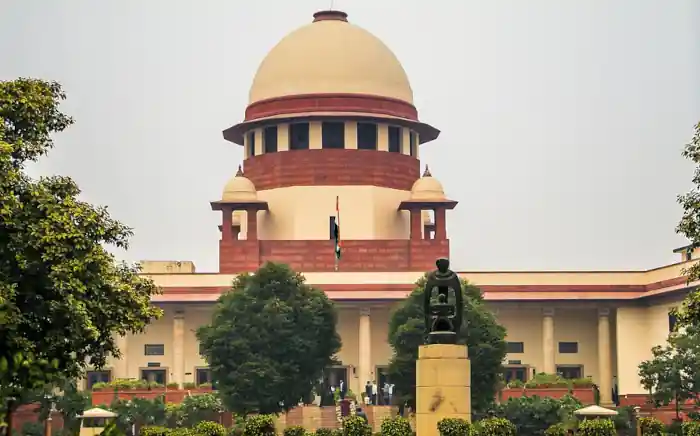
Abstract: India’s modern arbitration journey began with the Arbitration and Conciliation Act, 1996, modeled on the UNCITRAL Model Law. The goal was clear: to become an arbitration-friendly jurisdiction, attract international business, and unclog overburdened courts. However, despite significant legislative overhauls in 2015, 2019, and 2021, the perception of India as an “arbitration-unfriendly” seat persists. Critics argue that the Supreme Court, through its jurisprudence, has been a primary architect of this failure.
Examining how judicial overreach reshaped arbitration law and undermined India’s global credibility
To advance the theorem that Indian arbitration law represents a failed case primarily because of Supreme Court jurisprudence requires neither rhetorical exaggeration nor selective memory; it requires a disciplined reconstruction of how doctrine, over time, systematically subverted statutory intent. When examined through the full arc of judicial decision-making—anchored in specific cases, doctrinal shifts, and institutional behavior—the conclusion, while uncomfortable, becomes difficult to refute. The failure was not accidental, nor was it inevitable. It was jurisprudentially manufactured.
India’s modern arbitration framework began with clarity of purpose. The Arbitration and Conciliation Act, 1996, closely modeled on the UNCITRAL Model Law, sought to reposition India as a credible, neutral, and efficient dispute resolution hub for global commerce. The Act deliberately minimized judicial interference, emphasized party autonomy, and promised finality of awards. These were not aspirational slogans but concrete design choices aligned with international arbitration orthodoxy. Yet within a few years, judicial interpretation—principally by the Supreme Court—began to hollow out these foundations.
The first decisive fracture emerged in ONGC v. Saw Pipes (2003). In this judgment, the Supreme Court introduced the doctrine of “patent illegality” as a ground for setting aside domestic arbitral awards under Section 34. By holding that an award could be annulled if it contravened substantive law, contractual terms, or broad notions of justice and morality, the Court collapsed the distinction between review and appeal. What was meant to be a narrow supervisory jurisdiction became a merits-based re-examination. The practical effect was immediate and enduring: losing parties routinely reframed factual and contractual disputes as questions of legality, inviting courts to reassess arbitral reasoning in its entirety. Arbitration ceased to be final; it became provisional.
Rather than arresting this expansion, the Court entrenched it further in ONGC v. Western Geco (2014). Here, the Court amplified the public policy ground by importing the concept of “fundamental policy of Indian law,” allowing awards to be scrutinized for perversity, irrationality, and outcomes that “shock the conscience of the court.” This language was not merely imprecise; it was jurisprudentially corrosive. It empowered judges to substitute their own commercial judgment for that of arbitral tribunals, negating the very rationale for choosing arbitration. By this point, Indian courts had effectively installed themselves as appellate forums over arbitral awards, a position explicitly rejected in international arbitration practice.
The cumulative impact of Saw Pipes and Western Geco cannot be overstated. Together, they institutionalized judicial overreach, normalized intrusive review, and signaled to both domestic and foreign parties that arbitration in India offered no real insulation from litigation. The subsequent legislative amendments narrowing public policy were not proactive reforms; they were corrective responses to damage already inflicted.
Parallel to this erosion of finality ran an equally destabilizing line of cases on arbitrability and consent. In Booz Allen & Hamilton Inc. v. SBI Home Finance Ltd. (2011), the Supreme Court articulated categories of non-arbitrable disputes, including rights in rem and matters governed by special statutes. While conceptually defensible, the Court’s framework invited expansive threshold litigation. Every arbitration became vulnerable to preliminary challenges questioning jurisdiction, often delaying proceedings for years. Vidya Drolia v. Durga Trading Corp. (2020) attempted doctrinal clarification, but in practice, it reinforced judicial gatekeeping rather than minimizing it.
The Court’s embrace of the “group of companies” doctrine, notably in Chloro Controls vs Severn Trent Water Purification Inc (2012), further diluted contractual certainty. By binding non-signatories based on economic reality and composite transactions, the Court prioritized perceived commercial intent over formal consent. While attractive in theory, its unpredictable application generated significant risk for corporate groups. Parties could be compelled into arbitration without having signed an arbitration agreement, undermining one of arbitration’s most basic principles: consent.
Judicial obstruction was perhaps most visible in the Section 11 appointment regime. Prior to the 2015 amendments, applications for appointment of arbitrators routinely languished for two to five years, as the Supreme Court and High Courts treated them as full-fledged civil proceedings with appellate remedies. This procedural morass rendered arbitration structurally indistinguishable from litigation. Even after the 2015 amendment sought to restrict judicial inquiry to the prima facie existence of an arbitration agreement, courts continued to conduct detailed examinations of validity, stamping, and arbitrability. It was only with the 2019 amendment—transferring appointment powers to arbitral institutions—that the legislature effectively conceded that judicial control at this stage was incompatible with efficiency.
Interim relief under Section 9 provided another avenue for judicial dominance. Although intended as a supportive mechanism, it evolved into a strategic weapon. Parties routinely initiated or prolonged court proceedings under the guise of interim protection, even while arbitrations were pending. Courts, including the Supreme Court, frequently entertained these applications expansively, enabling parallel litigation and tactical delay. Arbitration, in effect, became subordinated to court-managed interim processes.
The most damaging jurisprudential episode, however, lay in the international arbitration context. In Bhatia International v. Bulk Trading S.A. (2002 4 SCC 105), the Supreme Court held that Part I of the 1996 Act applied to arbitrations seated outside India unless expressly excluded. This single decision dismantled the territorial principle that underpins the New York Convention and modern arbitration law. Foreign awards—rendered in London, Paris, or Singapore—were suddenly exposed to challenge in Indian courts. For foreign investors, this was catastrophic. India transformed overnight from a neutral venue into a jurisdictional risk. The ruling effectively invited Indian courts to police global arbitrations, an assertion of jurisdiction that no serious arbitration seat could tolerate.
Although BALCO v. Kaiser Aluminum (2012) eventually overruled Bhatia prospectively, the reputational damage was irreversible. For a full decade, India signaled to the world that it did not respect jurisdictional boundaries in arbitration. Correcting the doctrine did not erase the memory. In international commerce, legal credibility accumulates slowly and collapses quickly.
To be clear, the Supreme Court was not operating in a vacuum. Structural weaknesses compounded judicial excess. The absence of robust arbitral institutions with a commercial culture forced reliance on ad hoc arbitration. The dominance of retired judges as arbitrators imported courtroom formalism into arbitral proceedings. Procedural delay, high costs, and inadequate infrastructure further eroded confidence. Yet these deficiencies do not absolve the judiciary; they contextualize its influence. Courts did not merely respond to systemic weakness—they magnified it.
Only in the latter half of the past decade has a perceptible shift emerged. Legislative amendments in 2015 and 2019 narrowed public policy, imposed timelines, emphasized confidentiality, and curtailed judicial intervention. Jurisprudentially, decisions such as Ssangyong Engineering v. NHAI (2019) marked a conscious retreat, holding that “patent illegality” does not apply to international commercial arbitrations seated in India and confining public policy review to narrow grounds. Subsequent rulings in Amazon v. Future Retail (2021 SCC Online SC 557) and N.N. Global Mercantile vs M/S Indo Unique Flame Ltd (2023) reinforced separability and Kompetenz-Kompetenz, even in the context of unstamped instruments, signaling renewed respect for arbitral autonomy.
Yet these developments, while encouraging, underscore rather than negate the theorem. They demonstrate that failure was not embedded in the statute but in its judicial interpretation. For nearly twenty years—from Bhatia International in 2002 through Western Geco in 2014 and its aftermath—the Supreme Court systematically dismantled arbitration’s core attributes: finality, speed, consent, and minimal intervention. That period constitutes a genuine institutional failure, one for which the apex court bears principal responsibility.
Whether Indian arbitration can fully recover depends on sustained judicial restraint, consistent application across High Courts, and the maturation of credible arbitral institutions. Repair is possible, but reputation, once fractured, is not easily restored. The lesson for the business and juridical community is stark: in arbitration, the law on the books matters far less than the law as interpreted. In India’s case, it was interpretation—not ambition—that turned promise into prolonged dysfunction.
21st December 2025
Tanmoy Bhattacharyya
Bibliography
1. Sriram, R. (ed.)
Alternative Dispute Resolution: What It Is and How It Works
Oxford University Press, 2019
Why Read: A foundational text explaining arbitration theory and practice globally. Offers context for measuring India’s arbitration framework against international standards and statutory design principles. Important for contrasting legislative intent with judicial interpretation.
2. Lalit Bhasin & Harpreet Kaur (eds.)
Arbitration in India: A Practitioner’s Guide
LexisNexis Butterworths, 2020
Why Read: Authoritative compendium by practitioners dissecting statutory provisions and case law. Includes critical analysis of Section 34 public policy jurisprudence, arbitrability, and the group of companies doctrine — central to the argument that judicial readings compromised arbitration’s neutrality and predictability.
3. Redfern, Alan et al.
Law and Practice of International Commercial Arbitration (6th ed.)
Sweet & Maxwell, 2021
Why Read: An international benchmark text. Provides principles of finality, arbitrability, and minimal court intervention. Essential for evaluating where Indian Supreme Court jurisprudence departed from international orthodoxy — especially in Saw Pipes and Bhatia International.
4. K. Ramaswamy
Judicial Intervention in Arbitration: A Critical Analysis
Eastern Book Company, 2018
Why Read: A focused critique of judicial overreach in India’s arbitration landscape. Offers detailed doctrinal analysis with reference to key Supreme Court decisions — perfect for understanding how judicial attitudes eroded statutory safeguards.
5. Gary B. Born
International Commercial Arbitration (3rd ed.)
Kluwer Law International, 2021
Why Read: The leading global treatise. Provides authoritative explanations of arbitrability, Kompetenz-Kompetenz, and the New York Convention. Useful for contextualizing how Bhatia International and delayed reforms deviated from globally accepted jurisprudence.
6. Satyamurthy, T.P. Rao
Public Policy in Arbitration: Indian and International Perspectives
Wolters Kluwer, 2022
Why Read: Compares Indian doctrine of public policy with international practice. Excellent for understanding why Western Geco and Saw Pipes expanded public policy beyond acceptable limits and how that expansion undermined finality.
7. Dhir & Dhir Advocates
Arbitration Law and Practice: India and International Arbitration
Bloomsbury India, 2021
Why Read: Practical commentary enriched with case summaries and comparative analysis. Discusses India’s institutional shortcomings and legislative reforms alongside judicial interpretations, supporting the thesis of judicial causation of systemic failure.
8. Dr. Himanshu Sinha
Institutional Arbitration in India – Challenges and Opportunities
NALSAR University Press, 2023
Why Read: Examines the institutional landscape (including MCIA and NDIAC) and how systemic weaknesses combined with Supreme Court jurisprudence to diminish arbitration effectiveness.
9. Shashank Garg
Section 34 and Public Policy of India: Conflict and Convergence
Lexology, 2020 (article)
Why Read: A concise yet insightful analysis of Section 34 evolution post-Western Geco. Ideal for readers who want a focused, critical treatment of how judicial expansion of public policy has been doctrinally destabilizing.
10. Siddhartha Singh
International Arbitration in India: Recent Trends and Developments
Journal of International Arbitration, Kluwer, 2023
Why Read: A scholarly journal article that maps judicial trends, assesses recent jurisprudence (post-Ssangyong and Amazon/Future Retail), and offers nuanced commentary on whether the Supreme Court is recalibrating its stance.
11. Matthew Yeung & Rajat Gupta
The End of Bhatia International?
Kluwer Arbitration Blog, 2012
Why Read: Timely analysis of Bhatia International and its subsequent overruling in BALCO. Essential reading to understand how that period inflicted reputational harm that persists even after doctrinal correction.
12. Gary Wu & Sebastian Perry
Judicialization vs. Arbitration Autonomy
ICC International Court of Arbitration Bulletin, 2022
Why Read: Not India-specific but critical to understanding the global debate on judicial intervention in arbitration — directly relevant to critiques of Indian Supreme Court jurisprudence.