Understanding FIR Registration Under BNSS 2023
Section 173. Information in cognizable cases.
(1) Every information relating to the commission of a cognizable offence, irrespective of the area where the offence is committed, may be given orally or by electronic communication to an officer in charge of a police station, and if given—
(i) orally, it shall be reduced to writing by him or under his direction, and be read over to the informant; and every such information, whether given in writing or reduced to writing as aforesaid, shall be signed by the person giving it;
(ii) by electronic communication, it shall be taken on record by him on being signed within three days by the person giving it,
and the substance thereof shall be entered in a book to be kept by such officer in such form as the State Government may by rules prescribe in this behalf:
Provided that if the information is given by the woman against whom an offence under section 64, section 65, section 66, section 67, section 68, section 69, section 70, section 71, section 74, section 75, section 76, section 77, section 78, section 79 or section 124 of the Bharatiya Nyaya Sanhita, 2023 is alleged to have been committed or attempted, then such information shall be recorded, by a woman police officer or any woman officer:
Provided further that—
(a) in the event that the person against whom an offence under section 64, section 65, section 66, section 67, section 68, section 69, section 70, section 71, section 74, section 75, section 76, section 77, section 78, section 79 or section 124 of the Bharatiya Nyaya Sanhita, 2023 is alleged to have been committed or attempted, is temporarily or permanently mentally or physically disabled, then such information shall be recorded by a police officer, at the residence of the person seeking to report such offence or at a convenient place of such person’s choice, in the presence of an interpreter or a special educator, as the case may be;
(b) the recording of such information shall be videographed;
(c) the police officer shall get the statement of the person recorded by a Magistrate under clause (a) of sub-section (6) of section 183 as soon as possible.
(2) A copy of the information as recorded under sub-section (1) shall be given forthwith, free of cost, to the informant or the victim.
(3) Without prejudice to the provisions contained in section 175, on receipt of information relating to the commission of any cognizable offence, which is made punishable for three years or more but less than seven years, the officer in charge of the police station may with the prior permission from an officer not below the rank of Deputy Superintendent of Police, considering the nature and gravity of the offence,
(i) proceed to conduct preliminary enquiry to ascertain whether there exists a prima facie case for proceeding in the matter within a period of fourteen days; or
(ii) proceed with investigation when there exists a prima facie case.
(4) Any person aggrieved by a refusal on the part of an officer in charge of a police station to record the information referred to in sub-section (1), may send the substance of such information, in writing and by post, to the Superintendent of Police concerned who, if satisfied that such information discloses the commission of a cognizable offence, shall either investigate the case himself or direct an investigation to be made by any police officer subordinate to him, in the manner provided by this Sanhita, and such officer shall have all the powers of an officer in charge of the police station in relation to that offence failing which such aggrieved person may make an application to the Magistrate.
The provisions under Section 173 of the Bharatiya Nagarik Suraksha Sanhita, 2023 (BNSS) outline the legal procedure for informing the police and the registration of an FIR (First Information Report) in cognizable cases. Here’s a structured analysis of the section:
1. Manner of Giving Information (Sub-section 1)
Scope: Applies to every cognizable offence, regardless of where the offence occurred.
(i) Oral Information:
- Must be reduced to writing by the officer or under his direction.
- Read over to the informant.
- Must be signed by the informant.
(ii) Electronic Communication:
- The officer must take it on record.
- It must be signed within three days by the informant.
- Substance of the information is entered into a designated register, format prescribed by the State Government.
2. Special Safeguards for Vulnerable Victims (Provisos to Sub-section 1)
For Women Victims of Specific Offences (e.g. sexual offences, trafficking, etc. under BNS sections 64–79, 124):
- Must be recorded by a woman police officer or woman officer.
Additional Protections for Mentally or Physically Disabled Victims:
- Information to be recorded at victim’s residence or a place of their choice.
- In the presence of an interpreter or special educator.
- Videography of the recording is mandatory.
- Statement to be recorded by a Magistrate at the earliest (as per Section 183(6)(a)).
3. Right to Free Copy (Sub-section 2)
- A copy of the recorded information (FIR) must be given free of cost to the informant or victim.
4. Preliminary Enquiry in Select Cases (Sub-section 3)
Applies where:
- Offence is punishable with imprisonment of 3 to 7 years.
Police officer may:
- With prior permission from a Deputy Superintendent of Police (DySP) or higher:
- (i) Conduct a preliminary enquiry within 14 days to determine prima facie case, or
- (ii) Directly proceed with investigation if such a case exists.
This provision introduces checks and balances against misuse of police powers in moderate-gravity cases.
5. Remedy for Refusal to Register FIR (Sub-section 4)
If the police refuse to register information:
- The aggrieved person can write to the Superintendent of Police (SP).
- If the SP is satisfied, they may:
- Investigate the case themselves, or
- Direct a subordinate officer to investigate.
Failing action by the SP:
- The person may approach a Magistrate for appropriate directions.
Key Takeaways:
- Accessibility: FIR can be filed orally or electronically, ensuring wide access.
- Victim-centric: Special procedures for women and disabled victims enhance sensitivity and inclusivity.
- Accountability: Provision for preliminary enquiry ensures the police act with discretion and oversight.
- Remedies for refusal: Ensures that a legal recourse exists against police inaction.
| Aspect | Section 154 CrPC (Old) | Section 173 BNSS (New) |
|---|---|---|
| Mode of giving information | Oral or written | Oral or electronic communication explicitly included |
| Recording oral information | Must be reduced to writing, read over, and signed | Same process retained |
| Electronic communication | Not explicitly recognized | Must be signed within 3 days and entered in the record |
| Victim-centric provisions for women | Information by a woman victim of sexual offences to be recorded by a woman officer | Expanded list of offences (Sections 64–79, 124 BNS) and more detailed procedures |
| Provisions for disabled persons | Some directions given via case law (e.g., Lalita Kumari case), but not statutory | Statutory safeguards included: recording at home/choice, interpreter/special educator, videography, Magistrate recording |
| Free copy of FIR | Yes, must be given to informant | Retained: free of cost copy to informant/victim |
| Preliminary enquiry | Not clearly defined; guided by Supreme Court in Lalita Kumari v. State of U.P. (2014) | Codified procedure: allowed with DySP’s permission for offences punishable between 3–7 years, limited to 14 days |
| Refusal to register FIR | Informant may approach Superintendent of Police under Section 154(3) | Retained: approach SP, and failing action, move to Magistrate |
| Time-bound actions | Not specified | Time limit of 14 days for preliminary enquiry |
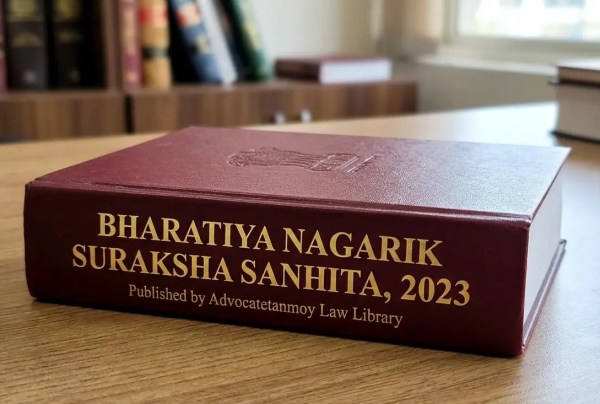
The Bharatiya Nagarik Suraksha Sanhita, 2023
CHAPTER I – PRELIMINARY
CHAPTER II – CONSTITUTION OF CRIMINAL COURTS AND OFFICES
CHAPTER IIl – POWER OF COURTS
CHAPTER IV – POWERS OF SUPERIOR OFFICERS OF POLICE AND AID TO THE MAGISTRATES AND THE POLICE
CHAPTER V – ARREST OF PERSONS
CHAPTER VI – PROCESSES TO COMPEL APPEARANCE
A.—Summons
B.—Warrant of arrest
C.—Proclamation and attachment
D.—Other rules regarding processes
CHAPTER VII – PROCESSES TO COMPEL THE PRODUCTION OF THINGS
A.—Summons to produce
B.—Search-warrants
C.—General provisions relating to searches
D.—Miscellaneous
CHAPTER VIII – RECIPROCAL ARRANGEMENTS FOR ASSISTANCE IN CERTAIN MATTERS AND PROCEDURE FOR ATTACHMENT AND FORFEITURE OF PROPERTY
CHAPTER IX – SECURITY FOR KEEPING THE PEACE AND FOR GOOD BEHAVIOUR
CHAPTER X – ORDER FOR MAINTENANCE OF WIVES, CHILDREN AND PARENTS
CHAPTER XI – MAINTENANCE OF PUBLIC ORDER AND TRANQUILLITY
A.—Unlawful assemblies
B.—Public nuisances
C.—Urgent cases of nuisance or apprehended danger
D.—Disputes as to immovable property
CHAPTER XII – PREVENTIVE ACTION OF THE POLICE
CHAPTER XIII – INFORMATION TO THE POLICE AND THEIR POWERS TO INVESTIGATE
CHAPTER XIV – JURISDICTION OF THE CRIMINAL COURTS IN INQUIRIES AND TRIALS
CHAPTER XV – CONDITIONS REQUISITE FOR INITIATION OF PROCEEDINGS
CHAPTER XVI – COMPLAINTS TO MAGISTRATES
CHAPTER XVIl – COMMENCEMENT OF PROCEEDINGS BEFORE MAGISTRATES
CHAPTER XVIII – THE CHARGE
A.—Form of charges
B.—Joinder of charges
CHAPTER XIX – TRIAL BEFORE A COURT OF SESSION
CHAPTER XX – TRIAL OF WARRANT-CASES BY MAGISTRATES
A.—Cases instituted on a police report
B.—Cases instituted otherwise than on police report
C.—Conclusion of trial
CHAPTER XXI – TRIAL OF SUMMONS-CASES BY MAGISTRATES
CHAPTER XXII – SUMMARY TRIALS
CHAPTER XXIII – PLEA BARGAINING
CHAPTER XXIV – ATTENDANCE OF PERSONS CONFINED OR DETAINED IN PRISONS
CHAPTER XXV – EVIDENCE IN INQUIRIES AND TRIALS
A.—Mode of taking and recording evidence
B.—Commissions for the examination of witnesses
CHAPTER XXVI – GENERAL PROVISIONS AS TO INQUIRIES AND TRIALS
CHAPTER XXVII – PROVISIONS AS TO ACCUSED PERSONS OF UNSOUND MIND
CHAPTER XXVIII – PROVISIONS AS TO OFFENCES AFFECTING THE ADMINISTRATION OF JUSTICE
CHAPTER XXIX – THE JUDGMENT
CHAPTER XXX – SUBMISSION OF DEATH SENTENCES FOR CONFIRMATION
CHAPTER XXXI – APPEALS
CHAPTER XXXII – REFERENCE AND REVISION
CHAPTER XXXIII – TRANSFER OF CRIMINAL CASES
CHAPTER XXXIV – EXECUTION, SUSPENSION, REMISSION AND COMMUTATION OF SENTENCES
A.—Death sentences
B.—Imprisonment
C.—Levy of fine
D.—General provisions regarding execution
E.—Suspension, remission and commutation of sentences
CHAPTER XXXV – PROVISIONS AS TO BAIL AND BONDS
CHAPTER XXXVI – DISPOSAL OF PROPERTY
CHAPTER XXXVII – IRREGULAR PROCEEDINGS
CHAPTER XXXVIII – LIMITATION FOR TAKING COGNIZANCE OF CERTAIN OFFENCES
CHAPTER XXXIX – MISCELLANEOUS