Sec 232 BNS
Police Can Register FIR for Witness Threats Without Court Complaint
State of Kerala v. Suni @ Sunil, reported as 2025 INSC 1260
The administration of criminal justice in India, especially in relation to the sanctity of witness testimony, has consistently occupied a central place in judicial discourse and legal reform. The integrity of the justice delivery system depends fundamentally upon the credibility, independence, and safety of witnesses, whose testimony forms the backbone of adjudication. Recognizing the pervasive threat posed by witness intimidation, the legislature introduced Section 195A into the Indian Penal Code, 1860 (IPC) with effect from 16 April 2006 through Act No. 2 of 2006. This insertion represented a deliberate legislative intervention aimed at curbing the growing menace of threats, coercion, and inducement directed at witnesses with the intent of distorting the course of justice.
Despite this legislative effort, the interpretation and application of Section 195A IPC soon became a subject of legal ambiguity and procedural 2025 INSC 1260uncertainty, illustrating the observation made by the Supreme Court in Maktool Singh v. State of Punjab (1999) 3 SCC 321 that precision and brevity in legislative drafting are indispensable, and their absence often results in protracted litigation. This concern materialized vividly in the case of State of Kerala v. Suni @ Sunil, reported as 2025 INSC 1260, where the Supreme Court was called upon to resolve a significant interpretative conflict relating to the procedural mechanism governing offences under Section 195A IPC. The central issue before the Court was whether such an offence is to be treated as a cognizable offence, permitting police investigation through registration of a First Information Report (FIR), or whether it falls within the restrictive framework of Section 195 of the Code of Criminal Procedure, 1973 (CrPC), thereby requiring a formal complaint by the court concerned.
The text of Section 195A IPC criminalizes the act of threatening a person with injury to body, reputation, or property, or to the person or reputation of someone in whom the individual is interested, with the intent to compel the giving of false evidence. The provision prescribes punishment extending up to seven years of imprisonment, or fine, or both, and in aggravated situations—where such false evidence results in the conviction of an innocent person for a serious offence—it mandates punishment equivalent to that imposed on the wrongfully convicted individual. This stringent penal consequence reflects the gravity of the offence and its potential to undermine the administration of justice.
Section 195A IPC was incorporated into Chapter XI of the IPC, which deals with “false evidence and offences against public justice.” The provisions preceding it, namely Sections 193, 194, and 195 IPC, address various forms of perjury and fabrication of evidence. Importantly, these provisions were historically categorized as non-cognizable offences under the First Schedule of the CrPC, thereby requiring judicial sanction before prosecution. This classification ensured that prosecutions for perjury were not initiated lightly and were subject to judicial oversight, primarily through the mechanism provided under Section 195(1)(b)(i) CrPC read with Section 340 CrPC.
The procedural complexity arose because Section 195(1)(b)(i) CrPC explicitly bars courts from taking cognizance of offences under Sections 193 to 196 IPC when such offences are alleged to have been committed in relation to judicial proceedings, except upon a written complaint by the court. This provision is supplemented by Section 340 CrPC, which prescribes a detailed procedure for conducting a preliminary inquiry before initiating such prosecution. Together, these provisions have historically functioned as a protective filter against frivolous or vexatious perjury prosecutions, ensuring that the authority of the court is not misused.
However, the introduction of Section 195A IPC marked a significant departure from this scheme. The legislature simultaneously amended the First Schedule of the CrPC to classify the offence under Section 195A as a “cognizable offence”, thereby enabling the police to arrest without warrant and to initiate investigation independently. This classification, as defined under Section 2(c) CrPC, stands in contrast to non-cognizable offences under Section 2(l) CrPC, where police action is contingent upon judicial authorization. The divergence in classification created an apparent inconsistency within the statutory framework, leading to conflicting interpretations across various High Courts.
The complexity was further compounded by the subsequent insertion of Section 195A in the CrPC in 2009 (Act No. 5 of 2009), which provides that a witness or any other person may file a complaint in relation to an offence under Section 195A IPC. While this provision appears to create an alternative remedial mechanism, it does not explicitly clarify whether it overrides or coexists with the bar under Section 195(1)(b)(i) CrPC. The use of the word “may” in Section 195A CrPC suggests a permissive and enabling provision, but its precise relationship with the existing procedural regime remained ambiguous.
This ambiguity led to a judicial divergence among High Courts. One line of decisions, exemplified by Rahul Yadav v. State (2018 SCC OnLine Del 8271), held that since Section 195A IPC is cognizable, the police possess the authority to register an FIR under Section 154 CrPC and conduct an investigation under Section 156 CrPC. According to this view, Section 195A CrPC merely supplements the available remedies and does not exclude the jurisdiction of the police. This interpretation was subsequently endorsed by the Madhya Pradesh High Court and the Calcutta High Court, thereby reinforcing the position that police action is permissible and valid in cases of witness intimidation.
In contrast, another line of authority, represented by the decision in Neput Rajiyung v. State of Assam (2023), took the view that offences under Section 195A IPC, particularly when connected to judicial proceedings, must be prosecuted only in accordance with the special procedure under Sections 195 and 340 CrPC. This interpretation effectively rendered the offence non-cognizable in practice, requiring the initiation of proceedings through a complaint before a Magistrate, rather than through a police FIR. This restrictive approach was also adopted in certain decisions of the Madhya Pradesh High Court, thereby deepening the judicial inconsistency.
The Supreme Court in State of Kerala v. Suni @ Sunil (2025 INSC 1260) undertook a comprehensive analysis of the statutory scheme to resolve this conflict. The Court emphasized the principle of harmonious construction, seeking to reconcile the provisions of the IPC and the CrPC in a manner that preserves their legislative intent and functional coherence. Central to the Court’s reasoning was the recognition that the classification of an offence as cognizable or non-cognizable in the First Schedule of the CrPC is a determinative factor in deciding the mode of investigation.
The Court observed that the legislature had consciously classified Section 195A IPC as a cognizable offence, in contrast to the non-cognizable nature of Sections 193 to 196 IPC. This distinction, the Court held, is neither accidental nor insignificant, but reflects a deliberate legislative choice to enable prompt and effective police intervention in cases of witness intimidation. The Court reasoned that such threats often occur outside the courtroom, sometimes even before the commencement of judicial proceedings, and therefore require immediate action to prevent the subversion of justice.
Rejecting the argument that Section 195A IPC should be read into Section 195(1)(b)(i) CrPC by implication, the Court invoked the doctrine of casus omissus, holding that it is impermissible for courts to supply omissions in statutory language when the provision is otherwise clear and unambiguous. Relying on authoritative precedents such as S.R. Bommai v. Union of India and Nathi Devi v. Radha Devi Gupta, the Court reiterated that judicial interpretation must respect legislative boundaries and cannot rewrite statutory provisions under the guise of purposive construction.
The Court further clarified that Section 195A CrPC does not create an exclusive procedural route, but merely provides an additional avenue for redress. The permissive language of the provision indicates that a witness may choose to file a complaint before a Magistrate, but is not compelled to do so. Accordingly, both remedies—police investigation through FIR and complaint before Magistrate—operate concurrently and independently.
In its final determination, the Supreme Court held unequivocally that Section 195A IPC is a cognizable offence, and that the police are fully empowered to register an FIR and conduct an investigation without awaiting a complaint from the court. The Court set aside the contrary rulings of the Kerala High Court and the Karnataka High Court, thereby restoring the cognizance taken by the trial court and reaffirming the validity of police action in such cases.
This judgment represents a significant clarification of the law, establishing that offences relating to witness intimidation occupy a distinct position within the framework of offences against public justice. By affirming the cognizable nature of Section 195A IPC, the Supreme Court has strengthened the protective mechanisms available to witnesses, ensuring that threats against them can be addressed swiftly and effectively. The decision underscores the importance of interpreting procedural law in a manner that advances substantive justice, rather than allowing technical constraints to impede the administration of justice.
In broader terms, the ruling reinforces the principle that the rule of law must prevail over procedural formalism, particularly in contexts where power imbalances and coercion threaten the integrity of judicial processes. It has far-reaching implications for the conduct of trials in cases involving organized crime, terrorism, and influential accused persons, where witness intimidation is a recurring challenge. By empowering the police to act decisively, the Court has contributed to the strengthening of the criminal justice system and the protection of its foundational values.
Section 232 in the BNS
Under the Bharatiya Nyaya Sanhita, 2023 (BNS), enacted as a modern replacement of the colonial-era Indian Penal Code, Section 232 has been introduced to expressly codify the offence of threatening a person to give false evidence. This provision is substantially identical to the former Section 195A IPC, preserving both its substantive essence and its penal structure. It continues to embody a two-tier punishment framework, whereby the general offence is punishable with imprisonment up to seven years along with fine, and in aggravated circumstances—where such intimidation results in the conviction and sentencing of an innocent person to death or imprisonment exceeding seven years—the offender is liable to suffer the same punishment as that imposed upon the wrongfully convicted individual. This continuity reflects a clear legislative intent to retain the gravity and deterrent value of the earlier provision.
When this statutory continuity is examined in light of the authoritative pronouncement in 2025 INSC 1260 (State of Kerala v. Suni @ Sunil), it becomes evident that the legislature has deliberately preserved not only the substantive offence but also its procedural character, particularly its classification as a cognizable offence. The Supreme Court in that case unequivocally held that the classification of an offence in the First Schedule to the Code of Criminal Procedure, 1973 (CrPC) is determinative of the mode of investigation, and that where an offence is designated as cognizable, the police are fully empowered to register a First Information Report under Section 154 CrPC and proceed with investigation without awaiting any complaint from the court under Section 195 CrPC. This reasoning, grounded in statutory interpretation and legislative intent, applies with equal force to Section 232 BNS, which does not alter or dilute the cognizable nature of the offence.
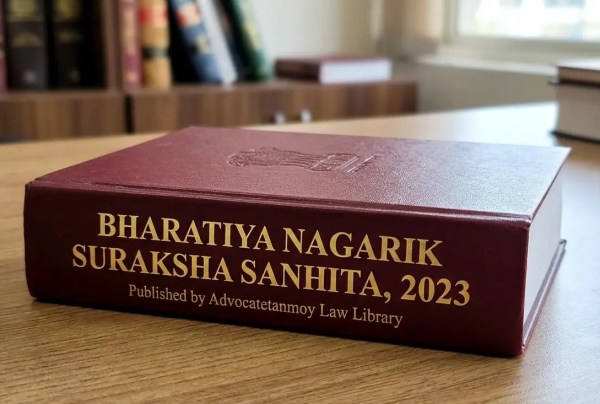
Importantly, the transition from the IPC to the BNS has not been accompanied by any reclassification of this offence as non-cognizable, nor has there been any indication of a shift towards a court-centric procedural requirement. Until the complete operationalization of the Bharatiya Nagarik Suraksha Sanhita, 2023 (BNSS), the existing framework of the CrPC, 1973 continues to govern procedural aspects, including the distinction between cognizable and non-cognizable offences. Consequently, the ratio laid down in 2025 INSC 1260 retains its status as a binding precedent, directly applicable to prosecutions under Section 232 BNS.
In practical terms, this means that an act of threatening a witness under Section 232 BNS constitutes a cognizable offence, thereby enabling the police machinery to act promptly and decisively upon receiving information. The registration of an FIR under Section 154 CrPC and the initiation of investigation under Section 156 CrPC remain fully permissible, ensuring that the process of criminal law is set in motion without procedural impediments. At the same time, the corresponding provision under the BNSS, namely Section 232 BNSS, which mirrors the earlier Section 195A CrPC, provides an additional and concurrent remedy by allowing the aggrieved witness or any other person to file a direct complaint before a Magistrate. This dual mechanism reinforces the accessibility of legal remedies while preserving procedural flexibility.
Significantly, the Supreme Court in 2025 INSC 1260 also rejected the argument that such offences require a preliminary inquiry by the court under Section 340 CrPC before any prosecution can be initiated. This rejection was based on the recognition that witness intimidation often occurs outside the courtroom and demands immediate intervention, rather than being subjected to delays inherent in judicial inquiry procedures. This principle seamlessly extends to the framework under the BNS and BNSS, ensuring that the offence of witness intimidation is addressed through swift investigative action rather than procedural formalism.
Thus, the incorporation of Section 232 in the BNS represents not a departure but a continuation and consolidation of existing legal principles, as clarified by the Supreme Court. The offence remains firmly situated within the category of cognizable offences, preserving the authority of the police to intervene without delay, while simultaneously offering an alternative complaint-based remedy. This alignment between legislative continuity and judicial interpretation ensures that the law remains effective, responsive, and aligned with the overarching objective of safeguarding the administration of justice from the corrosive effects of witness intimidation.
Core Concept: Administration of Criminal Justice
The administration of criminal justice forms the central node connecting doctrines relating to fair trial, rule of law, procedural safeguards, and evidentiary integrity. It is directly linked to witness testimony, investigative powers, and judicial control over prosecution, all of which shape the functioning of criminal adjudication.
See also
Rule of Law; Fair Trial; Due Process; Judicial Review; Separation of Powers
Cluster: Witness Testimony and Protection
The sanctity of witness testimony operates as a foundational pillar within the justice system, linking closely with truth discovery, evidentiary reliability, and procedural fairness. The emergence of statutory provisions addressing witness intimidation reflects a shift from passive reliance on testimony to active protection of witnesses.
Connected Concepts
Witness Protection; Perjury; False Evidence; Hostile Witness; Approver
See also
Section 232 Bharatiya Nyaya Sanhita (BNS); Former Section 195A IPC; Criminal Intimidation; Obstruction of Justice
Cluster: Offences Against Public Justice
The category of offences against public justice encompasses acts that distort or undermine judicial processes, including giving false evidence, fabrication of evidence, and witness intimidation. These offences are interconnected through their shared objective of protecting judicial integrity.
Connected Provisions
Section 193 IPC / BNS equivalent; Section 194 IPC; Section 195 IPC; Section 232 BNS
See also
Perjury Law; Judicial Integrity; Administration of Justice; Contempt of Court
Cognizable vs Non-Cognizable Offences
The distinction between cognizable offences and non-cognizable offences represents a structural principle of criminal procedure, determining the scope of police powers and judicial oversight. The classification directly impacts whether police may register an FIR and investigate independently or require prior court authorization.
Key Linkages
Section 2(c) CrPC / BNSS; Section 2(l) CrPC / BNSS; First Schedule classification
See also
Police Powers of Arrest; Judicial Control Mechanisms; Procedural Safeguards
Cluster: Police Investigation and FIR Mechanism
The First Information Report (FIR) under Section 154 CrPC / BNSS functions as the gateway to criminal investigation in cognizable cases. It connects the informational stage of criminal law with investigative authority, ensuring prompt action in cases involving threats to witnesses.
Connected Concepts
Section 156 CrPC (Power to Investigate); Cognizance of Offences; Charge Sheet
See also
Investigative Procedure; Criminal Procedure Framework; State Policing Powers
Judicial Control over Prosecution
The framework under Section 195 CrPC and Section 340 CrPC represents a court-centric control mechanism designed to prevent frivolous prosecutions for perjury. This cluster is linked to judicial discretion, institutional authority, and procedural filtering.
Connected Concepts
Preliminary Inquiry; Complaint by Court; Sanction for Prosecution
See also
Abuse of Process of Court; Judicial Discipline; Contempt Jurisdiction
Cluster: Section 195A IPC and Section 232 BNS
Section 195A IPC, now replaced by Section 232 BNS, occupies a unique position by combining elements of offences against public justice with a cognizable procedural character. It bridges the gap between judicial protection mechanisms and police-driven enforcement.
Conceptual Links
Witness Intimidation; False Evidence; Criminal Liability for Threats
See also
Bharatiya Nyaya Sanhita, 2023; Transition from IPC to BNS; Continuity of Substantive Criminal Law
Cluster: Section 195A CrPC and Section 232 BNSS
The procedural provision allowing a complaint by witness or other person creates an alternative remedy alongside police investigation. This cluster reflects the coexistence of dual procedural pathways.
Connected Concepts
Magisterial Complaint; Concurrent Remedies; Access to Justice
See also
Section 190 CrPC (Cognizance by Magistrate); Private Complaint Mechanism
Cluster: Judicial Interpretation and Statutory Construction
The interpretative exercise undertaken by courts in resolving conflicts between provisions highlights doctrines such as harmonious construction, literal interpretation, and casus omissus. These doctrines ensure that statutes are applied in a manner consistent with legislative intent.
Key Doctrines
Casus Omissus; Purposive Interpretation; Literal Rule
See also
Legislative Drafting Principles; Judicial Precedent; Constitution Bench Jurisprudence
Precedential Authority and Case Law
Judicial precedents form a network of interpretative authority linking various High Court and Supreme Court decisions. The case of State of Kerala v. Suni @ Sunil (2025 INSC 1260) serves as a central node resolving conflicting interpretations.
Connected Cases
Maktool Singh v. State of Punjab; Rahul Yadav v. State; Neput Rajiyung v. State of Assam; S.R. Bommai v. Union of India; Nathi Devi v. Radha Devi Gupta
See also
Doctrine of Precedent; Binding Authority; Judicial Hierarchy
Cluster: Legislative Evolution and Criminal Law Reform
The transition from IPC to BNS and CrPC to BNSS reflects broader trends in criminal law reform, emphasizing modernization, efficiency, and victim-centric justice.
Connected Concepts
Decolonization of Law; Codification; Legal Continuity vs Change
See also
Bharatiya Nagarik Suraksha Sanhita, 2023; Criminal Justice Reforms in India
Cluster: Impact on Trial Process and Justice Delivery
The recognition of witness intimidation as a cognizable offence strengthens the trial process, ensuring timely intervention and reducing the risk of evidence distortion. It connects to broader themes of trial management and justice delivery efficiency.
Connected Concepts
Speedy Trial; Protection of Witnesses; Integrity of Evidence
See also
Organized Crime Trials; Terrorism Prosecutions; Influence of Accused Persons