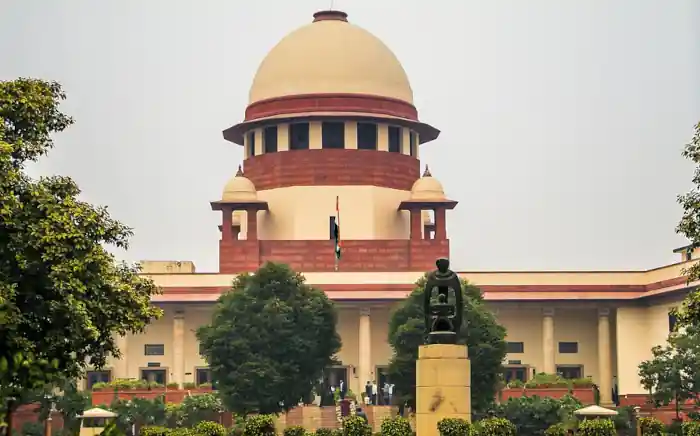
Supreme Court of India
Supreme Court of India Decisions (March 31, 2026)
Legal digests of the Supreme Court of India cases decided on 25th March 2026
Quick Summary
1. Sandeep Yadav v. Satish & Ors. (2026 INSC 301)
Technical Error in Criminal Charge Not Fatal to Trial If No Prejudice Caused: Supreme Court
2. Rajesh Goyal v. M/S Laxmi Constructions & Ors. (2026 INSC 299)
Subordinate Authority Cannot Overrule Final Supreme Court Eviction Order; Gross Abuse of Process
3. Charul Shukla v. State of U.P. & Ors. (2026 INSC 297)
Vague Matrimonial Allegations Without Evidence Against In-Laws: Supreme Court Quashes FIR After 6-Year Delay
4. State of Maharashtra v. Reliance Industries Ltd. & Ors. (2026 INSC 296)
State Can Withdraw Tax Exemption for Captive Power Plants in Public Interest; One-Year Notice Period Required
5. M/S. Steag Energy Services (India) Pvt. Ltd. v. GSPC Pipavav Power Company Ltd. (2026 INSC 295)
Courts Cannot Interfere in Technical Tender Evaluation Based on Marginal Price Difference: Supreme Court
6. Southern Power Distribution Company of AP Ltd. v. Green Infra Wind Solutions Ltd. (2026 INSC 294)
SERC Cannot Nullify Central Government’s Renewable Energy Incentive While Fixing Electricity Tariff
7. Andanayya & Ors. v. Deputy Chief Engineer & Ors. (2026 INSC 293)
Landowners Can Seek Higher Compensation Based on High Court’s Award Under Section 28-A; Second Application Maintainable
8. National Highways Authority of India v. Tarsem Singh & Ors. (2026 INSC 291)
Solatium and Interest for NH Act Land Acquisition: Only Live Claims Pending as on 28.03.2008 Eligible
Supreme Court of India Decisions (March 31, 2026)
1. Sandeep Yadav v. Satish & Ors.
Citation: 2026 INSC 301
Date of Judgment: March 25, 2026
Court: Supreme Court of India
Bench: Justice R. Mahadevan and Justice Ahsanuddin Amanullah
Subject: Criminal Procedure – Framing of Charges – De Novo Trial – Procedural Irregularity vs. Illegality
Facts: A 2007 FIR for murder and related offences led to a trial. In 2009, charges were framed against the accused, and the trial proceeded for over fourteen years with prosecution witnesses being examined and cross-examined. In 2024, it was noticed that the formal charge was unsigned. The trial court framed charges afresh but directed the trial to continue from the existing stage (Section 313 Cr.P.C.), noting that key witnesses had died and the accused had full knowledge of the accusations. The High Court, on a petition by the accused, set aside this order and directed a de novo (fresh) trial, holding that the defect was fundamental.
Issue: Whether the defect in the framing of the charge (absence of signature) vitiated the trial, requiring a fresh start, or was a curable irregularity.
Decision: The Supreme Court allowed the appeal, setting aside the High Court’s order. It restored the trial court’s order to proceed from the stage after the framing of charges.
Reasoning: The Court held that the purpose of a charge is to give the accused clear notice of the accusation, which was satisfied here. The accused participated in the trial for 14 years, cross-examined witnesses extensively, and were fully aware of the case. The absence of a signature on the charge was a mere procedural irregularity, not a fatal illegality. Relying on the Constitution Bench in Willie (William) Slaney and Sections 215 and 464 Cr.P.C., the Court held that such defects are curable unless prejudice is shown. The High Court’s direction for a de novo trial was held to be unwarranted, especially as key witnesses had expired, and the accused had not demonstrated any failure of justice.
Key Principles:
- The object of framing a charge is to inform the accused of the accusation.
- Procedural errors in the charge are curable if no prejudice or failure of justice is caused.
- A de novo trial is an exceptional remedy, not to be granted for mere technical lapses.
2. Rajesh Goyal v. M/S Laxmi Constructions & Ors.
Citation: 2026 INSC 299
Date of Judgment: March 25, 2026
Court: Supreme Court of India
Bench: Justice Sanjay Karol and Justice Nongmeikapam Kotiswar Singh
Subject: Landlord-Tenant – Eviction – Judicial Discipline – Jurisdiction of Rent Authority
Facts: The tenant-appellant’s eviction was affirmed by the Rent Authority, Appellate Authority, High Court, and finally by the Supreme Court, which granted time to vacate until 31.03.2025. Despite this, the tenant filed a restoration application before the same Rent Authority (Additional District Magistrate), which was allowed, effectively setting aside the eviction order. The High Court set aside this restoration order, leading to the present appeal and a show-cause notice to the Rent Authority for acting contrary to final orders.
Issue: Whether the Rent Authority could entertain and allow a restoration application after the eviction order had attained finality up to the Supreme Court.
Decision: The Supreme Court dismissed the tenant’s appeal, upheld the High Court’s order, and accepted the unconditional apology tendered by the Rent Authority.
Reasoning: The Court held that the Rent Authority’s order was a nullity, passed without jurisdiction and in gross violation of judicial discipline. It ignored the binding orders of the superior courts that had conclusively established the landlord-tenant relationship and the eviction. The Court emphasized that the jurisdiction of the Rent Authority is limited and does not extend to reviewing findings that have been affirmed by the Supreme Court. The principle of judicial comity requires subordinate authorities to follow the orders of superior courts unreservedly.
Key Principles:
- A subordinate authority cannot sit in judgment over or nullify a final order of a superior court.
- Jurisdiction conferred by a statute cannot be exercised to overreach the doctrine of merger and finality of judgments.
- Judicial discipline mandates that the orders of higher appellate authorities be followed by subordinate authorities.
3. Charul Shukla v. State of U.P. & Ors.
Citation: 2026 INSC 297
Date of Judgment: March 25, 2026
Court: Supreme Court of India
Bench: Justice B.V. Nagarathna and Justice Ujjal Bhuyan
Subject: Criminal Law – Matrimonial Disputes – Quashing of FIR – Section 498-A IPC – Abuse of Process of Law
Facts: A complainant (wife) filed an FIR against her husband, sister-in-law, and parents-in-law under Sections 498A, 323, 313, 354 IPC and Dowry Prohibition Act. The allegations included dowry demands, harassment, instigation by the sister-in-law, and a forced miscarriage. The chargesheet was filed under Sections 323, 354, 498-A IPC and the DP Act. The High Court dismissed the petition to quash the FIR. The appeals were filed by the sister-in-law and parents-in-law (the husband was not a party to these appeals).
Issue: Whether the criminal proceedings against the sister-in-law and aged parents-in-law should be quashed for lack of prima facie evidence.
Decision: The Supreme Court allowed the appeals, set aside the High Court’s order, and quashed the FIR, chargesheet, and criminal case against the appellants (sister-in-law and parents-in-law).
Reasoning: The Court found the allegations to be vague, omnibus, and lacking cogent material evidence. The complaint was filed after an inordinate delay of over six years without explanation. The allegations of dowry demand and harassment were generalised, with no specific instances. The allegation under Section 354 against the father-in-law was not substantiated. The charge under Section 313 (causing miscarriage) was dropped in the chargesheet due to lack of medical evidence. Citing Dara Lakshmi Narayana and Bhajan Lal, the Court held that vague allegations against family members in matrimonial disputes, without specific details of active involvement, amount to an abuse of the process of law, especially against senior citizens.
Key Principles:
- Generalised and sweeping allegations unsupported by concrete evidence cannot form the basis for criminal prosecution.
- In matrimonial cases, a delay in lodging the FIR must be explained, otherwise it can be fatal to the prosecution.
- Courts must exercise caution to prevent misuse of legal provisions like Section 498-A IPC against family members.
4. State of Maharashtra v. Reliance Industries Ltd. & Ors.
Citation: 2026 INSC 296
Date of Judgment: March 25, 2026
Court: Supreme Court of India
Bench: Justice Pamidighantam Sri Narasimha and Justice Alok Aradhe
Subject: Electricity Duty – Exemption – Promissory Estoppel – Legitimate Expectation – Fiscal Policy
Facts: The State of Maharashtra granted exemption from electricity duty to captive power generators to encourage self-sufficiency in power. Later, it issued notifications in 2000 and 2001 to withdraw/modify the exemption due to fiscal constraints. The High Court quashed these notifications, holding them to be discriminatory and arbitrary. The State appealed.
Issue: Whether the State, having granted an exemption, is legally precluded from withdrawing or modifying it in the exercise of the same statutory power.
Decision: The Supreme Court allowed the appeals, setting aside the High Court’s order. It upheld the State’s power to withdraw the exemption, but held that the notifications would operate only after a one-year notice period.
Reasoning: The Court held that an exemption is a concession, not a right. The power to grant exemption under Section 5A includes the power to modify or withdraw it in public interest, such as for augmenting revenue. Doctrines of promissory estoppel and legitimate expectation do not apply when a change in policy is made in public interest. However, principles of fairness require that such withdrawal should not cause undue hardship. The Court directed that the notifications would take effect one year after their issuance to allow industries to adjust to the new fiscal burden.
Key Principles:
- The power to grant an exemption includes the power to withdraw it.
- Fiscal policy decisions, including withdrawal of tax concessions, are matters of economic policy where judicial deference is owed.
- While the State can change its policy, it must do so fairly, often by providing a reasonable notice period to affected parties.
5. M/S. Steag Energy Services (India) Pvt. Ltd. v. GSPC Pipavav Power Company Ltd. (GPPC) & Ors.
Citation: 2026 INSC 295
Date of Judgment: March 25, 2026
Court: Supreme Court of India
Bench: Justice Pamidighantam Sri Narasimha and Justice Alok Aradhe
Subject: Contract Law – Tender Evaluation – Judicial Review – Quality and Cost Based System (QCBS) – Scope of Interference
Facts: GPPC invited bids for the operation and maintenance of a power plant under a QCBS system (70% technical, 30% cost). After evaluation, the appellant (STEAG) was declared the successful bidder. The writ petitioner (O&M) challenged the process. A re-evaluation directed by the High Court resulted in both bidders having the same technical score (93). The High Court, based on a marginal price difference (O&M being marginally lower), quashed the Letter of Award (LOA) to STEAG and directed it to be awarded to O&M. STEAG appealed.
Issue: Whether the High Court was justified in interfering with the tender evaluation and substituting its own decision based on a marginal price difference.
Decision: The Supreme Court allowed the appeal, set aside the High Court’s order, and upheld the LOA and contract in favor of the appellant (STEAG).
Reasoning: The Court held that the High Court exceeded its scope of judicial review. It reiterated that courts should interfere with the tender process only if it is arbitrary, mala fide, or perverse. The decision-making process of the expert body (owner) should be given deference, especially in technical matters. The owner has the “fair play in the joints” to choose the bidder, and courts cannot substitute their own evaluation, particularly when the difference between bidders is minuscule. The Court emphasized that the entire focus should not be on choosing the “most eligible” party to the exclusion of the owner’s needs and the public interest in timely project execution.
Key Principles:
- The scope of judicial review in tender matters is limited to arbitrariness, mala fides, or perversity.
- Courts should not interfere with the decision of the owner/employer in evaluating and awarding contracts, especially in technical fields.
- A mere marginal difference in price between competitive bidders is not a ground to interfere with the original decision.
6. Southern Power Distribution Company of Andhra Pradesh Limited & Anr. v. Green Infra Wind Solutions Limited & Ors.
Citation: 2026 INSC 294
Date of Judgment: March 25, 2026
Court: Supreme Court of India
Bench: Justice Pamidighantam Sri Narasimha and Justice Atul S. Chandurkar
Subject: Electricity Law – Tariff Determination – Generation Based Incentive (GBI) – Regulatory Power of SERC
Facts: The MNRE introduced a Generation Based Incentive (GBI) for wind power producers, explicitly stating it was “over and above” the tariff determined by SERCs. The Andhra Pradesh Electricity Regulatory Commission (APERC) later factored in the GBI while determining tariff for wind power projects, effectively deducting it from the tariff. The APTEL set aside this decision, holding the SERC had no such power. The DISCOMs appealed to the Supreme Court.
Issue: Whether a State Electricity Regulatory Commission can “consider and factor in” a Central Government incentive like GBI while determining tariff.
Decision: The Supreme Court dismissed the appeals by the DISCOMs, upholding the APTEL’s order that the GBI was intended to be disbursed to the GENCOs over and above the tariff.
Reasoning: While affirming that tariff determination is the exclusive province of the SERC, the Court held that this power must be exercised as a “collaborative enterprise.” The GBI was a parliamentary grant with a specific public policy objective to promote renewable energy. The Court found that APERC’s action of factoring in the GBI nullified the very purpose of the incentive. It held that while the SERC has the power to consider such incentives, it cannot exercise its regulatory authority in a manner that undermines the legislative or policy intent of a Central grant. The balance must be struck to promote the overarching goal of renewable energy.
Key Principles:
- Regulatory Commissions have plenary power over tariff determination.
- However, this power must be exercised in coordination with other stakeholders to achieve statutory objectives, including the promotion of renewable energy.
- A regulatory decision that nullifies the purpose of a policy or grant is not sustainable.
7. Andanayya & Ors. v. Deputy Chief Engineer & Ors.
Citation: 2026 INSC 293
Date of Judgment: March 25, 2026
Court: Supreme Court of India
Bench: Justice M. M. Sundresh and Justice Nongmeikapam Kotiswar Singh
Subject: Land Acquisition – Section 28-A of the Land Acquisition Act, 1894 – Re-determination of Compensation – Doctrine of Merger – Second Application
Facts: Landowners (appellants) did not seek a reference but later filed an application under Section 28-A of the 1894 Act based on a Reference Court award. While their application was pending, the High Court, in appeals by other landowners, further enhanced the compensation. The Collector allowed the first application based on the Reference Court award. The landowners then filed a second Section 28-A application seeking the benefit of the High Court’s enhanced award, which was rejected. The Division Bench of the High Court upheld this rejection, relying on a decision that held Section 28-A only applies to the award of the Reference Court.
Issue: Whether a second application under Section 28-A is maintainable to claim the benefit of an appellate court’s enhanced award.
Decision: The Supreme Court allowed the appeal, setting aside the High Court’s judgment. It held that a second application under Section 28-A based on the judgment of the High Court is maintainable.
Reasoning: The Court applied the doctrine of merger, holding that once an appellate court renders a decision, it merges with the trial court’s award. Thus, the final operative award for the purpose of Section 28-A is the award of the appellate forum. The object of Section 28-A is to ensure equality in compensation for similarly situated landowners. The Court overruled the view in Ramsingbhai Jerambhai, holding it was per incuriam as it did not consider the earlier decision in Pradeep Kumari and the principles of merger. The Collector should have kept the first application pending until the appeal was decided.
Key Principles:
- Section 28-A is a beneficial provision intended to remove inequality in compensation.
- The award of the appellate court (High Court/Supreme Court) merges with the reference court’s award and becomes the basis for re-determination under Section 28-A.
- A second application under Section 28-A, based on an appellate court’s judgment, is maintainable.
8. National Highways Authority of India v. Tarsem Singh & Ors.
Citation: 2026 INSC 291
Date of Judgment: March 25, 2026
Court: Supreme Court of India
Bench: Chief Justice Surya Kant and Justice Ujjal Bhuyan
Subject: Land Acquisition – National Highways Act, 1956 – Solatium and Interest – Delay and Laches – Finality of Judgments
Facts: This is a review petition filed by NHAI against an order clarifying that landowners under the NH Act were entitled to solatium and interest for acquisitions between 1997 and 2015. NHAI argued that the financial burden was misapprehended (claiming it was Rs. 29,000 crores, not Rs. 100 crores). The Court also considered tagged SLPs challenging orders that directed payment of these benefits.
Issue: Whether the benefit of solatium and interest should be extended to all landowners regardless of delay, and whether the review petition on grounds of financial burden is maintainable.
Decision: The Supreme Court disposed of the review petition and the SLPs, clarifying the scope of the previous orders. It held that the entitlement exists, but stale claims that were concluded prior to 28.03.2008 cannot be reopened.
Reasoning: The Court refused to review the judgment on the ground of increased financial burden, holding that the constitutional right to just compensation cannot be denied based on fiscal implications. However, the Court issued a clarification to balance the equities. It held that only landowners whose claims were alive (pending) on or after 28.03.2008 are entitled to the benefit. If a landowner raised the claim after this date, interest would be payable only from the date the claim was raised, not for the period of delay. Claims that were finally concluded before 28.03.2008 cannot be reopened to claim solatium or interest.
Key Principles:
- The constitutional guarantee of just compensation is not contingent upon the magnitude of the financial burden on the state.
- While a beneficial interpretation of law is preferred, it does not allow for the reopening of claims that have attained finality.
- Courts can deny interest for the period of delay to balance the equities when stale claims are revived.
Sarvarthapedia Legal Conceptual Network
I. Core Constitutional & Jurisprudential Anchors
A. Rule of Law & Judicial Hierarchy
Connects to: Criminal Procedure, Administrative Law, Land Acquisition, Electricity Law
Ensures legality of adjudication, binding force of superior courts, and limits on subordinate authority
Cross-links:
Jurisdictional limits (Rajesh Goyal; Steag Energy)
Finality of judgments (Tarsem Singh)
Doctrine of merger (Andanayya)
B. Natural Justice & Procedural Fairness
Audi alteram partem, absence of prejudice, informed defence
Cross-links:
Defective charge but fair notice (Sandeep Yadav)
Vagueness in allegations (Charul Shukla)
Fair transition in policy (Reliance Industries)
C. Equality & Non-Arbitrariness (Article 14)
Substantive fairness over formal technicality
Cross-links:
Equal compensation (Andanayya)
Non-arbitrary tariff structuring (Green Infra)
Fair policy withdrawal (Reliance Industries)
D. Finality vs Fairness Tension
Balancing closure of litigation with justice
Cross-links:
Bar on reopening stale claims (Tarsem Singh)
Exception to retrial (Sandeep Yadav)
Second application for parity (Andanayya)
II. Criminal Law & Procedure Cluster
A. Framing of Charge and Trial Validity
Node: Nature of Charge
Purpose is notice, not ritual compliance
Node: Procedural Irregularity vs Illegality
Unsigned charge as curable defect
Node: Prejudice Test
Requirement of demonstrable failure of justice
Cross-links:
→ Natural Justice (fair opportunity)
→ Finality (avoid retrial)
→ Evidentiary Integrity
B. De Novo Trial Doctrine
Node: Exceptional Nature of Retrial
Not warranted for technical defects
Node: Impact of Delay and Witness Loss
Death of witnesses weighs against retrial
Cross-links:
→ Finality of Litigation
→ Delay and Laches (Tarsem Singh)
C. Quashing of Criminal Proceedings
Node: Abuse of Process Doctrine
Prevents malicious prosecution
Node: Prima Facie Threshold
Requirement of specific, credible allegations
Cross-links:
→ Judicial Review (inherent powers)
→ Evidentiary Standards
D. Matrimonial Criminal Litigation
Node: Over-implication of Family Members
Caution against omnibus allegations
Node: Evidentiary Deficiency
Absence of medical or corroborative proof
Node: Delay in FIR
Undermines prosecution credibility
Cross-links:
→ Abuse of Process
→ Equality (protection from harassment)
III. Judicial Authority, Finality, and Remedies Cluster
A. Judicial Discipline
Node: Binding Nature of Higher Court Orders
Subordinate forums cannot override
Node: Judicial Comity
Respect for institutional hierarchy
Cross-links:
→ Rule of Law
→ Contempt principles
B. Jurisdiction and Nullity
Node: Lack of Jurisdiction
Orders void ab initio
Node: Excess of Authority
Administrative overreach invalidates decisions
Cross-links:
→ Procedural vs Substantive Defects (Sandeep Yadav)
→ Judicial Review Limits (Steag Energy)
C. Doctrine of Merger
Node: Appellate Supremacy
Higher court decision replaces lower court ruling
Node: Operative Decree Concept
Final enforceable judgment is appellate
Cross-links:
→ Equality in compensation (Andanayya)
→ Finality doctrine
D. Finality of Litigation
Node: Res Judicata
Prevents re-litigation
Node: Closure of Claims
No reopening of concluded matters
Cross-links:
→ Delay and Laches
→ Abuse of Process
E. Delay and Laches
Node: Stale Claims Doctrine
Delay defeats equitable relief
Node: Interest Curtailment
Relief adjusted for delay
Cross-links:
→ FIR delay (Charul Shukla)
→ Equity balancing (Tarsem Singh)
IV. Administrative Law, Policy, and Judicial Review Cluster
A. Judicial Review of Policy Decisions
Node: Limited Scope of Review
Focus on arbitrariness, mala fides
Node: Deference to Economic Policy
Courts avoid substituting executive judgment
Cross-links:
→ Tender matters (Steag Energy)
→ Fiscal policy (Reliance Industries)
B. Promissory Estoppel & Legitimate Expectation
Node: Non-absolute Doctrines
Yield to public interest
Node: Policy Flexibility
State can withdraw concessions
Cross-links:
→ Fairness in transition
→ Regulatory alignment (Green Infra)
C. Fairness in State Action
Node: Reasonable Notice Requirement
Mitigates hardship
Node: Non-Arbitrariness
Policy must not be abrupt
Cross-links:
→ Equity (Tarsem Singh)
→ Natural Justice
D. Tender Evaluation and Contractual Autonomy
Node: Owner’s Discretion
Freedom in selecting contractor
Node: Limited Judicial Interference
Only in cases of perversity
Node: Technical Expertise Deference
Courts avoid re-evaluation
Cross-links:
→ Institutional competence
→ Jurisdictional restraint
E. Regulatory Power and Policy Coordination
Node: Plenary Tariff Power
SERC authority over pricing
Node: Policy Harmonisation
Cannot defeat central incentives
Node: Collaborative Governance
Multi-level alignment of objectives
Cross-links:
→ Federal coordination
→ Purpose-oriented interpretation
V. Land Acquisition, Compensation, and Economic Justice Cluster
A. Just Compensation Doctrine
Node: Constitutional Right under Article 300A
Property deprivation requires fairness
Node: Components of Compensation
Includes solatium and interest
Cross-links:
→ Equality (Andanayya)
→ Fiscal burden limits
B. Delay and Equitable Relief Structuring
Node: Denial of Interest for Delay
Balances equities
Node: Non-Reopening of Settled Claims
Protects finality
Cross-links:
→ Finality doctrine
→ Laches
C. Section 28-A Re-determination
Node: Beneficial Provision
Ensures parity among landowners
Node: Second Application Maintainability
Based on appellate enhancement
Cross-links:
→ Doctrine of merger
→ Equality principle
D. Fiscal Policy vs Individual Rights
Node: Withdrawal of Exemptions
State’s economic authority
Node: Non-enforceability of Concessions
Exemptions not vested rights
Cross-links:
→ Promissory estoppel limits
→ Economic justice
VI. Electricity Law and Regulatory Governance Cluster
A. Tariff Determination Power
Node: Exclusive Domain of SERC
Regulatory autonomy
Node: Limits of Power
Cannot negate policy intent
Cross-links:
→ Administrative law principles
→ Judicial review limits
B. Incentive Schemes and Policy Intent
Node: Generation-Based Incentive (GBI)
Separate from tariff
Node: Policy Preservation
Regulatory action must not nullify incentive
Cross-links:
→ Legitimate expectation
→ Purpose-oriented interpretation
C. Collaborative Federalism in Regulation
Node: Coordination between Centre and States
Shared policy goals
Node: Harmonisation Principle
Avoid regulatory conflict
Cross-links:
→ Administrative fairness
→ Economic policy
VII. Cross-Domain Meta-Concepts
A. Jurisdictional Legitimacy
Criminal (quashing proceedings)
Administrative (ultra vires acts)
Contractual (tender review limits)
B. Procedural vs Substantive Justice
Curable defects (Sandeep Yadav)
Substantive fairness (Charul Shukla)
Policy fairness (Reliance Industries)
C. Evidentiary Integrity
Criminal allegations (Charul Shukla)
Trial process (Sandeep Yadav)
Policy justification (Green Infra)
D. Limits of State Power
Policy withdrawal (Reliance Industries)
Regulatory overreach (Green Infra)
Jurisdictional excess (Rajesh Goyal)
E. Temporal Justice
Delay in FIR
Delay in compensation claims
Timing of policy changes
VIII. Interlinking Knowledge Web Flow
Criminal Procedure ↔ Administrative Law
Procedural fairness ↔ arbitrariness review
Criminal Law ↔ Land Acquisition
Delay doctrine ↔ equitable relief
Administrative Law ↔ Electricity Regulation
Policy deference ↔ regulatory limits
Judicial Hierarchy ↔ All Domains
Finality ↔ discipline ↔ merger
Economic Policy ↔ Individual Rights
Fiscal flexibility ↔ fairness constraints
IX. Conceptual Core (Central Nodes)
1. Fairness
Procedural, substantive, and economic dimensions
2. Jurisdiction
Source, limits, and consequences of excess
3. Finality
Closure of litigation vs continuing justice
4. Equality
Uniform treatment and anti-arbitrariness
5. Institutional Integrity
Respect for hierarchy, expertise, and governance structures
Read More: HLJ
- Howrah Law Journal (March 2026) 18 Supreme Court Cases
- Howrah Law Journal (February 2026) 34 Supreme Court Cases
- Howrah Law Journal (January 2026) 25 Supreme Court Cases
- Delhi Law Digest (2025) Part-1