In the case in hand complainant as well as witness has turned hostile. The Trial Court had specifically held that there is no evidence produced on record to prove the demand of illegal gratification.
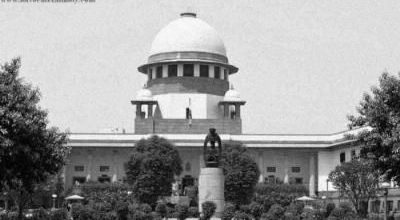
SUPREME COURT OF INDIA
Jagtar Singh Vs. State of Punjab
[Criminal Appeal No. 2136 of 2010]
DATE: March 23, 2023
ACTS: Prevention of Corruption Act, 1988
JUDGMENT
Rajesh Bindal, J.
1. The appellant has challenged his conviction under the Prevention of Corruption Act, 1988 (for short ‘the Act’). He was convicted by the Trial Court vide judgment dated 5.8.2005. His conviction was upheld by the High Court of Punjab and Haryana vide judgment dated March 2, 2010.
2. The facts, as are evident from the paper book, are that a demand of ₹ 500/- was made as illegal gratification and the appellant accepted a sum of ₹ 300/- for supplying copy of death certificate of Maghar Singh (deceased).
3. In the complaint, it was alleged that for getting the death certificate of Maghar Singh S/o. Hari Singh, who expired on 6.3.2003, Ranjit Singh, his son, requested his cousin Jit Singh to collect the same. On 17.10.2003, Jit Singh/complainant met the appellant in connection with supply of death certificate, who demanded ₹ 500/- as illegal gratification. Final settlement was for payment of ₹ 300/-.
As Ajit Singh was reluctant to pay the illegal gratification, he contacted Chamkaur Singh, Ex-Member Panchayat and on his suggestion went to the Office of DSP, Vigilance, Faridkot and got his statement recorded, on the basis of which FIR was registered.
The complainant handed over three currency notes of ₹ 100/- each to the DSP, Vigilance, who after coating the same with phenolphthalein powder recorded their numbers in the memo and handed over the same again to Jit Singh. Chamkaur Singh was made the shadow witness. It was alleged that the appellant was arrested red-handed while accepting the illegal gratification.
4. During the course of trial, Jit Singh, Complainant (PW-1) and Chamkaur Singh (PW-2) did not support the prosecution version. They were declared hostile. Usha Kumari, a computer operator in the office of Civil Surgeon (PW-3) deposed that the appellant was working in the office as cleaner. However, in emergency he could be deputed for discharging other duties also. The death certificate bearing no. 1241787 pertaining to late Maghar Singh was prepared in the handwriting of Class IV, Basant Singh.
It had been signed by the Additional District Registrar, Birth and Deaths, Faridkot. She also stated that sometimes the certificates are dispatched to the applicants and sometimes these are given by hand. The death certificate in question was prepared on 17.10.2003. The appellant was deputed to prepare the death certificates on 20.10.2003. Meaning thereby the death certificate had been prepared prior to the date on which the appellant was assigned the duty to prepare the death certificate. He otherwise was not responsible for that job as he was merely working as cleaner in the office.
5. HC Kirpal Singh (PW-4), HC Parsan Singh (PW-6) and C. Surinderjit Singh (PW-7) were the formal witnesses whereas Harbans Kaur, Clerk of Civil Surgeon, Faridkot (PW-5) proved certain official record and sanction of prosecution in the case of the appellant. Gurjinder Singh, (PW-8), District Social Security Officer, Faridkot stated about recovery of ₹ 300/- from the appellant. These were the same currency notes which were coated with phenolphthalein powder. In his statement recorded under Section 313 CrPC, the appellant submitted that he has been falsely implicated in the case.
6. The argument raised by the learned counsel for the appellant, relying upon the Constitution Bench judgment of this Court in Neeraj Dutta v. State (Govt. of NCT of Delhi) (2022) SCC Online SC 1724, is that the demand and recovery both must be proved to sustain conviction under the Act. In the case in hand, at the most, it can be said that recovery has been proved though that is also seriously doubtful. There is no evidence of demand of illegal gratification.
He further submitted that the appellant was merely working as cleaner in the office, and he was not having any authority either to prepare or deliver the death certificates. Admittedly, he was assigned the duty to prepare the death certificates on 20.10.2003 and in the case in hand the death certificate had been prepared on 17.10.2003.
7. On the other hand, learned counsel for the State submitted that the fact that the phenolphthalein coated currency notes with same serial numbers were recovered from the appellant in the presence of independent witnesses, inference can be drawn that there was demand and that is why he accepted the illegal gratification, hence, the conviction of the appellant deserves to be upheld.
8. Heard learned counsel for the parties and perused the material on record.
9. The conclusions of the Constitution Bench judgment referred above, have been summarized in paragraph 74, which read thus:
“74. What emerges from the aforesaid discussion is summarised as under:
(a) Proof of demand and acceptance of illegal gratification by a public servant as a fact in issue by the prosecution is a sine qua non in order to establish the guilt of the accused public servant under Sections 7 and 13(1)(d) (i) and (ii) of the Act.
(b) In order to bring home the guilt of the accused, the prosecution has to first prove the demand of illegal gratification and the subsequent acceptance as a matter of fact. This fact in issue can be proved either by direct evidence which can be in the nature of oral evidence or documentary evidence.
(c) Further, the fact in issue, namely the proof of demand and acceptance of illegal gratification can also be proved by circumstantial evidence in the absence of direct oral and documentary evidence.
(d) In order to prove the fact in issue, namely, the demand and acceptance of illegal gratification by the public servant, the following aspects have to be borne in mind:
(i) if there is an offer to pay by the bribe giver without there being any demand from the public servant and the latter simply accepts the offer and receives the illegal gratification, it is a case of acceptance as per Section 7 of the Act. In such a case, there need not be a prior demand by the public servant.
(ii) On the other hand, if the public servant makes a demand and the bribe giver accepts the demand and tenders the demanded gratification which in turn is received by the public servant, it is a case of obtainment. In the case of obtainment, the prior demand for illegal gratification emanates from the public servant. This is an offence under Section 13(1)(d)(i) and (ii) of the Act.
(iii) In both cases of (i) and (ii) above, the offer by the bribe giver and the demand by the public servant respectively have to be proved by the prosecution as a fact in issue. In other words, mere acceptance or receipt of an illegal gratification without anything more would not make it an offence under Section 7 or Section 13(1)(d), (i) and (ii) respectively of the Act.
Therefore, under Section 7 of the Act, in order to bring home the offence, there must be an offer which emanates from the bribe giver which is accepted by the public servant which would make it an offence. Similarly, a prior demand by the public servant when accepted by the bribe giver and in turn there is a payment made which is received by the public servant, would be an offence of obtainment under Section 13(1)(d) and (i) and (ii) of the Act.
(e) The presumption of fact with regard to the demand and acceptance or obtainment of an illegal gratification may be made by a court of law by way of an inference only when the foundational facts have been proved by relevant oral and documentary evidence and not in the absence thereof. On the basis of the material on record, the Court has the discretion to raise a presumption of fact while considering whether the fact of demand has been proved by the prosecution or not. Of course, a presumption of fact is subject to rebuttal by the accused and in the absence of rebuttal presumption stands.
(f) In the event of complaint turns ‘hostile’, or has died or is unavailable to let in his evidence during trial, demand of illegal gratification can be proved by letting in the evidence of any other witness who can again let in evidence, either orally or by documentary evidence or the presumption can prove the case by circumstantial evidence. The trial does not abate nor does it result in an order of acquittal of the accused public servant.
(g) In so far as Section 7 of the Act is concerned, on the proof of the facts in issue, Section 20 mandates the court to raise a presumption that illegal gratification was for the purpose of a motive or reward as mentioned in the said Section. The said presumption has to be raised by the court as a legal presumption or a presumption in law. Of course, the said presumption is also subject to rebuttal. Section 20 does not apply to Section 13(1)(d) (i) and (ii) of the Act.
(h) We clarify that the presumption in law under Section 20 of the Act is distinct from presumption of fact referred to above in point (e) as the former is a mandatory presumption while the latter is discretionary in nature.”
(emphasis added)
10. The referred question was answered in paragraph 76 of the aforesaid judgment, which reads thus:
“76. Accordingly, the question referred for consideration of this Constitution Bench is answered as under:
In the absence of evidence of the complainant (direct/primary, oral/documentary evidence), it is permissible to draw an inferential deduction of culpability/guilt of a public servant under Section 7 and Section 13(1)(d) read with Section 13(2) of the Act based on other evidence adduced by the prosecution.”
(emphasis added)
11. In the case in hand, Jit Singh, complainant as well as Chamkaur Singh, shadow witness have turned hostile. The Trial Court had specifically held that there is no evidence produced on record to prove the demand of illegal gratification.
It is not the case in which the demand was reiterated when the money was allegedly paid to him. Gurjinder Singh (PW-8) is only a witness who stated that he had recovered the money from the appellant. The High Court has passed its judgment on the assumption that the money having been recovered from the appellant, there was demand of illegal gratification. This is not a case where there was circumstantial evidence to prove the demand.
12. If the evidence produced on record by the prosecution is examined in the light of the law laid down by the Constitution Bench in Neeraj Dutta v. State (Govt. of N.C.T. of Delhi) (supra), the conviction and sentence of the appellant cannot be legally sustained.
13. The appeal is, accordingly, allowed. The impugned order passed by the High Court and that of the Trial Court are set aside. The appellant is acquitted of the charges and his bail bond stands discharged.
J. (Abhay S. Oka)
J. (Rajesh Bindal)
New Delhi
March 23, 2023.