Editorial: 15Th August 2025
From the Red Fort, the Prime Minister hails a century of RSS service, igniting fresh debate over its place in India’s secular fabric and political discourse.
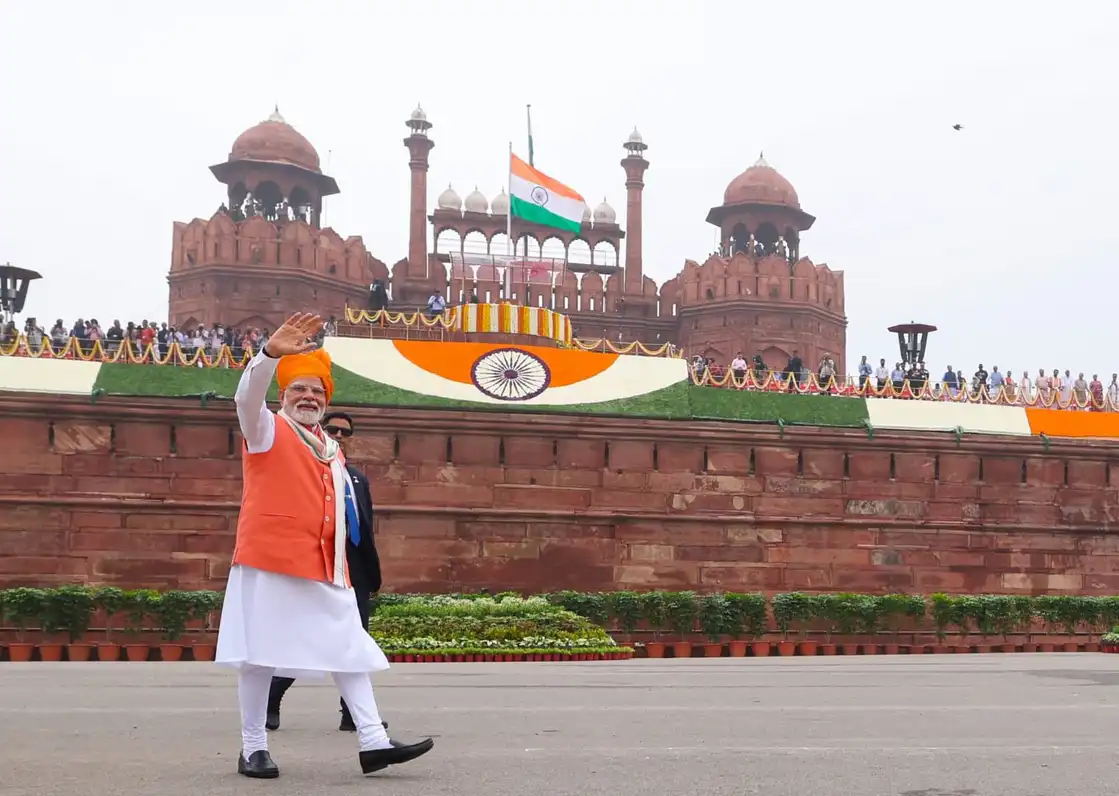
Prime Minister Narendra Modi’s address on the 79th Independence Day on 15th August 2025 resonated with a notable departure from convention, as he invoked the Rashtriya Swayamsevak Sangh (RSS) by name and paid unreserved tribute to its century-long journey. With an assertive tone, Modi declared that the nation is not solely the creation of governments or those who wield state power, but the collective endeavour of saints, scientists, soldiers, farmers, workers, and institutions alike.
In that spirit, he lauded the RSS, founded in 1925, as the world’s largest non-governmental organisation, whose guiding principles of service, dedication, organisation, and unmatched discipline have, for a hundred years, been devoted to the welfare of Maa Bharati. From the ramparts of the Red Fort, the Prime Minister saluted every swayamsevak who has walked this century-long path of nation-building through character-building, declaring the country’s pride in this golden chapter.
The political aftershocks were immediate. While Union Home Minister Amit Shah amplified Modi’s praise on X, underscoring the Sangh’s role in individual and national development, the Opposition struck a discordant note. The Congress accused the Prime Minister of violating the secular spirit of Independence Day by naming the RSS in such a symbolic venue, arguing that if the subject were to be raised, it should have been in the context of the organisation’s role in the freedom struggle—a role its critics claim was marginal.
The historical and ideological underpinnings of the RSS remain politically combustible. Conceived in Nagpur with the vision of uniting the Hindu community under the civilisational ethos of Sanatan Dharma, the RSS sought to cultivate Hindu discipline and protect the cultural identity rooted in the Vedas and Brahmanas, an intellectual institutional tradition far older than the Catholic Church and without centralised regimented priesthood. Over the decades, the RSS has often been seen as the ideological wellspring of the Bharatiya Janata Party (BJP), though not without tensions between the Sangh’s social work ethos and the BJP’s electoral pragmatism.
The timing of Modi’s gesture is politically loaded. The BJP, having lost its parliamentary majority in the most recent election (19 April to 1 June 2024) and forced into coalition with Nitish Kumar and Chandrababu Naidu, faces both domestic policy challenges—particularly the neglected push for Swadeshi manufacturing amid international tariff pressures—and the need to re-knit the strands of the Sangh Parivar.
The Prime Minister’s public embrace of the RSS from the most visible and symbolic platform in the nation was, therefore, as much a consolidation of the BJP’s political and social base as it was an expression of personal conviction. For the Congress-led INDI alliance, however, it is a fresh provocation in the ideological contest over India’s identity. For Modi and his supporters, it is a reaffirmation that the Government of India recognises and honours the RSS’s contributions; for his detractors, it is a troubling blurring of the line between the state and a socio-political movement deeply rooted in a specific cultural-religious vision.
In either case, the political ripples from this Independence Day address are certain to extend well beyond the Red Fort’s historic walls.