Brahmabandhab Upadhyay @ (Narahori Das) Reconverted to Sanatan Dharma
After performing Prayaschitta (great regret) in 1905, Catholic Brahmabandhaba started Saraswati Puja and popularised the same in Calcuttan schools. Brahmabandhab realised that Christianity was utter nonsense and was an anti-Indian British Raj supporter. Their institutional spirituality was against the Indian ethos and Vedantic Adhyatma. The Jesus of the Catholic church was neither Brahma nor Bandhu (friend) of the Indian Swadeshi movement. He did his second Prayaschitta (public) in February 1907 and disconnected his relationship with the Church. He devoted his energy to the ouster of the British.
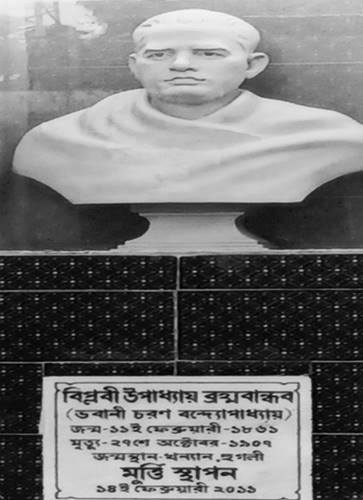
Bhavanicharan Bandyopadhyay was born on 11 February 1861 in the Hooghly district of West Bengal. On 10 September 1907, while he was giving an inflammatory Swadeshi speech before St. Paul’s Cathedral, the members of the church informed the police, and he was arrested for sedition. During the trial, he chose not to defend himself and submitted his written statement through barrister Chittaran Das. In jail, his health deteriorated, and he died on 27 October 1907. His last rites were performed according to the Vedic rituals (Sraddha Karma)
At the age of nine, under the influence of his uncle, he was baptised in the Anglican church and admitted to the General Assembly Institution in Calcutta, where he first read the English Bible and the Bengali Susamachar of Sadaprabhu. In 1880, Keshab Chandra one day took him to Ramakrishna, but uneducated rustic Ramakrishna did not attract Bhavani. He never met him again. He was in touch with Keshab Chandra. (Read more: Noble Bengali Families of Kolkata)
In 1891, he was rebaptised in the Catholic Church. In 1893, he became the editor of ‘Sophi’ and started to live like a monk. He began to wear saffron clothes and adopted the name of Brahmabandhab (Theophilus). He had an idea to establish a Catholic-Vedanta monastery, like the Ramakrishna Mission founded by Vivekananda. He wrote several Sanskrit devotional songs on Jesus Christ…’ Bande Sacchidanandam’ etc. His mixture of Hinduism with Christianity and his independent attitude did not go well with the then catholic establishment. He was banned from the Catholic Church (1899).
In 1902, he went to visit England and Europe and came back in 1904 as a completely reformed person, filled with Indian nationalism and hatred for the Church. He started his ‘Sandhya’ magazine in support of the Indian National Movement and declared that Lord Krishna is the ultimate moral example for the Indian sub-continent and Vedanta is superior to Christian theology.
The Christians (Catholics) had no idea what they did with Bhavanicharan, and Bhavanicharan also had no clue how to deal with the Catholics. Christians speak English, drink wine, and dress nicely, but they live under the bondage of church control; on the contrary, half-naked Hindus can easily articulate typical subjects like Vedanta and live freely. Bhavani soon understood that his catholic vocation and invocation of Sat-Chit-Ananda Jesus had no place in the church. His argument for the church was a waste of time. Advaita Vedanta was much better than the Union of the Trinity. (See: Vedanta Paribhasha)
Bhavanicharan mixed with the Brahma Samaj in or around 1887 under the influence of Gourgobinda Ray. He was also with Tagore in Shantiniketan. He was in Navadwipa in 1905 under the touch of Vaishnava and adopted the name of ‘Narahori Das’ (servant of Chaitanya Mahaprabhu). He wanted to become everything and failed to become anything. Hundreds of people gathered in Babughat to see Brahmabandhab’s Prayaschitta. He did Prayaschitta for his Christian life and vocation. He gave Dakshina to Brahmins and wore the sacred thread around his neck, did pranayama in the name of Vishnu, and became sinless before his death.
Everybody forgot him until a professor of the Sreerampore Theological College (1985) excavated and mentioned his works in his Thesis (Christian Hindu Vedanta Idea), and theological colleges started to sing ‘Vande Sacchidanandam’ in the Carnatic tune.
Sarvarthapedia Conceptual Network: Reconversion of Catholic Brahmabandhab
Overview
The reconversion of Bhavanicharan Bandyopadhyay, better known as Brahmabandhab Upadhyay, represents one of the most debated episodes in the intellectual and political history of colonial India. His life moved through Anglican Christianity, Roman Catholicism, Brahmo thought, Advaita Vedanta, Vaishnavism, and finally an explicit return to Vedic-Hindu identity through public Prayaschitta (atonement). His ideological journey also paralleled his transformation from a Christian theologian into a nationalist journalist and Swadeshi activist.
Unlike a simple religious conversion, his reconversion reflected his attempt to reconcile spirituality, Indian civilization, and political nationalism.
See Also
- Brahmabandhab Upadhyay
- Bhavanicharan Bandyopadhyay
- Catholic Church
- Anglican Church
- Brahmo Samaj
- Advaita Vedanta
- Keshab Chandra Sen
- Chittaranjan Das
- Rabindranath Tagore
- Chaitanya Mahaprabhu
- Lord Krishna
- Swadeshi Movement
- Prayaschitta
- Saraswati Puja
- Sandhya Newspaper
- Hindu-Christian Dialogue
- Indian Nationalism
- Vedic Rituals
Chronological Network
Birth and Early Life (1861)
Bhavanicharan Bandyopadhyay was born on 11 February 1861 in the Hooghly district of Bengal.
Connected Concepts
- Bengal Renaissance
- Colonial Bengal
- English Education
- Christian Missionary Influence
Anglican Baptism
At approximately nine years of age, influenced by his uncle, he was baptized into the Anglican Church. He studied at the General Assembly Institution in Calcutta and became acquainted with the English Bible and Bengali Christian literature.
Related Topics
- Anglican Missions in Bengal
- Bible Translation in Bengali
- Christian Education
- Colonial Mission Schools
Contact with Brahmo Samaj
During the 1880s he associated with the Brahmo Samaj under the influence of Keshab Chandra Sen and later Gourgobinda Ray.
He reportedly visited Ramakrishna once but did not continue the association.
Cross References
- Brahmo Samaj
- Religious Reform
- Monotheism
- Bengal Renaissance
Catholic Conversion (1891)
In 1891 he entered the Roman Catholic Church through rebaptism.
He sought to harmonize Christianity with Indian philosophy rather than simply adopt European religious traditions.
Related Concepts
- Inculturation
- Catholic Theology
- Christian Vedanta
- Comparative Religion
Brahmabandhab and Christian Vedanta
After becoming Brahmabandhab (“Friend of Brahman”), he lived an ascetic life, wore saffron robes, and envisioned a Catholic-Vedantic monastery.
He composed Sanskrit hymns including Bande Sacchidanandam in praise of Jesus using Vedantic terminology.
Connected Articles
- Sat-Chit-Ananda
- Christian Vedanta
- Sanskrit Christian Literature
- Comparative Theology
Conflict with Catholic Authorities
His attempt to interpret Christianity through Advaita Vedanta increasingly conflicted with Catholic ecclesiastical authority.
By 1899 he had become estranged from the Catholic establishment.
Related Topics
- Church Authority
- Religious Orthodoxy
- Theology of Inculturation
- Missionary Policy
European Visit (1902–1904)
His visit to England and continental Europe became an important turning point.
According to several nationalist interpretations, he returned with stronger anti-colonial convictions and greater confidence in Indian philosophical traditions.
Connected Concepts
- British Empire
- Colonial Politics
- European Christianity
- Indian Nationalism
Sandhya and Political Nationalism
Returning to India, he founded the newspaper Sandhya, which became a strong supporter of the Swadeshi movement.
He increasingly argued that Vedanta represented a superior philosophical system for India and praised Lord Krishna as an ideal moral guide.
Related Topics
- Swadeshi Movement
- Nationalist Journalism
- Anti-Colonial Thought
- Cultural Nationalism
First Prayaschitta (1905)
In 1905 Brahmabandhab publicly performed Prayaschitta, signifying his return to orthodox Hindu society.
Accounts describe the ceremony as including:
- Public repentance
- Gifts (Dakshina) to Brahmins
- Wearing the sacred thread
- Vishnu-centered prayers
- Vedic purification rituals
Hundreds reportedly gathered at Babughat to witness the event.
Connected Articles
- Prayaschitta
- Babughat
- Sacred Thread
- Dakshina
- Vedic Purification
- Hindu Reconversion
Saraswati Puja and Educational Nationalism
Following his return to Hindu practice, Brahmabandhab encouraged the celebration of Saraswati Puja in schools in Calcutta.
Within nationalist narratives, this has been interpreted as promoting indigenous cultural identity during the Swadeshi era.
Related Concepts
- Saraswati Puja
- National Education
- Swadeshi Culture
- Indigenous Education
Vaishnava Influence
During 1905 he also came into contact with Vaishnava traditions at Navadwip and adopted the devotional name Narahori Das.
Cross References
- Gaudiya Vaishnavism
- Navadwip
- Chaitanya Movement
- Bhakti
Public Separation from the Church (1907)
In February 1907 he publicly severed his remaining relationship with the Catholic Church.
Some nationalist accounts portray this as the culmination of his belief that institutional Christianity was incompatible with India’s spiritual traditions and political aspirations. Other historical interpretations emphasize that his relationship with the Church had already become strained years earlier over theological disagreements.
Related Topics
- Religious Identity
- Indian Nationalism
- Christian Missions
- Colonial Politics
Sedition Trial
On 10 September 1907 he delivered a nationalist speech near St. Paul’s Cathedral.
He was arrested on charges of sedition.
Rather than personally defend himself, he submitted a written statement through Chittaranjan Das.
Connected Articles
- Sedition Laws
- Freedom Movement
- Political Journalism
- Colonial Courts
Death
While imprisoned, his health deteriorated.
He died on 27 October 1907.
His funeral rites were reportedly conducted according to Vedic traditions, including Shraddha Karma.
Related Concepts
- Vedic Funeral Rites
- Shraddha
- Nationalist Martyrs
- Colonial Prisons
Intellectual Evolution Network
Christianity
Linked to
- Anglican Church
- Catholic Church
- Biblical Studies
- Christian Theology
↓
Brahmo Samaj
Linked to
- Monotheism
- Social Reform
- Bengal Renaissance
↓
Catholic Vedanta
Linked to
- Advaita Vedanta
- Comparative Theology
- Sanskrit Christian Literature
↓
Nationalism
Linked to
- Swadeshi
- Cultural Revival
- Sandhya
- Anti-Colonial Journalism
↓
Reconversion
Linked to
- Prayaschitta
- Saraswati Puja
- Vaishnavism
- Vedic Ritual
- Hindu Identity
Conceptual Network
Religion
- Anglican Christianity
- Roman Catholicism
- Brahmo Samaj
- Advaita Vedanta
- Vaishnavism
- Hindu Reconversion
Philosophy
- Sat-Chit-Ananda
- Vedanta
- Trinity
- Comparative Theology
- Spiritual Nationalism
Politics
- Swadeshi Movement
- British Raj
- Sedition
- National Journalism
- Indian Independence
Society
- Education
- Saraswati Puja
- Cultural Revival
- Bengali Renaissance
- Religious Identity
Related Sarvarthapedia Clusters
Religious Reformers
- Keshab Chandra Sen
- Ramakrishna (Gadadhar Chatterjee)
- Swami Vivekananda (Narendranath Dutta)
- Dayananda Saraswati
Indian Nationalism
- Swadeshi Movement
- National Education
- Cultural Nationalism
- Anti-Colonial Press
Hindu Philosophy
- Advaita Vedanta
- Bhakti
- Gaudiya Vaishnavism
- Dharma
- Prayaschitta
Colonial India
- British Raj
- Christian Missions
- Sedition Trials
- Bengal Renaissance
- Nationalist Journalism
Read More
- Identity Crisis of Indian Christian Theologians in Kolkata
- Decline of Christianity in Kolkata: Failure of Christian Narrative
- The Invention of Religion by Christians in 350 CE