China-Russia
China–Russia relations have evolved through sharp shifts since the 1950s. In 1950, the newly founded People’s Republic of China and the Soviet Union signed the Sino-Soviet Treaty of Friendship, Alliance and Mutual Assistance, marking a close ideological partnership during the early Cold War. This cooperation deteriorated by the late 1950s due to strategic and ideological differences, leading to the Sino-Soviet Split (1960–1989). Tensions peaked in 1969 with armed clashes along the Ussuri River.
Normalisation began in the 1980s, culminating in Mikhail Gorbachev’s 1989 visit to Beijing, which restored high-level dialogue. After the Soviet Union’s collapse in 1991, China and Russia rebuilt ties on pragmatic grounds. In 1996, they established a strategic partnership, followed by the landmark Treaty of Good-Neighbourliness and Friendly Cooperation in 2001, setting long-term principles for political trust and non-alignment.
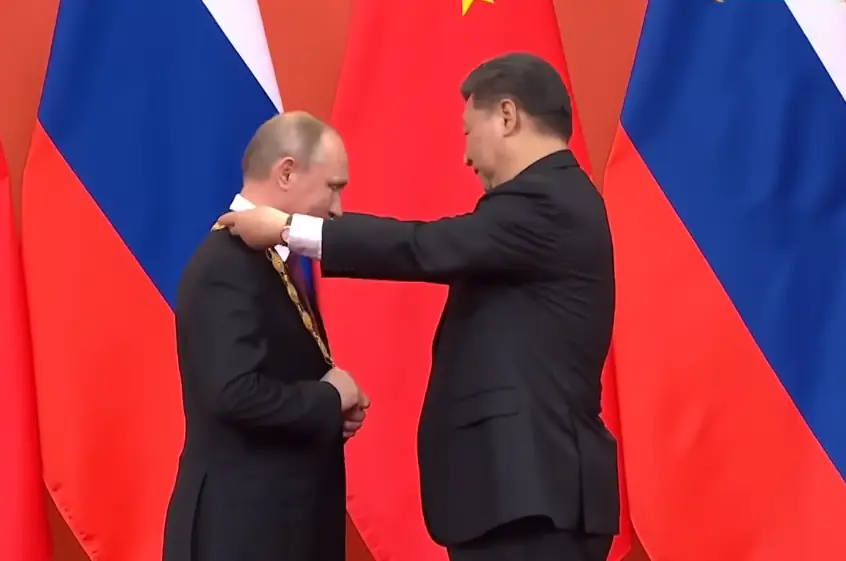
In the 2010s, cooperation deepened amid shared concerns about U.S. global influence. Major energy agreements—including the 2014 gas supply deal—expanded economic interdependence. Following 2014 geopolitical tensions, China emerged as a critical economic partner for Russia.
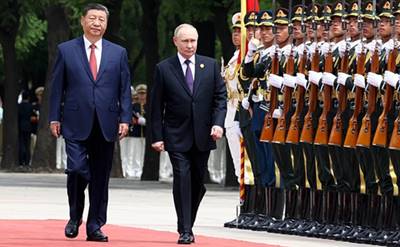
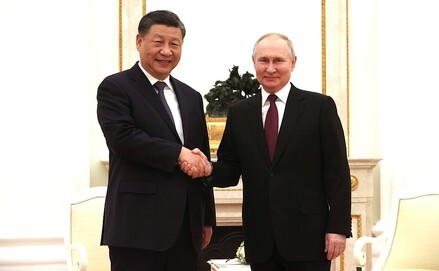
By the 2020s, ties evolved into a comprehensive strategic partnership encompassing energy, defence, technology, and multilateral coordination in BRICS, the SCO, and the UN, while remaining officially non-allied.