From Atharva Parisista
Brahma Yajna Bidhi – Complete Ritual Procedure and Significance
(6000-3500 BCE)
ब्रह्मयागविधिः
After bowing to the sage Bhargava, the revered Shaunika said, “Please describe to me in full detail the complete procedure of the Brahma Yajña.”
Then Atharvan, the best among those who perform sacrifices, being thus asked, began to explain the entire method with proper order and devotion.
Among all sacrifices, this is declared to be the supreme one — the Brahma Yajña. Listen carefully to this rite as I describe it in sequence.
In a pure, pleasant, and sacred place, free from all disturbances, away from impure or inauspicious things like mucus, dust, vultures, and others, one should prepare a clean and auspicious ground. There, according to the prescribed method, the teacher or priest should construct a pavilion decorated with flags, festoons, and variously designed gates.
After sprinkling the place with sanctified water or the five products of the cow (Panchagavya: Milk, Ghree, Nani, Chhana, and Dahi), and coating it with cow dung, the priest should worship the directions separately with colors and offerings of flowers and fruits. Then, at night, he should offer oblations in the four quarters and light lamps filled with ghee.
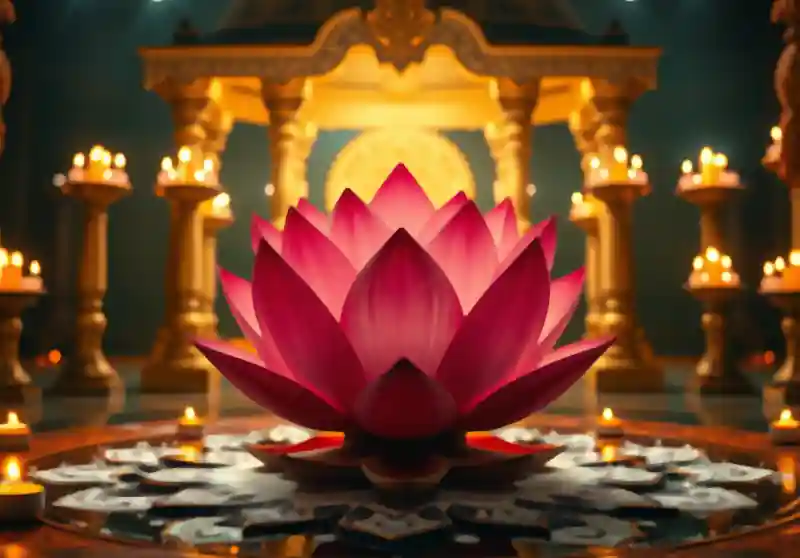
In the center of the pavilion, a divine circular or square altar with four entrances should be drawn. In its middle, a beautiful lotus should be marked with white powder, surrounded by colored designs for adornment. In the center of this lotus, the image or symbol of Brahmā, the Supreme Lord (ब्रह्माणं परमेश्वरम्), should be placed and worshipped with the Brahma-jñāna-sūkta hymn.
Then, using the Vedic mantras beginning with Imā āpaḥ, the deity should be ritually consecrated with perfumed substances such as sandal paste, rocanā, and fragrant incense. Worship should also be done with garlands, ghee lamps, cloth, food offerings, white sandalwood, camphor, and fragrant resins like guggulu.
After circumambulating the altar, one should bow with all parts of the body touching the ground. The altar is preferably placed in the southern or western part of the sacred area. After performing the offerings up to the ājyabhāga portion, sanctified water should again be used for purification, while reciting the Brahma-jñāna-sūkta. Thereafter, Rudra mantras should be used for consecration.
The wise priest should then offer oblations with mantras to the Rudra deities, and prepare a sacred dish (charu) for them according to the rules, using the Nīla Rudra hymns. Offerings should also be made with the Kutsa Sūkta (होमयेत्कुत्ससूक्तेन) and Ucchuṣma mantras, accompanied by chants for longevity and prosperity.
After these, offerings to the women should be performed. Then the deity should be bathed with the five cow-products and again with sanctified water. A symbolic bath with fruits and auspicious music should follow, accompanied by singers, bards, learned Vedic chanters, and women singing joyful songs.
During the ceremony, attendants with fans, mirrors, and decorated staffs should stand nearby. The deity should be worshipped with the Brahma Sūkta and also with Rudra mantras. Then, after circumambulation, the worshipper should kneel upon the ground, offer prayers for the desired fruit, and recite auspicious verses while instruments like drums, conches, and trumpets are sounded.
After this, the Uttara Tantra (concluding ritual) should be performed, and the officiating priests should be invited to recite. Learned Brahmins, skilled in the Vedas, should be fed according to one’s capacity. The poor, the destitute, the blind, and the helpless should also be especially honored with food and drink.
After giving suitable gifts to the priests and offering night oblations to the guardian deities (devatas), one should celebrate a household festival. Afterwards, yogis and householders should be fed. Trees should not be cut, and no living being should be harmed. Captives should be released, and anger toward enemies should be abandoned. The master of the rite should proclaim peace and safety to all beings and honor the preceptor.
By granting fearlessness and worshipping the Supreme Lord (इष्टे च परमेश्वरे) with devotion, one attains long life and enjoys prosperity over the entire earth.
Thus, the complete method of the Brahma Yajña has been declared by me for the benefit of devotees. Atharvan, wishing well to Indra, described this sacred rite. Having performed the ablutions, sacrifice, daily duties, and protection rituals, Indra, blessed by Atharvan, shone in heaven without a rival.
— This is the end of the description of the Brahma Yajña. —
ब्रह्मयागः
(१९ ,१.१) ओं भार्गवं प्रणिपत्याथ भगवाञ्शौनकोऽवदत् । ब्रह्मयागविधिं कृत्स्नं विस्तरेण वदस्व मे ॥
(१९ ,१.२) परिपृष्टः स तेन अथ अथर्वा यजतां वरः । विधिं कृत्स्नं प्रतिष्ठाय आख्यातुमुपचक्रमे ॥
(१९ ,१.३) सर्वेषामेव यागानां परमोऽयमुदाहृतः । ब्रह्मयागं प्रयत्नेन शृणु एतं तद्यथाक्रमम् ॥
(१९ ,१.४) हृद्ये मनोहरे शुभ्रे सर्वाबाधाविवर्जिते । श्लेष्मान्तकाक्षगृध्रादिपरित्यक्ते समे शुभे ॥
(१९ ,१.५) मण्डपं कारयेत्तत्र यथोक्तविधिना गुरुः । पताकातोरणिर्युक्तं द्वारैश्च अपि पृथग्विधैः ॥
(१९ ,२.१) अभ्युक्ष्य शान्तितोयेन पञ्चगव्येन वा सकृत् । गोमयेन प्रलिप्य आदौ पूजयेद्वर्णकिः पृथक् ॥
(१९ ,२.२) पुष्पैश्च विविधैः शुभ्रैः फलैश्च अपि अर्चयेद्बुधः । ततो बलिं हरेद्रात्रौ चतुर्दिक्षु विधानवित् ॥
(१९ ,२.३) प्रदीपान् घृतपूर्णांश्च प्रदद्याद्विविधान् तथा । त्ततो मण्डपमध्ये तु वर्तयेद्दिव्यमण्डलम् ॥ [चतुरश्रं चतुर्द्वारं वृत्ताकारमथ अपि वा] ॥
(१९ ,२.४) सितचूर्णेन तन्मध्ये लिखेत्पद्मं सुशोभनम् । बहिश्च वर्णैः शुभ्रैर्नाना शोभां प्रकल्पयेत् ॥
(१९ ,२.५) मध्ये पद्मं तु संस्थाप्य ब्रह्माणं परमेश्वरम् । ब्रह्मजज्ञानसूक्तेन यथोक्तमुपकल्पयेत् ॥
(१९ ,३.१) तथ इमा आप इत्या द्यैर्यथावदधिवासयेत् । रोचनाचन्दनाद्यैश्च पुष्पैर्धूपैश्च पूजयेत् ॥
(१९ ,३.२) घृतप्रदीपमाल्यैश्च वस्त्रैर्भक्षैश्च शोभनैः । सितचन्दनकर्पूरं दद्याद्वा अपि हि गुग्गुलम् ॥
(१९ ,३.३) प्रदक्षिणं ततः कृत्वा नमेत्सर्वाङ्गकैर्नरः । दक्षिणे पश्चिमे वा अपि भागे वेदिः प्रशस्यते ॥
(१९ ,३.४) कृत्वाज्यभागपर्यन्तं ततः शान्त्युदकं पुनः । ब्रह्मजज्ञानसूक्तेन कुर्याच्चैवात्र पूजनम् । तथैव रौद्रमन्त्रैश्च अभिषेकाय कल्पयेत् ॥
(१९ ,३.५) हुत्वाभ्यातानमन्त्रांश्च ततो रुद्रगणेन च । नीलरुद्रैश्चरुं विद्वान् विधिना श्रपयेद्बुधः ॥
(१९ ,४.१) होमयेत्कुत्ससूक्तेन उच्छुष्मैश्च यथाविधि । जपेन्मन्त्रान् तथायुष्यान्मङ्गल्यांश्चापि यत्नतः ॥
(१९ ,४.२) हुत्वा च चातनं तत्र मातृनामगणेन च । स्नापयेत्पञ्चगव्येन तथा शान्त्युदकेन च ॥
(१९ ,४.३) फलस्नानं च कुर्वीत युक्तो मङ्गलवादिभिः । बन्दिभिर्वेदविद्भिश्च स्त्रीसण्गीतैर्मनोरमैः ॥
(१९ ,४.४) चारुचामरहस्ताभिश्चित्रदण्डैः सदर्पणैः । स्नापयेद्ब्रह्मसूक्तेन रौद्रेणापि तथार्चयेत् ॥
(१९ ,४.५) ततः प्रदक्षिणं कृत्वा जानुभ्यां धरणीं गतः । आशास्येष्टफलं तत्र युक्तो मङ्गलपाठकैः ॥
(१९ ,५.१) तूर्यघोषेण संयुक्तः कृतस्वस्त्ययनस्तथा । कुर्याद्दुन्दुभिनादं तु शङ्खभेरिप्रपूरितम् ॥
(१९ ,५.२) कुर्यादुत्तरतन्त्रं च सदस्यान् वाचयेत्ततः । भोजयेच्छक्तितस्तत्र ब्राह्मणान् वेदपारगान् ॥
(१९ ,५.३) दीनानाथान्धकृपणान् भक्षभोज्यैरनेकधा । अन्नपानविहीनांश्च विशेषेण प्रपूजयेत् ॥
(१९ ,५.४) दत्त्वा च दक्षिणां शक्त्या दद्याद्गणबलिं निशि । गृहदेवास्तु संपूज्याः कार्यश्चाप्युत्सवो गृहे ॥
(१९ ,५.५) योगिनो भोजयेत्पश्चाद्गृहेसु गृहमेधिनः । अछेद्यास्तरवः कार्याः प्राणिहिंसां च वर्जयेत् ॥
(१९ ,५.६) बन्धनस्थाश्च मोक्तव्या बद्धाः क्रोधाच्च शत्रवः । अभयं घोषयेद्देशे गुरुं च परिपूजयेत् ॥
(१९ ,५.७) अभयं सर्वतो दत्त्वा इष्टे च परमेश्वरे । दीर्घमायुरवाप्नोति कृत्स्नां भुङ्क्ते वसुंधराम् ॥
(१९ ,५.८) ब्रह्मयागविधिः कृत्स्नो भक्तानां तु मयोदितः । अथर्वणा सुरेन्द्राय प्रणताय शुभेच्छया ॥
(१९ ,५.९) कृताभिषेकः कृतयाग एष कृताह्ह्निकः कृतरक्षः सुरेशः । अथर्वणोऽनुग्रहमाशु लब्ध्वा त्रिविष्टपं विरराजासपत्नम् ॥ इति ॥