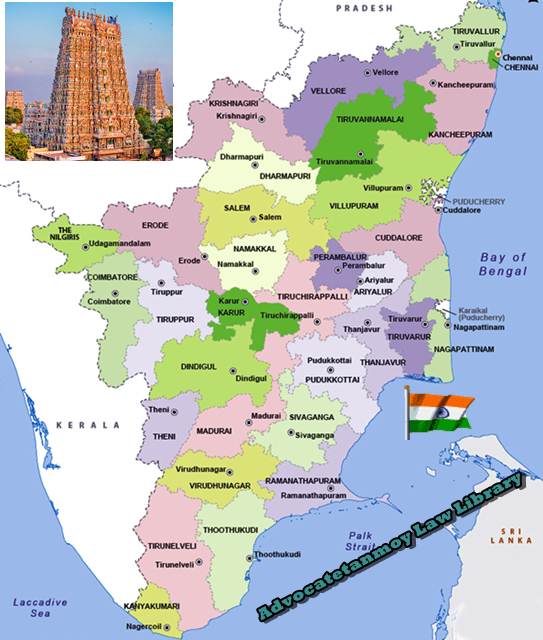
A Quantitative Analysis of Tourism and Hotel Industry Growth in Tamil Nadu (1980-2026)
The concept of tourism represents one of the oldest and most enduring human activities, rooted in the desire to explore, experience, and temporarily detach from the routine of daily life. Historically, travel in ancient civilizations such as those of India, Egypt, Greece, and Rome was often motivated by trade, pilgrimage, or conquest. In the Indian context, references to travel can be traced back to early texts like the Rig Veda (c. 4500 BCE) and later to accounts of foreign travelers such as Fa-Hien (c. 399–414 CE) and Xuanzang (c. 629–645 CE), who visited the Indian subcontinent and documented its cultural richness. Over time, this movement evolved into what is now known as modern tourism, characterized by organized travel, hospitality services, and structured infrastructure.
The transformation of tourism into a global economic industry gained momentum during the Industrial Revolution (late 18th to early 19th century), when improvements in transportation, such as railways and steamships, facilitated mass mobility. The establishment of organized travel agencies, notably by Thomas Cook in 1841, marked a turning point in the commercialization of tourism. By the late 20th century, tourism had become one of the largest global industries, with international tourist arrivals reaching 637 million in 1999 and revenue generation amounting to US$ 435 billion, reflecting its critical role in global economic integration.
In India, tourism has always been deeply intertwined with culture, religion, and heritage. The country’s vast diversity, encompassing ancient temples, historical monuments, natural landscapes, and vibrant traditions, provides immense scope for tourism development. Despite these advantages, the tourism sector in India remained underdeveloped for a considerable period after independence in 1947, largely due to inadequate infrastructure, lack of professional management, and limited international promotion. Recognizing its potential, the Government of India introduced several initiatives, most notably the National Tourism Policy of 2002, which aimed to position tourism as a key driver of economic growth, employment generation, and foreign exchange earnings.
Central to the growth of tourism is the hotel industry, which serves as the backbone of the sector by providing accommodation, food, and related services. The origins of the modern hotel industry in India can be traced to the early 20th century, with the establishment of landmark properties such as the Taj Mahal Hotel in Mumbai in 1903. This period also saw the emergence of major hotel chains, including the Oberoi Group (founded in 1934) and the Ashok Group (established in 1956) under government initiative. The growth of the hotel industry accelerated significantly after economic liberalization in 1991, which encouraged private investment and foreign collaboration. By 2005, the number of classified hotels in India had increased to over 1900, reflecting rapid expansion and diversification.
Within this national framework, Tamil Nadu occupies a unique and prominent position in India’s tourism landscape. Located in the southeastern part of the Indian peninsula, the state has a recorded history that dates back over 2000 years, with references found in Sangam literature (c. 300 BCE–300 CE). The region has been ruled by powerful dynasties such as the Cholas (c. 300 BCE–1279 CE), Pallavas (c. 275–897 CE), and Pandyas (c. 600 BCE–1345 CE), all of whom contributed significantly to architecture, art, and culture. The legacy of these dynasties is visible in the numerous temples, monuments, and heritage sites that form the core attractions of Tamil Nadu tourism.
The state’s tourism potential is further enhanced by its geographical diversity, including a coastline stretching over 1000 kilometers, hill stations located in the Western Ghats, and fertile plains interspersed with rivers such as the Cauvery. Major destinations such as Madurai, known for the Meenakshi Amman Temple (original structure dating to the 6th century CE, rebuilt in the 16th century), and Kanchipuram, famed as the “City of Thousand Temples,” attract millions of pilgrims annually. Coastal attractions like Mamallapuram, a UNESCO World Heritage Site recognized in 1984, showcase the architectural brilliance of the Pallava dynasty through rock-cut temples and sculptures dating to the 7th and 8th centuries CE.
The development of tourism in Tamil Nadu gained institutional support with the establishment of the Tamil Nadu Tourism Development Corporation (TTDC) in 1977. This organization was tasked with promoting tourism, developing infrastructure, and operating hospitality services across the state. TTDC introduced innovative initiatives such as hotel Tamil Nadu chains, tourist transport services, and package tours, which significantly improved accessibility and convenience for travelers. The state government also increased budget allocations for tourism during the 1980s and 1990s, recognizing its potential as a revenue-generating sector.
The growth trajectory of tourism in Tamil Nadu can be divided into two significant phases: the pre-reform period (1980–1990) and the post-reform period (1991–2005). During the pre-reform phase, domestic tourist arrivals grew steadily at a compound annual growth rate of 9.63%, while foreign tourist arrivals increased at 5.56%. This growth was largely driven by pilgrimage tourism and domestic travel. In the post-reform phase, following India’s economic liberalization in 1991, the sector experienced accelerated growth, with domestic tourist arrivals increasing at 6.98% and foreign arrivals at 8.04%. Over the entire period from 1980 to 2005, the compound growth rate for domestic tourists reached 10.88%, highlighting the state’s expanding appeal.
The resilience of Tamil Nadu’s tourism industry is evident in its ability to withstand global disruptions. Events such as the September 11, 2001 terrorist attacks and the Indian Ocean tsunami of December 26, 2004 had limited long-term impact on tourist arrivals. While coastal areas were affected by the tsunami, major inland destinations such as Madurai and hill stations like Ooty (Udhagamandalam, established as a hill station by the British in 1824) and Kodaikanal (developed in 1845) continued to attract visitors, resulting in record tourist numbers in 2004 and 2005.
A centre-wise analysis reveals that Chennai, the capital city and a major metropolitan hub, consistently records the highest tourist inflow. As a gateway city with an international airport established in 1954 and expanded significantly in the early 2000s, Chennai serves as a primary entry point for foreign tourists. Other prominent destinations include Rameswaram, a sacred pilgrimage site associated with the Ramayana, and Kanyakumari, the southernmost tip of India, known for its unique geographical position where the Arabian Sea, Bay of Bengal, and Indian Ocean converge.
The expansion of tourism has necessitated the growth of the hotel industry in Tamil Nadu. The number of classified hotels increased from 41 in 1982 to 166 in 2005, with room capacity rising from 3,078 to 9,689. This growth reflects the increasing demand for accommodation driven by rising tourist arrivals. Hotels in Tamil Nadu range from budget lodges to luxury five-star properties, catering to diverse segments of travelers. The average occupancy rate reached 60.7% in 2005, indicating a healthy level of utilization.
The socio-economic profile of tourists visiting Tamil Nadu provides valuable insights into travel patterns. Studies conducted during the early 2000s indicate that a majority of tourists fall within the 31–45 age group, representing the economically active population. Educational attainment is relatively high, with over 67% possessing at least higher secondary or technical qualifications. Income distribution shows that most tourists belong to the middle-income category, earning between Rs. 20,001 and Rs. 40,000 per month, reflecting the democratization of travel.
The purpose of travel varies significantly between domestic and foreign tourists. Domestic tourists are primarily motivated by pilgrimage, accounting for 34.5% of visits, while foreign tourists are driven by sightseeing and cultural exploration, accounting for 60.5%. This distinction underscores the dual nature of Tamil Nadu tourism, which combines religious significance with historical and cultural attractions.
Transportation plays a crucial role in shaping the tourist experience. The development of Indian Railways, particularly the expansion of southern railway networks during the late 19th and early 20th centuries, has facilitated domestic travel. By contrast, foreign tourists predominantly rely on air travel, reflecting globalization and increased connectivity. Within the state, road transport, including buses and taxis, serves as the primary mode of movement, emphasizing the importance of a well-maintained road network.
Accommodation preferences reveal a strong inclination toward non-star hotels, chosen by 55.75% of tourists due to affordability and convenience. However, foreign tourists show a greater preference for star hotels and heritage properties, reflecting higher expectations regarding service quality and amenities. Key factors influencing hotel selection include budget, cleanliness, location, and service quality.
Despite significant progress, several challenges persist within the tourism and hotel industry in Tamil Nadu. Issues such as water scarcity, reported by 38.5% of tourists, and concerns related to hygiene and sanitation, highlight the need for improved infrastructure and management. Additionally, the quality of drinking water and sanitary facilities remains a concern, affecting overall tourist satisfaction.
The role of information technology in tourism has grown rapidly since the late 1990s, with the rise of the internet transforming how tourists access information and make travel decisions. By the early 2000s, approximately 31% of tourists relied on online sources, including websites and email, for travel planning. This trend underscores the importance of digital marketing and online booking systems in enhancing the visibility and accessibility of tourist destinations.
For foreign tourists, procedural aspects such as visa acquisition and currency exchange are critical components of the travel experience. While a majority report smooth visa processes, a significant proportion encounter delays due to bureaucratic procedures. Financial management is facilitated by the use of US dollars and credit cards, reflecting global travel norms.
In the policy framework of 2025–2026, the M. K. Stalin–led Dravida Munnetra Kazhagam government has consciously expanded the scope of development beyond conventional tourism to emphasize Hindu pilgrimage revitalization, restoration of ancient Dharmic sites, and culturally rooted economic activity, reflecting a historically grounded approach to heritage management. Drawing upon the legacy of temple-centered urbanization that dates back to the Chola period (c. 9th–13th century CE) and later expansions under the Nayak rulers of Madurai (16th–18th century CE), the state has undertaken systematic conservation of structurally significant temples such as the Meenakshi Amman Temple and Ramanathaswamy Temple through initiatives led by the Hindu Religious and Charitable Endowments Department, which has reported extensive kumbabhishekam (consecration) ceremonies and renovation works across hundreds of shrines between 2021 and 2026.
The government’s policy orientation integrates pilgrimage circuits, infrastructure upgrades such as improved temple access roads, sanitation, and drinking water facilities, and digitization of temple administration, thereby aligning spiritual mobility with modern governance. While maintaining a formally secular administrative stance, the DMK government has positioned these efforts within a broader framework of heritage conservation, community participation, and inclusive economic development, ensuring that ancient Dharmic institutions—many dating back over a millennium—are preserved not merely as religious centers but as living cultural ecosystems that contribute to regional livelihoods, artisanal continuity, and socio-economic stability.
Core Concept Cluster: Tourism as an Integrated System
Tourism
See also: Economic Development, Cultural Heritage, Transport Infrastructure, Hospitality Industry, Globalization
Tourism functions as a multidimensional system linking mobility, leisure, culture, and economy. It interacts with technological progress, social aspirations, and state policy frameworks.
Economic Development
See also: Foreign Exchange Earnings, Employment Generation, Investment Flows, Regional Development
Tourism contributes to macroeconomic stability by generating income, supporting labor-intensive sectors, and stimulating infrastructure expansion.
Cultural Heritage
See also: Temple Architecture, Historical Monuments, Pilgrimage Networks, Heritage Conservation
Cultural heritage forms the symbolic core of tourism, especially in regions with long civilizational continuity.
National Context Cluster: India
Tourism in India
See also: National Tourism Policy 2002, Incredible India Campaign, Infrastructure Development, Service Sector Growth
India’s tourism structure reflects a combination of historical depth and developmental constraints.
National Tourism Policy 2002
See also: Public-Private Partnership, Sustainable Tourism, Community Welfare
This policy marked a shift toward structured tourism governance and international branding.
Indian Hotel Industry
See also: Taj Group, Oberoi Group, Ashok Group, Liberalization 1991
The hotel industry emerged as a critical support system, evolving from colonial establishments to global-standard hospitality networks.
Tamil Nadu Tourism System
Tamil Nadu Tourism
See also: Coastal Geography, Temple Networks, Hill Stations, Heritage Economy
Tamil Nadu represents a high-density tourism region shaped by ancient urbanization patterns and religious geography.
Tamil Nadu Tourism Development Corporation (1977)
See also: State Tourism Policy, Public Sector Hospitality, Transport Services
TTDC acts as the institutional backbone for tourism promotion and infrastructure development.
Tourism Growth Phases
See also: Pre-Reform Period (1980–1990), Post-Reform Period (1991–2005), Economic Liberalization
Tourism expansion correlates with broader economic reforms and globalization trends.
Destination Cluster: Major Tourist Centers
Chennai
See also: Urban Tourism, Transport Hub, International Connectivity
Acts as the primary gateway integrating domestic and international tourist flows.
Madurai
See also: Temple City, Meenakshi Amman Temple, Pilgrimage Economy
A historically continuous urban center rooted in temple-based socio-economic systems.
Kanchipuram
See also: Sacred Geography, Silk Industry, Temple Architecture
Represents the intersection of religious significance and artisanal economy.
Mamallapuram
See also: Pallava Architecture, UNESCO World Heritage (1984), Coastal Tourism
Illustrates early medieval artistic excellence and global heritage recognition.
Ooty and Kodaikanal
See also: Colonial Hill Stations, Climate Tourism, Eco-Tourism
Developed during British rule as climatic retreats, now major leisure destinations.
Rameswaram
See also: Ramayana Tradition, Pilgrimage Circuits, Coastal Sacred Sites
A प्रमुख node in pan-Indian pilgrimage networks.
Kanyakumari
See also: Geographical Extremes, Maritime Confluence, Spiritual Tourism
Combines natural geography with symbolic national identity.
Hotel Industry Cluster
Hospitality Industry
See also: Accommodation Infrastructure, Service Quality, Customer Satisfaction
Forms the operational backbone of tourism, linking demand with service delivery.
Hotel Classification System
See also: Star Hotels, Budget Hotels, Heritage Hotels
Reflects segmentation based on service standards, pricing, and target demographics.
Employment Generation
See also: Labor-Intensive Sector, Women Workforce Participation, Ancillary Industries
Hotels create both direct and indirect employment opportunities.
Occupancy Rate Dynamics
See also: Demand Patterns, Seasonality, Tourist Segmentation
Indicates efficiency and utilization of hospitality infrastructure.
Tourist Behavior Cluster
Domestic Tourists
See also: Pilgrimage Motivation, Rail Transport, Middle-Income Groups
Primarily driven by religious and cultural motivations.
Foreign Tourists
See also: Sightseeing Motivation, Air Travel, Cultural Curiosity
Influenced by global perceptions, heritage value, and service quality.
Socio-Economic Profile
See also: Age Group 31–45, Education Levels, Income Distribution
Tourist demographics shape consumption patterns and service expectations.
Travel Motivation
See also: Pilgrimage, Leisure, Cultural Exploration
Motivational factors determine destination choice and duration of stay.
Accessibility Cluster
Transport Infrastructure
See also: Railways Expansion, Air Connectivity, Road Networks
A foundational element enabling tourist mobility.
Mode of Transport
See also: Rail Travel, Air Travel, Road Transport
Choice depends on cost, convenience, and accessibility.
Intra-State Connectivity
See also: Bus Services, Taxi Networks, Tourism Circuits
Critical for linking dispersed tourist destinations.
Accommodation and Amenities Cluster
Accommodation Preferences
See also: Budget Hotels, Star Hotels, Cost Considerations
Reflect economic diversity among tourists.
Indoor Amenities
See also: Cleanliness, Room Service, Comfort Standards
Primary determinants of customer satisfaction.
Outdoor Amenities
See also: Swimming Pools, Recreational Facilities
Enhance overall tourism experience, especially for international visitors.
Infrastructure Challenges
See also: Water Scarcity, Hygiene Issues, Location Constraints
Highlight gaps between quantity and quality of services.
Support Services Cluster
Communication Facilities
See also: Internet Access, Mobile Connectivity, Digital Platforms
Essential for modern travel planning and navigation.
Banking and Financial Services
See also: Currency Exchange, Credit Cards, Foreign Exchange
Facilitate economic transactions for international tourists.
Medical Facilities
See also: Health Infrastructure, Emergency Services
Critical for safety and trust in tourism systems.
Information Technology in Tourism
See also: Online Booking, Digital Marketing, E-Tourism
Transforms accessibility and global reach of destinations.
Governance and Policy Cluster
State Tourism Policy
See also: Infrastructure Development, Promotion Strategies, Investment Incentives
Guides long-term growth and sustainability of tourism.
Tourism Promotion Agencies
See also: Travel Agents, Government Campaigns, Digital Outreach
Act as intermediaries between destinations and tourists.
Public-Private Partnership
See also: Investment Models, Infrastructure Expansion
Encourages collaborative development of tourism assets.
Crisis and Resilience Cluster
Global Disruptions
See also: September 11 Attacks (2001), Travel Decline
Impact international tourist flows.
Natural Disasters
See also: Indian Ocean Tsunami (2004), Coastal Impact
Test resilience of tourism infrastructure.
Tourism Resilience
See also: Recovery Strategies, Diversification of Destinations
Ensures continuity of growth despite external shocks.
Dharmic Heritage and Pilgrimage Cluster (2025–2026 Policy Context)
Hindu Pilgrimage Networks
See also: Temple Circuits, Sacred Geography, Ritual Economy
Form a historically continuous system of spiritual mobility.
Temple Restoration
See also: Kumbabhishekam, Architectural Conservation, Ritual Renewal
Revitalizes ancient structures and sustains religious practices.
Dharmic Heritage Economy
See also: Artisanal Continuity, Local Livelihoods, Cultural Sustainability
Links religious institutions with economic ecosystems.
Governance of Temples
See also: Hindu Religious and Charitable Endowments Administration, State Oversight
Ensures management, funding, and restoration of temple assets.
Pilgrimage Infrastructure
See also: Access Roads, Sanitation, Drinking Water Facilities
Integrates spiritual travel with modern infrastructure.
Digital Temple Administration
See also: E-Governance, Online Services, Transparency Mechanisms
Represents modernization of traditional institutions.
Integrated Systems Cluster
Tourism Product
See also: Attractions, Accessibility, Accommodation
Represents the “big three” components of tourism systems.
Sustainable Tourism
See also: Resource Conservation, Community Participation, Long-Term Growth
Ensures balance between development and preservation.
Heritage Conservation
See also: Archaeological Preservation, Cultural Identity, Policy Intervention
Protects historical assets for future generations.
Inclusive Economic Growth
See also: Regional Equity, Employment Expansion, Social Development
Tourism acts as a catalyst for broad-based development.
Cross-Link Synthesis
Tourism and Heritage Linkage
See also: Cultural Tourism, Pilgrimage Tourism, Identity Formation
Tourism transforms heritage into an economic and experiential resource.
Tourism and Hospitality Interdependence
See also: Service Quality, Infrastructure Capacity, Visitor Satisfaction
Hotels and tourism operate as mutually reinforcing systems.
Policy and Practice Integration
See also: Governance Models, Implementation Mechanisms, Development Outcomes
Effective tourism growth depends on alignment between policy design and execution.
Tradition and Modernity Interface
See also: Dharmic Sites, Digital Infrastructure, Global Tourism Trends
Tamil Nadu exemplifies the coexistence of ancient traditions with modern systems of governance and technology.