Governing the American Government
Civilizational History of North America
Trump at G7 2026: “Without the United States, There Would Be No Israel” Amid Netanyahu Debate
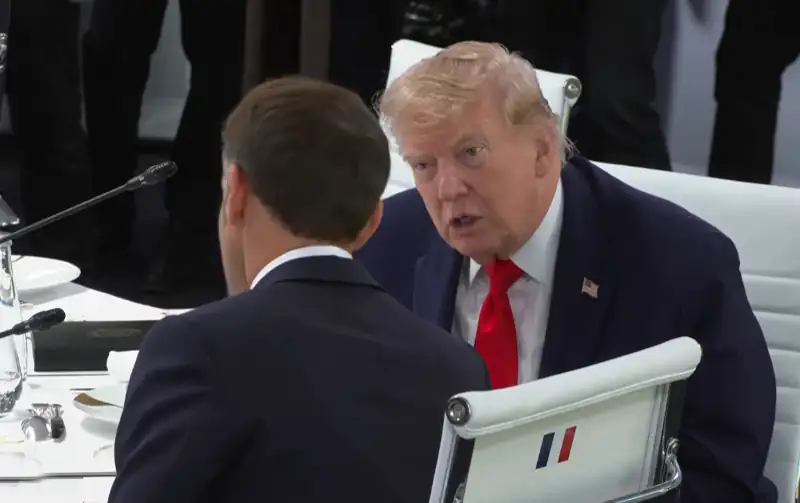
The G7 Summit took place from June 15 to 17, 2026, in Evian-les-Bains.
The remarks made by Donald Trump on Benjamin Netanyahu during the G7 Summit of 2026 at France became one of the most discussed moments of the international gathering, revealing a rare combination of praise, criticism, and strategic warnings concerning Israel, Lebanon, Syria, Hezbollah, and Iran. Speaking to reporters on the sidelines of the summit held in 16th June 2026, Trump defended the possibility of a broader regional agreement while simultaneously expressing frustration over Israel’s military conduct in Lebanon and its long-running confrontation with Hezbollah.
When asked whether a wider agreement could survive despite Israel’s actions, Trump replied that it could. He characterized the confrontation with Hezbollah as a “minor war” compared with what he described as the “big one,” namely Iran. “Iran’s the big one,” Trump said, adding that Hezbollah remained “that little pin prick out there that constantly rears its head.” The remarks reflected Trump’s longstanding view that Iran remains the central strategic challenge in the Middle East, a position he repeatedly advanced during both his first presidency from 2017 to 2021 and his subsequent political career.
Trump also made striking comments regarding Syria’s political developments. He claimed that he had been “very responsible for Syria” and asserted that the country’s current leadership had been supported by him alongside Turkish President Recep Tayyip Erdogan and other regional actors. The statement immediately attracted attention because it suggested a level of personal involvement in Syrian politics that has been widely debated by analysts and diplomats. Nevertheless, Trump praised Syria’s leadership, saying the country had been pulled together “amazingly quickly” and describing its leader as highly capable, despite acknowledging that he was “not a Boy Scout.”
The American president went further by arguing that Syria could play a more active role in countering Hezbollah. According to Trump, Israel had been fighting Hezbollah for too long, with excessive civilian casualties and extensive destruction. He criticized the use of overwhelming military force, remarking that “you don’t have to knock down an apartment house every time you’re looking for somebody because there are a lot of people in those apartment houses.” The comment represented one of Trump’s strongest public criticisms of Israeli military tactics in Lebanon during the 2026 crisis.
Trump disclosed that he had suggested Israel allow Syria to confront Hezbollah directly. “I think they do a better job of doing it,” he said. The statement marked a notable departure from traditional American rhetoric, which has generally treated Syria’s political future separately from Israel’s security calculations. Trump’s remarks implied that regional powers, rather than Israel alone, could assume greater responsibility for containing Hezbollah’s military and political influence.
He also referred to an incident in Beirut, the capital of Lebanon, saying he was unhappy that an attack had taken place shortly before an agreement was expected to be finalized. Trump stressed that the attack had occurred in Beirut itself and not in southern Lebanon, a distinction he emphasized repeatedly. “I did not like that. I let them know that I didn’t like it. Not at all,” he said, suggesting that he had communicated his displeasure directly to the relevant parties.
Despite these criticisms, Trump maintained that Syria had performed effectively in protecting American interests. He praised the Syrian leadership for carrying out requests he had made and argued that if Israel could not neutralize Hezbollah without causing extensive civilian casualties, Syria would be capable of doing so. “If Israel can’t do the job without killing everyone else, he’ll do the job. Syria will do the job,” Trump declared.
The discussion then shifted to his relationship with Israeli Prime Minister Benjamin Netanyahu, often referred to by his nickname, “Bibi” or “BB.” Asked directly whether he was frustrated with Netanyahu, Trump answered, “No. We had a great relationship.” Nevertheless, he acknowledged disagreements over specific military actions. Trump said he was dissatisfied with what he described as an Israeli attack launched after a relatively minor drone incident. Referring to the strike, he stated that it had been “too much” and characterized it as “vicious.”
These remarks stood out because Trump has long portrayed himself as one of Israel’s strongest supporters. During his first administration, he recognized Jerusalem as Israel’s capital in December 2017, moved the American embassy from Tel Aviv to Jerusalem in May 2018, recognized Israeli sovereignty over the Golan Heights in March 2019, and brokered the Abraham Accords in 2020, normalizing relations between Israel and several Arab states. Trump referred to this history while defending his record.
“Without us, without the United States, there would be no Israel,” Trump said. He went further, adding, “Without me, there would be no Israel because no other president was willing to do what I did.” The statement echoed his longstanding argument that his policies fundamentally strengthened Israel’s diplomatic and strategic position in the Middle East.
At the same time, Trump urged Netanyahu to act more responsibly regarding Lebanon. He lamented Lebanon’s decline, recalling that it had once been regarded as one of the intellectual and cultural centers of the Arab world. “Lebanon used to be a great country. It was a country where you had professors, doctors, lawyers. The great intellect was in Lebanon,” he said. Trump contrasted that historical image with the country’s present difficulties, arguing that Lebanon had suffered greatly from regional conflicts and political instability.
Trump added that Hezbollah remained a major obstacle to Lebanon’s recovery, but he also criticized Israel’s strategy against the organization. He said Israel should have been able to conclude the conflict more quickly and warned that prolonged warfare was damaging broader diplomatic efforts. “It just goes on forever,” he remarked, adding that the continuing conflict cast “a negative light on the big deal,” referring to negotiations involving Iran.
Despite his criticism, Trump closed his remarks by reaffirming his close ties with Netanyahu. He described their relationship as “unbelievable” and reiterated his belief that Israel’s security had been strengthened by his involvement over many years. The comments illustrated the complex nature of Trump’s approach to Middle Eastern affairs in 2026: unwavering support for Israel’s existence and security, combined with unusually public criticism of Israeli military operations and an emphasis on regional diplomacy involving Syria, Lebanon, and Iran.
The exchange at the G7 Summit underscored how the geopolitics of the Middle East remained at the center of global diplomacy in June 2026, with Trump’s comments once again placing him at the forefront of international debate.
Transcript
The G7 Summit took place from June 15 to 17, 2026, in Evian-les-Bains.
Question: Can this agreement still hold if Israel occasionally takes independent military action?
Trump: Yes, I believe it can. In my view, that’s the smaller conflict. The larger issue is Iran. But there is another persistent challenge in the region, and that’s Hezbollah, which keeps resurfacing.
I’ve been deeply involved in matters concerning Syria. The current leadership there, along with support from President Erdogan and others, has managed to stabilize the country to a surprising extent.
He’s not perfect, and nobody would describe him as a saint, but he’s done a remarkable job bringing the country together under difficult circumstances.
He’s also taken a firm stance against Hezbollah. Israel has been engaged in fighting Hezbollah for too long, and far too many civilians have suffered in the process.
I don’t think entire apartment buildings need to be destroyed to target a few individuals. There are innocent families living in those buildings, and that’s something that cannot be ignored.
I’ve told Israel that Syria may be in a better position to deal with Hezbollah directly. Frankly, I think they could handle the situation more effectively.
There was one development I didn’t like at all. Just hours before an agreement was expected to be signed, there was an attack in Lebanon.
It happened in Beirut itself, not somewhere far away in the south. I made it very clear that I was unhappy about that incident.
Still, I think Syria has recovered much faster than many expected. Its leadership has proven capable and has cooperated on issues important to me.
They’ve delivered on commitments and protected the interests I asked them to protect.
If Israel cannot eliminate the threat without causing widespread casualties, then Syria may be the one to take on that responsibility.
Question: Are you frustrated with Netanyahu?
Trump: No, not at all. We’ve had a very strong relationship over the years.
We’re discussing some remaining issues, but I didn’t agree with one particular military response. There was a relatively minor drone incident, and I thought the retaliation went too far.
I saw where the strike landed. The scale of it was excessive. Even close allies can sometimes overreact.
That said, our relationship has remained highly effective.
Without the United States, Israel would be in a far weaker position.
And I believe that my administration did things for Israel that previous presidents were unwilling to do.
I’ve always had a good relationship with Bibi, but I think Israel must act with greater responsibility when it comes to Lebanon.
Lebanon was once among the most vibrant and educated countries in the Middle East. It had renowned universities, professionals, and a thriving intellectual culture.
Today, unfortunately, it has endured years of crisis and instability.
In many ways, Lebanon has suffered immensely. It struggles to defend itself and continues to face the challenge posed by Hezbollah.
I’m not satisfied with how Israel has handled the conflict in Lebanon or its confrontation with Hezbollah.
The conflict should have been resolved more quickly. Instead, it has dragged on and created additional complications.
And when these battles continue indefinitely, they distract from what I see as the larger issue—the negotiations and broader strategy concerning Iran.
So when people ask me about Bibi, I say this: we’ve had an extraordinary relationship over the years.
I’ve always believed my involvement played an important role in strengthening Israel’s position and security.
[End of remarks]
Sarvarthapedia Conceptual network
Trump on Netanyahu at G7 (2026)
This topic lies at the intersection of international diplomacy, Middle Eastern geopolitics, military strategy, and United States foreign policy. It connects the evolving relationship between Donald Trump and Benjamin Netanyahu with wider regional issues involving Lebanon, Syria, Hezbollah, and Iran.
Primary Political Figures
Donald Trump
- United States foreign policy in the Middle East
- Trump presidency (2017–2021)
- Trump foreign policy doctrine
- US-Israel strategic alliance
- Abraham Accords
- Jerusalem recognition policy
- Golan Heights recognition
- Trump and Iran policy
- Intelligence, Espionage, and Counterintelligence
Benjamin Netanyahu
- Premiership of Benjamin Netanyahu
- Israel-Lebanon conflict
- Israeli security doctrine
- Netanyahu and Trump relations
- Israeli military operations
- Israeli foreign policy
Recep Tayyip Erdogan
- Turkey and Syria relations
- Turkish foreign policy
- Turkey in the Syrian conflict
- Turkey-Israel relations
- Regional diplomacy in the Middle East
International Summit Cluster
G7 Summit (2026)
Related Topics:
- Group of Seven (G7)
- Kananaskis Summit
- International diplomacy
- Global security issues
- Middle East diplomacy at G7
- US foreign relations
- Canada and international summits
Israel Cluster
Israel
Connected Topics:
- Israel–United States relations
- Israel–Lebanon conflict
- Israel–Iran tensions
- Israeli defense strategy
- Israeli military doctrine
- Israeli national security
- Jerusalem as Israel’s capital
- Golan Heights
Israel–Lebanon Conflict
Related Articles:
- Hezbollah–Israel conflict
- Cross-border military operations
- Beirut military strikes
- Southern Lebanon conflict
- Civilian casualties in warfare
- Rules of engagement
Lebanon Cluster
Lebanon
Related Topics:
- Contemporary World History
- History of modern Lebanon
- Lebanese Civil War
- Beirut
- Lebanese political crisis
- Economic crisis in Lebanon
- Sectarian politics in Lebanon
- Lebanon and regional geopolitics
Beirut
Connected Articles:
- Capital of Lebanon
- Beirut port explosion
- Beirut in regional conflicts
- Urban warfare
- Civilian infrastructure during war
Hezbollah Cluster
Hezbollah
Major Connections:
- Hezbollah and Iran
- Hezbollah and Lebanon
- Hezbollah–Israel conflict
- Shiite political movements
- Armed non-state actors
- Middle Eastern militias
- Security issues in Lebanon
Hezbollah–Israel Conflict
Related Subjects:
- Rocket warfare
- Border conflicts
- Military deterrence
- Regional security
- Lebanon border disputes
- Israeli military campaigns
Syria Cluster
Syria
Related Topics:
- Syrian Civil War
- Syrian political transition
- Syria after civil war
- Syria and Hezbollah
- Syria and Israel
- Syria and Turkey
- Reconstruction of Syria
Syrian Political Leadership
Connected Articles:
- Post-war Syria
- Syrian governance
- Regional alliances
- Syria–Iran relations
- Syria–Turkey diplomacy
Iran Cluster
Iran
Related Topics:
- Iran nuclear program
- Iran–United States relations
- Iran–Israel conflict
- Iranian regional influence
- Middle East security
- Sanctions on Iran
- Nuclear negotiations
- Non-Proliferation of Nuclear Weapons
Iran and Regional Geopolitics
Associated Concepts:
- Proxy conflicts
- Regional alliances
- Strategic deterrence
- Gulf security
- Nuclear diplomacy
- International sanctions
United States Foreign Policy Cluster
United States and the Middle East
Related Articles:
- American diplomacy in the Middle East
- Strategic alliances
- Military aid to Israel
- Counterterrorism policy
- Peace negotiations
- Regional power balance
- Trump’s 2026 Cuba Sanctions Order
US–Israel Relations
Important Connections:
- Military cooperation
- Strategic partnership
- Diplomatic recognition of Jerusalem
- Abraham Accords
- Security agreements
- Congressional support for Israel
Diplomatic Concepts
Regional Diplomacy
See Also:
- Conflict resolution
- Peace agreements
- Ceasefire negotiations
- International mediation
- Strategic partnerships
- Geopolitical alliances
Military Strategy
Related Concepts:
- Counterinsurgency
- Urban warfare
- Asymmetric warfare
- Civilian protection in conflict
- Military escalation
- Rules of armed conflict
Historical Context
Middle East Geopolitics
Cross References:
- Arab–Israeli conflict
- Modern history of Israel
- Modern history of Lebanon
- Syrian Civil War
- Iranian foreign policy
- Gulf politics
- Regional power struggles
- Post-Cold War Middle East
- Iran-US War on June 2, 2026
See Also
- Trump on Middle East Policy
- Benjamin Netanyahu
- G7 Summit 2026
- Israel–United States Relations
- Israel–Lebanon Conflict
- Hezbollah
- Syria
- Iran
- Abraham Accords
- Middle East Geopolitics
- International Diplomacy
- Regional Security in West Asia