U.S. Defense Preparedness, Space Command, and Missile Systems in 2026
The defence preparedness of the United States in April 2026 reflects the culmination of more than two centuries of military evolution, technological innovation, geopolitical competition, and strategic doctrine shaped by historical experience. From the founding of the republic in 1776 in Philadelphia, through the expansionist era of the 19th century, the industrial mobilization of the World Wars, the ideological confrontation of the Cold War, and the asymmetric conflicts of the post-9/11 era, American defence policy has consistently adapted to emerging threats while seeking to maintain global strategic superiority. By April 2026, this preparedness is characterized by a complex integration of conventional forces, nuclear deterrence, cyber capabilities, and space-based systems, alongside a revitalized industrial base operating under what policymakers increasingly describe as a “wartime footing.”
The modern structure of American defence finds its institutional roots in the National Security Act of 1947, signed in Washington, D.C., which created the Department of Defense and established the unified command system. This act reorganized military leadership following lessons learned during World War II (1939–1945), particularly after the attack on Pearl Harbor on December 7, 1941, in Hawaii, which exposed critical vulnerabilities in coordination and preparedness. Over subsequent decades, the U.S. military developed a doctrine of deterrence, especially during the Cold War (1947–1991), when nuclear parity with the Soviet Union necessitated the creation of the nuclear triad, consisting of land-based intercontinental ballistic missiles (ICBMs), submarine-launched ballistic missiles (SLBMs), and strategic bombers.
By April 2026, this triad remains central to U.S. defence policy, though undergoing extensive modernization. Programs such as the Sentinel ICBM, replacing the aging Minuteman III system first deployed in 1970, represent a continuation of strategic modernization efforts initiated in the early 21st century. Similarly, the development of the Columbia-class submarine, scheduled to replace the Ohio-class fleet commissioned in the 1980s, reflects the enduring importance of second-strike capability. The B-21 Raider bomber, unveiled in the early 2020s, further strengthens the air leg of the triad, ensuring survivability and penetration capability against advanced air defence systems.
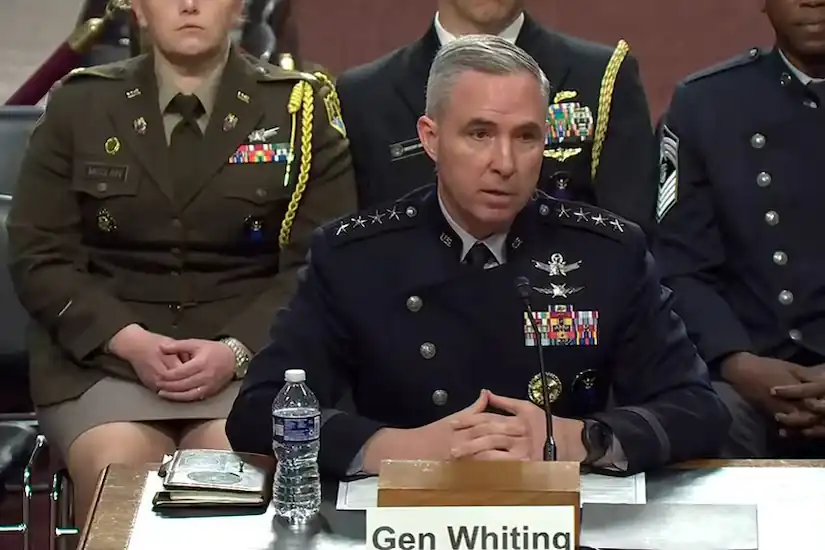
A defining feature of U.S. defence preparedness in 2026 is the emphasis on multi-domain operations, integrating land, sea, air, cyber, and space. The establishment of the United States Space Force in December 2019, headquartered initially in Washington, D.C., marked a historic milestone comparable to the creation of the Air Force in 1947. By 2026, space has become a contested domain, with military planners emphasizing the protection of satellite networks critical for GPS navigation, missile warning, and secure communications. Statements made before congressional committees in March 2026 highlight concerns over adversarial capabilities, including anti-satellite weapons and potential orbital nuclear systems, underscoring the vulnerability of space infrastructure.
Parallel to these strategic concerns is the rapid development of hypersonic weapons, defined as systems capable of traveling at speeds exceeding Mach 5. On March 26, 2026, at Cape Canaveral Space Force Station, Florida, a joint Army–Navy effort successfully launched a common hypersonic missile, demonstrating a significant technological milestone. This test, publicly reported on April 2, 2026, reflects years of research dating back to early experiments in the 1960s under programs such as the X-15. The 2026 launch signifies not only technological advancement but also a shift in procurement philosophy, emphasizing joint-service collaboration to reduce costs and accelerate deployment. The missile’s capability to strike time-sensitive, heavily defended, and high-value targets represents a transformative development in modern warfare, particularly in scenarios involving near-peer adversaries.
The industrial dimension of defence preparedness has also undergone significant transformation. In April 2026, the Department of War announced a landmark agreement with major defence contractors to triple the production capacity of PAC-3 missile seekers, a critical component of the Patriot Advanced Capability-3 Missile Segment Enhancement system. This agreement, building on earlier contracts with prime contractors, reflects a strategic shift toward strengthening the entire supply chain, rather than focusing solely on final assembly. The emphasis on “Arsenal of Freedom”, a term historically associated with President Franklin D. Roosevelt’s 1940 speech in Detroit, has been revived to describe efforts to expand industrial capacity in response to contemporary threats.
This industrial expansion is further evidenced by agreements to quadruple production of THAAD interceptor seekers and accelerate the manufacturing of the Precision Strike Missile (PrSM). These initiatives are rooted in lessons learned from past conflicts, particularly the logistical challenges faced during the Iraq War (2003–2011) and the War in Afghanistan (2001–2021), where supply chain vulnerabilities and production delays affected operational readiness. By 2026, policymakers have sought to mitigate such risks by providing long-term demand signals to industry, enabling investments in infrastructure, workforce development, and advanced manufacturing technologies.
The geopolitical context of April 2026 is heavily influenced by tensions in the Middle East, particularly involving Iran. The ongoing Iran War, referenced in connection with operations such as Operation Epic Fury, reflects a continuation of decades-long rivalry between the United States and Iran, dating back to the Iranian Revolution of 1979 in Tehran, which resulted in the overthrow of Shah Mohammad Reza Pahlavi and the establishment of the Islamic Republic under Ayatollah Ruhollah Khomeini. Subsequent events, including the Iran–Iraq War (1980–1988), the U.S. invasion of Iraq in 2003, and repeated confrontations in the Strait of Hormuz, have shaped the strategic environment.
In March 2026, diplomatic and military coordination with Gulf Cooperation Council (GCC) partners highlighted the importance of regional alliances in countering Iranian missile and drone threats. The defence of maritime routes, particularly the Strait of Hormuz—a chokepoint through which approximately 20% of global oil supply passes—remains a critical priority. Historical incidents, such as the Tanker War phase of the Iran–Iraq War in the 1980s, serve as precedents for contemporary concerns about freedom of navigation and energy security.
The Iranian threat has also driven advancements in missile defence systems. The deployment and enhancement of Patriot, THAAD, and Aegis systems reflect a layered defence strategy designed to intercept ballistic and cruise missiles at various stages of flight. These systems trace their origins to the Strategic Defense Initiative (SDI) proposed by President Ronald Reagan in 1983, though modern implementations are far more technologically sophisticated. By 2026, integration with space-based sensors and artificial intelligence enables faster detection and response times, enhancing overall effectiveness.
Another critical aspect of U.S. defence preparedness is the human element, particularly the role of highly trained personnel. At installations such as Vandenberg Space Force Base in California, missile maintenance teams play a crucial role in ensuring the reliability of strategic systems. These activities are part of a broader tradition of technical excellence that dates back to the Manhattan Project (1942–1945) in Los Alamos, New Mexico, where scientists and engineers developed the first nuclear weapons. In 2026, maintainers and operators continue this legacy, working on complex systems that require precision, discipline, and adherence to strict protocols.
The importance of testing and validation is underscored by regular missile launches conducted at Vandenberg and other facilities, including F.E. Warren Air Force Base in Wyoming, Minot Air Force Base in North Dakota, and Malmstrom Air Force Base in Montana. These tests serve both operational and psychological purposes, demonstrating capability to adversaries while reinforcing confidence among allies. The principle of deterrence, articulated during the Cold War by strategists such as Thomas Schelling, remains central: the credibility of a threat depends not only on capability but also on the perception of readiness.
Technological innovation continues to play a pivotal role in shaping defence preparedness. The successful flight of the Affordable Rapid Missile Demonstrator (ARMD) in March 2026, powered by a liquid rocket engine, represents a significant step toward cost-effective and scalable missile systems. This development reflects a broader trend toward rapid prototyping and agile acquisition, contrasting with the lengthy development cycles characteristic of Cold War-era programs. The ability to move from contract to flight-ready systems in a matter of months rather than years indicates a fundamental shift in how the United States approaches military innovation.
Cyber warfare and the electromagnetic spectrum have also emerged as critical domains. Since the Stuxnet cyber operation in 2010, widely attributed to U.S. and Israeli collaboration, the importance of cyber capabilities has grown exponentially. By 2026, the integration of cyber defence into all aspects of military planning is essential, with dedicated units responsible for protecting networks, disrupting adversary systems, and ensuring the integrity of command and control structures.
The strategic environment is further complicated by the rise of China as a near-peer competitor. Since its economic reforms in 1978 under Deng Xiaoping, China has expanded its military capabilities, culminating in significant investments in naval power, missile technology, and space systems. By 2026, China operates over 1,300 active satellites, a dramatic increase since 2015, enabling advanced intelligence, surveillance, and reconnaissance capabilities. This expansion poses challenges to U.S. dominance in the Indo-Pacific region, particularly in areas such as the South China Sea, where territorial disputes have led to increased militarization.
Simultaneously, Russia continues to pose a strategic threat, particularly in the nuclear domain. The expiration of the New Strategic Arms Reduction Treaty (New START) in February 2026 marks a significant turning point in arms control, removing limitations on the number of deployed strategic warheads. This development raises concerns about a potential arms race reminiscent of the Cold War, when treaties such as SALT I (1972) and INF (1987) sought to limit nuclear proliferation.
In response to these challenges, U.S. defence policy emphasizes deterrence through strength, a concept articulated in various forms throughout American history, from President George Washington’s Farewell Address in 1796 to modern strategic documents. The integration of advanced technologies, robust industrial capacity, and global alliances is intended to prevent conflict by demonstrating overwhelming capability.
The concept of the “wartime footing” adopted in 2026 reflects a recognition that the international system is entering a period of heightened instability. Unlike the post-Cold War era, characterized by relative unipolarity, the current environment involves multiple competing powers, each with advanced technological capabilities. This complexity requires a flexible and adaptive approach to defence, capable of addressing simultaneous threats across different regions and domains.
The role of alliances remains central to U.S. strategy. Organizations such as NATO, established in 1949 in Washington, D.C., continue to provide a framework for collective defence, while partnerships in the Indo-Pacific, including those with Japan, South Korea, and Australia, enhance regional stability. In the Middle East, cooperation with GCC countries is essential for countering Iranian influence and ensuring the security of critical infrastructure.
By April 2026, the United States’ defence preparedness represents a synthesis of historical experience and contemporary innovation. The successful testing of hypersonic missiles, expansion of missile defence production, modernization of the nuclear triad, and integration of space and cyber capabilities collectively demonstrate a comprehensive approach to national security. These efforts are informed by lessons from past conflicts, from the trenches of World War I (1914–1918) to the battlefields of the Global War on Terror, and are shaped by the evolving nature of warfare in the 21st century.
The 2026 National Defense Strategy
The 2026 National Defense Strategy marks a reorientation toward hard power, strategic realism, and the restoration of military primacy as the central pillar of national security.
The United States, from its founding in 1776 through its emergence as a global power in the 20th century, has repeatedly reshaped its defense posture in response to evolving threats. The transformation following the Second World War, particularly after 1945, established the United States as the leading architect of global security arrangements, backed by unmatched industrial strength and nuclear capability. However, the post-Cold War era, beginning in 1991, saw a gradual erosion of focus, as strategic clarity gave way to diffuse missions and expanding commitments. By January 2025, the nation faced a convergence of threats across multiple theaters, raising the risk of simultaneous conflicts and exposing vulnerabilities in both readiness and industrial capacity.
Under the framework outlined in the 2026 strategy, the Department of War emphasizes a return to fundamentals: defending the homeland, deterring major adversaries, strengthening alliances through burden-sharing, and revitalizing the defense industrial base. This approach is grounded in the principle of peace through strength, a doctrine historically rooted in deterrence theory developed during the Cold War, but adapted to a multipolar world defined by rapid technological change and regional instability.
Central to this renewed posture is the modernization of the nuclear triad. Since its conceptual development in the late 1950s, the triad has served as the backbone of strategic deterrence. By 2026, modernization programs are underway across all three components, including next-generation intercontinental ballistic missiles, advanced strategic bombers, and nuclear-powered ballistic missile submarines. These systems are designed to ensure survivability, flexibility, and credibility in the face of emerging threats from peer competitors. The expiration of longstanding arms control agreements has further underscored the necessity of maintaining a robust and adaptable nuclear force capable of deterring multiple adversaries simultaneously.
Equally significant is the expansion of capabilities in emerging domains. Space, once considered a sanctuary, has become a contested operational environment. Military reliance on satellites for communication, navigation, and intelligence has driven investments in resilience, redundancy, and active defense. By 2026, the integration of space operations into joint military planning reflects a recognition that any future conflict will extend beyond traditional battlefields. Cyber capabilities similarly play a critical role, with defensive and offensive operations integrated into all levels of command, ensuring that adversaries cannot exploit vulnerabilities in digital infrastructure.
The technological frontier is further defined by advancements in hypersonic weapons. On March 26, 2026, a joint Army and Navy test conducted at Cape Canaveral Space Force Station demonstrated the successful launch of a common hypersonic missile. This system, capable of exceeding speeds of Mach 5, represents a significant leap in strike capability, enabling rapid engagement of high-value targets in heavily defended environments. The collaboration between services reflects a broader shift toward joint development and procurement, aimed at accelerating timelines and reducing costs. Such capabilities are essential in maintaining a competitive edge against adversaries who have invested heavily in similar technologies.
The industrial base supporting these advancements has undergone a substantial transformation. Agreements announced in April 2026 to expand production of critical missile components, including PAC-3 and THAAD systems, highlight the emphasis on scalability and resilience. These initiatives draw on historical precedents from the Second World War, when industrial mobilization played a remarkable role in sustaining military operations. The modern approach, however, incorporates advanced manufacturing techniques, digital supply chain management, and public-private partnerships to ensure rapid production and deployment. The concept of the “Arsenal of Freedom,” revived in contemporary discourse, underscores the importance of industrial capacity as a strategic asset.
Geopolitically, the security environment of 2026 is defined by the interplay of major powers and regional conflicts. The Indo-Pacific region, encompassing the world’s largest and fastest-growing economies, remains a focal point of strategic competition. The rise of China as a military and economic power has necessitated a recalibration of U.S. posture, emphasizing deterrence through strength rather than confrontation. The establishment of defensive positions along key geographic lines, combined with enhanced cooperation with regional allies, aims to prevent any single power from achieving dominance.
In Europe, the ongoing conflict involving Russia has reinforced the importance of collective defense arrangements. While European allies possess significant economic and military potential, the strategy emphasizes increased responsibility on their part, supported by targeted U.S. contributions. This shift reflects a broader trend toward burden-sharing, ensuring that alliances remain sustainable and effective in addressing regional threats.
The Middle East continues to present complex challenges, particularly in relation to Iran. The historical roots of U.S.-Iran tensions, dating back to the late 20th century, have evolved into a multifaceted confrontation involving conventional forces, proxy networks, and missile capabilities. By 2026, operations targeting Iranian infrastructure and allied groups have significantly degraded their capabilities, yet the potential for resurgence remains. The strategy emphasizes both deterrence and partnership, working with regional allies to maintain stability and counter threats.
The Korean Peninsula represents another enduring flashpoint. North Korea’s continued development of nuclear and missile technologies poses a direct threat to regional and global security. The strategy acknowledges the need for sustained vigilance, supported by strong alliances and advanced defensive systems capable of intercepting and neutralizing potential attacks.
A defining challenge of the contemporary security environment is the possibility of simultaneous conflicts across multiple theaters. This “simultaneity problem” requires a level of preparedness that exceeds traditional planning assumptions. The strategy addresses this by emphasizing flexibility, rapid deployment, and the integration of allied capabilities. By encouraging partners to increase defense spending and assume greater responsibility, the United States seeks to create a distributed network of security that can respond effectively to concurrent threats.
The human dimension of military readiness remains a critical component. Training, discipline, and the cultivation of a warrior ethos are emphasized as essential qualities for maintaining effectiveness. From missile maintenance crews at strategic bases to operators in advanced command centers, the performance of personnel directly impacts the reliability and credibility of military systems. Historical experience has repeatedly demonstrated that technological superiority alone is insufficient without the expertise and dedication of those who operate and maintain these systems.
In parallel, the strategy highlights the importance of rapid innovation. Programs such as the Affordable Rapid Missile Demonstrator, tested in March 2026, illustrate a shift toward agile development processes. By reducing the time required to move from concept to deployment, the United States aims to outpace adversaries and maintain technological dominance. This approach contrasts with earlier models characterized by lengthy development cycles and high costs, reflecting a broader transformation in defense acquisition.
Core Concept: America’s Defence Preparedness (April 2026)
Overview
A multidimensional system integrating military power, industrial capacity, strategic doctrine, and geopolitical positioning. It connects historical evolution, technological advancement, and contemporary security challenges into a unified framework.
Cluster: Strategic Doctrine and Policy Framework
National Defense Strategy (2026)
Defines priorities: homeland defense, deterrence, alliance restructuring, and industrial revitalization.
Peace Through Strength
Doctrine emphasizing deterrence via overwhelming capability rather than reactive engagement.
America First Strategy
Focuses on prioritizing national interests over global interventionism.
See also
Cold War Deterrence Doctrine
Monroe Doctrine
Post–Cold War Military Policy
Strategic Realism
Nuclear Deterrence and Strategic Forces
Nuclear Triad
Land-based ICBMs, submarine-launched ballistic missiles, and strategic bombers.
Sentinel ICBM Program
Replacement for Minuteman III, ensuring long-term land-based deterrence.
Columbia-Class Submarines
Next-generation sea-based nuclear deterrent.
B-21 Raider Bomber
Advanced stealth bomber ensuring penetration capability.
See also
Mutually Assured Destruction
Arms Control Treaties
Strategic Command
Nuclear Modernization
Cluster: Hypersonic and Advanced Weapons
Hypersonic Missile Program (March 26, 2026)
Joint Army–Navy test demonstrating Mach 5+ strike capability.
Precision Strike Missile (PrSM)
Long-range deep strike system for modern battlefields.
Affordable Rapid Missile Demonstrator (ARMD)
Rapid development model for scalable missile systems.
See also
Next-Generation Warfare
Missile Technology Evolution
Air-Land Battle Doctrine
Advanced Strike Systems
Cluster: Missile Defense Systems
Patriot PAC-3 MSE
Precision interceptor for ballistic missile defense.
THAAD System
High-altitude missile interception system.
Layered Missile Defense
Integration of multiple systems across altitude and range.
See also
Strategic Defense Initiative
Ballistic Missile Defense
Integrated Air and Missile Defense
Defense Industrial Supply Chain
Cluster: Defense Industrial Base
Arsenal of Freedom
Revitalization of industrial capacity for mass production of weapons.
Acquisition Transformation Strategy
Focus on speed, scalability, and supplier integration.
Public-Private Defense Partnerships
Collaboration between government and contractors.
See also
World War II Industrial Mobilization
Military-Industrial Complex
Supply Chain Resilience
Defense Economics
Cluster: Space and Cyber Domains
Space Force and Space Command
Military operations in space, including satellite protection.
Satellite Warfare Threats
Anti-satellite weapons and orbital risks.
Cyber Defense Systems
Protection of digital infrastructure and command networks.
See also
Information Warfare
Electronic Warfare
Global Positioning Systems
Cyber Deterrence
Cluster: Regional Security – Indo-Pacific
China Military Expansion
Rapid growth in naval, missile, and space capabilities.
First Island Chain Strategy
Defensive positioning to prevent regional dominance.
Indo-Pacific Balance of Power
Maintaining open access to global trade routes.
See also
South China Sea Disputes
Great Power Competition
Maritime Security Strategy
Alliance Systems in Asia
Cluster: Regional Security – Europe and Russia
Russia-Ukraine Conflict
Ongoing war shaping NATO defense posture.
NATO Burden-Sharing
Increased defense spending commitments by allies.
European Strategic Autonomy
Shift toward self-reliant regional defense.
See also
Cold War NATO Formation
Eastern European Security
Collective Defense Doctrine
Post-Soviet Military Power
Cluster: Regional Security – Middle East and Iran War
Iran War and Operations
Includes operations such as Midnight Hammer, Absolute Resolve, and Epic Fury.
Iranian Missile and Proxy Networks
Threats from regional allies and militant groups.
Gulf Cooperation Council Partnerships
Regional cooperation for missile defense and security.
Strait of Hormuz Security
Critical maritime chokepoint for global energy supply.
See also
Iranian Revolution (1979)
Middle East Power Balance
Proxy Warfare
Energy Security
Cluster: Regional Security – Korean Peninsula
North Korean Nuclear Program
Expanding nuclear and missile capabilities.
U.S.–South Korea Alliance
Joint deterrence and defense framework.
Missile Threats to Homeland
Long-range strike capability targeting the United States.
See also
Korean War Legacy
Nuclear Proliferation
East Asian Security Dynamics
Ballistic Missile Development
Cluster: Homeland Defense and Western Hemisphere
Border Security and Counter-Narcotics
Defense against transnational threats and illegal trafficking.
Monroe Doctrine Revival
Reassertion of influence in the Western Hemisphere.
Strategic Locations
Panama Canal, Greenland, Gulf of America.
Counter-Terrorism Operations
Targeting threats with intent to strike the homeland.
See also
Homeland Security Policy
Counterterrorism Strategy
Western Hemisphere Geopolitics
Maritime Security
Military Personnel and Operational Readiness
Missile Maintenance Operations
Ensuring reliability of nuclear and conventional systems.
Training and Warrior Ethos
Restoration of discipline and combat readiness culture.
Joint Force Integration
Coordination across Army, Navy, Air Force, and Space Force.
See also
Military Professionalism
Operational Readiness
Command and Control Systems
Defense Training Doctrine
Cluster: Simultaneity and Multi-Theater Warfare
Simultaneity Problem
Risk of concurrent conflicts across multiple regions.
Multi-Domain Operations
Integration of land, sea, air, cyber, and space.
Rapid Deployment Capability
Ability to respond quickly to emerging threats.
See also
World War II Global Strategy
Cold War Containment
Joint Operations Doctrine
Expeditionary Warfare
Cluster: Historical Foundations
World War I and II Military Lessons
Industrial mobilization and large-scale warfare.
Cold War Strategic Balance
Nuclear deterrence and ideological competition.
Post-9/11 Conflicts
Counterinsurgency and asymmetric warfare.
See also
Military History of the United States
Evolution of Warfare
Defense Policy Timeline
Strategic Thought Leaders
Interlinking Concepts
Deterrence connects to
Nuclear Triad
Hypersonic Weapons
Missile Defense
Alliance Systems
Industrial Base connects to
Missile Production
Defense Technology
Global Supply Chains
Regional Conflicts connect to
Iran War
Russia-Ukraine War
China-U.S. Rivalry
Emerging Technology connects to
Space Warfare
Cyber Defense
Hypersonic Systems
Knowledge Web Summary
The conceptual network demonstrates that America’s defence preparedness in April 2026 is not a single system but an interconnected web. Strategic doctrine shapes military development; industrial capacity enables technological advancement; regional conflicts drive operational priorities; and historical experience informs decision-making. Each cluster reinforces others, creating a dynamic, adaptive structure designed to maintain global stability through strength, deterrence, and readiness.