Skip to content

ADVOCATETANMOY LAW LIBRARY

Research & Library Database

Primary Menu
  • News
  • Opinion
  • Countries198
    • National Constitutions: History, Purpose, and Key Aspects
  • Judgment
  • Book
  • Legal Brief
    • Legal Eagal
  • LearnToday
  • HLJ
    • Supreme Court Case Notes
    • Daily Digest
  • Sarvarthapedia
    • Sarvarthapedia (Core Areas)
    • Systemic-and-systematic
    • Volume One
06/04/2026
  • Asia

WHO published “Gujarat Declaration” on Traditional Medicine Global Summit 2023

The action points of two day WHO Traditional Medicine Global Summit 2023 held at Gandhinagar, Gujarat are based on the evidence, discussions and outcomes presented at the Summit. Deliberation were done on varied topics like Health and well-being of people and the planet, research and evidence, universal health coverage, primary health care and health systems, Data & routine information systems, digital health frontiers, biodiversity and sustainability, human rights, equity and ethics.
advtanmoy 06/09/2023 4 minutes read

© Advocatetanmoy Law Library

  • Share on WhatsApp (Opens in new window) WhatsApp
  • Share on X (Opens in new window) X
  • Share on Facebook (Opens in new window) Facebook
  • Share on Telegram (Opens in new window) Telegram
WHO

Home » Law Library Updates » Sarvarthapedia » National » Asia » WHO published “Gujarat Declaration” on Traditional Medicine Global Summit 2023

India as host of WHO-GCTM will scale up WHO’s capacities to support member states and take forward the summit action agenda

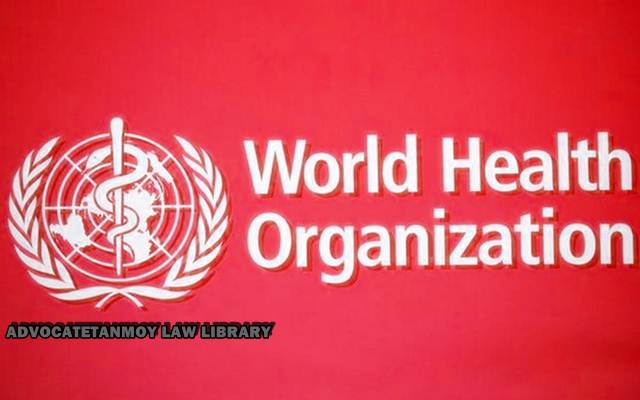
World Health Organization (WHO) has released the outcome document of first WHO Traditional Medicine Global Summit 2023 in form of “Gujarat Declaration”. The declaration reaffirmed global commitments towards indigenous knowledges, biodiversity and traditional, complementary and integrative medicine. WHO underlined that the application of rigorous scientific methods is needed to better understand, assess and, where appropriate, apply more holistic, context-specific, complex and personalized approaches for health and well-being for all.

It reiterates that India as host of the WHO Global Traditional Medicine Centre at Jamnagar, Gujarat has an important role in scaling up WHO’s capacities to support member states and stakeholders in taking forward the summit action agenda and other relevant priorities.

The action points of two day WHO Traditional Medicine Global Summit 2023 held at Gandhinagar, Gujarat are based on the evidence, discussions and outcomes presented at the Summit. Deliberation were done on varied topics like Health and well-being of people and the planet, research and evidence, universal health coverage, primary health care and health systems, Data & routine information systems, digital health frontiers, biodiversity and sustainability, human rights, equity and ethics.

Read Next

  • Putin and Xi Jinping Discuss Global Security and Bilateral Cooperation – Ushakov’s Commentary
  • How US – China relations transformed in the 1970s: Strategic shift that reshaped Asia
  • Why Does India Appear Confused After the US-Israel Attack on Iran?

Union minister of Ayush Shri Sarbananda Sonowal had said, “Gujarat declaration is testimony of our prime minister Shri Narendra Modi’s commitment to promote our ancient knowledge of Traditional Medicine system. Through collaborative efforts and sustainable practices, we can ensure a healthier future for generations to come.”

During the WHO traditional Medicine global Summit, Director General of the World Health Organization Dr Tedros Adhanom Ghebreyesus, had said that “Gujarat Declaration” will serve as a catalyst to harness the potential of traditional medicine through the lens of science and will focus on the integration of traditional medicines in national health systems and help unlock the power of traditional medicine.

Gujarat declaration talks about scaling up efforts to further implement evidence-based TCIM (Traditional complimentary integrative medicine) interventions and approaches in support of the goal of universal health coverage (UHC) and all health-related Sustainable Development Goals (SDGs). It states the role of multi-regional, multi-disciplinary and multi-stakeholder collaborations demonstrated at the Global Summit through the WHO GCTM that is aligned with and complementary to the work of WHO major offices, to maximize evidence based benefits of TCIM in global health.

Support the evidence-based integration in national health policies and systems based on the highest quality research. Accelerate the production, regulation, and formal utilization of scientifically proven TCIM products and practices. Advance policies that promote standardized TCIM documentation, including through expanded and accelerated use of the WHO International Classification of Diseases (ICD-11) to enable integration of evidence and data collection on TCIM in a standardized way within routine health information systems. Establish a global network of TCIM reference clinical centres that can routinely undertake standardized data collection and monitoring based on WHO ICD-11 coding of the implementation.

Read Next

  • Putin and Xi Jinping Discuss Global Security and Bilateral Cooperation – Ushakov’s Commentary
  • How US – China relations transformed in the 1970s: Strategic shift that reshaped Asia
  • Why Does India Appear Confused After the US-Israel Attack on Iran?

The highlight of summit was how to enable the appropriate development and application of digital health technologies, and artificial intelligence (AI) in particular, to advance digital health resources on TCIM for people’s health and well-being.

It mentions that actions should be promoted and taken at all levels to safeguard, restore and sustainably manage biodiversity, and to ensure the fair and equitable sharing of the benefits arising from the use of biodiversity resources, related genetic material and Indigenous knowledges. Fully recognize, respect and protect the rights of Indigenous Peoples, as provided in the UN Declaration on the Rights of Indigenous Peoples. Incorporate ethical methods and processes in TCIM research and practice.

The First global summit on Traditional Medicine was organised by the World Health Organization (WHO) and co-hosted by the Ministry of Ayush, from August 17-18, 2023, at Gandhinagar, Gujarat.
Read Next

  • Putin and Xi Jinping Discuss Global Security and Bilateral Cooperation – Ushakov’s Commentary
  • How US – China relations transformed in the 1970s: Strategic shift that reshaped Asia
  • Why Does India Appear Confused After the US-Israel Attack on Iran?


Tags: 2023 CE Ayurvedic medicine WHO

Post navigation

Previous: TRAI recommendations on “Issues related to FM Radio Broadcasting” (05/09/2023)
Next: वोल्गा से गंगा-राहुल सांकृत्यायन (1944)
Communism
Sarvarthapedia

Manifesto of the Communist Party 1848: History, Context, and Core Concepts

Arrest
Sarvarthapedia

Latin Maxims in Criminal Law: Meaning, Usage, and Courtroom Application

Abolition of Slave Trade Act 1807: Facts, Enforcement, and Historical Context

British Slavery and the Church of England: History, Theology, and the Codrington Estates

United States of America: History, Government, Economy, and Global Power

Biblical Basis for Slavery: Old and New Testament Laws, Narratives, and Interpretations

Rule of Law vs Rule by Law and Rule for Law: History, Meaning, and Global Evolution

IPS Cadre Strength 2025: State-wise Authorised Strength

Uric Acid: From 18th Century Discovery to Modern Medical Science

Christian Approaches to Interfaith Dialogue: Orthodox, Catholic, Protestant, and Pentecostal Views

Origin of Central Banking in India: From Hastings to RBI and the History of Preparatory Years (1773–1934)

Howrah District Environment Plan: Waste Management, Water Quality & Wetland Conservation

Bharatiya Nyaya Sanhita 2023: Sections (1-358), Punishments, and Legal Framework

Bengali Food Culture: History, Traditions, and Class Influences

  • Sarvarthapedia

  • Delhi Law Digest

  • Howrah Law Journal

  • Amit Arya vs Kamlesh Kumari: Doctrine of merger
  • David Vs. Kuruppampady: SLP against rejecting review by HC (2020)
  • Nazim & Ors. v. State of Uttarakhand (2025 INSC 1184)
  • Geeta v. Ajay: Expense for daughter`s marriage allowed in favour of the wife
  • Ram v. Sukhram: Tribal women’s right in ancestral property [2025] 8 SCR 272
  • Naresh vs Aarti: Cheque Bouncing Complaint Filed by POA (02/01/2025)
  • Bharatiya Nagarik Suraksha Sanhita 2023 (BNSS)
  • Bharatiya Sakshya Adhiniyam 2023 (BSA): Indian Rules for Evidence
  • Bharatiya Nyaya Sanhita (BNS) 2023
  • The Code of Civil Procedure (CPC)
  • Supreme Court Daily Digest
  • U.S. Supreme Court Orders
  • U.k. Supreme Court Orders
United Kingdom, UK

Abolition of Slave Trade Act 1807: Facts, Enforcement, and Historical Context

British Slavery and the Church of England: History, Theology, and the Codrington Estates

British Slavery and the Church of England: History, Theology, and the Codrington Estates

USA, America

United States of America: History, Government, Economy, and Global Power

Biblical Basis for Slavery, english slave trade

Biblical Basis for Slavery: Old and New Testament Laws, Narratives, and Interpretations

2026 © Advocatetanmoy Law Library

  • About
  • Global Index
  • Judicial Examinations
  • Indian Statutes
  • Glossary
  • Legal Eagle
  • Subject Guide
  • Journal
  • SCCN
  • Constitutions
  • Legal Brief (SC)
  • MCQs (Indian Laws)
  • Sarvarthapedia (Articles)
  • Contact Us
  • Privacy Policy
  • FAQs
  • Library Updates