Editorial By Advocatetanmoy
After Tariff Defeat, Trump Proves Again He Has No Respect for Constitutional Limits
Trump’s Tariff Meltdown: How His Supreme Court Rage Reveals Contempt for Democracy
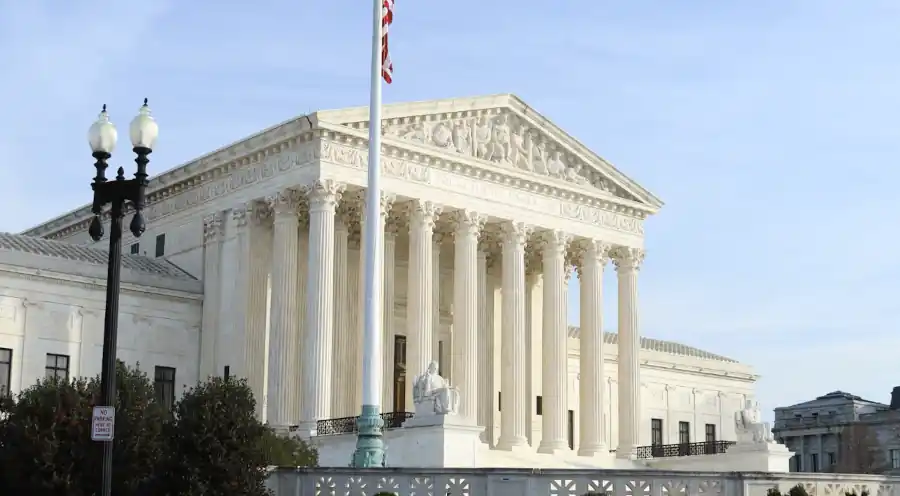
In the wake of the United States Supreme Court’s landmark ruling in Learning Resources, Inc. v. Trump, one thing is undeniable: Donald Trump’s conduct once again reveals a man who holds no respect—neither for the Constitution nor for the tribunal explicitly empowered to defend it. The Court’s 6–3 majority, led by John Roberts, dismantled the very foundation of Trump’s tariff crusade, reminding him—forcefully—that presidential power in this country has limits. Roberts’s opinion made the principle unmistakably simple: if Congress doesn’t authorize a tariff, the president cannot conjure one through sheer will. Yet Trump, faced with this basic constitutional truth, spiraled publicly through shock, denial, rage, and sheer contempt, belittling the six justices—including two he appointed, Neil Gorsuch and Amy Coney Barrett—as “a disgrace to our nation.” The man sworn to defend the Constitution instead smeared the very branch that checked his unlawful ambition.
The case, argued before the Court by Neil Katyal on behalf of more than 50 American businesses, delivered a stunning repudiation: Trump’s unilateral tariff regime was unconstitutional, and spectacularly so. Roberts emphasized that the president claimed “extraordinary power to unilaterally impose tariffs of unlimited amount, duration, and scope”—and that no such power exists without clear congressional approval. This wasn’t ideology; it was constitutional bedrock. Even the concurring justices—among them Elena Kagan, Sonia Sotomayor, and Ketanji Brown Jackson—reinforced that ordinary statutory interpretation alone sinks Trump’s argument. The Court’s message could not have been plainer: tariffs function as taxes, and in America, presidents do not unilaterally tax the people.
The dissent, written by Brett Kavanaugh, attempted to carve out a theory of presidential flexibility rooted in wartime blockade authority. But as the majority recognized and as Katyal underscored, blockades stop goods—they do not reach into Americans’ wallets. Tariffs do. And taxation without representation is not some abstract civics lesson; it is the precise abuse the Constitution was crafted to prevent.
But instead of absorbing the Court’s rebuke with even a shred of statesmanship, Trump erupted. He accused the justices—Roberts, Gorsuch, Barrett, and the three liberals—of being automatic “no” votes, of weakening America, of disgracing their families. Not one word of respect for the judiciary. Not one breath acknowledging the separation of powers. His attacks were not the reaction of a president who disagrees with a legal outcome; they were the tantrum of a man who has never accepted that—here—the law restrains him.
Meanwhile, the practical fallout grows. American businesses already battered by Trump’s reckless tariff experiment now confront further uncertainty. Some may be owed refunds after the U.S. Treasury collected roughly $240 billion in tariff revenue since April 2, 2025—a day Trump had the audacity to label “Liberation Day.” Capital Economics estimates potential refunds at $120 billion. Even The New York Times notes that the refund process could be a bureaucratic catastrophe, a point even Kavanaugh acknowledged. Yet despite Trump’s prophecy of economic doom if the Court dared check him, markets—Dow Jones Industrial Average, S&P 500, and Nasdaq Composite—closed slightly up. Reality once again refused to bend to Trump’s political theatrics.
Even more unsettling is Trump’s immediate pivot to finding a workaround. He now floats a new 10% global tariff under a 1974 statute, as though the Court hadn’t just reminded him that Congress—not the Oval Office—writes tax laws. His desperation underscores what small businesses already fear: that a president who openly disrespects the rule of law will keep searching for ways to bulldoze it. Congress—United States Congress—rejected his tariff agenda once before. Instead of facing that reality, Trump again tries to govern by edict.
The ruling’s significance stretches far beyond tariffs. It is a victory for the 250-year-old principle that no president—no matter how self-styled his strength—can erase the separation of powers. It is a reminder that the judiciary remains capable, however rarely, of reining in executive overreach. And it highlights something else: the fragility of our institutions when a president greets constitutional limits not with humility, but with venom.
Trump’s response proves exactly why this decision mattered. A president who respects the Constitution does not attack judges for doing their jobs. A president who respects the Supreme Court does not smear its members for upholding the rule of law. And a president who respects America does not seek unchecked power—he accepts that the Constitution was written precisely to deny it to him.
This episode is not about tariffs; it is about character. And Trump’s words and actions reveal a truth the Court’s opinion only reinforces: he sees constitutional limits not as the guardrails of democracy but as obstacles to his will. His contempt today should alarm every citizen who still believes that in the United States, no president is above the law.
22nd February 2026
Read More