Access to Justice: Lawyers’ Role & Legal System Challenges
Examining how advocates impact public access to justice through professional conduct and court traditions.
ACCESS TO JUSTICE
[Calcutta High Court: 29th April 2013]
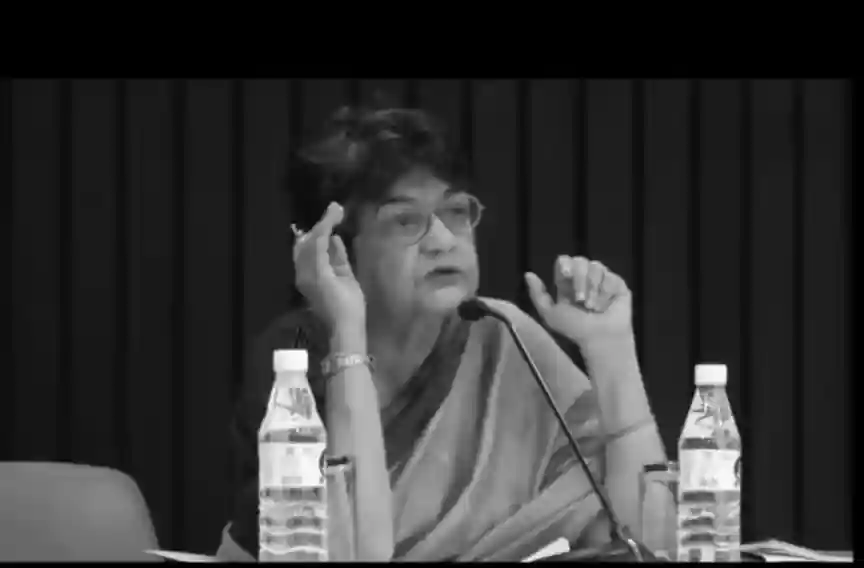
Speech delivered by Hon’ble Justice Ruma Pal on Access to Justice on 29.4.2013
In one of the articles written on the occasion of the Centenary celebrations of this Court in 1962, the illustrious history of the Court, its distinguished judges and lawyers has been traced. The Article ends with the sentence “Whether the high traditions of the past are being kept up it will be for posterity to declare”. Fifty years have passed since that article was published. At the end of this year’s celebrations, it is time to take stock and assess whether these high traditions have been kept up and how the Court is viewed at present. Although both judges and lawyers have been described as partners in the administration of justice, when one uses the word “Court” in the legal context, one normally refers to the judges. But as far as the litigating public is concerned, the Court is the lawyer. It is the lawyer with whom the public interacts and it is the lawyer through whom the public can access justice.
I have been a part of this Court for most of these fifty years, of which about 22 years were spent as an Advocate. I can no longer practise, but I consider myself to be a kind of Advocate Emeritus, and it is in that capacity that I decided to speak today about the role of advocates in the access to justice and how far this has been in keeping with the traditions of the past.
Access to justice is sometimes understood in the sense of the ability to approach courts- to have recourse to the judicial system. Sometimes it means the obtaining of qualitative justice. Such a distinction was drawn recently by the Supreme Court by saying (Dr Haniraj L. Chulani v. Bar Council of Maharashtra & Goa, (1996) 3 SCC 342) that “Access to justice is… much more than improving an individual’s access to courts, or guaranteeing representation. It must be defined in terms of ensuring that legal and judicial outcomes are just and equitable”. Theoretically and ideally it may be possible to say that the distinction is without a difference because a judicial system which does not deliver qualitative justice is not a judicial system at all. But existing situations are far from ideal and the distinction is practically apt.
Access to justice has been variously described as “the basis of the legal system”, “the most basic human right”, “vital for the rule of law” and as a “fundamental right”. The issue of access has come up before courts generally in the context of either infrastructure- such as a larger number of courts, more judges, more staff and so on; or procedure- such as reasonable filing fees, enlarging the scope of locus standi, public interest litigation and more such measures enabling access. The onus of ensuring this fundamental right of access to justice is normally assumed by legislatures, the executive and the judiciary but rarely, if ever, has it been assumed by those who have the power and the ultimate responsibility to ensure such access both in the qualitative and quantitative sense viz. the advocates.
In this country, traditionally, aggrieved citizens either resolved their differences through the good offices of village elders or approached the Kings or local Zamindars in India directly for redressal of their grievances, a tradition which was carried on by the Mughal Emperors in the Dewan-i-Am. The adversarial system where the agency of another was used to plead a citizen’s cause was introduced in India by the British. “Early advocates in England “ were generally persons in holy orders who rendered their services to the weak and afflicted without charge and as an act of pity”. It was because of the service rendered that the profession was called honourable and noble and not because lawyers were considered to be aristocratic by birth.
Lawyers’ fees were not compensation for discharge of legal obligations but a gratuity or an honorarium which the client bestowed as a token of gratitude. The small bag at the back of a lawyer’s gown was where the tokens of gratitude were put by grateful clients. The lawyers were considered as officers of the court because they assisted the Court in the administration of justice, and the law was an honorary occupation. With the growth of litigation, lawyering became a full-time occupation and most of the lawyers came to depend upon it as the sole source of livelihood.
The concept of advocacy as a profession as well as the standing which lawyers had gathered over the years in England, together with expected standards of etiquette and behaviour were imported into India along with the adversarial system when the Supreme Courts were established by Charter Acts and Letters Patents in Calcutta, Bombay and Madras. Fortunately for India, high standards of rectitude, service and commitment to the cause of justice were created by doyens of the Bar who initially graced this court some of whom have been named with pride in The High Court at Calcutta: 150 Years-an Overview.
Courts alone decided who could be enrolled as an advocate and who could practise as a lawyer. The jurisdiction to enforce discipline was derived from three distinct sources: first: from the inherent jurisdiction of a court to regulate proceedings before it; this was distinct from the second source: viz the contempt jurisdiction and lastly- from statute. For example, in Calcutta, the Court could and did take disciplinary action against erring advocates under clause 10 of Letters Patent 1865 by taking one of three courses (i) removing the offender from the roll of Advocates; (ii) suspending him from practising; and (iii) censuring him. Sudder or District Courts controlled the quality of service by giving Certificates to those who were entitled to practise. In 1861, this jurisdiction was transferred to High Courts under the Indian High Courts Act. All that changed with the Legal Practitioners Act, 1879 followed by the Indian Bar Councils Act, 1926 for unification and autonomy of the bar. “It was assumed that a unified Bar for the whole country with monopoly in legal practice and autonomy in matters of professional management would advance the cause of justice in society”. Bar Councils for the High Courts were set up with power to regulate the admission of advocates, to prescribe their qualifications and to refer any case of misconduct received by them to the High Court for inquiry and action. The High Court could also itself refer any case for inquiry in which it had reason to believe that an advocate had been guilty of misconduct. Apart from such control, High Courts retained the absolute discretion to refuse to allow even a person who was qualified according to the Bar Council Rules to practise before it as well as the power to take disciplinary action in contempt.
In 1950, the Constitution of India came into force under which Parliament was given the power to enact laws relating to persons entitled to practise before the Supreme Court and High Courts. In exercise of that power, Parliament enacted The Advocates Act, 1961, repealing, inter alia, the statutory sources of the Courts authority to take disciplinary action against advocates such as clause 10 of the Letters Patent of this Court. The statutory jurisdiction to set and enforce the standards of professional conduct and etiquette is now vested in the Bar Council of India and the power to take disciplinary proceedings with Disciplinary Committees of State Bar Councils and the Bar Council of India although the High Courts are still empowered by section 34 of the 1961 Act to make rules laying down the guidelines subject to which an advocate shall be permitted to practise in the High Court and the sub-ordinate courts. The same power has been conferred on the Supreme Court by Article 145 of the Constitution. Also any person aggrieved by an order made by the disciplinary committee of the Bar Council of India may prefer an appeal to the Supreme Court of India under Section 38 of the Act. Within this framework are the Bar Associations in High Courts with lawyers as their members and hierarchy of elected officers. Each Association has rules of membership and to that extent, control over its members. Calcutta High Court is perhaps the only High Court which by reason of historical circumstances, has three associations -viz the Bar Association, the Bar Library Club and The Incorporated Law Society. But the right to practise has been reserved to lawyers enrolled as Advocates under the Act with the Bar Councils.
At present, therefore, lawyers command a virtual monopoly in the matter of enabling the public to approach Court- a monopoly which is controlled by the Bar Council of India and to a lesser extent by the State Bar Councils and Bar Associations. The law grants lawyers that monopoly based on the assumption that lawyers perform a service to the public by assisting in the administration of justice being professionally equipped to do so. The Bar Council of India has set out ethical standards of the Indian Bar to regulate an advocate’s conduct both before the court and vis a vis clients. Therefore, the responsibility and accountability for upholding the standards should be of the Bar Councils as well as the Bar Associations. But such regulation or control cannot amount to an abdication of responsibility by the individual lawyer to conduct himself or herself conscientiously. A licence to practise is an individual right carrying with it a corresponding individual duty and as a professional person, a lawyer’s service must in the ultimate analysis be regulated by himself/herself and not by the profession as a whole. Unfortunately, not only is the monopoly on occasion misused and the responsibility to clients shirked, but lawyers have often over the years, post the Advocates Act,1961, actually barred access of the public to justice both in the quantitative and qualitative sense.
A judge’s ability to deliver qualitative justice depends on the arguments of counsel. As has been said assistance from the Bar “goes a long way for the Bench to do justice”. The judge’s reliance is based on the trust that the counsel will conduct cases in a just and proper manner to assist the court and not mislead it. That trust is often well-founded and courts have readily acknowledged and recorded their appreciation of the Bar. But sometimes that trust is betrayed- for example when a lawyer cites a judgment of a court which has been overruled without disclosing the fact that it has been overruled or knowingly makes a misstatement of fact; or if lawyers unnecessarily delay the hearing and disposal of cases by misusing the facility of adjournment available to the counsel. Adjournments are often used so that interim orders once obtained continue for a long time merely on the ground of counsel’s illness.
On occasion it has been known that a prayer for adjournment has been sought and obtained on the ground that counsel for a party was ill while in fact that very day the same counsel was appearing in another Court. Defective petitions are filed with Advocates being mere name-lenders, without having, or taking any responsibility for processing or conducting the case. The filing of frivolous petitions is often resorted to deliberately delay the hearing of a case and sometimes to even extort money. In one such case which came to be considered by the Supreme Court, the petitioner who was a lawyer filed a petition styled as “public interest litigation” before the Nagpur Bench of the Bombay High Court. The Supreme Court upheld the finding of the High Court that there was no public interest involved and in fact the advocate-petitioner was using the process of court to blackmail the Respondents.
In another case the Court was constrained to direct the registry not to entertain any application by way of public interest litigation by the petitioner Advocate in future. What is intriguing however is the absence of any action of the Bar Councils of the State and of India in any of these or like matters against the lawyers who impinge upon the delivery of qualitative justice by the courts.
The role of the Bar Councils and Bar Associations in impeding access to quantitative justice is worse. They achieve this in a variety of ways. One of the ways is through bringing the judicial system itself into disrepute. If the public is put off from approaching the Courts because they have lost respect or confidence for the judicial system-access to justice is prevented. If the right of access to justice is a fundamental right, then no one has the right, least of all a lawyer, to obstruct that right. When that lawyer holds a position either in a Bar Association or Bar Council the action is more condemnable. The President of the Delhi Bar Association on 26th September, 1991 probably thought that he was upholding the traditions of the Bar when he and a large number of other lawyers stormed the various court rooms of the Delhi High Court while the courts were in session, stood on the chairs, tables and the dais of the Court Masters and shouted abuses at the judges saying, ” Stop the work, we will not allow the courts to function and you should retire to your chambers”. Or take the case when a senior member of the Bar and also the Chairman of the Bar Council of India and the President of the U.P. High Court Bar Association, Allahabad tried to browbeat, threaten, insult and show disrespect personally to a judge of the High Court. If the High Officials of the Bar Councils and Bar Associations act in this manner, it is unlikely that the members will behave otherwise.
Small wonder then that in an examination conducted last year to select the new batch of Advocates on Record among the lawyers practising in the Supreme Court, 420 out of 450 failed in the paper on professional ethics and advocacy.
In the few cases that have come up before the Supreme Court by way of appeal under section 38 of the Advocates Act, since 1961 it is evident that the disciplinary jurisdiction of the Bar Councils is exercised, if at all, in connection with the conduct of advocates with their clients and not with their conduct in Courts. I have been unable to access any statistics of the Bar Council of India relating to the number of complaints received by it and how the complaints have been dealt with. However, if the figures as reported of The Bar Council of Punjab and Haryana are representative, they show that till June 2011 it had received 1,432 complaints against lawyers on various charges in the past seven years but only one lawyer had been removed till then and only 5 were suspended.
As far as the State Bar Council for West Bengal is concerned it appears that no Disciplinary Committee has been constituted at all for the last few years despite a number of complaints being filed.
Another aspect of lawyers impeding access to quantitative justice is by the recent phenomenon of lawyers refusing to accept cases because they have pre-judged the issue of a person’s guilt. Significantly the first paragraph in the Ethics Standards of the Bar Council of India says “it is the duty of every advocate to whom the privilege of practising in Courts of Law is afforded, to undertake the defence of an accused person who requires his/her services. Any action which is designed to interfere with the performance of this duty is an interference with the course of justice”.
Unfortunately, in case after case lawyers have violated this mandate. In 2006, when a mass grave of the skeletal remains of or of what appeared to be children was found in Gurgaon, Haryana, perhaps on the basis of media reports but before any forensic tests or any investigation, lawyers not only refused to represent the suspects but severely beat up the suspects when they were produced in court. Incidentally, the investigating agency on completion of the investigation, did not find sufficient evidence to sustain even a charge sheet against one of the suspects.
More recently, the Bar Association of Coimbatore passed a resolution that no member of the Coimbatore Bar would defend the accused policemen in a criminal case against them. In 2011, the Supreme Court noted that “several Bar Associations all over India, whether the High Court Bar Associations or the District Court Bar Associations have passed resolutions that they will not defend a particular person or persons in a particular criminal case. Sometimes there are clashes between policemen and lawyers, and the Bar Association passes a resolution that no one will defend the policemen in the criminal case in court. Similarly, sometimes the Bar Association passes a resolution that they will not defend a person who is alleged to be a terrorist or a person accused of a brutal or heinous crime or involved in a rape case”.
The Supreme Court held that such resolutions were against all norms of the Constitution, the statute and professional ethics and a disgrace to the legal community. Consequently it was declared that “all such resolutions of Bar Associations in India are null and void and the right-minded lawyers should ignore and defy such resolutions if they want democracy and rule of law to be upheld in this country”. The irresponsibility of the several Bar Associations is in stark contrast with the behaviour of individual lawyers. When the case of Ajmal Kasab was recently argued before the Supreme Court he was represented by a very senior and eminent member of the Bar and his team of juniors. The matter was argued for 13 weeks. At the end of the hearing the Court directed the Maharashtra Government to pay a sum of Rs 11 lakhs to the Senior Advocate and Rs 3.5 lakhs to the juniors as “token remuneration for their very valuable assistance to the Court”. But the Counsel were not willing to accept any remuneration for their services leading the Court to record their appreciation of “the high standard of professional ethics set” by the learned counsel for themselves.
However the most egregious impediments to the administration of justice created by lawyers are abstentions from work, boycotts of courts and strikes for whatever reason. According to some, there were no strikes by lawyers prior to independence and that the first strike took place when CJ A.N. Ray superseded 3 of his colleagues on April 25, 1973 almost immediately after the decision in Keshavananda Bharati. Be that as it may there can be no doubt that by 1994 strikes by lawyers called at the instance of Bar Councils and Associations enforced by threats of expulsion and violence had reached epidemic proportions.
Public interest litigation was filed under Article 32 before the Supreme Court seeking the Court’s intervention to protect the interest of the litigants on account of the members of the Bar proceeding on strike from time to time in different parts of the country. Before any order was passed a National Conference of State Bar Councils and the Bar Council of India was held and a resolution passed that-
‘(a) the Bar Council of India is against resorting to strike except in rarest of rare cases involving the dignity and independence of the judiciary as well as of the Bar; and
(b) Whenever strikes become inevitable, efforts shall be made to keep it short and peaceful to avoid causing hardship to the litigant public.’
Before the Court all the Bar Associations, State Bar Councils and Bar Council of India consented to an order passed on 7th December 1994 which provided inter alia that “In the rare instance where any association of lawyers (including statutory Bar Councils) considers it imperative to call upon and/or advise members of the legal profession to abstain from appearing in courts on any occasion, it must be left open to any individual member/members of that association to be free to appear without let, fear or hindrance or any other coercive step”.
Despite this Bar Associations and on occasion even the Bar Councils continued to resort to call upon lawyers to go on boycotts and strikes and individual lawyers felt obliged to follow such directives. Thus for example on 15th May 1998, the Delhi Bar Association directed its members not to appear before a particular judge because of the refusal of the judge to transfer the case for hearing to some other court. The lawyer for the defendant asked for an adjournment because he said that as a member of the Bar Association, he was bound by its resolution. This was refused. The matter came up before the Supreme Court which after reiterating a lawyer’s freedom of choice to appear said: “If any counsel does not want to appear in a particular court, that too for justifiable reasons, professional decorum and etiquette require him to give up his engagement in that court so that the party can engage another counsel”. It also said “No court is obliged to adjourn a cause because of the strike call given by any association of advocates or a decision to boycott the courts either in general or any particular court. It is the solemn duty of every court to proceed with the judicial business during court hours. No court should yield to pressure tactics or boycott calls or any kind of browbeating”.
Both these aspects namely the absence of any right of Advocates to strike or to boycott the courts or even boycott any particular court without ensuring representation of clients as well as the courts obligation to hear and decide cases brought before it and not shirking that obligation on the ground that the advocates are on strike have been reaffirmed time and time again after that but without any impact. The strikes and abstentions by the lawyers continued and in fact increased.
In September 2002 a joint meeting of the Chairmen of various State Bar Councils and members of the Bar Council of India was held at which it was resolved that abstentions from work in courts should not be resorted to except in exceptional circumstances and that and “the Bar Associations and the individual members of the Bar Associations should take all steps to comply with the same and avoid cessation of the work except in the manner and to the extent indicated above”.
In 2003, the Supreme Court held that strikes by lawyers were unconstitutional and illegal. One exception was made in the case of “a protest on an issue involving dignity, integrity and independence of the Bar and the judiciary, provided it does not exceed one day”, but abstentions from work at the instance of Bar Councils and Associations continue unabated for reasons which have nothing to do with that exception.
In the Calcutta High Court, all three Bar Associations continue to call upon members to desist from work frequently, sometimes for consecutive days in a week. The reason most frequently given is to pay homage to a deceased member of any one of the three Associations, irrespective of the date of death. If the death has taken place during a working day, an advocate wishing to pay respect to the deceased has and should be accommodated by the court. But at times members follow the Association’s resolutions without any knowledge as to who has died or who the deceased was. Apart from the lack of logical nexus between abstention of work and showing respect to the deceased, it is doubtful whether the deceased would want homage to be paid by holding litigants to ransom.
Furthermore, given the fact that the membership of the Bar Association alone is now about 6000 the possibility of frequent occasions to pay such homage cannot be discounted leading to debarring the public from accessing justice for several days.
The calls for abstentions from work by Bar Councils or Associations can hardly be said to advance the cause of justice for which the Bar was unified in 1926. Rather, it is a show of strength and affirmation of the status and power of the office bearers. The paradox which lies in such affirmation is that the cost of such affirmation is the destruction of the system which gives them that status. Contrary to the tradition that lawyers while becoming politicians did not bring politics into the profession, Bar Councils and Associations have since 1961 become increasingly politicized.
The practise of law is seen as a service in the commercial sense and not in the sense of social welfare. The profession is not an industry. Because it is not, offices of advocates have not been classified as commercial establishments or shops and exempted from the fiscal and other repercussions that would follow if they were. It is unfortunately seen as such at present and like workers in an industry, lawyers behave like political unions and go on strikes and enter into confrontation with those that they perceive as being in ‘management’. This idea must be and can be removed by bodies which seek to control the profession themselves.
The process has to an extent been started at least in the Supreme Court by excluding the members of the Supreme Court Bar Association whose names do not figure in the final list of regular practitioners from either voting at an election of the office-bearers of the Association and from contesting any of the posts for which elections would be held by the Association. Furthermore, accountability and transparency in disciplinary matters must be ensured. The Disciplinary Committees’ jurisdiction like other tribunals performs judicial functions with all the powers of a Civil Court and an appeal lying ultimately to the Supreme Court from their decisions. Relevant statistics must be made available to the public by publication on the official website or otherwise. Third-Grievance Redressal Committees at the taluk/sub-division or tehsil level, at the district level, High Court and Supreme Court levels for lawyers as was resolved in 2002 by all the Bar Councils should be immediately set up.
Grievances of lawyers if required to be ventilated publicly should be done in a dignified yet effective manner by e.g. giving press statements, TV interviews, carrying banners and/or placards, wearing black or white or any colour armbands, peaceful protest marches outside and away from court premises, going on dharnas or relay fasts etc.
More importantly, in many instances when legal remedies are available recourse must be had to the law before adopting any extra-legal methods. As far as abstention from work because of the death of a member of a Bar Association is concerned, wearing a black armband would be more in keeping with the dignity and duty of an advocate to courts and the litigating public.
There was an old tradition of lawyers wearing special bands called “weepers” as a sign of mourning. That tradition along with other high traditions of this court seems to have been lost.
The profession has been described as “a kind of close and exclusive ‘club’ …where members enjoy privileges and immunities denied to less fortunate persons who are not members”. The “club” referred to is the profession itself and not the representative bodies such as Bar Councils or Associations. There is no need to enter the profession and there is no need to stay, but having entered it and having elected to stay and enjoy its amenities and privileges, its rules must be obeyed”. The rules of the ‘profession’ require members to behave and conduct themselves in keeping with high standards of behaviour. But the overarching rule is that lawyers must uphold the law.
The law says that strikes and abstentions are illegal. The lawyers are bound to follow this rule-individually and collectively. No Bar Council or Bar Association can use any threat or coercion to stop or hinder the fundamental right of a lawyer to practise. No lawyer has any right to obstruct or prevent another lawyer from discharging his professional duty to the client and the Court. If anyone does it, he commits a criminal offence and interferes with the administration of justice and commits contempt of court and he is liable to be proceeded against on all these counts. In fact most of the lawyers participate passively rather than actively in strikes.
Apart from their professional duty to their clients, every time a lawyer abstains from work he/she is in breach of contract with the client. If after accepting a vakalat or brief lawyers do not attend a matter when it is called on merely because the Bar Association or any Bar Council has called upon them to abstain from work, they are liable to be sued for damages or made to pay costs of their client.
Judges for their part must take some responsibility for this sorry state of affairs. They must like true sentinels on the ‘qui vive’ keep open the portals of justice by invoking their inherent powers to control proceedings in their courts and utilizing their powers to commit for contempt. It cannot be disputed that in regard to matters of contempt, the members of a Bar Association do not occupy any privileged or higher position than ordinary citizens. The Supreme Court and the High Courts have the jurisdiction to prevent a contemner advocate from appearing before them till he/she purges himself/herself of the contempt.
Further, if an advocate impedes justice the Courts must “bar the malefactor from appearing before the courts for an appropriate period of time”. On the other hand more often than not when lawyers abstain from work, courts agree to adjourn cases or rise either because they sympathise with the lawyers or due to their helplessness to proceed without the aid of counsel. But the court is under an obligation to hear and decide cases brought before it and is required to function as such during court hours. A judge cannot shirk that obligation and rise early for reasons not connected with judicial functions or on the ground that the advocates are on strike or have decided to abstain from work. Otherwise, it would be “tantamount to [Courts] becoming a privy to the strike” or abstention from work and “the defaulting courts may also be contributory to the contempt of [the] Court”.
It has been prophetically said that “The present trend, unless checked, is likely to lead to a stage when the system will be found wrecked from within before it is wrecked from outside”. It is for the members of the profession and the judiciary to introspect and take the corrective steps in time. I have spoken elsewhere of the role of the judiciary in ensuring qualitative and quantitative justice to litigants.
Since I have limited myself today to the role of lawyers, let me conclude by saying: that although there are a great many distinguished and honourable advocates today who try to uphold the high standards of the Bar, there are vocal packs who are tarnishing the reputation of the Bar and who, unfortunately, are seen as the face of the profession. Lawyers must return to the idea that they can command the respect that the profession had in the past only if they accept individual responsibility for their conduct. Swami Vivekananda, whose 150th birth centenary celebrations have also just concluded, correctly emphasized: “We are born as individuals and have to work out our own destiny by our individual power”. In other words it is the individual lawyer who has to decide whether he/she is rendering a valuable service to society and behave accordingly or whether he/she will allow the present state of affairs to continue.
If the public’s access to qualitative or quantitative justice continues to be denied and obstructed by the misconduct of lawyers, or by abstentions, boycotts and strikes, the public will lose confidence in the legal system and people will then look for short cuts or take the law into their own hands.
In one of Shakespeare’s plays one of the characters suggested “The first thing we do, let’s kill all the lawyers”. Let us hope it does not come to that. Speaking for myself, I also sincerely hope that today’s talk does not give reason to call for yet another strike.