Essential guidance on writing clear, reasoned, and effective judicial judgments from a Supreme Court perspective.
On Judgment Writing-I
READ ALSO: Judgment Writing – II
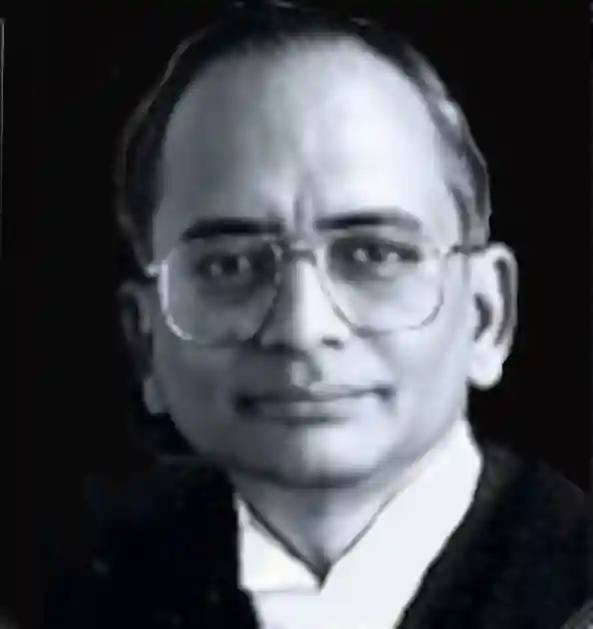
By Justice M. Jagannadha Rao (1997)
It is a very delicate task to give a straight-jacket formula for judgment-writing, and perhaps, I am least suited to write on the subject. But I shall make an earnest endeavour.
I may start apologetically as did Rt Hon Sir Harry Gibbs, former Chief Justice of Australia, in his article “Judgment Writing” (1993) vol. 67 Austr LJ 494. He stated: “For a retired Judge to lecture on the subject of Judgment Writing is to provide proof, if it were needed, of the truth of the assertion by a seventeenth century French moralist (La Rochefoucauld in his Maxima 1665) that men give good advice when they are no longer capable of setting bad examples. Some Judges whom I have known in the past, would have regarded it as derogatory of their dignity, to have to listen to a talk on a subject which they considered themselves to have mastered, and perhaps there are Judges today who may justifiably take the same approach. But the subject goes to the very heart of the exercise of the judicial function and for that reason, it seems worth discussing.”
Why are judgments of different Judges so different from each other? The varying facts of the different statutes involved and the differing perceptions of the Judge – all contribute to keep each judgment different from every other. A Judge battles with all these factors and in the process he acquires skills of his own which will remain peculiar to himself. Ultimately, it is experience that tells us how to go about the job. Are there not a few exceptions to this rule? I do not deny that there are a gifted few among Judges who have stood above all others in judgment-writing by certain special gifts from God. How disconcerting it is to sit in appeal over a judgment which merely says ‘petition dismissed’ or ‘appeal dismissed’ or is too brief to give an idea about the case. Such judgments or orders are, even today, abounding. Judges who write such short pieces shift the entire burden of giving reasons to the appellate Court. Some of these are Judges who – I say this with great respect – typically glorify their disposal statistics. They must only know the percentage of appeals filed against their judgments and how often they are reversed or how much time one or more Judges in the appellate courts or in a higher court spend to know what it was all about. Quality can never be sacrificed for quantity. The first and foremost duty of the Judge, therefore, is to give adequate reasons. There are some other Judges who err on the other side. Their judgments are longish and confused that one does not know where to look in for locating the points in issue or the reasons. Such judgments too increase the task of the appellate courts or of the superior courts.
I do not know why some training is not given to our new recruits so that they can write lucid, reasoned judgments with clear cut findings. Let me, therefore, say a few things which come upper most in my mind. At the start of one’s judicial career, I think the best way is to adopt the traditional way of writing judgments. One can refer briefly to the pleadings, briefly to submissions, set out the issues or points that arise for consideration and take them up one by one. I have never seen a Judge who has adopted this method, missing a single point or omitting to give clear findings on all the issues/points. May be after some years of experience a little innovation can be permitted if it improves the quality of his writing.
What do you mean by giving good reasons or discussion of the material? There are some Judges who, after reproducing the entire pleadings page after page, go to extract the contents of each document and then reproduce the entire evidence of each witness on each side. In the end, they simply say that they accept some witnesses and reject the others. There is no way of knowing how the conclusions are reached. One would expect the Judge to keep the pleadings as the outer boundaries of the evidence and to analyse how far a witness spoke to the facts mentioned in his own pleading or contradicted the pleas of his opponent or was cross-examined in regard to what he said in his chief-examination or in regard to his opponent’s case. One would also expect the Judge to keep the admitted documents as another standard to test the oral evidence. The Judge should also find out if a witness is an interested witness. Every method must be employed to test the veracity of the witness. It is expected that the Judge gathers the relevant pleading, documentary evidence and oral evidence under each issue and draws his conclusions. That is what makes a good judgment.
Well then, coming to issues of law, should the Judge not explain how he understood the statute or rule or how he either applied a binding precedent or distinguished another which was put across. Is it not necessary for him to distinguish a ruling by referring to some point of distinction. Yes, indeed, it is necessary. It is no doubt said that the quality of a judgment depends upon the quality of arguments addressed. Of that, I have absolutely no doubt. But an incomplete or inartistic argument of a lawyer is not an excuse for producing an unsatisfactory judgment. Judges have, in my view, a moral and legal duty to make up for the shortcomings of the counsel who might have argued before them. A certain minimum amount of industry or even research is needed. Sometime back, lack of a good law library at home or even in the Court was a handicap for the judges in our subordinate courts. But thanks to the Supreme Court, today some small court or home libraries are available.
A word in regard to discussion of the legal issues. Sometimes, Judges go on setting out the statutory provisions in extenso without even a preliminary note as to what the exact legal issue covering these provisions is. The Judges must initially focus the reader’s attention upon the issue concerned by referring to the contentions of the respective counsel on the legal issue. Likewise, sometimes, Case law is set out, referring to one ruling after another. Some Judges make long extracts from judgments of the Supreme Court or High Court cited by both sides. One does not know which aspect of the precedent is being highlighted. One does not know which ruling is followed or applied to the facts of the case nor which is distinguished. Precedents must be read closely, grouped together and it must be stated which of them is very close to the facts of the case or why it is being followed or distinguished. In any event, long extracts are to be avoided. No Judge should think that the sheer length of his judgment or its physical weight will be an index of quality. Surely not. The quality depends on the presentation of facts, discussion of the issues of both fact and law and the quality of the reasons.
Judgment-writing is indeed an art. Some Judges are highly technical in their approach and have no mind for justice. At the other end are some who have their sense of justice totally overriding the bounds of law. Both approaches are unacceptable. The Judge must always try to render justice but that does not mean he should transgress the limitations of the law. Where to draw the line is not normally difficult except in a few cases. Here, of course, what is ‘Justice’ depends again to a large extent on one’s own notion as to where the justice of the case lies.
It is said, Judges have their own personal predilections on various issues which come before them. Some – the Bar believes, – are pro-landlord or pro-tenant, or pro-assessee or anti-assessee, pro-individual right as against community interests, or pro-women/children as against men; pro-labour or pro-management. No doubt Judges are human and their family background, education or environment may have a say in their decision-making process. This cannot be helped. But, over a period, the Judge must detach himself from these fixations and keep the oath of his office in mind and decide strictly according to law and the justice of the case.
I shall than take up another aspect which reflects certain contemporary trends. Some Judges think that use of high flown language is necessary. In their anxiety to do so, they use words which are either totally inappropriate or “disproportionate” to the context or the situation. In my view, a judgment must use simple language, which the litigant public or the legal profession or other Judges can follow. The law laid down or expressed must be clear and definite. There is no need to show off and attempt a stylish language not one’s own and leave the reader to search in vain for the ratio of the case.
I shall then refer to another dangerous trend, which has become a little common these days. Some Judges in the subordinate judiciary, have forgotten that they are in for serious work. They have acquired some journalistic zeal and write something special for the Press. The publicity bug would bite them – particularly if the decision is likely to be reported in the Press. Some even write pages and pages for projecting their personal views on several controversial issues. This trend in our subordinate judiciary is dangerous and is reaching alarming proportions.
I have touched upon a few aspects of judgment-writing without philosophizing or making it look like a serious academic discussion. If I were to do that I should have referred to the great theorists on this subject. But, I am tempted to refer at least to what was said by one of greatest Judges of this century, Justice Cardozo of the U.S. Supreme Court. In his essay on ‘Law and Literature’ (1925)(p.10 of 1986 reprint), he said that in matters of literary style in writing judgments, the sovereign virtue for the Judge is ‘clearness’. He said, “Write an opinion, and read it a few years later when it is dissected in the briefs of counsel. You will learn for the first time the limitations of the power of speech or if not those of speech in general, at all events your own. All sorts of gaps and obstacles and impediments will obtrude themselves before your gaze, as pitilessly manifest as the hazards on a golf course.” He says, you may realize that the mistake was yours in which event you may smite your breast and pray for deliverance thereafter. Or you may realize the fault was that of counsel and feel a sense of injured innocence. You may be convinced that the fault was not there but made out by somebody maliciously – and in that event it will be wise to keep your feelings to yourself. Simplicity, he says is not the only one to be pursued. The opinion will need persuasive force or the impressive virtue of sincerity, or the mnemonic power of alliteration and antithesis or the terseness and tang of the proverb and the maxim. I would say that these latter skills come to some naturally but must be kept to the minimum necessary and not be substituted for the real essence of one’s judgment.
There are, Cardozo says, six types of judgments. There is “the type magisterial or imperative, the type laconic or sententious, the type conversational or homely; the type refined or artificial, smelling of the lamp, verging at times upon preciosity or euphemism, the type demonstrative or persuasive; and finally the type, tonsorial or agglutinative, so called from the shears and the pastepot which are its implements and emblem.” Those who wish to know more about these six types of judgment would do well to read the essay on ‘Law and Literature’ by Justice Cardozo.
Lord Justice Templeman (as he then was) in a BBC interview (quoted by Justice Michael Kirby in ‘On Writing Judgments’, (1990) Austr LJ 691) divided Judges into three categories on the basis of their judgments.
He said: “Judges and their judgments – I think you can divide into three categories; there are philosophers, the scientists and the advocates. The present Lord Chancellor, Lord Hailsham, I would put in the category of philosopher; Lord Wilberforce and Lord Diplock, I would put into the scientific vein, and Lord Denning in one of the advocates. And in common with those other Judges whose judgments are feats of advocacy, you can see some traces of the eloquence in the advocacy which they used when they were at the Bar, and these three elements are all there in Lord Denning’s judgments.”
Read More
- What is Judgment and how to write it: Judge L.O. Bosielo (SA)
- What is Judgment
- Law Points on Judgment Writing
- How to write Judgment in criminal cases – Instructions for judges
- Judgment Writing for the Trial Court