Ensuring prompt acknowledgment and discussion of circulated draft judgments is essential for judicial efficiency and professional respect.
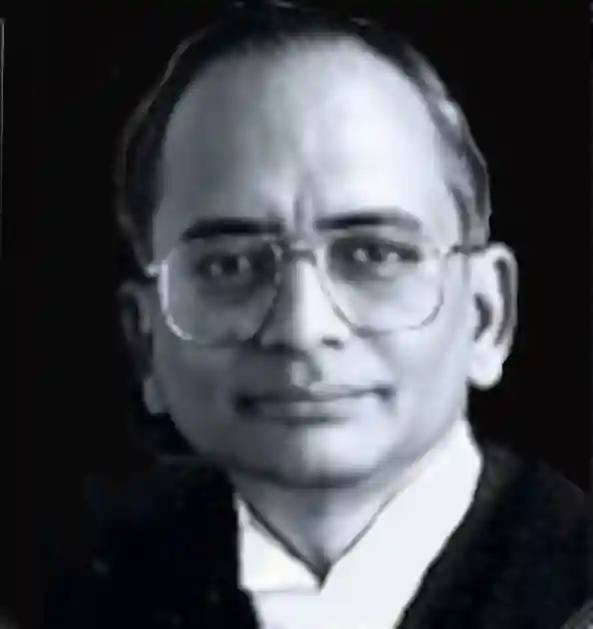
Justice M. Jagannadha Rao
Chief Justice, Delhi High Court (1994-97)
Read Also: On Judgment Writing-I
On Judgment Writing-II
In this second article, I intend to discuss certain aspects of judgment writing that were not covered in my earlier piece, written in 1996 and published by the U.P. Judicial Training and Research Institute, Lucknow, when I was Chief Justice of the Delhi High Court (1994–1997).
I begin with the issue of judgments that lack reasons. While serving in the Supreme Court, we encountered such a case in Hindustan Times Ltd. v. Union of India (1998) 2 SCC 242, where a High Court had dismissed a writ petition with a single word—“dismissed.” Referring to Justice Michael Kirby’s article on “Writing Judgments” (1990) 64 Australian Law Journal 691, we noted that judgment writing must be viewed from several perspectives: that of the litigant, the legal profession, lower courts and tribunals, fellow judges, and the judge’s own conscience.
For the litigant, the judge must demonstrate integrity and explain why the case was lost. The legal profession deserves to see that correct principles were applied and that judgments contribute to legal precedent and public confidence in the judiciary. Written judgments reveal much about a judge—whether diligent or careless—and are vital for appellate review, judicial self-discipline, and the preservation of judicial standards. Justice Asprey of Australia observed in Petit v. Dankley (1971) 1 NSWLR 376 that failing to provide reasons undermines a litigant’s right of appeal.
We concluded that the satisfaction a reasoned judgment gives to the losing party or lawyer is the true measure of quality. While disposing of cases efficiently is important, the substance and clarity of reasoning matter more. It should never fall upon a higher court to infer or supply reasons absent in the judgment under appeal.
While brevity can be a virtue, excessive length and prolixity have become another problem. Professor Enid Campbell, in Reasons for Judgment: Some Consumer Perspectives (2003) 77 Australian Law Journal 62, citing Doyle J. in “Judgment Writing: Are There Needs for Change?” (1993) 73 Australian Law Journal 738, observed that judgments are becoming unnecessarily long due to excessive citations, multiple concurring opinions, and over-reporting. Doyle J. humorously noted the emergence of “reports of unreported judgments—a curious oxymoron.”
His survey of law reports revealed that the average judgment length in the Commonwealth Law Reports grew from 18 pages in 1935 to 73 pages in 1950. Eva Sallis remarked that judges, having a captive readership, need not sustain interest and thus often write repetitive and tedious judgments.
Among lengthy judgments, some merely reproduce pleadings and counsel arguments, followed by conclusions without analysis. Others are “tonsorial and agglutinative,” in Justice Cardozo’s words—constructed from endless quotations without synthesis or reasoning. Such judgments, though often reported, lack precedential value.
Justice Sir Frank Kitto, in “Why Write Judgments” (1992) 66 Australian Law Journal 787, listed several purposes of reasoned judgments: to explain results to the parties (especially the losing side), to expose the reasoning for appellate scrutiny, to reveal defects in law or administration, to identify wrongdoing when relevant, and to uphold transparency in justice. Sir Harry Gibbs similarly noted that giving reasons is intrinsic to the common law tradition—justice must not only be done but be seen to be done. Judgments, he said, should never aim at media publicity.
Regarding the preparation of judgments, Judge Learned Hand preferred writing by hand, “thinking through his fingers.” Lord MacMillan also endorsed handwritten drafts, observing that dictation encourages diffuseness, while writing by hand promotes conciseness through effort. Chief Justice Gibbs followed a similar approach—first drafting by hand, then dictating and revising multiple times. Justice Brandeis famously said, “There is no such thing as good writing. There is only good rewriting.”
A recurring issue arises when judgments are dictated ex tempore in court. Judges often revise the typed version later. As Sir Harry Gibbs observed, this is acceptable when revisions clarify or correct expression, though litigants may be puzzled when the final version differs from what they heard. Reasonable revisions—to shorten sentences, add clarity, cite supporting cases, or organize conditions—are permissible, provided they do not alter the judgment’s outcome or essential reasoning.
A modern and welcome trend is the use of headings within judgments. This practice, popularized by Lord Denning and adopted by the House of Lords and Australian courts, improves structure and readability. Michael Kirby observed that headings guide the reader and reveal the logical plan of the judgment, making it more accessible and coherent.
Another issue is the delay in delivering judgments. While subordinate courts have prescribed timelines, higher courts rely on judicial self-discipline. Delays in superior courts are sensitive matters—counsel hesitate to mention them, and judges rarely remind one another. Professor Campbell notes that while reasonable delay is acceptable depending on complexity and composition of the bench, prolonged delays erode public confidence, especially when judges insist on separate opinions.
Sometimes, even conscientious judges delay writing important judgments while pursuing thoroughness or perfection, only for new cases to intervene. The desire to craft a fine judgment must be matched with timely completion. Self-discipline is crucial; judges should keep pending files visibly on their desks as a reminder. Superior courts, which often admonish lower courts for delays, must set an example by avoiding them.
Another practical difficulty arises when one judge prepares a draft judgment and circulates it among colleagues who heard the case, only to receive no response for weeks. Professional courtesy demands timely acknowledgment and discussion. In one instance, a senior judge had to retrieve his own draft from a colleague’s residence to secure approval.
Justice Bryan Beaumont, in “Contemporary Judgment Writing: The Problem Restated” (1999) 73 Australian Law Journal 743, cited Goose v. Wilson Sandford (CA, 1998), where the Court of Appeal warned that prolonged delays heighten litigants’ anxiety and weaken confidence in the judiciary, potentially undermining the rule of law. Similar concerns were expressed by the Indian Supreme Court in Bhagwandas Fatehchand Daswani v. H.P.A. International (2002) 2 SCC 13 and R.C. Sharma v. Union of India (1976) 3 SCC 574. In Anil Rai v. State of Bihar AIR 2001 SC 3173, the Court laid down guidelines for addressing such delays, empowering Chief Justices and parties to act when judgments remain pending beyond specified periods—though, in practice, lawyers hesitate to pursue this for fear of offending the judge.
Delays also impair quality, as judges may lose recall of facts and arguments, leading to superficial reasoning or unexpected outcomes.
Justice Roslyn Atkinson of the Supreme Court of Queensland offers practical advice on writing judgments: avoid clichés, be precise, use active voice, prefer clarity over abstraction, employ inclusive language, and write simply and directly. She also humorously lists common grammatical and stylistic pitfalls—subject-verb disagreement, dangling participles, run-on sentences, double negatives, mixed metaphors, redundant words, and misuse of apostrophes, among others.
Much more could be said about the art of judgment writing, and those interested should read the full texts of the works referenced here for deeper guidance.
Mr. Justice Mamidana Jagannadha Rao, B.Sc., (Hons.) LL.B. Born on 2-12-1935. Enrolled Advocate on 25-7-1960 at Hyderabad. Practised on the civil side, original and appellate at Hyderabad. Appointed as Additional Judge on 29-9-1982 (AN) in the Andhra Pradesh High Court, Appointed permanent Judge on 29-11-1982. Appointed as Chief Justice of Kerala High Court with effect from 8.8.91. Transferred to Delhi High Court on 12-4-94. Appointed as a Judge of the Supreme Court of India on 21-03-1997. Retired on 01-12-2000.