2nd February 2025
- Bibliography
- Criticism and Effectiveness of America First Trade Policy
- Why a U.S.-China Trade War Seems Inevitable
- Canada-Mexico Relations and Their Mutual Ties with America
America First Trade Policy 2025
When Trump put tariffs on Chinese imports last time he was in the White House, Beijing put tariffs on US imports, including soya beans and corn. The move ultimately hurt US farmers, who relied on business with China. Without the approval of Congress, Trump ended up bailing out farmers, whose export revenues dropped by at least $10bn (£8bn) after the tariffs were imposed.
Critical Analysis of America’s First Trade Policy and Comparison with China
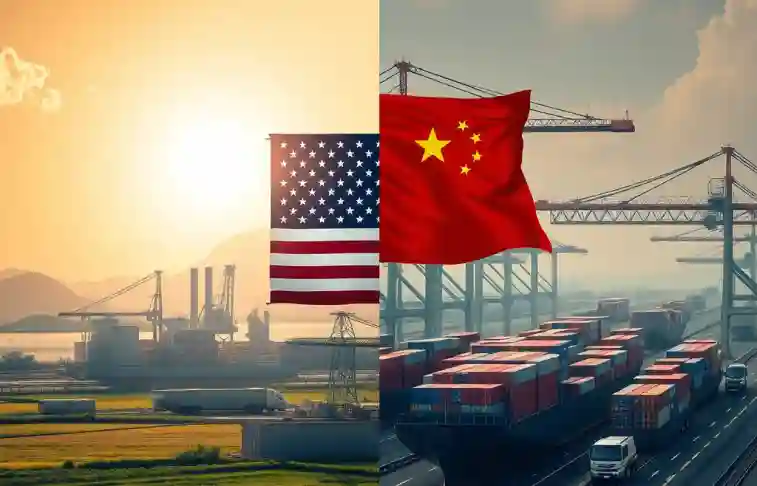
The “America First” trade policy, introduced in 2017, represents a shift toward protectionism, aiming to reduce trade deficits, enhance domestic industrial growth, and prioritize national security. This policy contrasts with China’s trade strategy, which has historically relied on export-led growth, state subsidies, and global supply chain integration. This analysis critically examines the effectiveness of America’s first trade policy and contrasts it with China’s approach using key examples.
1. America First Trade Policy: Key Features & Implications
The core principles of this policy include:
- Tariffs and Trade Barriers:
- The U.S. imposed tariffs on steel, aluminum, and Chinese goods under Section 301 of the Trade Act of 1974.
- The 2018 tariff war with China led to reciprocal tariffs on American agricultural and industrial exports.
- Reshoring and Industrial Independence:
- Policies encouraged U.S. companies to bring manufacturing back to American soil.
- Investments in domestic semiconductor production aimed to reduce reliance on foreign tech.
- Trade Deficit Reduction:
- Focused on renegotiating trade agreements (e.g., USMCA replacing NAFTA).
- Targeted currency manipulation by foreign governments.
- National Security and Economic Protectionism:
- Export controls on strategic goods like AI and microchips to China.
- Efforts to curb Chinese influence in critical industries, such as telecommunications (Huawei restrictions).
Effectiveness & Challenges
- Short-term gains: Tariffs increased government revenue and pressured China to negotiate trade terms.
- Long-term challenges: Higher costs for U.S. businesses relying on Chinese imports, retaliatory tariffs, and supply chain disruptions (e.g., agriculture sector losses due to Chinese countermeasures).
- Global response: Strained trade relations with allies (e.g., European tariffs on U.S. goods).
2. China’s Trade Policy: Contrasting Approach
China’s trade policy is export-driven, state-supported, and globally expansionist. Key aspects include:
- State-Led Economic Growth & Industrial Policy:
- Massive subsidies for domestic industries (e.g., solar energy, steel, and electronics).
- “Made in China 2025” initiative aimed at global tech dominance.
- Export-Oriented Trade Model:
- Lower tariffs and incentives for foreign investment.
- Dominance in global supply chains, especially in electronics and pharmaceuticals.
- Bilateral & Regional Trade Agreements:
- China’s Belt and Road Initiative (BRI) strengthens trade ties with developing nations.
- Membership in the Regional Comprehensive Economic Partnership (RCEP) enhances regional trade without U.S. involvement.
- Currency & Trade Surplus Strategy:
- China’s government-controlled exchange rate makes exports cheaper.
- Large trade surpluses with the U.S. despite tariffs.
Effectiveness & Challenges
- Short-term gains: Strong export growth, expanded geopolitical influence, and continued foreign direct investment (FDI).
- Long-term risks: Heavy reliance on global markets, U.S.-led trade restrictions, and economic slowdown due to domestic debt issues.
3. Case Studies: America First vs. China’s Trade Policy
| Aspect | America First (U.S.) | China’s Trade Policy |
|---|---|---|
| Tariff Impact | Raised costs for U.S. firms, retaliation from China | Benefited some domestic industries, but faced U.S. restrictions |
| Supply Chain Strategy | Reshoring efforts, semiconductor independence | Expanded global supply chain control (e.g., rare earth minerals) |
| Trade Agreements | Focused on renegotiations (USMCA, Phase One with China) | Expanded influence through RCEP, BRI |
| Tech & Innovation | Limited Chinese tech (Huawei, TikTok) | Heavy investment in AI, 5G, EVs |
| Currency Strategy | Investigated currency manipulation | Managed yuan valuation for trade advantage |
America’s First trade policy emphasizes protectionism, reshoring, and national security, while China’s model is expansionist, subsidy-driven, and export-oriented. The U.S. approach led to higher domestic investment but also trade tensions and economic inefficiencies. Meanwhile, China capitalized on its global supply chain but faced challenges from U.S. restrictions. Moving forward, a balanced trade strategy incorporating fair competition and strategic alliances could benefit both economies.
Criticism and Effectiveness of America First Trade Policy
1. Higher Costs for U.S. Businesses & Consumers
- Tariffs on Chinese imports raised prices for essential goods, from electronics to raw materials.
- Example: The 25% tariffs on steel and aluminum increased production costs for U.S. automakers and construction firms.
- Impact: Businesses either passed costs to consumers or faced profitability issues.
2. Trade War Retaliation and Agricultural Losses
- China responded with tariffs on U.S. goods, severely impacting farmers and exporters.
- Example: Soybean exports to China fell by over 50% in 2018, forcing the U.S. to provide $28 billion in bailout funds to struggling farmers.
- Impact: Short-term relief but long-term uncertainty for American agriculture.
3. Limited Success in Reducing Trade Deficits
- The policy did not significantly reduce the trade deficit, as tariffs failed to bring back large-scale manufacturing.
- Example: Despite tariffs, U.S. imports from China remained high, as companies rerouted supply chains through third countries like Vietnam.
- Impact: Trade deficits with other countries (e.g., Mexico, Vietnam) increased, offsetting gains against China.
4. Strained Relations with Allies
- The policy applied tariffs not just to China but also to European and Canadian goods, leading to diplomatic tensions.
- Example: The EU imposed retaliatory tariffs on U.S. products like whiskey and motorcycles.
- Impact: Weakened trade partnerships and slowed negotiations on new agreements.
5. Supply Chain Disruptions
- Tariffs and reshoring efforts led to shortages of essential goods, particularly during the COVID-19 pandemic.
- Example: Restrictions on Chinese medical equipment imports caused supply gaps in PPE (personal protective equipment).
- Impact: Exposed the risks of rapid decoupling from global trade networks.
Was the Policy Effective?
The America First trade policy had some success in promoting national security, reshoring industries, and renegotiating trade agreements. However, its overall effectiveness was limited by unintended consequences such as:
✅ Short-Term Gains (job growth, reduced Chinese influence in key sectors).
❌ Long-Term Challenges (higher costs, retaliatory tariffs, supply chain issues).
Final Assessment
- Effectiveness in Job Creation: Moderate (manufacturing jobs increased but not at expected levels).
- Success in Reducing Trade Deficits: Limited (shifts in global trade patterns offset gains).
- Impact on National Security: Strong (protection of key industries and technology).
- Impact on Global Trade Relations: Negative (strained alliances and increased trade tensions).
Going forward, a more balanced trade approach—combining protectionism with global cooperation—could yield better long-term results.
There will be 25% tariffs on goods coming into the US from Canada and Mexico, and 10% on imports from China from this weekend.
Is a U.S.-China Trade War Inevitable Under the “America First” Trade Policy?
Why a U.S.-China Trade War Seems Inevitable
1. Structural Trade Conflicts
The U.S. and China have fundamentally different economic models:
- The U.S. follows a free-market system, relying on private businesses and innovation.
- China operates a state-controlled capitalist system, heavily subsidizing key industries like semiconductors, electric vehicles, and telecommunications.
Key Conflict: The U.S. sees China’s state subsidies, forced technology transfers, and market barriers as unfair trade practices, while China views U.S. tariffs as economic containment. Given these opposing perspectives, conflict is likely to persist.
2. Section 301 Tariffs and Economic Retaliation
- Section 3(b) of the policy directs a review of Section 301 tariffs on Chinese goods, which were first imposed in 2018.
- Section 3(c) empowers the U.S. Trade Representative to investigate other discriminatory Chinese trade practices, potentially leading to more tariffs or sanctions.
- China has a history of retaliating with its own tariffs and restrictions, targeting key American industries like agriculture and technology.
Example: In 2018, the U.S. imposed tariffs on $250 billion worth of Chinese goods, and China retaliated with tariffs on $110 billion worth of U.S. goods, including soybeans and automobiles. A similar pattern could emerge again.
3. National Security vs. Trade Interdependence
- The U.S. policy increasingly links trade with national security, particularly regarding technology.
- The ban on Huawei, TikTok, and Chinese AI chips under national security concerns could provoke further retaliatory measures from China.
- China, in response, has imposed restrictions on American firms like Micron and Apple and could cut off rare earth exports, which are crucial for U.S. defense and tech industries.
4. Political Factors and 2024 Elections
- The “tough on China” stance is a bipartisan issue in the U.S., meaning any administration—especially Trump—would likely continue the trade war.
- Trump’s return to office would mean a more aggressive stance, potentially increasing tariffs, investment restrictions, and reshoring efforts.
- China, preparing for long-term trade disputes, is focusing on self-reliance in critical industries, making a full de-escalation unlikely.
Given these factors, a trade war is not just possible but probable, especially under an “America First” framework.
Would the U.S. Face Huge Economic Losses in a Renewed Trade War?
1. Increased Costs for American Consumers & Businesses
- Tariffs = Higher Import Prices → Inflationary Pressure
- U.S. businesses heavily rely on Chinese manufacturing, especially for electronics, machinery, and consumer goods.
- Higher tariffs would raise production costs, forcing businesses to either increase prices or absorb losses.
- Example: The 2018-2019 trade war cost American consumers an estimated $79 billion in higher prices (Federal Reserve study).
2. Retaliatory Tariffs on Key U.S. Sectors
- China could target American exports in key industries:
- Agriculture → Soybeans, corn, pork (hurts Midwest farmers).
- Technology → Apple, Tesla, Qualcomm (reduces market access).
- Energy → LNG exports (hurts oil & gas sector).
- Example: In 2018, U.S. soybean exports to China fell by 50%, costing American farmers billions and leading to $28 billion in federal bailouts.
3. Global Supply Chain Disruptions
- A renewed trade war would accelerate decoupling, forcing U.S. companies to shift supply chains to Vietnam, India, and Mexico.
- This process is costly and slow, increasing short-term economic instability.
- Example: Apple has moved some iPhone production to India, but China remains irreplaceable for high-volume production.
4. Financial Market Uncertainty & Economic Slowdown
- Trade war fears often rattle stock markets, reducing investment confidence.
- If tariffs expand, GDP growth could slow due to declining exports and corporate earnings.
- Example: The S&P 500 dropped 6% in May 2019 when Trump threatened 25% tariffs on $325 billion of Chinese goods.
Can America Avoid a Huge Loss?
Yes, but only with a more strategic approach.
Alternatives to a Full-Scale Trade War
✅ Selective Tariffs on Strategic Industries – Instead of broad tariffs, the U.S. could target sectors where China engages in unfair competition (e.g., solar panels, semiconductors).
✅ Incentives for Domestic Production – Reducing dependence on China through tax incentives rather than just tariffs could gradually shift supply chains without economic shocks.
✅ Stronger Alliances with Allies – Working with the EU, Japan, and India to counter China’s practices would create more leverage than unilateral tariffs.
Prediction: Will the U.S. Face a Huge Loss?
✅ Short-Term Impact: High consumer prices, economic uncertainty, and retaliatory tariffs would hurt U.S. businesses and farmers.
✅ Long-Term Impact: If properly managed, a controlled trade strategy could strengthen domestic industries and reduce reliance on China without excessive economic damage.
❌ Under Trump’s “America First” Approach: A full-scale trade war could cost hundreds of billions in GDP losses, repeating the economic turbulence of 2018-2019.
Final Verdict
- A trade war is likely if Trump’s aggressive policies continue.
- America would face huge short-term losses, but long-term gains depend on how strategically tariffs and trade policies are implemented.
- A smarter approach would be targeted trade actions rather than a broad trade war to minimize economic damage.
Bibliography
- Baldwin, R. (2016). The Great Convergence: Information Technology and the New Globalization. Harvard University Press.
- Why Read It? This book explains how modern globalization differs from traditional trade and how digital advancements are reshaping supply chains, which is key to understanding U.S.-China trade competition.
- Krugman, P., Obstfeld, M., & Melitz, M. (2018). International Economics: Theory and Policy. Pearson.
- Why Read It? A foundational text on trade policy, tariffs, and exchange rates, providing an analytical framework to assess the impact of America’s First Trade Policy and China’s trade strategy.
- Bown, C. P. (2020). The US-China Trade War: How We Got Here and What Comes Next. Peterson Institute for International Economics.
- Why Read It? Offers a detailed analysis of the U.S.-China trade war, explaining the key policies, tariffs, and their economic consequences.
- Shambaugh, D. (2021). China and the World. Oxford University Press.
- Why Read It? Provides insight into China’s global trade policies, including its Belt and Road Initiative, RCEP, and strategies to counterbalance U.S. trade restrictions.
- Rodrik, D. (2011). The Globalization Paradox: Democracy and the Future of the World Economy. W. W. Norton & Company.
- Why Read It? Discusses the tension between national sovereignty, trade policy, and globalization, relevant for evaluating protectionist policies like “America First.”
- Meltzer, J. P., & Shenai, N. (2019). The US-China Economic Relationship: A Comprehensive Approach. Brookings Institution.
- Why Read It? Analyzes the structural economic issues between the U.S. and China, including trade imbalances, supply chains, and technological competition.
- Blustein, P. (2019). Schism: China, America, and the Fracturing of the Global Trading System. Centre for International Governance Innovation.
- Why Read It? Examines the breakdown of the global trade system due to rising tensions between the U.S. and China, providing context for the impact of tariffs and trade policies.
- Autor, D. H., Dorn, D., & Hanson, G. H. (2016). The China Shock: Learning from Labor Market Adjustment to Large Changes in Trade. National Bureau of Economic Research.
- Why Read It? Investigates how China’s rise as a manufacturing powerhouse affected U.S. labor markets, which influenced the adoption of protectionist trade policies.
- Irwin, D. A. (2017). Clashing Over Commerce: A History of US Trade Policy. University of Chicago Press.
- Why Read It? Offers a historical perspective on U.S. trade policies, helping to contextualize the shift toward the “America First” approach.
- Ferguson, N. (2021). Doom: The Politics of Catastrophe. Penguin Press.
- Why Read It? Discusses economic nationalism and how trade policies influence geopolitical risks, including trade conflicts between the U.S. and China.
U.S.-China Trade Relations and the “America First” Trade Policy
- Krugman, Paul. (2020). Arguing with Zombies: Economics, Politics, and the Fight for a Better Future. W.W. Norton & Company.
- Why Read It? Krugman, a Nobel Prize-winning economist, provides sharp critiques of protectionist trade policies, including Trump’s tariffs on China. He explains how tariffs can backfire, raising consumer prices and harming economic growth.
- Quote: “Tariffs are taxes on consumers. The more you impose, the more you make your own people pay.”
- Bown, Chad P. (2021). The US-China Trade War: Tariffs, Phase One, and Beyond. Peterson Institute for International Economics.
- Why Read It? This book provides an in-depth analysis of the 2018-2019 trade war, evaluating its economic impact and the effectiveness of Trump’s tariffs. It helps explain whether a renewed trade war would be economically viable.
- Quote: “Trade wars are easy to start but nearly impossible to win without major collateral damage.”
- Lighthizer, Robert. (2023). No Trade is Free: Changing Course, Taking on China, and Helping America’s Workers. HarperCollins.
- Why Read It? Lighthizer, Trump’s former U.S. Trade Representative, was one of the architects of the America First trade policy. His book explains why tariffs were imposed and defends the administration’s aggressive trade stance.
- Quote: “China does not play by the rules of free trade. America must act to protect its industries, or it will lose them.”
- Blustein, Paul. (2019). Schism: China, America, and the Fracturing of the Global Trading System. The Brookings Institution Press.
- Why Read It? This book explores the long-term effects of U.S.-China trade tensions, explaining how economic decoupling is already happening and what it means for the future of globalization.
- Quote: “The global economy may never function the same again as the U.S. and China drift further apart.”
- Shirk, Susan. (2022). Overreach: How China Derailed Its Peaceful Rise. Oxford University Press.
- Why Read It? This book examines how China’s aggressive policies, including trade practices and technology theft, have led to worsening U.S.-China relations. It provides insight into why trade tensions exist and whether they can be resolved.
- Quote: “China’s economic ambitions and America’s resistance have created an unavoidable confrontation.”
- Destler, I.M. (2005). American Trade Politics. Institute for International Economics.
- Why Read It? While not focused only on China, this book is one of the best resources on the history of U.S. trade policy and why protectionism continues to be a major political force. It helps explain why “America First” trade policies gain traction.
- Quote: “Trade politics is never just about economics—it is about national identity and power.”