Indian Foreign Policy Challenges in the US-Israel-Iran Conflict Era
Indian Foreign Policy Challenges in the US-Israel-Iran Conflict Era
Indian Foreign Policy and West Asian Geopolitics: Economic Risks and Diplomatic Choices
Foreign Policy in an Age of Geopolitical Uncertainty
Date: 14th March 2026
The trajectory of Indian foreign policy has historically been shaped by a complex interplay between ethical posturing, pragmatic calculation, and structural constraints imposed by the international system. From the earliest days after independence, India attempted to craft a diplomatic posture that balanced moral legitimacy with strategic flexibility. Yet the contemporary moment reveals a transformation in tone, method, and emphasis, as India navigates a turbulent geopolitical environment characterized by intensifying great-power competition, energy insecurity, and regional volatility. The ongoing conflict involving the United States, Israel, and Iran—now extending into a twelve-day war—illustrates the dilemmas confronting India’s diplomatic establishment and the tension between historical doctrines and present-day compulsions.
India’s strategic vulnerability to developments in West Asia is profound. Much of the country’s economic growth relies on resources sourced from this region. India depends on imports for roughly 80–90 percent of its crude oil consumption, and approximately 50–60 percent of these imports originate from West Asia. In 2025 alone, about seventy billion dollars’ worth of crude oil was imported from the region. Before the present war, the price of crude hovered between sixty and sixty-five dollars per barrel; during the conflict it has surged to ninety to ninety-three dollars. Every ten-dollar increase in oil prices imposes an additional burden of roughly fourteen billion dollars on the Indian economy. Consequently, a rise of twenty or thirty dollars could generate an excess payment of forty-two billion dollars—nearly equivalent to a hundred thousand crore rupees. Such numbers illustrate the scale of India’s dependence and the fragility of its economic calculations when geopolitical disruptions occur.
Energy dependence does not end with crude oil. Around forty percent of the liquefied petroleum gas imported into India comes from Qatar, and production disruptions there immediately affect the domestic energy market. Natural gas supplies also originate significantly from this region. The fertilizer sector is similarly exposed: potash and other critical fertilizer inputs are imported from West Asian sources. Any disruption to these supply chains threatens agricultural productivity and the broader food economy. The ripple effects extend into other sectors as well—gems and diamonds, manufacturing, petrochemicals, plastics, textiles, construction, and infrastructure projects that rely heavily on petrochemical inputs. Even the metals and industrial commodities sectors face potential constraints. Remittances represent another dimension of dependence; nearly thirty-five percent of India’s total remittances originate from Indian workers in West Asia. Their security, employment stability, and the flow of money back home are directly influenced by regional stability.
Beyond commodities and remittances, the conflict disrupts maritime trade and transportation. Insurance premiums for shipping have increased sharply as vessels navigate more dangerous waters. Some ships are now forced to take longer routes around Africa, raising freight costs and elongating delivery times. Such disruptions reverberate throughout supply chains, increasing inflationary pressures and complicating economic management. The consequences of West Asian instability therefore permeate almost every sector of the Indian economy, revealing how geopolitics and economic development remain deeply intertwined.
Against this backdrop, India’s diplomatic positioning has become a subject of debate. Historically, Indian foreign policy—articulated most prominently during the era of Jawaharlal Nehru—was associated with the doctrine of non-alignment. This approach did not signify neutrality in the sense of disengagement; rather, it represented the preservation of independent judgment. India sought the autonomy to articulate its own views without formally aligning with either bloc during the Cold War. Strategic autonomy allowed India to criticize Western interventions such as the Suez Crisis while simultaneously maintaining relations with multiple actors across ideological divides. New Delhi cultivated ties with Israel even before formal diplomatic relations were established in the 1990s, while simultaneously nurturing close partnerships with Arab states like Egypt and Iraq. This diplomatic dexterity enabled India to interact with rival powers without becoming entangled in their conflicts.
The contemporary landscape, however, appears different. India is now simultaneously a member of the Quadrilateral Security Dialogue—often called the Quad—and the BRICS grouping. The Quad includes the United States, Japan, and Australia, and has been widely interpreted as a strategic alignment focused on the Indo-Pacific region. BRICS, by contrast, brings together emerging economies including China, Russia, Brazil, and South Africa. The coexistence of these affiliations reflects India’s attempt at “multi-alignment,” yet it also generates diplomatic contradictions. In a period of heightened conflict involving Iran—now also linked to BRICS—India’s perceived proximity to Israel and the United States risks complicating its relationships with West Asian partners.
One particularly sensitive dimension concerns Iran. Through Iran, India gains access to Central Asia and Afghanistan, and the development of the Chabahar Port has long been regarded as a strategic project designed to bypass Pakistan and expand connectivity. If relations with Tehran deteriorate, the viability of this corridor could be jeopardized. In the midst of a regional war, therefore, diplomatic signaling becomes crucial. Silence or ambiguity can be interpreted by different actors as tacit alignment or strategic hesitation.
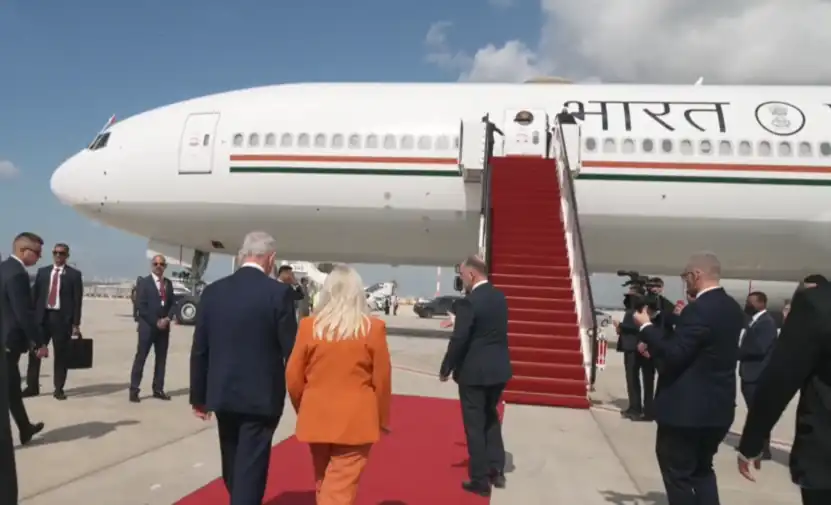
Critics argue that India’s current diplomatic posture appears overly identified with the United States and Israel. The optics surrounding high-level visits and public statements have reinforced this perception. Such positioning raises questions about whether India risks forfeiting its traditional image as a voice of the Global South. In recent years, New Delhi attempted to project itself as a champion of developing countries, particularly during its leadership initiatives associated with the Group of Twenty. However, if India remains silent during major crises affecting the developing world, its credibility as a representative of those interests may weaken.
Another critique concerns the personalization and transactional nature of contemporary diplomacy. Some observers suggest that foreign policy has become increasingly centered on leader-to-leader relationships and deal-making arrangements. Economic diplomacy, in this interpretation, sometimes appears less like a systematic state strategy and more like a sequence of bilateral agreements negotiated with specific leaders or corporate actors. Business interests, defense contracts, and infrastructure investments can intersect with diplomatic calculations, creating the impression that foreign policy is influenced by narrow commercial considerations. Advocates of this approach argue that promoting domestic industry is a legitimate objective of statecraft; critics respond that transparency and institutional oversight are necessary to prevent the erosion of broader national interests.
The tension between institutionalized diplomacy and personalized engagement also affects India’s ability to navigate multilateral forums. As a participant in both the Quad and BRICS, India must manage competing expectations. The Quad focuses on Indo-Pacific security cooperation and regional development initiatives, while BRICS emphasizes economic coordination among emerging economies and discussions about financial reforms, including debates over de-dollarization. In principle, participation in both forums could reflect strategic autonomy. Yet when geopolitical conflicts intensify—particularly involving members of one grouping against allies of another—India faces the challenge of maintaining equilibrium.
The present war has also accelerated broader geopolitical realignments. Russia and China appear to be drawing closer in response to Western pressure. If these trends continue, BRICS could acquire a stronger political dimension, especially in discussions about alternatives to Western-dominated financial institutions. India would then confront the delicate task of participating in such debates without alienating Western partners. Conversely, within the Quad framework, expectations may arise that India should support strategic initiatives aimed at counterbalancing China. Balancing these divergent expectations requires careful diplomatic choreography.
Pakistan’s diplomatic maneuvering illustrates another dimension of the regional equation. Islamabad has attempted to expand its options by maintaining relations with Iran while simultaneously deepening security cooperation with Gulf states such as Saudi Arabia. Defense arrangements between Pakistan and Gulf countries highlight the fluidity of alliances in West Asia. For India, the lesson is that foreign policy success often lies not in rigid alignment but in expanding strategic choices.
The Gulf monarchies themselves confront difficult dilemmas. Many host American military bases that provide security guarantees, but also make them potential targets during regional conflicts. If these states allow their territories to be used for attacks against Iran, they risk retaliation; if they distance themselves from the United States, they may lose vital protection. Consequently, they are exploring hedging strategies—strengthening their own military capabilities, diversifying security partnerships, and cultivating relationships with multiple external powers.
The specter of nuclear proliferation further complicates the situation. If Iran ultimately decides to pursue a nuclear weapon in response to perceived threats, the entire non-proliferation regime could unravel. Such developments would destabilize not only West Asia but also Europe and East Asia, where other states might reconsider their own nuclear options. The international system would become more dangerous and unpredictable.
For India, the economic implications of this instability are severe. Rising oil prices increase the fiscal deficit and intensify inflationary pressures. Shipping disruptions and declining remittances could reduce growth rates. Capital flows may also become volatile as investors seek safer markets during periods of uncertainty. India’s share of global trade remains relatively modest, and the country is not deeply embedded in major regional trade blocs. Negotiations with partners such as the European Union or East Asian economies have progressed slowly. In a world of fragmented supply chains and bilateral bargaining, India may face disadvantages unless it strengthens its domestic economic foundations.
These challenges intersect with long-term developmental ambitions. To achieve the vision of becoming a developed nation by 2047, India would require sustained growth rates approaching nine percent annually for two decades. Yet structural constraints—stagnant private investment, underutilized industrial capacity, and global economic volatility—make such acceleration difficult. Foreign policy cannot substitute for domestic reform, but it can create the external conditions necessary for economic expansion.
The changing nature of the international system adds another layer of complexity. The post-Second World War order, dominated by Western institutions and American leadership, is gradually eroding. Power is more widely distributed across multiple states, yet no single coalition possesses the authority or capacity to establish a stable global order. Instead of a neatly structured multipolar system, the world may be entering a phase of strategic disorder—an environment where cooperation occurs through ad hoc coalitions and issue-based partnerships rather than permanent alliances.
In such circumstances, countries like India may find both opportunities and risks. On the one hand, the absence of rigid blocs allows greater diplomatic maneuverability. On the other hand, bilateral negotiations with stronger powers can place weaker economies at a disadvantage. India’s leverage ultimately depends on its domestic capabilities—economic strength, technological innovation, political stability, and social cohesion.
Despite current uncertainties, India retains significant advantages. Its demographic scale, geographic location, and pluralistic social fabric give it the potential to play a constructive role in global governance. For much of its post-independence history, India derived diplomatic influence from a reputation for principled engagement and advocacy of peaceful solutions. Reaffirming these traditions—while adapting them to contemporary realities—could enhance India’s credibility as a mediator and bridge-builder in a fractured world.
Ultimately, the central challenge of Indian foreign policy lies in reconciling economic imperatives with strategic independence. Energy security, trade integration, and technological cooperation require engagement with major powers. Yet excessive alignment with any single camp risks narrowing India’s options. The historical doctrine of strategic autonomy—updated for a twenty-first-century context—remains a valuable compass. By cultivating diverse partnerships, strengthening regional connectivity, and articulating an independent voice in international forums, India can preserve the diplomatic flexibility necessary to navigate an increasingly uncertain global landscape.
The current crisis in West Asia, therefore, should not merely be viewed as a threat but also as a moment for reflection. It underscores the importance of foresight, institutional resilience, and public debate in shaping foreign policy. India’s future role will depend not only on the choices of its leaders but also on the capacity of its democratic institutions and strategic community to deliberate openly about national interests. If India can reconcile economic modernization with principled diplomacy, it may once again project influence disproportionate to its power and contribute to a more stable international environment.
Tanmoy Bhattacharyya
Read More
- Why Does India Appear Confused After the US-Israel Attack on Iran?
- UN Condemns Iran’s Attacks on Gulf States; Russia’s Alternative Resolution Rejected
- Modi failed to protect India’s interests at Chabahar under American Pressure