BRICS
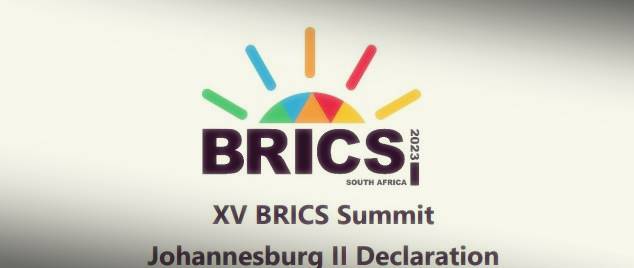
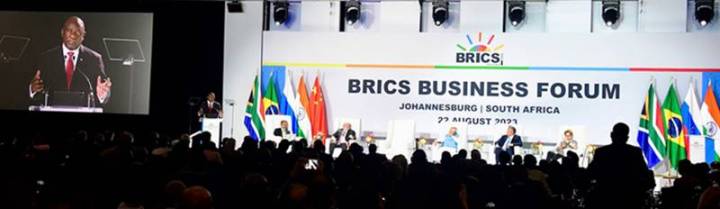
BRICS is an international group of major emerging economies formed to promote economic cooperation, political coordination, and development among its members. The original concept “BRIC” was introduced in 2001 by economist Jim O’Neill in a research paper predicting the rapid growth of Brazil, Russia, India, and China. The first formal meeting of BRIC foreign ministers took place on 20 September 2006 on the sidelines of the United Nations General Assembly in New York City. The first BRIC Summit was held on 16 June 2009 in Yekaterinburg, where leaders discussed reform of global financial institutions after the 2008 global financial crisis. In December 2010, South Africa was invited to join the group, and it officially became a member in April 2011 at the BRICS Summit in Sanya. This expanded the group to five countries, representing major regions of the developing world. A major achievement of BRICS was the establishment of the New Development Bank (NDB) during the 6th BRICS Summit in July 2014 in Fortaleza. The bank began operations in July 2015 with headquarters in Shanghai to fund infrastructure and sustainable development projects. Along with this, the Contingent Reserve Arrangement (CRA) worth $100 billion was also created in 2014 to provide financial support during economic crises. In August 2023, during the 15th BRICS Summit in Johannesburg, the group announced expansion by inviting countries including Saudi Arabia, Iran, Egypt, Ethiopia, and the UAE, effective from 1 January 2024. Today, BRICS represents about 40% of the world’s population and a significant share of global GDP.