

Indo-China relation, President Xi Jinping Meets with Indian Prime Minister Narendra Modi
October 24, 2024
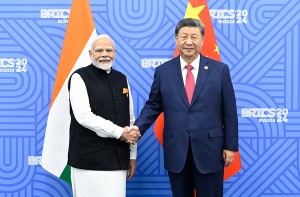
Indo-China Relation: President Xi Jinping met with Indian Prime Minister Narendra Modi on the margins of the BRICS Summit held in Kazan, Russia, where both leaders engaged in a high-stakes dialogue aimed at enhancing bilateral relations and addressing pressing regional challenges. This meeting marked a significant opportunity for the two powers to discuss a range of issues, including trade partnerships, security cooperation, and climate change initiatives, reflecting their commitment to fostering a collaborative approach that could strengthen ties and promote stability in the increasingly complex geopolitical landscape of Asia.
President Xi pointed out that as time-honored civilizations, large developing countries and important members of the Global South, China and India both stand at a crucial phase of their respective modernization endeavors. It is in the fundamental interest of our two countries and two peoples to keep to the trend of history and the right direction of bilateral relations. The two sides should strengthen communication and cooperation, enhance strategic mutual trust, and facilitate each other’s pursuit of development aspirations. In an increasingly interconnected and rapidly changing global landscape, this partnership holds immense potential, enabling both nations to leverage their unique strengths and resources to overcome shared challenges. The two countries must also shoulder their international responsibility, set an example in boosting the strength and unity of developing countries, and contribute to promoting a multipolar world and greater democracy in international relations. By collaborating on critical issues such as climate change, economic growth, and regional security, China and India can forge a robust alliance that not only benefits their citizens but also fosters stability and prosperity throughout the Global South, thereby affirming their roles as leaders in shaping a more inclusive and equitable international order.
President Xi stressed that China-India relations are essentially a question of how the two large developing countries and neighbors, each with a 1.4-billion-strong population, treat each other in an increasingly interconnected world. Development is now the biggest shared goal of China and India, as both nations seek to lift their citizens out of poverty and improve their overall quality of life. The two sides should continue to uphold their important understandings, including that China and India are each other’s development opportunity rather than threat, and cooperation partner rather than competitor. They should maintain a sound strategic perception of each other, understanding that their successes can complement rather than hinder one another. Furthermore, there is a great need for collaborative initiatives that enhance trade, technology exchanges, and infrastructure development, which will not only benefit their economies but also strengthen bilateral ties. Through open communication and mutual respect, China and India can work together to find the right and bright path for big, neighboring countries to live in harmony and develop side by side, paving the way for a prosperous future that brings stability and peace to the region.
Prime Minister Modi noted that maintaining the steady growth of India-China relations is critical to the two countries and peoples. It not only concerns the well-being and future of 2.8 billion people, but also carries great significance for peace and stability of the region and even the world at large. Against a complex international landscape, cooperation between India and China, two ancient civilizations and engines of economic growth, can help drive economic recovery and promote multipolarity in the world.
With historical ties that have shaped both societies, it is imperative to build on these foundations to address the pressing challenges faced globally, including climate change, trade imbalances, and security concerns. India is willing to strengthen strategic communication, enhance strategic mutual trust, and expand mutually beneficial cooperation with China. By fostering open dialogues and collaborative initiatives, both nations can work towards common goals that benefit their populations. It will give every support for China’s Shanghai Cooperation Organization presidency and strengthen communication and cooperation with China in BRICS and other multilateral frameworks, thereby ensuring that both nations play a pivotal role in shaping a more just and equitable international order that not only serves their interests but also contributes to global harmony and development.
The two leaders commended the important progress the two sides had recently made through intensive communication on resolving the relevant issues in the border areas. Prime Minister Modi made suggestions on improving and developing the relationship, which President Xi agreed to in principle.
The two sides agreed to make good use of the Special Representatives mechanism on the China-India boundary question, ensure peace and tranquility in the border areas, and find a fair and reasonable settlement.
The two sides agreed on holding talks between their foreign ministers and officials at various levels to bring the relationship back to sound and steady development at an early date.
The two sides agreed to strengthen communication and cooperation in multilateral fora to safeguard the common interests of developing countries.
The two sides were of the view that this meeting is constructive and carries great significance, recognizing the need for ongoing dialogue to enhance mutual understanding. They agreed to view and handle China-India relations from a strategic height and long-term perspective, emphasizing the importance of collaboration in addressing global challenges. Additionally, they committed to preventing specific disagreements from affecting the overall relationship, thereby strengthening their partnership. This positive approach is vital for not only contributing to maintaining regional and global peace and prosperity but also for advancing multipolarity in the world, ensuring a balanced international order where diverse voices and interests are respected and integrated into decision-making processes. Through collective efforts, both nations aspire to foster a sense of trust and shared responsibility that can lead to sustainable growth and development for their peoples and the broader region.
Cai Qi and Wang Yi, among others, attended the meeting.
- BRICS security officials meet | Putin tagged Russia, India & China
- India and China both deployed around 50,000 to 60,000 troops along the high-altitude line of actual control-11/01/2022
- China-India Border Affairs: China and India Hold 28th Meeting (01/12/2023)
- Khrushchev and Mao conversation on political situations in Tibet, India, Indochina, and Taiwan-02/10/1959
- Indian to collect and cremate dead bodies of their soldiers from China: Indo-sino war Docs-1962
More Stories
Income Tax Bar Association Ahmedabad (Office-Bearers) 2026-27
DLSA Howrah Panel Advocate Enrollment 2026 (Group-B)
DLSA West Bengal Contact List – All 22 District Legal Services Authorities