Meta-Civilizational Architecture
Encyclopedia of Contemporary World History
Giorgia Meloni Announces Italy School Veil Ban and Foreign Student Class Limits
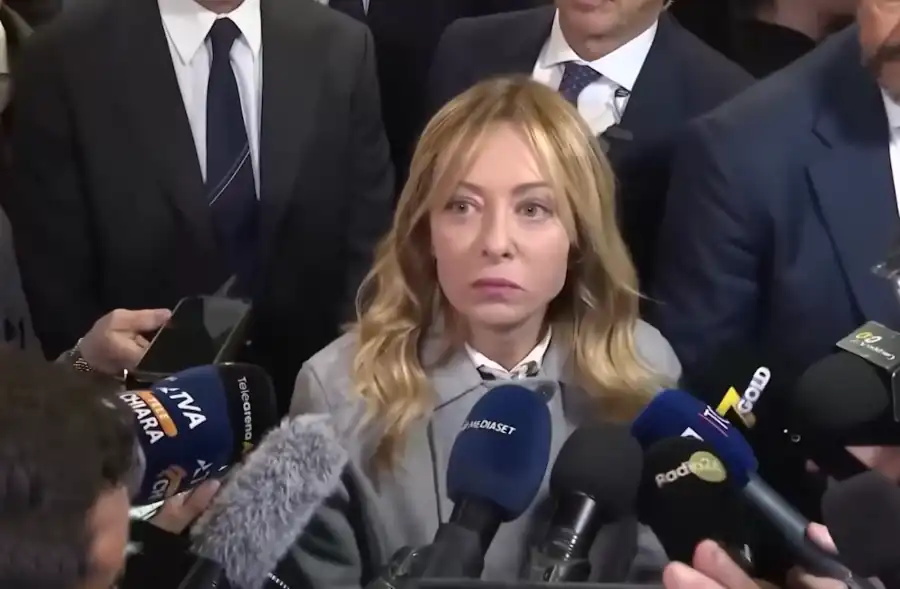
On 20 September 2026, Italian Prime Minister Giorgia Meloni announced that her government would introduce measures to ban burqas and niqabs in schools, establish a legal maximum for foreign students in individual classes, and require parents of foreign pupils experiencing serious difficulties in integration to learn Italian. Meloni made the announcement in Rome at the annual national gathering of Gioventù Nazionale, the youth organisation of her party, Fratelli d’Italia (FdI). She said that a measure would soon be presented to the Italian Council of Ministers to establish a maximum number of foreign students per class and to impose Italian-language learning requirements on parents where their children were experiencing serious difficulties integrating into the school system. The precise numerical ceiling was not specified.
Meloni placed the measures within her government’s conception of integration through the Italian language, Italian culture and respect for Italian rules. She argued that if a class contained only one child who did not understand Italian, that pupil could learn the language and integrate through contact with classmates and teachers; where the number of pupils unable to understand Italian became large, or even a majority, she argued that the situation ceased to constitute integration and instead represented neglect. She also stated that students in Italy should attend school with their faces uncovered, arguing that no person, in the name of a real or supposed tradition, should determine that a young woman must conceal her face.
The proposed measure concerns the burqa and niqab, not the ordinary hijab. A burqa traditionally covers the entire body and includes a mesh covering the eyes; a niqab covers the face while leaving the eyes visible; a hijab covers the hair and neck while leaving the face uncovered. Meloni’s proposal therefore concerns full-face coverings within educational institutions. The issue forms part of a broader Italian debate concerning immigration, religious symbols, cultural integration, citizenship, women’s dress and the authority of the Italian state within schools.
Italy already has legislation dealing with face concealment. Article 5 of Law No. 152 of 22 May 1975, commonly known as the Reale Law, prohibited the wearing of helmets or other garments capable of making identification difficult in public places without a justified reason. The law was introduced during the Years of Lead, when public security was a major concern. A 2008 ruling subsequently clarified the application of the provision to religious or cultural reasons, while maintaining the requirement that the face could be revealed when identity verification was necessary. Consequently, neither the burqa nor the niqab has historically been subject to an absolute nationwide prohibition in Italy.
The question was again brought before Parliament during 2026. In March 2026, the League (Lega), a member of Meloni’s governing coalition, introduced a Senate bill seeking to amend Article 5 of the 1975 Reale Law. The proposed amendment addressed the concealment of the face and created a proposed offence concerning the forced concealment of another person’s face, punishable by one to two years’ imprisonment and fines between €10,000 and €30,000. The proposal also provided for restrictions concerning the acquisition of Italian citizenship by persons convicted under the provision. In late July 2026, the political movement Futuro Nazionale, founded by European Parliament member and retired general Roberto Vannacci, tabled a resolution against full-face veils in the Culture Committee of the Chamber of Deputies. The resolution was approved with centre-right votes after being redrafted at the government’s request. In early August 2026, Education and Merit Minister Giuseppe Valditara proposed action against the full-face veil through an amendment connected with the security bill.
The proposed foreign-student ceiling likewise builds upon an existing Italian framework. A 30-percent limit on pupils without Italian citizenship was established through a 2010 ministerial circular issued during the tenure of Education Minister Mariastella Gelmini. The existing limit has frequently encountered practical difficulties, particularly in areas where demographic conditions produce a high concentration of pupils with foreign citizenship. The September 2026 proposal therefore raises the question of whether the government intends to replace, strengthen, formalise or otherwise modify an existing administrative limit through a specific statutory rule.
According to Fondazione ISMU, pupils with non-Italian citizenship represented approximately 11.6 percent of students enrolled in Italian schools, equivalent to nearly 12 pupils in every 100. The national figure, however, does not describe the distribution within individual municipalities, neighbourhoods or schools. Some local school systems have substantially higher concentrations than the national average. It is this question of classroom concentration, rather than merely the national percentage of foreign pupils, that lies at the centre of the government’s proposed legal ceiling.
The Italian debate has a wider European background. France introduced a nationwide prohibition on concealing the face in public places in April 2011; the measure was subsequently upheld by the European Court of Human Rights. Belgium adopted a nationwide face-covering prohibition in July 2011, with financial and criminal penalties. Bulgaria prohibited full-face veils in state, administrative and educational institutions from September 2016. Austria adopted an anti-mask law in October 2017 requiring faces to remain visible in public spaces. From September 2026, Austria also prohibited girls up to the age of 14 from wearing at school a veil that covers the head according to Islamic traditions. Denmark introduced a nationwide face-covering prohibition in August 2018, with financial penalties increasing for repeat violations. The Netherlands introduced a partial prohibition in August 2019, covering institutions and locations including schools, hospitals, government offices and public transport. Switzerland introduced a federal public-space face-covering prohibition following a national referendum, with implementing legislation taking effect in 2023. Portugal completed its legislative process in August 2026 with legislation prohibiting face coverings in public spaces and providing financial penalties.
Other European systems employ different constitutional and administrative approaches. Germany has no general nationwide prohibition on face coverings, although federal legislation restricts facial concealment for certain public employees, judges, members of the armed forces and motorists, while several German Länder have adopted restrictions affecting full-face veils in schools and universities. Spain and Poland, by contrast, operate within constitutional frameworks that protect freedom of conscience and religion, producing a different legal environment for restrictions on religious dress.
The question of foreign pupils in classrooms also has European precedents but no uniform European model. Denmark has permitted upper-secondary schools to introduce limits of up to 50 percent for pupils described as being of non-Western origin or coming from disadvantaged neighbourhoods. Danish schools may also organise classes with regard to parents’ income, with the stated objective of encouraging social and ethnic mixing. France does not operate ethnic quotas of the Italian type because the French state does not ordinarily collect official statistics according to ethnic or religious identity. Instead, French authorities use school zoning and catchment-area reforms to redistribute pupils between working-class and wealthier neighbourhoods; in districts with high concentrations of migrant pupils, authorities may also reduce the number of pupils per class.
Italy’s proposed statutory ceiling would therefore operate through citizenship-based classification, rather than an ethnic or religious classification. The distinction is significant because pupils holding Italian citizenship may have migrant family origins, while many foreign-born or immigrant-origin pupils may possess Italian citizenship and consequently fall outside a citizenship-based numerical limit. The proposal announced on 20 September did not specify whether the future legislation would simply codify the existing 30-percent principle, establish a different percentage, introduce exceptions, or create a new administrative mechanism for schools with exceptional demographic circumstances.
The measures have acquired particular political importance because immigration is expected to remain a central issue in Italy’s 2027 general election. Meloni’s government, formed in October 2022, has been Italy’s longest-running government since the end of the Second World War, and competition has intensified on its political right. Futuro Nazionale, associated with Roberto Vannacci, has advocated tougher measures concerning immigration and the wearing of full-face veils; the movement had already called for a crackdown on burqas in schools in July 2026. The League, another component of the governing coalition, had separately pursued legislation concerning face coverings earlier in the year.
The September announcement therefore brings together several strands of Italian public policy: school administration, immigration, Italian-language acquisition, religious dress, public identification, citizenship, cultural integration and national political competition. The proposed package is expected to proceed first through the Council of Ministers. If the government adopts the measures in a form requiring parliamentary approval, Parliament will determine their final legal content, including the precise definition of foreign pupils, the numerical ceiling applicable to classes, exemptions for particular schools or demographic circumstances, the scope of the Italian-language obligation imposed upon parents, and the enforcement of the proposed prohibition on burqas and niqabs in Italian schools. As of 20 September 2026, these details had not yet been specified by the Prime Minister.
Sarvarthapedia Knowledge Web — School Integration, Face Veils, Immigration and National Identity
Core Node
Italy — 2026 School Integration Measures
- Giorgia Meloni
- → Fratelli d’Italia
- → Italian immigration policy
- → school integration
- → Italian-language acquisition
- → regulation of religious dress
- → foreign-student distribution
- → 2027 Italian general election
- 20 September 2026, Rome
- → Fenix / Gioventù Nazionale
- → proposed Council of Ministers measure
- → proposed parliamentary legislation
- Proposed policy cluster:
- → Burqa and niqab prohibition in schools
- → maximum foreign students per class
- → Italian-language requirement for certain parents
- → integration through Italian language and school system
The September 2026 proposal is therefore a junction-node connecting immigration policy, education policy, religious dress, language policy, citizenship, integration, and national identity.
Cluster: Italian Immigration and Integration
Immigration in Italy
Central Mediterranean Migration
- Italy
- ↔ Mediterranean migration routes
- ↔ North African migration
- ↔ border control
- ↔ asylum policy
- ↔ European migration policy
- ↔ citizenship
- ↔ migrant integration
Italian Integration Policy
- Migration
- → school admission
- → Italian language
- → employment
- → citizenship
- → cultural integration
- → family integration
- School
- → first institutional environment for integration
- → language acquisition
- → civic education
- → contact between Italian and foreign pupils
Language as Integration
- Italian language
- ↔ school performance
- ↔ classroom communication
- ↔ parental participation
- ↔ social integration
- ↔ cultural transmission
- Foreign parents
- → proposed compulsory Italian learning where children face serious integration difficulties
- Italian-language policy
- ↔ Decree-Law 71/2024
- ↔ language assessment
- ↔ additional Italian teaching
- ↔ personalised educational plans
Cluster: Foreign Students in Italian Schools
Foreign-Student Distribution
- Foreign pupils
- → class composition
- → language competence
- → school integration
- → educational achievement
- → demographic concentration
- 11.6%
- → approximate proportion of pupils without Italian citizenship
- → national school population
- National percentage
- ≠ identical distribution in every school
- → regional variation
- → municipal variation
- → neighbourhood concentration
- → individual-school concentration
30 Percent Principle
- 2010
- → ministerial circular
- → 30% guideline concerning foreign pupils
- 30% principle
- → class distribution
- → school administration
- → demographic concentration
- → later political demand for statutory legislation
- 2026
- → Giuseppe Valditara
- → criticism that the 30% limit had not been effectively implemented
- → proposal to move from circular to law
- → regional school offices
- → redistribution between schools
- → avoidance of concentrated “ghetto” schools
Earlier Legal Framework
- DPR 394/1999, Article 45
- → foreign minors’ right to education
- → admission under conditions applicable to Italian minors
- → distribution of foreign pupils among classes
- → avoidance of classes in which foreign pupils become predominant
- → Italian-language support
- → communication with foreign families
- → cultural mediators
- → intercultural education
2024 Language-Integration Framework
- Decree-Law No. 71, 31 May 2024
- → Article 11
- → Italian-language teachers
- → classes with significant numbers of newly enrolled foreign pupils lacking basic Italian
- → language assessment
- → personalised educational plans
- → extracurricular Italian-language programmes
- → CPIA cooperation
- 2024 framework
- → 2025–26 school year
- → dedicated Italian-language teaching
- → stronger institutional integration mechanisms
Cluster: Religious Dress and Face Covering
Burqa
- Burqa
- → full-body covering
- → face covered
- → eyes generally viewed through mesh
- Burqa
- ↔ religious dress
- ↔ public identification
- ↔ women’s dress
- ↔ secularism
- ↔ school regulation
- ↔ public-order law
Niqab
- Niqab
- → face covering
- → eyes visible
- → distinct from hijab
- Niqab
- ↔ religious expression
- ↔ face identification
- ↔ school regulation
- ↔ European face-covering legislation
Hijab
- Hijab
- → hair and neck covered
- → face remains visible
- Hijab
- ≠ niqab
- ≠ burqa
- This distinction
- → important for legal classification
- → important for school policy
- → important for comparative European law
Cluster: Italian Face-Covering Law
Reale Law
- Law No. 152 of 22 May 1975
- → Article 5
- → face concealment
- → identification
- → public security
- → Years of Lead
- Reale Law
- ↔ anti-mask legislation
- ↔ public-order law
- ↔ identity verification
- ↔ religious dress debate
2008 Legal Interpretation
- 2008
- → religious/cultural justification
- → face-covering question
- → identity verification
- Existing framework
- → no simple nationwide prohibition of every form of religious face covering
- → identification requirements remain relevant
- 2026 proposal
- → school-specific prohibition
- → possible strengthening of existing framework
2026 Legislative Movement
- March 2026
- → League Senate bill
- → amendment of Article 5
- → forced concealment of face
- → proposed imprisonment
- → proposed fines
- → citizenship consequences
- July 2026
- → Futuro Nazionale
- → Roberto Vannacci
- → Culture Committee
- → resolution against full-face veil
- August 2026
- → Giuseppe Valditara
- → security-bill amendment
- → full-face veil
- 20 September 2026
- → Giorgia Meloni
- → proposed school prohibition
- → Council of Ministers
Cluster: European Face-Covering Regulation
France
- 2011
- → nationwide prohibition on concealing the face in public
- → European Court of Human Rights
- France
- ↔ secularism
- ↔ public space
- ↔ religious expression
- ↔ European human-rights law
Belgium
- 2011
- → nationwide face-covering prohibition
- → fines
- → imprisonment
- Belgium
- ↔ France
- ↔ European public-space regulation
Bulgaria
- 2016
- → restrictions on full-face veils
- → state institutions
- → administrative institutions
- → educational institutions
Austria
- 2017
- → anti-mask legislation
- September 2026
- → additional school restriction for girls up to age 14
- Austria
- ↔ school regulation
- ↔ Islamic dress
- ↔ child policy
Denmark
- 2018
- → nationwide face-covering prohibition
- → financial penalties
- → repeat-offence penalties
- Denmark
- ↔ integration policy
- ↔ school composition
- ↔ social mixing
Netherlands
- 2019
- → partial face-covering prohibition
- → schools
- → hospitals
- → government offices
- → public transport
Switzerland
- 2021 referendum
- → federal face-covering prohibition
- 2023
- → implementation
- Switzerland
- ↔ direct democracy
- ↔ religious dress
- ↔ public-space regulation
Portugal
- August 2026
- → completed legislative process
- → face-covering prohibition in public spaces
- → financial penalties
Germany
- No nationwide general prohibition
- Restrictions
- → public employees
- → judges
- → armed forces
- → motorists
- → individual Länder
- → schools and universities
Cluster: European Models of School Integration
Italy
- Citizenship-based approach
- → foreign pupils
- → classroom percentage
- → Italian language
- → distribution between schools
- Italy
↔ 30% principle
↔ 2024 language-support measures
↔ 2026 proposed statutory ceiling
Denmark
- School composition
- → non-Western origin
- → disadvantaged neighbourhoods
- → social mixing
- → upper-secondary school limits
- Denmark
↔ socioeconomic classification
↔ ethnic/social concentration
↔ school segregation
France
- Ethnic statistics
- → restricted state collection
- Alternative mechanism
- → school zoning
- → catchment-area reform
- → redistribution of pupils
- → reduction of class size in concentrated areas
- France
↔ secularism
↔ zoning
↔ social mixing
↔ integration
Cluster: School as an Integration Institution
School
- School
- → language acquisition
- → civic education
- → socialisation
- → national curriculum
- → cultural transmission
- → peer integration
- School
↔ family
↔ state
↔ language
↔ citizenship
↔ national identity
Classroom Composition
- Classroom
→ linguistic environment
→ teacher workload
→ peer interaction
→ educational attainment
→ integration - Foreign-student concentration
→ class distribution
→ school distribution
→ neighbourhood demographics
→ educational policy
Family–School Relationship
- Foreign pupils
↔ parents
↔ Italian language
↔ teachers
↔ cultural mediation
↔ school administration - Parent language acquisition
→ communication with school
→ participation in child’s education
→ integration policy
Cluster: Citizenship, National Identity and Integration
Citizenship
- Citizenship
↔ foreign-student statistics
↔ immigration
↔ naturalisation
↔ national identity - Foreign student
≠ necessarily foreign-born
≠ necessarily Muslim
≠ necessarily recently arrived - Citizenship-based regulation
→ measurable legal category
→ different from ethnicity
→ different from religion
→ different from ancestry
National Identity
- Italian identity
↔ Italian language
↔ national curriculum
↔ constitutional order
↔ public institutions
↔ cultural integration - National identity
↔ immigration debate
↔ citizenship debate
↔ religious symbols
↔ school policy
Cluster: Political Competition in Italy
Giorgia Meloni
- Giorgia Meloni
→ Prime Minister
→ Fratelli d’Italia
→ immigration policy
→ school policy
→ national identity
→ 2027 election
Fratelli d’Italia
- FdI
↔ nationalist-conservative politics
↔ Meloni government
↔ Gioventù Nazionale
↔ immigration debate
League
- League
→ governing coalition
→ March 2026 face-covering bill
→ Reale Law
→ public-order legislation
Roberto Vannacci
- Roberto Vannacci
→ Futuro Nazionale
→ European Parliament
→ full-face veil restrictions
→ immigration debate
→ political competition to the right of FdI
2027 Italian General Election
- 2027 election
→ immigration
→ national identity
→ school integration
→ religious dress
→ political competition - 2026 school proposals
→ political context of 2027
→ migration as electoral issue
Cluster: Law, Society and Religious Freedom
Religious Freedom
- Religious freedom
↔ religious dress
↔ constitutional protection
↔ public-order restrictions
↔ school regulations
↔ European human-rights law
Public Identification
- Face
→ personal identification
→ security
→ examination
→ school administration - Face covering
↔ identification
↔ religious expression
↔ public order
↔ gender and dress
Gender and Dress
- Full-face veil
↔ religious practice
↔ women’s dress
↔ autonomy
↔ state regulation
↔ equality arguments
Cluster: Historical-Legal Genealogy
1975 → 2008 → 2010 → 2024 → 2026
- 1975
→ Reale Law
→ face concealment
→ public security - 2008
→ judicial interpretation
→ religious/cultural justification
→ identification - 2010
→ 30% foreign-pupil guideline
→ classroom distribution - 2024
→ Decree-Law 71
→ Italian-language integration
→ dedicated teachers
→ language assessment - 2026
→ statutory foreign-pupil ceiling proposed
→ parental Italian requirement proposed
→ burqa/niqab school prohibition proposed - 2027
→ general election
→ immigration and integration as major political questions
Sarvarthapedia Conceptual Links
Immigration → School → Language → Integration
Migration
→ Foreign Population
→ Foreign Pupils
→ Classroom Composition
→ Italian Language
→ School Integration
→ Social Integration
→ Citizenship
Religion → Dress → Face → Identification → Law
Religious Dress
→ Hijab / Niqab / Burqa
→ Face Covering
→ Identification
→ Public Order
→ School Regulation
→ Religious Freedom
Demography → Classroom → School → State
Migration Demography
→ Local Concentration
→ Foreign-Pupil Concentration
→ Classroom Distribution
→ School Segregation / Social Mixing
→ Education Policy
→ State Regulation
Family → Language → Child → School
Foreign Parents
→ Italian Language
→ Parent–School Communication
→ Child’s Integration
→ Educational Participation
→ Social Integration
Law → Policy → Administration
1975 Reale Law
→ 2008 Interpretation
→ 2010 30% Circular
→ 2024 Integration Measures
→ 2026 Proposed Legislation
Italy → Europe → Comparative Integration
Italy
↔ France
↔ Belgium
↔ Austria
↔ Denmark
↔ Netherlands
↔ Switzerland
↔ Portugal
↔ Germany
Sarvarthapedia GraphRAG Architecture
1. Knowledge Domain
Root Domain: Italy — Immigration, School Integration, Religious Dress and European Policy
Italy 2026│├── Giorgia Meloni├── Italian Government├── Fratelli d’Italia├── Immigration├── Foreign Students├── Italian Schools├── Language Integration├── Burqa├── Niqab├── Hijab├── Face-Covering Law├── Reale Law 1975├── 2008 Legal Interpretation├── Foreign-Student 30% Rule├── 2024 Language Measures├── 2026 Legislative Proposals├── European Face-Covering Laws├── European School Integration Models└── 2027 Italian General Election
2. GraphRAG Master Graph
Entity Layer
[Giorgia Meloni] │ ├── leader_of ──> [Fratelli d’Italia] │ ├── heads ──> [Italian Government] │ ├── announced ──> [2026 School Measures] │ └── political_context ──> [2027 General Election][2026 School Measures] │ ├── proposes ──> [Burqa/Niqab School Ban] ├── proposes ──> [Foreign Student Class Ceiling] └── proposes ──> [Parental Italian Requirement][Foreign Students] │ ├── enrolled_in ──> [Italian Schools] ├── affected_by ──> [30% Rule] ├── connected_to ──> [Language Integration] └── connected_to ──> [Classroom Composition][Burqa] │ ├── is_type_of ──> [Face Covering] └── distinguished_from ──> [Hijab][Niqab] │ ├── is_type_of ──> [Face Covering] └── distinguished_from ──> [Hijab]
3. Temporal Graph
Historical Timeline Node
1975│└── Reale Law │ └── Article 5 │ └── Face Concealment │ ↓2008│└── Legal Interpretation │ └── Religious/Cultural Justification │ └── Identification Requirement │ ↓2010│└── 30% Foreign-Pupil Guideline │ └── Classroom Distribution │ ↓2024│└── Decree-Law 71 │ ├── Italian Language Support ├── Language Assessment ├── Dedicated Teachers └── Integration Measures │ ↓March 2026│└── League Senate Proposal │ └── Amendment to Reale Law │ ↓July 2026│└── Futuro Nazionale Resolution │ └── Full-Face Veil │ ↓August 2026│└── Valditara Proposal │ └── Full-Face Veil │ ↓20 September 2026│└── Meloni Announcement │ ├── Burqa/Niqab School Ban ├── Foreign-Pupil Ceiling └── Parent Italian Requirement │ ↓2027│└── Italian General Election
4. Core Concept Graph
Integration Cluster
Immigration ↓Foreign Population ↓Foreign Families ↓Foreign Pupils ↓School ↓Italian Language ↓Classroom Communication ↓Educational Integration ↓Social Integration ↓Citizenship
Language Graph
Italian Language│├── Student Language Competence│ ↓│ Classroom Participation│├── Parent Language Competence│ ↓│ School–Family Communication│├── Teacher Support│ ↓│ Language Acquisition│└── Cultural Integration ↓ National Institutions
Classroom Demography Graph
Migration ↓Local Demography ↓Neighbourhood Concentration ↓School Concentration ↓Classroom Composition ↓Language Environment ↓Integration Policy
GraphRAG pathway: Foreign Students → Classroom → Language → Integration → 30% Rule → 2026 Proposal.
5. Face-Covering Concept Graph
Religious Dress Ontology
Religious / Cultural Dress│├── Hijab│ └── Face Visible│├── Niqab│ └── Face Covered / Eyes Visible│└── Burqa └── Face and Body Covered └── Eye Mesh
Legal Graph
Face Covering│├── Religious Freedom├── Personal Autonomy├── Gender and Dress├── Public Identification├── Public Security└── School Regulation
The retrieval system should distinguish “Islamic head covering” from “full-face covering”, preventing the graph from incorrectly merging hijab, niqab and burqa.
6. Italian Legal Graph
Reale Law Node
Law No. 152 / 1975 │ └── Article 5 │ ├── Public Places ├── Identification ├── Helmets ├── Face-Concealing Garments └── Justified Reason
2008 Node
2008 Interpretation │ ├── Religious Reason ├── Cultural Reason └── Identity Verification
2026 Legislative Node
2026│├── League Bill│ ├── Article 5 amendment│ ├── Forced Concealment│ ├── Imprisonment│ ├── Financial Penalties│ └── Citizenship Consequences│├── Futuro Nazionale Resolution│ └── Full-Face Veil│├── Valditara Initiative│ └── Security Bill Amendment│└── Meloni Proposal ├── School Veil Ban ├── Foreign-Pupil Ceiling └── Parent Language Requirement
7. Foreign-Student Legal Graph
Foreign Pupils│├── DPR 394/1999 Article 45│ ├── Right to Education│ ├── Class Distribution│ ├── Avoidance of Excessive Concentration│ ├── Italian Language Support│ └── Cultural Mediation│├── 2010 Ministerial Circular│ └── 30% Principle│├── 2024 Decree-Law 71│ ├── Language Support│ ├── Dedicated Teachers│ ├── Language Assessment│ └── Personalised Educational Measures│└── 2026 Meloni Proposal └── Statutory Maximum
GraphRAG relationship: 1999 → 2010 → 2024 → 2026
8. Political-Actor Graph
Italian Government│├── Giorgia Meloni│ └── Fratelli d’Italia│├── Giuseppe Valditara│ └── Education and Merit Ministry│├── League│ └── March 2026 Senate Bill│└── Coalition
Political Competition│├── Fratelli d’Italia│├── League│└── Futuro Nazionale │ └── Roberto Vannacci
Event Relationship
2026 Policy Debate ↓Immigration ↓Integration ↓Religious Dress ↓School Policy ↓Political Competition ↓2027 Election
9. European Comparative Graph
Face-Covering Regulation
European Face-Covering Regulation│├── France — 2011├── Belgium — 2011├── Bulgaria — 2016├── Austria — 2017├── Denmark — 2018├── Netherlands — 2019├── Switzerland — 2023├── Portugal — 2026├── Germany — Partial / Sectoral└── Italy — Proposed School Regulation, 2026
School Integration
European School Integration│├── Italy│ └── Citizenship-based pupil framework│├── Denmark│ └── Social / demographic mixing mechanisms│└── France ├── School Zoning ├── Catchment Areas └── Class-Size Intervention
10. Geographic Graph
Europe│├── Italy│ └── Rome│ └── Gioventù Nazionale│├── France├── Belgium├── Austria├── Denmark├── Netherlands├── Switzerland├── Portugal├── Germany└── Bulgaria
Italian Geographic Subgraph
Italy│├── Rome│ └── National Political Institutions│├── Mediterranean│ └── Migration Routes│├── Urban Areas│ └── Foreign-Pupil Concentration│└── Schools └── Classroom Distribution
11. Numerical Knowledge Graph
Key Numbers
11.6%│└── Approximate proportion of pupils with non-Italian citizenship30%│└── Existing foreign-pupil classroom principle1975│└── Reale Law1999│└── DPR 394 / Article 452008│└── Face-covering legal interpretation2010│└── 30% ministerial guideline2024│└── Decree-Law 712026│├── League bill├── Futuro Nazionale resolution├── Valditara initiative└── Meloni announcement2027│└── General election
12. Event Graph
Event: 20 September 2026
[20 September 2026] │ ├── occurred_at ──> [Rome] ├── speaker ──> [Giorgia Meloni] ├── audience ──> [Gioventù Nazionale] ├── organisation ──> [Fratelli d’Italia] │ ├── announced ──> [Burqa/Niqab School Ban] ├── announced ──> [Foreign Student Ceiling] └── announced ──> [Parent Italian Requirement]
13. Source Graph
Source Types
Source│├── Government Document├── Statute├── Ministerial Circular├── Parliamentary Bill├── Parliamentary Resolution├── Court Decision├── Research Institution├── Official Statement└── News Report
Source Authority Hierarchy
Primary Legal Sources ↓Government / Parliamentary Documents ↓Official Statistics ↓Research Institutions ↓Established News Agencies ↓Secondary Commentary
Claim│├── Source├── Date├── Institution├── Jurisdiction├── Source Type├── Confidence└── Temporal Validity
14. GraphRAG Edge Types
Entity Relationships
is_apart_ofmember_ofleadsheadsfoundedlocated_in
Historical Relationships
occurred_inprecededfollowedamendedreplaceddeveloped_from
Legal Relationships
legislatesproposesamendsinterpretsprohibitspermitsregulatesrequires
Policy Relationships
targetsaffectsimplementsrestrictssupportslimitsdistributes
Conceptual Relationships
related_tocontrasts_withdepends_oncauses_debate_aboutconnected_tosubclass_of
Comparative Relationships
similar_todifferent_fromadopted_bynot_adopted_by
15. Community Detection / Cluster Layer
Cluster A — Italian Political System
Meloni → FdI → Government → League → Vannacci → Futuro Nazionale → 2027 Election
Cluster B — Immigration
Mediterranean Migration → Foreign Population → Foreign Families → Foreign Pupils → Integration
Cluster C — Education
School → Classroom → Foreign-Pupil Distribution → Language → Teachers → Parents → Integration
Cluster D — Religious Dress
Burqa → Niqab → Hijab → Face Covering → Religious Freedom → Identification → School Regulation
Cluster E — Italian Law
Reale Law 1975 → 2008 Interpretation → League Bill 2026 → Meloni Proposal 2026
Cluster F — Foreign-Pupil Regulation
DPR 394/1999 → 30% Rule 2010 → Decree-Law 71/2024 → Proposed Statutory Ceiling 2026
Cluster G — Europe
France → Belgium → Bulgaria → Austria → Denmark → Netherlands → Switzerland → Portugal → Germany → Italy
16. Cross-Cluster Bridges
Immigration ↕Foreign Students ↕Classroom Composition ↕Language Integration ↕School Policy
Religious Dress ↕Face Covering ↕Identification ↕Public Order ↕Reale Law ↕2026 Legislation
Immigration ↕National Identity ↕Italian Language ↕Education ↕Citizenship
European Migration ↕European Integration ↕European Religious-Dress Regulation ↕Comparative Law
17. GraphRAG Retrieval Paths
Query: “Why is Italy discussing foreign students?”
Foreign Students→ 11.6%→ Local Concentration→ Classroom Composition→ 30% Rule→ 1999 Framework→ 2024 Language Policy→ 2026 Meloni Proposal
Query: “What is the history of Italy’s face-covering law?”
Face Covering→ Reale Law 1975→ Article 5→ 2008 Interpretation→ League Bill March 2026→ July Resolution→ August Initiative→ Meloni September 2026 Proposal
Query: “How does Italy compare with Europe?”
Italy→ Proposed School Ban→ Foreign-Pupil Regulation ↓FranceBelgiumAustriaDenmarkNetherlandsSwitzerlandPortugalGermany
Query: “What connects immigration and education?”
Migration→ Foreign Families→ Foreign Pupils→ Language→ Classroom→ Teachers→ Parents→ Integration→ Citizenship
18. Semantic Layer
Central Sarvarthapedia Concepts
IMMIGRATION │ ├── MOVEMENT ├── DEMOGRAPHY ├── INTEGRATION ├── LANGUAGE ├── EDUCATION ├── CITIZENSHIP └── NATIONAL IDENTITYRELIGIOUS DRESS │ ├── RELIGIOUS FREEDOM ├── FACE COVERING ├── IDENTIFICATION ├── PUBLIC ORDER └── SCHOOL REGULATIONEDUCATION │ ├── CLASSROOM ├── LANGUAGE ├── INTEGRATION ├── DEMOGRAPHY └── SOCIAL MIXINGLAW │ ├── SECURITY ├── RELIGION ├── EDUCATION ├── IMMIGRATION └── CITIZENSHIP
19. Entity–Event–Concept Architecture
Sarvarthapedia should not be constructed as a collection of isolated articles. The underlying GraphRAG model should use three principal layers:
                    SARVARTHAPEDIA
                          │
          ┌───────────────┼───────────────┐
          ↓               ↓               ↓
       ENTITIES          EVENTS         CONCEPTS
          │               │               │
      Meloni          20 Sep 2026     Integration
      Valditara       March 2026       Immigration
      League          July 2026        Language
      Vannacci        August 2026      Education
      FdI                              Religion
      Italy                            Citizenship
      France                           Public Order
          │               │               │
          └───────────────┼───────────────┘
                          ↓
                       RELATIONS
                          ↓
                    KNOWLEDGE GRAPH
                          ↓
                       GraphRAG
                          ↓
              Contextual Article Retrieval
20. Article-Level Graph
The principal Sarvarthapedia article:
[Italy: Burqa, Niqab and Foreign Students — 2026]
Connected articles:
├── Giorgia Meloni├── Fratelli d’Italia├── Italian Immigration Policy├── Italian Education System├── Foreign Students in Italy├── Italian Language Policy├── Reale Law├── Face-Covering Laws in Europe├── Religious Dress in Europe├── Italian Citizenship Law├── Mediterranean Migration├── Roberto Vannacci├── Futuro Nazionale├── League├── Giuseppe Valditara├── European School Integration└── 2027 Italian General Election
21. Sarvarthapedia GraphRAG Retrieval Unit
Article│├── Entity Chunk├── Date Chunk├── Place Chunk├── Legal Chunk├── Statistical Chunk├── Historical Chunk├── Political Chunk├── Comparative Chunk├── Definition Chunk└── Cross-Reference Chunk
Each chunk carries metadata:
{ Entity: Event: Date: Place: Institution: Jurisdiction: Topic: Concept: Source: Related_Nodes: Temporal_Status:}
22. Final Sarvarthapedia Knowledge Web
                         ITALY
                           │
             ┌─────────────┼─────────────┐
             ↓             ↓             ↓
        IMMIGRATION      EDUCATION     RELIGION
             │             │             │
             ↓             ↓             ↓
     FOREIGN PUPILS      CLASSROOM    FACE COVERING
             │             │             │
             └──────┐      │      ┌──────┘
                    ↓      ↓      ↓
                  LANGUAGE  INTEGRATION
                       │       │
                       └───┬───┘
                           ↓
                    NATIONAL IDENTITY
                           │
             ┌─────────────┼─────────────┐
             ↓             ↓             ↓
           LAW          POLITICS       EUROPE
             │             │             │
       Reale Law       Meloni/FdI    France
       30% Rule        League         Belgium
       DPR 394         Vannacci       Austria
       DL 71           2027           Denmark
             │             │             │
             └─────────────┼─────────────┘
                           ↓
                  SARVART HAPEDIA
                    KNOWLEDGE GRAPH
                           ↓
                       GraphRAG
                           ↓
              QUESTION → PATH → CONTEXT
                           ↓
                ANSWER WITH CONNECTIONS
The fundamental design principle
Sarvarthapedia GraphRAG retrieves not merely “the article about Italy”, but the network surrounding the question.
A query such as “Italy bans burqas in schools” should automatically traverse:
Italy → Meloni → 20 September 2026 → School → Burqa → Niqab → Reale Law 1975 → 2008 interpretation → 2026 League bill → Valditara → European face-covering laws → religious freedom → foreign-student policy → language integration → 30% rule → 2027 political context.