Pope Leo XIV Controversy: Meloni Rebukes Trump Over AI Image and Harsh Criticism
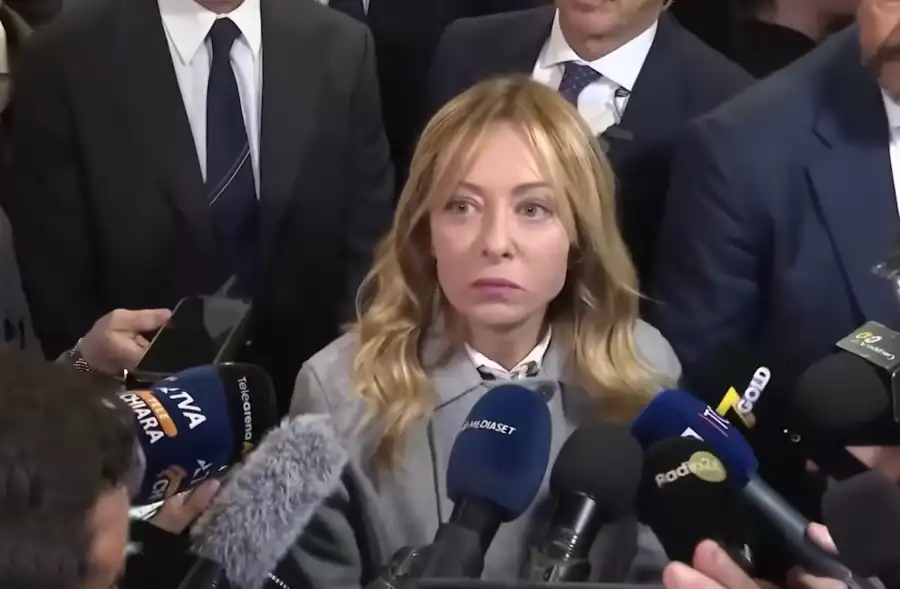
April 15, 2026 — A fresh global political and religious controversy erupted after Giorgia Meloni sharply criticized Donald Trump for what she described as “unacceptable remarks” directed at Pope Leo XIV, further intensifying an already volatile rift between political leadership and the Vatican.
The backlash was triggered by Trump’s now-deleted AI-generated image portraying himself as a Christ-like figure, which drew widespread condemnation across the United States political spectrum and among religious communities worldwide. Critics argued that the imagery was deeply offensive and disrespectful to Christian beliefs, while also raising concerns about the growing use of AI-generated political propaganda. Although Trump later claimed the image was meant to depict him as a doctor “making people better,” the explanation failed to quell outrage.
The situation escalated further after Trump publicly attacked Pope Leo XIV, accusing him of being “terrible for Foreign Policy” and questioning the legitimacy of his election. These remarks came in response to the pope’s increasingly vocal stance against war and global conflict, particularly his criticism of recent military actions involving the United States and its allies.
Entering the fray, Meloni delivered a strong defense of the pontiff, emphasizing that the Vatican’s role is to promote peace, dialogue, and moral clarity in times of crisis. She condemned attempts to undermine religious authority for political gain, stating that attacks on the pope risk damaging international stability and deepening ideological divides. Her intervention marked one of the most prominent European responses to the controversy.
At the center of the dispute is a broader clash over morality, war, and leadership, with Pope Leo XIV continuing to advocate for peace, reconciliation, and restraint, while political leaders like Trump push back against what they view as overreach into policy matters. The controversy has also drawn in figures such as JD Vance, who recently urged the pope to be “careful” when discussing theological interpretations related to war.
As reactions pour in from governments, religious institutions, and civil society, the episode underscores a deepening divide between political authority and spiritual leadership, raising critical questions about the boundaries of influence in shaping global discourse on conflict, ethics, and governance.
Sarvarthapedia Core Cluster: Political–Religious Conflict and Global Governance
This cluster examines the intersection of political authority, spiritual leadership, and global ethics, focusing on the controversy involving Giorgia Meloni, Donald Trump, and Pope Leo XIV.
See also
Political Authority
Spiritual Authority
Church–State Relations
Global Governance
Diplomatic Conflict
Moral Philosophy in Politics
Cluster: Leadership Personalities and Ideological Positions
Giorgia Meloni
Positioned as a defender of religious legitimacy and institutional respect, Meloni emphasizes the Vatican’s moral role in global peacebuilding.
See also
European Political Leadership
Conservatism in Europe
Religious Diplomacy
Transatlantic Relations
Donald Trump
Represents a model of assertive political nationalism, challenging religious intervention in policy and leveraging media symbolism, including controversial AI imagery.
See also
Populism
Political Communication
Media Controversies
Executive Power
Pope Leo XIV
Embodies spiritual authority advocating for peace, reconciliation, and ethical restraint, often intersecting with geopolitical debates.
See also
Catholic Social Teaching
Just War Theory
Vatican Diplomacy
Religious Ethics
See also
- Glossary of Vaticanism and Vatican Politics
- Glossary of Religious Terms
- Glossary of Female/Woman Psychology
- Glossary of Diplomacy
JD Vance
Acts as a bridge figure, acknowledging religious discourse while insisting on clear boundaries between theology and governance.
See also
Religion in American Politics
Policy vs Theology Debate
Conservative Intellectual Traditions
Cluster: AI, Media, and Symbolism in Politics
AI-Generated Political Imagery
The controversy around Trump’s Christ-like image highlights the emerging power of AI in shaping political narratives and public perception.
See also
Artificial Intelligence Ethics
Digital Propaganda
Deepfakes and Democracy
Visual Political Rhetoric
Symbolism and Religious Sensitivity
Use of religious imagery in political contexts raises concerns about blasphemy, respect, and manipulation of belief systems.
See also
Religious Iconography
Freedom of Expression
Cultural Sensitivity
Political Messaging
Cluster: War, Peace, and Moral Authority
Vatican’s Peace Doctrine
The Vatican promotes nonviolence, dialogue, and reconciliation, often critiquing military actions by global powers.
See also
Pacifism
Humanitarian Ethics
Conflict Resolution
International Law
Just War vs Absolute Pacifism
A central tension highlighted by the debate between Pope Leo XIV’s statements and political responses.
See also
Ethics of War
Historical Theology
Moral Absolutism vs Pragmatism
Cluster: International Relations and Diplomatic Strain
US–Vatican Relations
The controversy reflects a rare diplomatic strain between a major global power and a religious sovereign entity.
See also
Soft Power
Religious Diplomacy
International Institutions
European Response and Global Reaction
Meloni’s intervention represents European political alignment with religious authority, influencing global discourse.
See also
European Union Politics
Global Public Opinion
Alliance Dynamics
Cluster: Ethics, Governance, and Public Discourse
Boundaries of Influence
The crisis raises questions about who shapes moral narratives in global politics—elected leaders or spiritual figures.
See also
Legitimacy of Authority
Public Ethics
Governance Models
Ideological Polarization
The clash illustrates deepening divides between secular governance and faith-based perspectives.
See also
Cultural Conflict
Identity Politics
Global Ideological Trends
Network Synthesis
This conceptual network reveals an interconnected system where leaders, institutions, and technologies interact to shape global discourse on war, morality, and authority. The controversy links AI innovation, religious doctrine, and political power, forming a dynamic knowledge web that reflects the evolving tensions of the modern world.