Zardari Orchestrates Sweeping Executive Decrees, Elevates Ministerial Emoluments Amid Cabinet Expansion
In an assertive recalibration of administrative structure and fiscal distribution, the President enacts four ordinances, igniting debate over governance priorities.
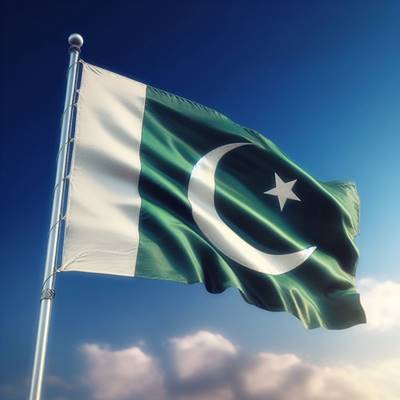
Islamabad, May 4, 2025—In an emphatic assertion of executive dominion, President Asif Ali Zardari of Pakistan promulgated four ordinances on Friday (2nd May 2025). The most conspicuous of these elevates the pecuniary stature of federal ministers and ministers of state to parity with members of the National Assembly, marking a substantial augmentation in ministerial remuneration against a backdrop of fiscal strain and political scrutiny.
This ordinance, nested within amendments to the Federal Ministers and Ministers of State (Salaries, Allowances and Privileges) Act, 1975, mandates a recalibration whereby federal ministers and state ministers shall henceforth receive a monthly salary of Rs 519,000 — a conspicuous leap from their erstwhile emoluments of Rs 200,000 and Rs 180,000 respectively. The legislative genesis of this shift lies in the Members of Parliament Salaries and Allowances (Amendment) Bill, 2025, which passed both parliamentary chambers earlier in February with minimal resistance. The National Assembly’s Finance Committee, under the stewardship of Speaker Ayaz Sadiq, had sanctioned this trebling of parliamentary salaries, catalyzing a domino effect now extending to the executive echelons.
This salary synchronisation unfolds contemporaneously with a dramatic inflation in cabinet size. On February 27, President Zardari administered the oath to 12 federal ministers and nine ministers of state, supplementing this intake with three advisers and four special assistants to the Prime Minister. The federal cabinet thus swelled from a modest 21 members to a politically ponderous 43 — comprising 30 federal ministers, nine ministers of state, and four advisers — a configuration heavily weighted in favour of the ruling Pakistan Muslim League-Nawaz (PML-N), though leavened with allies from coalition constituents.
Beyond the augmentation of salaries, the President’s legislative activism extended into structurally pivotal domains.
A second ordinance established the National Agri-trade and Food Safety Authority (NAFSA), envisaged as a regulatory bulwark tasked with enforcing sanitary and phytosanitary protocols governing agro-industrial imports and exports — a measure cloaked in bureaucratic precision yet rich with implications for trade policy and food sovereignty.
Simultaneously, the Tax Laws (Amendment) Ordinance, 2025 was promulgated, designed ostensibly to expedite the recovery of substantial tax arrears mired in protracted litigation. This juridico-fiscal instrument, although couched in technocratic rhetoric, subtly gestures towards the state’s intensifying desperation for revenue consolidation amid a swelling fiscal deficit.
Finally, the Capital Development Authority (Amendment) Ordinance, 2025 surfaced with less fanfare, yet it bears administrative weight, likely portending jurisdictional shifts or regulatory realignments within Islamabad’s capital territory — a zone long susceptible to opaque governance dynamics and speculative urban planning.
Critics have been quick to decry the procedural bypass of parliamentary deliberation, branding the flurry of ordinances as an emblem of executive overreach and an affront to the principles of representative scrutiny. As public discourse strains under the weight of spiraling inflation, endemic joblessness, and waning institutional trust, the elevation of ministerial salaries to opulent proportions risks becoming an enduring symbol of political detachment from grassroots exigencies.
As the ordinances take effect, their cumulative resonance — administrative, economic, and symbolic — is poised to ripple through Pakistan’s already volatile political terrain, intensifying the dialectic between executive ambition and democratic accountability.
Read more:
- Pakistan’s Economy Will Collapse: Indus Waters Treaty Suspended
- Pakistan’s Political Turmoil Since 1947: Army Rule & Islamic Hegemony
- U.S. Sanctioned Pakistan’s Missile Program: State Dept Explained
- China and Pakistan Relationship | Joint Statement (15/10/2024)
- Jammu and Kashmir: Pakistan’s principled position (2023)
- Report on Criminal Justice System: Law and Justice Commission of Pakistan