Modern history of Palestine and Zionism since 1516
History of Palestine: From Ottoman Rule to the Present Conflict
The modern history of Palestine traces a long and complex path shaped by empire, colonialism, nationalism, and enduring conflict. From the early 16th century, the region was under Ottoman rule following the conquest of the Levant in 1516. Ottoman administration in Palestine was often mediated through powerful local figures such as Zahir al-Umar in Acre and Ahmad al-Jazzar in the late eighteenth century. The empire’s capitulations regime, beginning in 1569 and expanded in 1604, granted European powers extraterritorial privileges that grew over time, embedding foreign influence in local affairs. Episodes of unrest, including the Naqib al-Ashraf Rebellion in Jerusalem (1703–1705) and a tax revolt in 1825, punctuated Ottoman control. The Egyptian occupation led by Ibrahim Pasha from 1831 to 1840 saw a major uprising in 1834, revealing early patterns of popular resistance. The Tanzimat reforms of 1839 and 1856 brought new administrative and legal changes, including the 1858 Land Code, which reshaped patterns of land ownership and contributed to future dispossession.
From the mid-nineteenth century, European consulates established in Jerusalem increased external involvement in local affairs. Zionist settlement began in the late 1800s, marked by the founding of Petah Tikva in 1878 and the First Aliyah (1882–1903). Palestinian opposition emerged quickly, exemplified by the 1891 petition by Jerusalem notables against Jewish immigration. Theodor Herzl’s 1896 publication The Jewish State and the 1897 Zionist Congress formalized political Zionism. Tensions between local Arabs and new settlers surfaced in incidents such as the clashes in al-Yahudiyya in 1886 and Tiberias in 1900. The Young Turk Revolution of 1908 briefly raised hopes for reform, but growing centralization and continued Zionist land acquisition deepened Arab nationalism. By the eve of World War I, a distinct Palestinian political identity had begun to take shape, expressed through newspapers such as Filastin and al-Karmil and through emerging political societies. Ottoman wartime policies and the execution of Arab nationalists underlined the shifting regional order.
World War I transformed Palestine’s future. British forces captured Jerusalem in 1917, and that same year the Balfour Declaration announced support for a “Jewish national home.” After the war, the League of Nations granted Britain the Mandate over Palestine in 1922, despite repeated Palestinian petitions and congresses demanding self-determination. Under British rule, two national movements developed in parallel. The Jewish community organized through institutions like the Jewish Agency, Histadrut, and the Haganah militia. Palestinian politics coalesced around the Arab Executive Committee and, later, parties such as Istiqlal. Haj Amin al-Husseini, appointed Mufti of Jerusalem in 1921, became the most prominent national leader. Periodic eruptions of violence, including the 1921 Jaffa riots and the 1929 al-Buraq uprising over the Western Wall, reflected deepening tensions. Immigration surged, especially after the rise of Nazi Germany in 1933, and opposition intensified. The death of Shaykh Izzeddin al-Qassam in 1935 at the hands of British forces galvanized Palestinian resistance.
The Great Rebellion of 1936–1939 marked the largest uprising in Mandate Palestine. It began with a general strike and evolved into an armed revolt against British rule and Zionist colonization. The Arab Higher Committee led the movement, but British repression was severe, involving military operations, demolitions, and mass detentions. The Peel Commission of 1937 proposed partition, which Palestinians rejected, leading to renewed fighting. The rebellion’s defeat coincided with the 1939 White Paper restricting Jewish immigration and land sales, alienating Zionists. During World War II, Zionist groups expanded their military capacity, preparing for postwar confrontation. After 1945, Zionist militias such as the Irgun and Lehi intensified attacks against British targets while lobbying for international support.
In 1947, Britain referred the question of Palestine to the United Nations, which adopted Resolution 181 recommending partition into Jewish and Arab states. The Zionist movement accepted the plan; Palestinians and Arab governments rejected it. Civil war erupted, and Zionist forces launched operations to seize territory and displace Arab communities. On May 14, 1948, Israel declared independence, prompting intervention by neighboring Arab armies. The ensuing conflict—known to Palestinians as the Nakba—resulted in Israel’s control over most of the land and the forced displacement of more than 700,000 Palestinians. The 1949 armistice agreements left Israel with 78 percent of Mandate Palestine, Jordan in control of the West Bank and East Jerusalem, and Egypt administering Gaza. The short-lived All-Palestine Government in Gaza symbolized the fragmented state of the Palestinian polity.
The decades following the Nakba were marked by exile, statelessness, and new forms of political organization. Israel’s 1950 Law of Return and Absentees’ Property Law institutionalized Jewish privilege and foreclosed the refugees’ return. Palestinian guerrilla activity from neighboring states prompted Israeli reprisals, while Arab governments absorbed and constrained Palestinian refugees. The 1956 Suez War saw Israel briefly occupy Gaza. In the early 1960s, Palestinian nationalism began to reorganize independently: the Palestine Liberation Organization (PLO) was founded in 1964, and Fatah, emerging from the late 1950s, launched its first operation in 1965. The 1967 Six-Day War was another watershed—Israel captured the West Bank, Gaza, East Jerusalem, Sinai, and the Golan Heights, creating a new wave of displacement. UN Resolution 242 called for withdrawal from occupied territories in exchange for peace, a formula that shaped later diplomacy.
After 1967, Palestinian resistance adopted guerrilla strategies, with the PLO under Yasser Arafat’s leadership from 1969 serving as the umbrella for armed factions. The Battle of Karama in 1968 became a symbol of defiance. The PLO’s expulsion from Jordan during Black September (1970–71) forced its relocation to Lebanon. By the mid-1970s, diplomatic recognition expanded: the PLO gained observer status at the United Nations in 1974 and was recognized by Arab states as the representative of the Palestinian people. The Lebanese Civil War drew the PLO deeper into conflict until Israel’s 1982 invasion and the siege of Beirut forced another exile to Tunis. The massacres at Sabra and Shatila underscored Palestinian vulnerability. Despite repeated displacement, Palestinian identity and the quest for self-determination persisted.
In 1987, popular frustration erupted in the First Intifada, a mass uprising across the occupied territories marked by strikes, demonstrations, and civil disobedience. The revolt reshaped the national movement and witnessed the rise of Hamas, which issued its charter in 1988. That same year, the PLO declared the independence of the State of Palestine. The uprising set the stage for renewed diplomacy, beginning with the 1991 Madrid Conference and culminating in the 1993 Oslo Accords. These accords established mutual recognition between Israel and the PLO and created the Palestinian Authority (PA) to administer parts of the West Bank and Gaza. Yet the Oslo process did not stop settlement expansion or resolve final status issues. Violence on both sides, the 1994 Hebron massacre by an Israeli settler, and the 1995 assassination of Israeli Prime Minister Yitzhak Rabin deepened mistrust. With Benjamin Netanyahu’s election in 1996, the peace process entered paralysis.
The failure of negotiations at Camp David in 2000 and Ariel Sharon’s visit to the Haram al-Sharif triggered the Second Intifada, a far more violent uprising that brought devastating Israeli military operations and widespread destruction. Israel began constructing a separation barrier largely inside the West Bank. Following Yasser Arafat’s death in 2004, Mahmoud Abbas assumed the presidency of the Palestinian Authority. Israel’s unilateral withdrawal from Gaza in 2005 was followed by Hamas’s electoral victory in 2006 and subsequent armed takeover of Gaza in 2007, dividing Palestinian governance between Gaza and the West Bank. Israel’s blockade of Gaza, combined with recurrent wars—Operation Cast Lead (2008–09), Pillar of Defense (2012), and Protective Edge (2014)—brought severe humanitarian crises. The Palestinian leadership pursued international recognition, achieving UN non-member observer state status in 2012.
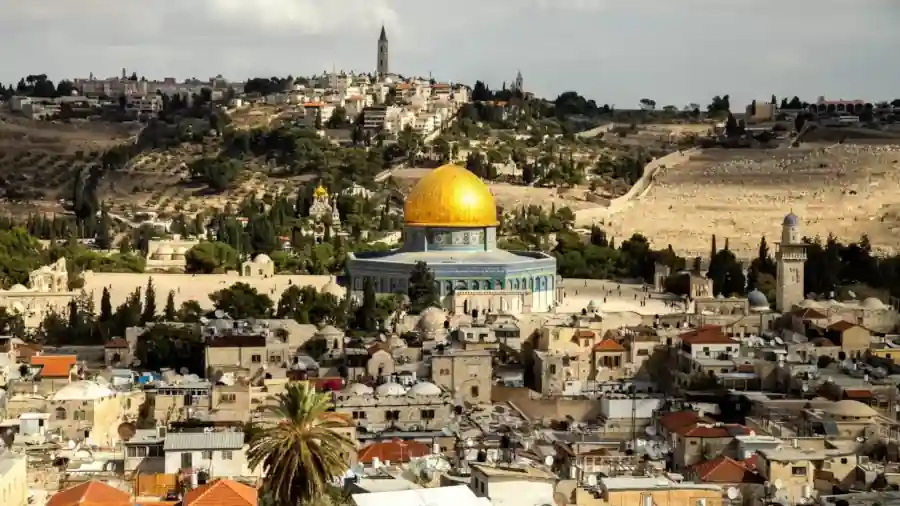
From 2017 onward, the political stalemate deepened. The Trump administration recognized Jerusalem as Israel’s capital in 2017, moved the U.S. embassy there in 2018, cut aid to Palestinian institutions, and proposed a peace plan widely seen as legitimizing Israeli annexation. Meanwhile, Palestinian internal divisions persisted, and Israeli settlement construction accelerated. Protests in Gaza during the 2018–2019 Great March of Return were met with lethal force. In 2021, attempts to evict families from the Sheikh Jarrah neighborhood of East Jerusalem ignited widespread demonstrations, a new war between Israel and Hamas, and protests among Palestinian citizens of Israel. In recent years, the reality has become one of entrenched Israeli control across the land, the continued fragmentation of the Palestinian people, and a deepening impasse with no clear path toward a just or lasting resolution.
Tanmoy Bhattacharyya
24th October 2025
Read More
- Amendment to the Palestine National Charter-1996
- Palestinian people’s right to self-determination: UN Resolution (2018)
- Nature of relationship between the US and the Zionist regime-Foad Izadi Explains (19/10/2023)
- PM Netanyahu at UNGA 2024 | Eternity of Israel will not falter
- Statement of Netanyahu of Israil (80th Session UNGA) Debate
- Victories in the War of Redemption have been achieved: Netanyahu
- Trump Peace Declaration on Gaza (2025): Israel is not a signatory
- Sharm El-Sheikh Peace Summit: Egyptian Prez El-Sisi’s Speech