These men do not know the true import of the Vedas; they only know how to recite or read them. They are indeed intent on destroying the Vedas!
श्रीकृष्णमिश्रयतिष्रणीतं
प्रवोधचन्द्रोदयं
Varanasi, the City of Brahman, stands as an eternal entity and serves as the birthplace of Vidyaa (Knowledge) and Prabodha (Awakening). This Viveka aspires to reside here perpetually, aiming to dismantle his own familial ties, represented by the Mind and others.
प्रबोध चन्द्रोदय
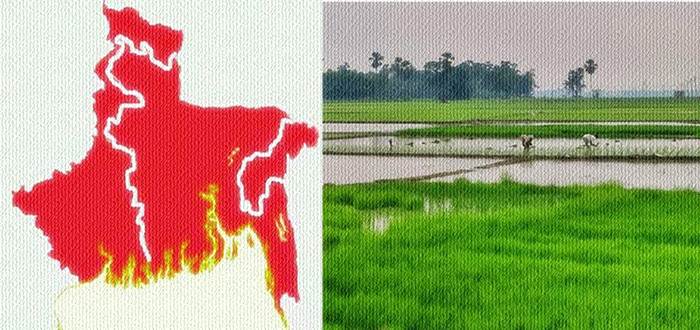
This play was possibly presented before King Gopala II (950 CE), a ruler of Gouda Desha (at Lakhnauti, near by present-day Malda District West Bengal) preoccupied with ongoing battles and conflicts. Krishna Mishra seeks to enlighten him about the dire state of his kingdom, particularly the decline of the spiritual fabric of society and the misappropriation of ancient Vedic scriptures by many. By selecting ‘Battle’ as the central theme, he aims to capture the king’s interest in the narrative. The entire play serves as a poignant appeal from the astute author to the king to restore Vedic Dharma within his realm. It may well be an awakening for the monarch, urging him to transition from a world dominated by bloodshed to one addressing the erosion of spirituality. This work subtly implores the king to take corrective action before the Vedas and Upanishads fall victim to atheistic ideologies and fade into obscurity.
Gouda is a remarkable country, home to the unparalleled Radaapuri. Notable among its structures is the splendid Bhoori-Shreshtaka, which stands as a testament to our heritage. In this place, our father is regarded as an exemplary man. It is well known that his sons hail from a distinguished lineage; among them, I pride myself on excelling in wisdom, conduct, discernment, courtesy, and behavior. (2.7)
“I think he must be coming from the southern Raadda ( राढा ) country situated on the other side of the River Ganges. I will find out from the other traveler the news about this Ahamkaara”.
‘PRABODHA-CHANDRODAYA’ or ‘THE RISE OF THE MOON OF AWAKENING’.
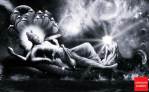
What does self-realization signify? It entails the removal of forgetfulness. A person who dreams loses connection with their true identity and experiences suffering in the dream, be it as impoverished, diseased, or otherwise afflicted. The instant one wakes from this slumber, they recollect who they are. They do not acquire knowledge of their identity; they simply awaken. This act of awakening is termed Prabodha. When an individual, ensnared in the world’s illusions, awakens, they return to their true self. Such a transformation can only occur when discernment prevails over intellect. It is facilitated by seeking the company of wise individuals and internalizing Upanishadic teachings. It is realized through the relinquishment of anger, greed, and passion, alongside the cultivation of self-control and mental discipline. This awakening occurs when faith in heretical doctrines is abandoned in favor of surrender to Lord Vishnu and devotion to His lotus feet. It is only upon the complete annihilation of the delusion that governs the ignorant mind that true awakening happens. At this juncture, Prabodha emerges. Awakening transpires. King Viveka unites with the illustrious Upanishat Devi, thus birthing the child Prabodha. The author likens this awakening to the rise of the moon rather than the dawn. The bliss associated with this awakening is soothing like moonlight, in stark contrast to the blazing intensity of sunlight. A realized individual immerses in the bliss of the Self, akin to the nectar emanating from the moon. In such a state, the heat of worldly existence dissipates, void of the relentless commotion of activities. The knower finds solace in the tranquil essence of the Self (Atman). Even amidst action, they remain impervious to worldly events, maintaining their state of awakening. Thus, it is fitting that Shri Krishna Mishra entitled his play ‘Prabodha Chandrodaya’ – ‘The Moon-rise of Awakening’.
“Nobody has studied anything; nor have they understood anything. Just dressing up as great thinkers and philosophers, they fool the people and rob their money!”
“I have never heeded the teachings of the Guru, Prabhaakara, who is the founder of the Meemaamsaka theory. I have also failed to grasp the philosophy presented by Kumarila Bhatta, a noted Meemaamsaka theorist. The insights discussed by Shalika Mishra, a follower of Prabhaakara, remain foreign to me. What can be said about the Nyaaya philosophy of Vachaspati? I have not even taken the time to read a simple sentence from the vast expanse of the Vyakarana Maha Bhasya treatise. Furthermore, I have not engaged with the nuanced analysis of objects as described in the Pashupati philosophy. It is perplexing how these seemingly human figures can appear so composed as if they possess a complete understanding of it all”. (2.3)
What has been achieved? What has been forfeited? What has emerged? What has been cast aside? What has been intricately intertwined? What has faded away? Is this a tangible reality or an illusion? By whose presence does the tri-world fail to elevate itself above such uncertain debates? I am that Prabodhodaya (Rise of the Awakening), by whose inherent illumination the shadows dissipate.