Skip to content

ADVOCATETANMOY LAW LIBRARY

Research & Library Database

Primary Menu
  • News
  • Opinion
  • Countries198
    • National Constitutions: History, Purpose, and Key Aspects
  • Judgment
  • Book
  • Legal Brief
    • Legal Eagal
  • LearnToday
  • HLJ
    • Supreme Court Case Notes
    • Daily Digest
  • Sarvarthapedia
    • Sarvarthapedia (Core Areas)
    • Systemic-and-systematic
    • Volume One
06/04/2026
  • Geo-Political

Program of a Translation of the Sacred Books of the East-Max Müller (1876)

Apart from the interest which the Sacred Books of all religions possess in the eyes of the theologian, and, more particularly, of the missionary, to whom an accurate knowledge of them is as indispensable as a knowledge of the enemy's country is to a general, these works have of late assumed a new importance, as viewed in the character of ancient historical documents.
advtanmoy 05/07/2022 15 minutes read

© Advocatetanmoy Law Library

  • Share on WhatsApp (Opens in new window) WhatsApp
  • Share on X (Opens in new window) X
  • Share on Facebook (Opens in new window) Facebook
  • Share on Telegram (Opens in new window) Telegram
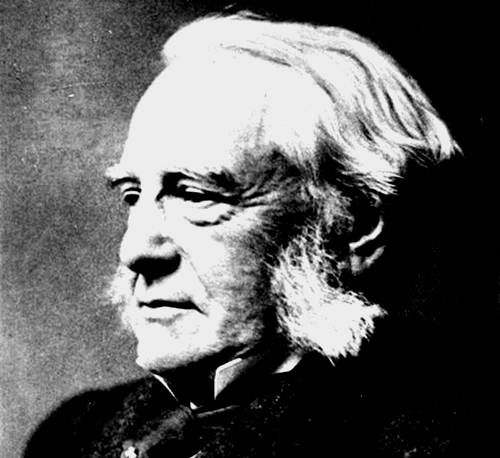
Max-Muller

Home » Law Library Updates » Sarvarthapedia » Geo-Political » Program of a Translation of the Sacred Books of the East-Max Müller (1876)

SOURCE– The Sacred BooksBook Council of Trent (1545–1563) the Catholic Church created a Congregation of the Index, to declare a writing dangerous and to burn it, till it exists without notice. For Christians, the Bible, and for Muslims Quran, is only good for human guidance and nothing else. After Jesus, St. Peter and St. Paul are the most educated persons in the Christian world. of the East (SBE) series(50 Vol) issued by the Oxford University Press (1879 -1910)

Program of a Translation of the Sacred Books of the East

I here subjoin the program in which I first put forward the idea of a translation of the Sacred Books of the East, and through which I invited the co-operation of Oriental scholars in this undertaking. The difficulty of finding translators, both willing and competent to take a part in it, provedProved A fact is said to be proved when, after considering the matters before it, the Court either believes it to exist, or considers its existence so probable that a prudent man ought, under the circumstances of the particular case, to act upon the supposition that it exists; far greater than I had anticipated. Even when I had secured the assistance of a numberNumber Αριθμός of excellent scholars, and had received their promises of prompt co-operation, illness, domestic affliction, and even death asserted their control over all humanHuman Ο άνθρωπος (Humanum> Homo sapiens) मानव:. We have failed to consider the minimum need to be a 'human'. For Christians, human beings are sinful creatures, who need some saviour. For Evolution biology a man is still evolving, for what, we don´t know. For Buddhist Nagarjuna, the realisation of having a human body is a mere mental illusion. We are not ready to accept that a human is a computer made of meat. For a slave master, a human person is another animal, his sons and daughters are his personal property.             affairs. Professor Childers, who had shown the warmest interest in our work, and on whom I chiefly depended for the PaliPali Regional dialect of Magadha Empire, generated from Sanskrit. The latest inscription can be dated around the 4th Century CE. Tipitaka was collected around 100 BCE. Tipitaka and Pali grammar was written in Devanagari Script. literature of the Buddhists, was taken from us, an irreparable loss to Oriental scholarship in general, and to our undertaking in particular. Among native scholars, whose co-operation I had been particularly desired to secure, Rajendralal Mitra, who had promised a translation of the Vâyu-purâna, was prevented by serious illness from fulfilling his engagement. In other cases sorrow and sickness have caused, at all events, serious delay in the translation of the very books which were to have inaugurated this Series. However, new offers of assistance have come, and I hope that more may still come from Oriental scholars both in IndiaIndia Hind/ hend >hindia. Bharat Varsha (Jambudvipa used in Mahavamsha) is the name of this land mass. The people of this land are Sanatan Dharmin and they always defeated invaders. Indra (10000 yrs) was the oldest deified King of this land. Manu's jurisprudence enlitened this land. Vedas have been the civilizational literature of this land. Guiding principles of this land are : सत्यं वद । धर्मं चर । स्वाध्यायान्मा प्रमदः । The place also been called Hindusthan in Pesia. The word Hendu is mentioned in Avesta. Read more and EnglandEngland 47 boroughs, 36 counties, 29 London boroughs, 12 cities and boroughs, 10 districts, 12 cities, 3 royal boroughs boroughs: Barnsley, Blackburn with Darwen, Blackpool, Bolton, Bournemouth, Bracknell Forest, Brighton and Hove, Bury, Calderdale, Darlington, Doncaster, Dudley, Gateshead, Halton, Hartlepool, Kirklees, Knowsley, Luton, Medway, Middlesbrough, Milton Keynes, North Tyneside, Oldham, Poole, Reading, Redcar and Cleveland, Rochdale, Rotherham, Sandwell, Sefton, Slough, Solihull, Southend-on-Sea, South Tyneside, St. Helens, Stockport, Stockton-on-Tees, Swindon, Tameside, Thurrock, Torbay, Trafford, Walsall, Warrington, Wigan, Wirral, Wolverhampton counties (or unitary authorities): Bedfordshire, Buckinghamshire, Cambridgeshire, Cheshire, Cornwall, Cumbria, Derbyshire, Devon, Dorset, Durham, East Sussex, Essex, Gloucestershire, Hampshire, Herefordshire, Hertfordshire, Isle of Wight, Kent, Lancashire, Leicestershire, Lincolnshire, Norfolk, North Yorkshire, Northamptonshire, Northumberland, Nottinghamshire, Oxfordshire, Shropshire, Somerset, Staffordshire, Suffolk, Surrey, Warwickshire, West Sussex, Wiltshire, Worcestershire, so that the limit of timeTime χρόνος. Judicial: Where any expression of it occurs in any Rules, or any judgment, order or direction, and whenever the doing or not doing of anything at a certain time of the day or night or during a certain part of the day or night has an effect in law, that time is, unless it is otherwise specifically stated, held to be standard time as used in a particular country or state. (In Physics, time and Space never exist actually-“quantum entanglement”) यमः , पुं, (यमयति नियमयति जीवानां फलाफलमिति । यम् + अच् । विश्वे च कलयत्येव यः सर्व्वायुश्च सन्ततम् । अतीव दुर्निवार्य्यञ्च तं कालं प्रणमाम्यहम् ॥यमैश्च नियमैश्चैव यः करोत्यात्मसंयमम् । स चादृष्ट्वा तु मां याति परं ब्रह्म सनातनम् ॥ which had been originally assigned to the publicationPublication It includes any speech, writing, broadcast, or other communication in whatever form (including internet and social media), which is addressed to the public at large or any section of the public. of twenty-four volumes may not, I hope, be much exceeded.

Apart from the interest which the Sacred Books of all religions possess in the eyes of the theologian, and, more particularly, of the missionary, to whom an accurate knowledge of them is as indispensable as a knowledge of the enemy’s country is to a general, these works have of late assumed a new importance, as viewed in the character of ancient historicalHistorical Old or ancient facts, which could be verified, are recorded after following a system. 'In the beginning was God' is a faith statement, not a historical Fact. Itihas (iti-ha-asa) in Sanskrit means it was there or as it existed, which is part of Smriti Parampara, verified facts, and Puranas are a collection of old stories of the vedic nation, which can not be verified, but they are with the people and recorded in books without verification. documentsDocument It means any matter expressed or described or otherwise recorded upon any substance by means of letters, figures or marks or any other means or by more than one of those means, intended to be used, or which may be used, for the purpose of recording that matter and includes electronic and digital records. (Bharatiya Sakshya Adhiniyam 2023). In every country where Sacred Books have been preserved, whether by oral tradition or by writing, they are the oldest records, and mark the beginning of what may be called documentary, in opposition to purely traditional, history.

Read Next

  • U.S.–North Macedonia Trade Agreement Marks a Turning Point for the Western Balkans
  • North Korea–Belarus Relations 2026: Historic Talks Between Kim Jong and Lukashenko in Pyongyang
  • Fundamental Analysis of Nuclear Threshold by India and Pakistan

There is nothing more ancient in India than the VedasVedas Samhita: Rigveda, Samveda, Yayurveda (Shukla and Krishna), Atharvaveda. Commentary: Rig, Atharva, Shukla Yajurveda, Krishna Yajurveda. Total Manta: 20,380; and, if we except the Vedas and the literature connected with them, there is again no literary work in India which, so far as we know at present, can with certainty be referred to an earlier date than that of the Sacred CanonCanon The term (kanon) means a norm or rule, and is used in various contexts, including sacerdotal prayer within the Christian Eucharistic Liturgy. of the Buddhists. Whatever age we may assign to the various portions of the AvestaZend Avesta Zarathushtra (abestāg): Zend (from Hend) The text of the Avesta, as it exists today, is from a single master copy from the Sasanian Empire (224–651 CE). The text is similar to Rigveda Sanskrit. The Yasna (Yagna), The Visperad, The Vendidad, The Yashts, The Siroza, The Nyayeshes, The Gahs, The Afrinagans, Fragments. (Khorda Avesta, Vendidad, Visperad). Zoroastrian Creed. and to their final arrangement, there is no bookBook Council of Trent (1545–1563) the Catholic Church created a Congregation of the Index, to declare a writing dangerous and to burn it, till it exists without notice. For Christians, the Bible, and for Muslims Quran, is only good for human guidance and nothing else. After Jesus, St. Peter and St. Paul are the most educated persons in the Christian world. in the PersianPersian Alphabet:  ( ا ب پ ت ث ج چ ح خ د ذ ر ز ژ س ش ص ض ط ظ ع غ ف ق ک گ ل م ن و ه ی ) > Cuneiform [Darius I (550-486 BC)] originated from Vedic Sanskrit : adam : dārayavauš : xšāyaθiya : vazarka : xšāyaθiya : xšāyaθiyānām : xšāyaθiya : pārsaiy : xšāyaθiya : dahyūnām : vištāspahyā : puça : aršāmahyā : napā : haxāmanišiya….   language of greater antiquity than the Sacred Books of the followers of ZarathustraZarathustra Ζαρατούστρα: In Babylon > Avesta (800 BCE) is the sacred book of his followers. He was the prophet of Mazda and protector of cow (Ahuramazda) Read the Zoroastrian creed (Christian Church adopted this creed with variations). After 450 CE Zoroastrians started to convert to Christianity. Zoroastrian priest Bahman Kaikobad Sanjan composed the Persian text Qessa-e-Sanjan in 1600 CE. Khordeh Avesta, nay, even than their translation in Pehlevi. There may have been an extensive ancient literature in China long before Khung-fû-tze and Lâo-tze, but among all that was rescued and preserved of it, the five King and the four Shû claimA Claim A claim is “factually unsustainable” where it could be said with confidence before trial that the factual basis for the claim is entirely without substance, which can be the case if it were clear beyond question that the facts pleaded are contradicted by all the documents or other material on which it is based. again the highest antiquity. As to the Koran, it is known to be the fountain-head both of the religionReligion ‘The word ( θρησκεία) -Re Legion (Latin)- A group or Collection or a brigade, is a social-cultural construction and substantially doesn’t exist. Catholic religion (संघवाद) is different from the Protestant religion (संघवाद). Dharma is not Religion (धार्मिक संगठन). "Religion" occurs 5 times in 5 verses in the KJV. Hindu Religion means in the indian language is हिंदू धार्मिक संगठन. Deen in Islam. and of the literature of the Arabs.

This being the case, it was but natural that the attention of the historian should of late have been more strongly attracted by these Sacred Books, as likely to afford most valuable information, not only on the religion, but also on the moralMorality Mental frame. It can be high morality or low morality, savage morality or civilised morality or Christian morality, or Nazi morality. Decent Behaviour is acceptable norms of the nations. Christian morality starts with the belief that all men are sinners and that repentance is the cause of divine mercy. Putting Crucified Christ in between is the destruction of Christian morality and logic. Now morality shifted to the personal choice of Jesus. What Jesus did is 'good'. The same would be the case of Ram, Krishna, Muhammad, Buddha, Lenin, etc. Pure Human Consciousness degraded to pure followership. There exists no proof the animals are devoid of morality. sentiments, the social institutions, the legal maxims of some of the most important nations of antiquity. There are not many nations that have preserved sacred writings, and many of those that have been preserved have but lately become accessible to us in their original form, through the rapid advance of Oriental scholarship in EuropeEurope EU and Countries - Albania Andorra Austria Belarus Belgium Bosnia and Herzegovina Bulgaria Croatia Cyprus Czech Denmark Estonia Finland France Germany Greece Hungary Iceland Ireland Italy Latvia Liechtenstein Lithuania Luxembourg Malta Moldova Monaco Montenegro Netherlands North Macedonia Norway Poland Portugal Romania Russia San Marino Serbia Slovakia Slovenia Spain Sweden Switzerland Ukraine United Kingdom Vatican City.. Neither Greeks, nor Romans, nor Germans, nor Celts, nor Slaves have left us anything that deserves the name of Sacred Books. The Homeric Poems are national Epics, like the Râmâyana, and the Nibelunge, and the Homeric Hymns have never received that general recognition or sanction which alone can impart to the poetical effusions of personal piety the sacred or canonicalCanon The term (kanon) means a norm or rule, and is used in various contexts, including sacerdotal prayer within the Christian Eucharistic Liturgy. character which is the distingishing feature of the Vedicnon-vedic Non-Vedic literature and ideas are corrupt and nonsustainable for human lives and prosperity. Vedic values ruled the Bharatvarsha directly up to 2000 BCE, then it degraded due to some unknown reason. Then, less meritorious people started to rule Bharat with the spreading of ignorance and Avidya. Hymns. The sacred literature of the early inhabitants of Italy seems to have been of a liturgical rather than of a purely religious kind, and whatever the Celts, the Germans, the Slaves may have possessed of sacred traditions about their gods and heroes, having been handed down by oral tradition chiefly, has perished beyond all hope of recovery. Some portions of the Eddas alone give us an idea of what the religious and heroic poetry of the Scandinavians may have been. The Egyptians possessed Sacred Books, and some of them, such as the Book of the Dead, have come down to us in various forms. There is a translation of the Book of the Dead by Dr. Birch, published in the fifth volume of Bunsen’s Egypt, and a new edition and translation of this important work may be expected from the combined labours of Birch, Chabas, Lepsius, and Naville, In BabylonBabylonia Βαβυλωνία: Mat Akkadi (Achaemenidian language), the fertile alluvial plain between the Euphrates and Tigris. It became capital city of Achaemenidians after the faall of Assyrian empire (612 BCE). Peviously Sumerrians used to live here. Cyrus the Greatcaptured is around 539 BCE His son Cambyses conquered Egypt in 525 BCE, his relative Darius, killed Gaumâta (by the blessing of Ahuramazda). Darius' son was Xerxes ( his campaign against greeks were failed in 480-479). Darius III Codomannus faced Alexander in 336-330 BCE. and Assyria, too, important fragments of what may be called a Sacred Literature have lately come to light. The interpretation, however, of these Hieroglyphic and Cuneiform texts is as yet so difficult that, for the present, they are of interest to the scholar only, and hardly available for historical purposes.

Leaving out of consideration the JewishJew “Being Jewish” is very important and not forgetting the Holocaust is religion over Halakha. Israeli Jews are divided into Haredi (Orthodox), Dati (reformed), Masorti (Conservative/traditional) or Hiloni (secular), nonetheless, their ethnoreligious identity was possibly originated in ancient Egypt and modified in Babylone. In their Synagogue, they read the Torah and pray for the coming of the Messiah, who would build global 'Israel', through which the Divine and Human would meet forever. and Christian ScripturesChristian Scripture The words of Jesus are from God (John 12:49), the writings of Paul are from God (2 Peter 3:16), the Old Testament writers were moved by the Spirit of God (2 Peter 1:21), all Scripture is inspired by God (2 Timothy 3:16)., it appears that the only great and original religions which profess to be founded on Sacred Books[13], and have preserved them in manuscript, are:—

The religion of the Brahmans.
The religion of the followers of BuddhaBuddha It started with Kashyapa (Son of King of Kashi) and ended with Siddhartha Goutam (c. 490-410 BCE) during the period of Bimbisara. Sanatanis accepted Kashyapa as the Avatar of Vishnu. The primary source of Teaching: Tipitaka > Anguttara Nikaya, Digha Nikaya, Majjhima Nikaya, Saṃyutta Nikaya. 2nd century CE Maha Parinirvana Sutra (2nd Cen CE) was first Recorded about Gautama. Buddha Charitra of Asvaghosa (150 CE) is the First Biography of Gautama. Read Tipitaka,  .
The religion of the followers of Zarathustra.
The religion of the followers of Khung-fû-tze.
The religion of the followers of Lâo-tze.
The religion of the followers of Mohammed.

Read Next

  • U.S.–North Macedonia Trade Agreement Marks a Turning Point for the Western Balkans
  • North Korea–Belarus Relations 2026: Historic Talks Between Kim Jong and Lukashenko in Pyongyang
  • Fundamental Analysis of Nuclear Threshold by India and Pakistan

A desire for a trustworthy translation of the Sacred Books of these six Eastern religions has often been expressed. Several have been translated into English, French, German, or LatinLatin Augustus (63 B.C.E.-14 A.C.E), Julius Caesar (100-44 B.C.E.), Cicero (106-43 B.C.E), Virgil (70-19 B.C.E), Tacitus (56-120 A.C.E), Ovid (43 B.C.E.-17 A.C.E), Lucretius (1st-century B.C.E), Livy (59 B.C.E.-17 A.C.E), Lucan (39-65 A.C.E), Hirtius (90-43 B.C.E), Horace (65-8 B.C.E). > Latin America  > Latin is the Official language of Vatican City > Latin Grammar> Vulgar Latin., but in some cases these translations are difficult to procure, in others they are loaded with notes and commentaries, which are intended for students by profession only. Oriental scholars have been blamed for not having as yet supplied a want so generally felt, and so frequently expressed, as a complete, trustworthy, and readable translation of the principal Sacred Books of the Eastern Religions. The reasons, however, why hitherto they have shrunk from such an undertaking are clear enough. The difficulties in many cases of giving complete translations, and not selections only, are very great. There is still much work to be done in a critical restoration of the original texts, in an examination of their grammarGrammar English > Greek > Sanskrit Vyakarana: It is the study of the rules governing the use of a language. That set of rules is also called the grammar of the language, and each language has its own distinct grammar. Grammar is part of the general study of language called linguistics. Read Panini and metres, and in determining the exact meaning of many words and passages. That kind of work Pali Documents.is naturally far more attractive to scholars than a mere translation, particularly when they cannot but feel that, with the progress of our knowledge, many a passage which now seems clear and easy, may, on being re-examined, assume a new import. Thus while scholars who are most competent to undertake a translation, prefer to devote their time to more special researches, the work of a complete translation is deferred to the future, and historians are left under the impression that Oriental scholarship is still in so unsatisfactory a state as to make any reliance on translations of the VedaVedas Samhita: Rigveda, Samveda, Yayurveda (Shukla and Krishna), Atharvaveda. Commentary: Rig, Atharva, Shukla Yajurveda, Krishna Yajurveda. Total Manta: 20,380, the Avesta, or the Tâo-te King extremely hazardous.

It is clear, therefore, that a translation of the principal Sacred Books of the East can be carried out only at a certain sacrifice. Scholars must leave for a time their own special researches in order to render the general results already obtained accessible to the public at large. And even then, really useful results can be achieved viribus unitis only. If four of the best Egyptologists have to combine in order to produce a satisfactory edition and translation of one of the Sacred Books of ancient Egypt, a much larger number of Oriental scholars will be required for translating the Sacred Books of the Brahmans, the Buddhists, the ZoroastriansZarathustra Ζαρατούστρα: In Babylon > Avesta (800 BCE) is the sacred book of his followers. He was the prophet of Mazda and protector of cow (Ahuramazda) Read the Zoroastrian creed (Christian Church adopted this creed with variations). After 450 CE Zoroastrians started to convert to Christianity. Zoroastrian priest Bahman Kaikobad Sanjan composed the Persian text Qessa-e-Sanjan in 1600 CE. Khordeh Avesta, the followers of Khung-fû-tze, Lâo-tze, and Mohammed.

Lastly, there was the most serious difficulty of all, a difficulty which no scholar could remove, viz. the difficulty of finding the fundsFund The term refers to assets of every kind, whether corporeal or incorporeal, tangible or intangible, movable or immovable, however acquired, and legal documents or instruments in any form, including electronic or digital, evidencing title to, or interest in, such assets. necessary for carrying out so large an undertaking. No doubt there exists at present a very keen interest in questions connected with the origin, growth, and decay of religion. But much of that interest is theoretic rather than historical. How peopleMen Ανθρωποι (People), a woman (γυναίκα), Man (Ανδρας) > Adama, Manu > No proof to establish that due to mutation a monkey turned into a human being. might or could or should have elaborated religious ideas, is a topic most warmly discussed among psychologists and theologians, but a study of the documents, in which alone the actual growth of religious thoughtThinking Human beings began conscious thought as far back as sixty million years ago. By around three hundred thousand years ago, humans inhabiting the Indian subcontinent had developed forms of cognition comparable to those of the modern age, including awareness of competition, defense, and collective security. These early communities were capable of abstract observation, such as counting stars in the night sky, and engaged in reflective discussion about everyday experiences, including the flavors and qualities of food, indicating a sophisticated mental and social life. can be traced, is much neglected. A faithful, unvarnished prose translation of the Sacred Books of India, PersiaPersia King Darius says: These are the countries which are subject unto me, and by the grace of Ahuramazda I became king of them: Persia [Parsa], Elam [Uvja], Babylonia [Babirus], Assyria [Athura], Arabia [Arabaya], Egypt [Mudraya], the countries by the Sea, Lydia [Sparda], the Greeks [Yauna (Ionia)], Media [Mada], Armenia [Armina], Cappadocia [Katpatuka], Parthia [Parthava], Drangiana [Zraka], Aria [Haraiva], Chorasmia [Uvarazmiy], Bactria [Baxtris], Sogdia [Suguda], Gandhara [Gadara], Scythia [Saka], Sattagydia [Thatagus], Arachosia [Harauvatis] and Maka; twenty-three lands in all., China, and Arabia, though it may interest careful students, will never, I fear, excite a widespread interest, or command a circulation large enough to make it a matterMatter Normal matter is made of molecules, which are themselves made of atoms. Inside the atoms, electrons are spinning around the nucleus. The nucleus is made of protons and neutrons. Inside the protons and neutrons, exist indivisible quarks, like the electrons. All matter around us is made of elementary particles. ( building blocks of matter > quarks and leptons). All stable matter in the universe is made from particles that belong to the first-generation. Fundamental forces result from the exchange of force-carrier particles, which belong to a broader group called “bosons”. The strong force is carried by the “gluon”, electromagnetic force is carried by the “photon.” of private enterprise and commercialCommercial Profit-making economic activities, such as the production, consumption, exchange, and distribution of goods and services, are primarily undertaken to earn money or a livelihood. Key Features > (1) Involve sale and exchange of goods and services for consideration (money or value), (2) Aim to earn profit and ensure business growth, (3) Include risk-bearing and creation of utility, (4) Economic in nature and satisfy customer needs. Commercial Activities > Earning profit, Business growth, Serving society, Achieving market leadership. speculation.

Read Next

  • U.S.–North Macedonia Trade Agreement Marks a Turning Point for the Western Balkans
  • North Korea–Belarus Relations 2026: Historic Talks Between Kim Jong and Lukashenko in Pyongyang
  • Fundamental Analysis of Nuclear Threshold by India and Pakistan

No doubt there is much in these old books that is startling by its very simplicity and truthTruth Mathematical 'truth' may not be agreeable with the philosophical 'truth.' A question may be asked on propositional 'truth' on the grounds of physics, that space and time actually don't exist. Vedic injunction Satyam Param Dhimahi, technically Satya is none other than Brahman. For Madhymic Buddhists there is nothing as such to be called 'truth', as all the corresponding facts are only mental projections. Apart from Bio-neuroelectricity nothing exists for Biological Cognition. So-called religious truths are nothing more than a marketing strategy., much that is elevated and elevating, much that is beautiful and sublime; but people who have vague ideas of primeval wisdom and the splendour of Eastern poetry will soon find themselves grievously disappointed. It cannot be too strongly stated, that the chief, and, in many cases, the only interest of the Sacred Books of the East is historical; that much in them is extremely childish, tedious, if not repulsive; and that no one but the historian will be able to understand the important lessons which they teach. It would have been impossible to undertake a translation even of the most important only of the Sacred Books of the East, without the support of an Academy or a University which recognises the necessity of rendering these works more generally accessible, on the same grounds on which it recognises the duty of collecting and exhibiting in Museums the petrifactions of bygone ages, little concerned whether the public admires the beauty of fossilised plants and broken skeletons, as long as hard-working students find there some light for reading once more the darker pages in the history of the earthEarth Sixty million years ago, the Earth may not have been radically different from the world known today. Vast soils supported dense vegetation, including banyan-like trees across the Indian subcontinent, with flourishing plant life extending through what is now Central Asia. Rivers resembling the modern Amazon may already have sustained abundant fish populations, while reptiles, snakes, turtles, and primates moved freely across diverse ecosystems. Human beings—both intelligent and unintelligent—were present, navigating cycles of stability and catastrophe. Localized cataclysms may have occurred without globally erasing life. Monkeys, snakes, and other familiar animals are assumed to have coexisted with humans, reinforcing the claim that biological continuity, rather than linear evolution, defines Earth’s history. From this perspective, fossil interpretation is seen as fragmentary and imaginative, shaped by academic models rather than complete evidence, with scholars constructing theoretical problems and resolving them through evolving intellectual frameworks rather than absolute historical certainty..

Having been so fortunate as to secure that support, having also received promises of assistance from some of the best Oriental scholars in England and India, I hope I shall be able, after the necessary preparations are completed, to publish about three volumes of translations every year, selecting from the stores of the six so-called “Book-religions” those works which at present can be translated, and which are most likely to prove useful. All translations will be made from the original texts, and where good translations exist already, they will be carefully revised by competent scholars. Such is the bulk of the religious literature of the Brahmans and the Buddhists, that to attempt a complete translation would be far beyond the powers of one generation of scholars. Still, if the interest in the work itself should continue, there is no reason why this series of translations should not be carried on, even after those who commenced it shall have ceased from their labours.

What I contemplate at present and I am afraid at my time of life even this may seem too sanguine, is no more than a Series of twenty-four volumes, the publication of which will probably extend over eight years. In this Series I hope to comprehend the following books, though I do not pledge myself to adhere strictly to this outline:—

1. From among the Sacred Books of the Brahmans I hope to give a translation of the Hymns of the RigRig Veda Mandala: ( 1,  2,  3,  4,  5,  6,  7,  8,  9,  10 ) अ  आ  इ  ई  उ  ऊ  ऋ  ए  ऐ  ओ  औ  क  ख  ग  घ  च  छ  ज  त  द  ध  न  प  ब  भ  म  य  र  ल  व  श  ष  स  ह  § Alphabetical Index of the Rig Veda Mantras > Rigveda: A Historical Analysis by Shrikant G. Talageri (2000) > Rigveda is at least ninety thousand years old, perhaps more: OSHO > वेदपारायणविधिः-The method of reciting the Vedas > List of the Vedic Rishis > ऋग्वेद भाष्यम् – Rig Veda Bhashyam by Sayanacharya > Core Hindutva Philosophy in the Rig Veda > Read more  -veda. While I shall continue my translation of selected hymns of that Veda, a traduction raisonnée which is intended for SanskritSanskrit It is the oldest living language and civilizational mark. The language of Rig Veda or Atharva Veda (10000 years old) is a pre-Sanskrit Vedic language. It has its own Pratisakhya (Grammar) and Nirukta (Vocabulary).  40% of Tamil is Sanskrit. Before the written form, it was in the form of oral tradition. Such is the case of  Six Kanda Ramayana. Before Valmiki, it was in Oral form. Sanskrit has been the language of  Jambudvipa. The mother tongue of Sunok, Vasistha, Viswamitra or grandparents of  Zarathustra (Resource person of Abrahamic Religions) was the language of Rig Veda. The legend goes that the origin of Sanskrit is the sky, therefore, it is called Deva Bhasa. scholars only, on the same principles which I have followed in the first volume[14], explaining every wordWord Λόγος  and sentence that seems to require elucidation, and carefully examining the opinions of previous commentators, both native and European, I intend to contribute a freer translation of the hymns to this Series, with a few explanatory notes only, such as are absolutely necessary to enable readers who are unacquainted with Sanskrit to understand the thoughts of the Vedic poets. The translation of perhaps another Samhitâ, one or two of the Brâhmanas, or portions of them, will have to be included in our Series, as well as the principal UpanishadsUpanishad Sitting nearby the Fire (उप + नि + सद् + क्विप्) Comprehending ultimate Truth. Isa-upanishad is the 40th Chapter of Yayur Veda. Brihadaranayaka Upanishad is the 14th Kanda of Satapath Brahman. Most of the 108+ Upanishads are fake books or Psedograph. Shankara Commented on only 10 Books. Ramanuja approved Shankara.  माण्डूक्योपनिषत् ईशावास्योपनिषत् केनोपनिषत् काठकोपनिषत् मुण्डकोपनिषत् प्रश्नोपनिषत् तैत्तिरीयोपनिषत् ऐतरेयोपनिषत् छान्दोग्योपनिषत् बृहदारण्यकोपनिषद् , theosophic treatises of great interest and beauty. There is every prospect of an early appearance of a translation of the Bhagavad-gîtâ, of the most important among the sacred LawLaw νόμος:  Positive command of sovereign or divine. One can be ruled either by a Statute, a Statue, or a Statement. Legislation is the rule-making process by a political or religious organisation. Physics governs natural law. Logical thinking is a sign of a healthy brain function. Dharma is eternal for Sanatanis. Judiciary > Show me the face, and I will show you the law. Some people know how to bend the law rather than break it. Law Practice. Read a scholarly article books, and of one at least of the Purânas. I should have wished to include a translation of some of the Gain books, of the Granth of the Sikhs, and of similar works illustrative of the later developments of religion in India, but there is hardly room for them at present.

2. The Sacred Books of the Buddhists will be translated chiefly from the two original collections, the Southern in Pali, the Northern in Sanskrit. Here the selection will, no doubt, be most difficult. Among the first books to be published will be, I hope, Sûtras from the Dîgha Nikâya, a part of the Vinaya-pilaka, the Dhammapada, the Divyâvadâna, the Lalita-vistara, or legendary life of Buddha.

3. The Sacred Books of the Zoroastrians lie within a smaller compass, but they will require fuller notes and commentaries in order to make a translation intelligible and useful.

4. The books which enjoy the highest authority with the followers of Khung-fû-tze are the King and the Shû. Of the former the Shû King or Book of History; the Odes of the TempleTemple Latin templum (Tem > "to cut", set apart) Greek temenos (ναός - innermost chamber), Old French temple "side of the forehead" >  night temper > Template. Church building (εκκλησιαστικό κτίριο) is not a Temple (ναός) rather it is σαλόνι for a communal meal (devoid of ιερότητα και αφιέρωση), again the early Christian community had no intention to build anything like Ναός του Σολομώντα. (मन्दिर  is देवगृह), मन्दिर प्रतिष्टा is a good karma mentioned in Agni and Gaduda Purana. Temple of Athena (Ναός της Αθηνάς). Ayodhya Ram Temple. Read: Temple Management, Devottar. and the Altar, and other pieces illustrating the ancient religious views and practices of the Chinese, in the Shih King or Book of Poetry; the Yî King; the Lî K’î; and the Hsiâo King or Classic of Filial Piety, will all be given, it is hoped, entire. Of the latter, the Series will contain the Kung Yung or Doctrine of the Mean; the Tâ Hsio or Great LearningLearning Educational learning theories: Cognitive Learning Theory, Behaviorism Learning Theory, Constructivism Learning Theory, Humanism Learning Theory, Connectivism Learning Theory, Transformative Learning Theory, Social Learning Theory, Experiential Learning Theory.; all Confucius’ utterances in the Lun Yü or Confucian Analects, which are of a religious nature, and refer to the principles of his moral system; and Mang-tze’s Doctrine of the Goodness of Human Nature.

5. For the system of Lâo-tze we require only a translation of the Tâo-teh King with some of its commentaries, and, it may be, an authoritative work to illustrate the actual operation of its principles.

6. For Islam, all that is essential is a trustworthy translation of the Koran.

It will be my endeavour to divide the twenty-four volumes which are contemplated in this Series as equally as possible among the six religions. But much must depend on the assistance which I receive from Oriental scholars, and also on the interest and the wishes of the public.

F. Max Müller.

Oxford, October, 1876.

The following distinguished scholars, all of them occupying the foremost rank in their own special departments of Oriental literature, are at present engaged in preparing translations of some of the Sacred Books of the East: S. Beal, R. G. Bhandarkar, G. Bühler, A. Burnell, E. B. Cowell, J. Darmesteter, T. W. Rhys Davids, J. Eggeling, V. Fausböll, H. Jacobi, J. Jolly, H. Kern, F. Kielhorn, J. Legge, H. Oldenberg, E. H. Palmer, R. Pischel, K. T. Telang, E. W. West.

The works which for the present have been selected for translation are the following:

1. ANCIENT VEDIC RELIGION.

Hymns of the Rig-veda.
The Satapatha-brâhmana.
The Upanishads.
The Grihya-sûtras of Hiranyakesin and others.

II. LAW-BOOKS IN PROSE.

The Sûtras of Âpastamba, Gautama, Baudhâyana, Vasishtha, VishnuVishnu He is celebrated as an ancient and supreme deity who upholds cosmic order (ṛta) and creation. He is known as Trivikrama, having measured the universe in three strides: covering the earth, the sky, and reaching the ultimate realm of liberation, called the parama padam. He never incarnated himself as an Avatara. Read More, &c.

III. LAW-BOOKS IN VERSE.

The Laws of Manu,Yâgñavalkya, &c.

IV. LATER BRAHMANISM.

The Bhagavad-gîtâ.
The Vâyu-purâna.

V. BUDDHISM.

1. Pali Documents.

The Mahâparinibbâna Sutta, the Tevigga Sutta, the Mahasudassana Sutta, the Dhammakakkappavattana Sutta; the Suttanipâta; the Mahâvagga, the Kullavagga, and the Pâtimokkha.

2. Sanskrit Documents.

The Divyâvadâna and Saddharmapundarîka.

3. Chinese Documents.

The Phû-yâo King, or life of Buddha.

4. PrakritPrakrit Originated from the Vedic-Sanskrit Language (Prākrṭa Prakasa / Siddha-Hema-Sabdanusasana) and was in vogue from 350 BCE to 900 CE. Two languages were generated from the Vedic Language (1) Sanskrit Bhasha and (2) Prakrita Bhasha. Example: Gaha Sattasai. Prakrit (Maharashtri) , Shauraseni, Magadhi, Paisachi, Apabhramas. Brihatkatha of Gunadhya is written in the Paisachi language. Example: मरगअसूईविद्धं व मोत्तिअं पिअइ आअअग्गीवो । मोरो पाउसआले तणग्गलग्गं उअअबिंदुं ॥ In the monsoon season the peacock cranes his neck to drink a drop of water resting on the tip of a blade of grass as if it were a pearl pierced by an emerald needle. Gaina Documents.

The Âkârânga Sûtra, Dasavaikâlika Sûtra, Sûtrakritânga, and Uttarâdhyayana Sûtra.

VI. PARSI RELIGION.

1. Zend Documents.

The Vendidâd.

2. Pehlevi and Parsi Documents.

The Bundahis, Bahman Yasht, Shâyast-lâ-shâyast, Dâdistâni Dînî, Mainyôi Khard.

VII. MOHAMMEDANISM.

The Koran.

Pali Documents.VIII. CHINESE RELIGION.

1. Confucianism.

The Shû King, Shih King, Hsiâo King, Yî King, Lî Kî, Lun Yu, and Mang-tze.

2. Tâoism.

The Tâo-teh King, Kwang-tze, and Kan Ying Phien.

[13] Introduction to the ScienceScience επιστήμη of Religion, by F. Max Müller (Longmans, 1873), p.104

[14] Rig-veda-sanhitâ, The Sacred Hymns of the Brahmans, translated and explained by F. Max Müller. Vol. i. Hymns to the Maruts or the Storm-Gods. London, 1869.


Tags: 1876CE Max Müller Sacred Books of East

Post navigation

Previous: Institution of Civil Government-John Calvin (1536)
Next: Introduction to the Upanishad-Friedrich Max Müller (1897)
Communism
Sarvarthapedia

Manifesto of the Communist Party 1848: History, Context, and Core Concepts

Arrest
Sarvarthapedia

Latin Maxims in Criminal Law: Meaning, Usage, and Courtroom Application

United States of America: History, Government, Economy, and Global Power

Biblical Basis for Slavery: Old and New Testament Laws, Narratives, and Interpretations

Rule of Law vs Rule by Law and Rule for Law: History, Meaning, and Global Evolution

IPS Cadre Strength 2025: State-wise Authorised Strength

Uric Acid: From 18th Century Discovery to Modern Medical Science

Christian Approaches to Interfaith Dialogue: Orthodox, Catholic, Protestant, and Pentecostal Views

Origin of Central Banking in India: From Hastings to RBI and the History of Preparatory Years (1773–1934)

Howrah District Environment Plan: Waste Management, Water Quality & Wetland Conservation

Bharatiya Nyaya Sanhita 2023: Sections (1-358), Punishments, and Legal Framework

Bengali Food Culture: History, Traditions, and Class Influences

West Bengal Court-Fees Act, 1970: Fees, Schedules, and Procedures

WB Land Reforms Tribunal Act 1997: History, Features, Provisions, Structure, Powers and Functions

  • Sarvarthapedia

  • Delhi Law Digest

  • Howrah Law Journal

  • Amit Arya vs Kamlesh Kumari: Doctrine of merger
  • David Vs. Kuruppampady: SLP against rejecting review by HC (2020)
  • Nazim & Ors. v. State of Uttarakhand (2025 INSC 1184)
  • Geeta v. Ajay: Expense for daughter`s marriage allowed in favour of the wife
  • Ram v. Sukhram: Tribal women’s right in ancestral property [2025] 8 SCR 272
  • Naresh vs Aarti: Cheque Bouncing Complaint Filed by POA (02/01/2025)
  • Bharatiya Nagarik Suraksha Sanhita 2023 (BNSS)
  • Bharatiya Sakshya Adhiniyam 2023 (BSA): Indian Rules for Evidence
  • Bharatiya Nyaya Sanhita (BNS) 2023
  • The Code of Civil Procedure (CPC)
  • Supreme Court Daily Digest
  • U.S. Supreme Court Orders
  • U.k. Supreme Court Orders
USA, America

United States of America: History, Government, Economy, and Global Power

Biblical Basis for Slavery, english slave trade

Biblical Basis for Slavery: Old and New Testament Laws, Narratives, and Interpretations

Sarvarthapedia, Law and Legal Materials

Rule of Law vs Rule by Law and Rule for Law: History, Meaning, and Global Evolution

Indian Government

IPS Cadre Strength 2025: State-wise Authorised Strength

2026 © Advocatetanmoy Law Library

  • About
  • Global Index
  • Judicial Examinations
  • Indian Statutes
  • Glossary
  • Legal Eagle
  • Subject Guide
  • Journal
  • SCCN
  • Constitutions
  • Legal Brief (SC)
  • MCQs (Indian Laws)
  • Sarvarthapedia (Articles)
  • Contact Us
  • Privacy Policy
  • FAQs
  • Library Updates