Sanatan Dharma: Society and Philosophy
Uttar Pradesh Police Arrest 8 Temple Employees in ₹20 Million Ram Mandir Donation Theft Case
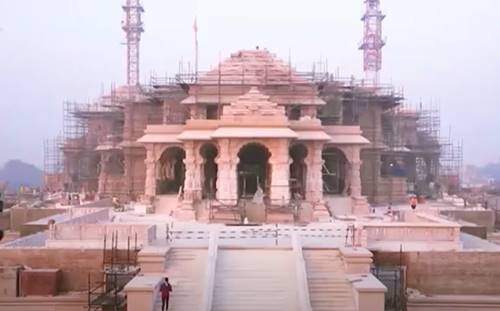
In June 2026, the administrative apparatus of the Shri Ram Janmabhoomi Teerth Kshetra Trust, the governing body of the Ram Mandir in Ayodhya, Uttar Pradesh, was thrust into a profound crisis following allegations of systemic theft and misappropriation of devotional offerings. This controversy, which led to the arrest of eight individuals and the subsequent resignation of the temple trust’s powerful general secretary, marked the first significant administrative scandal to engulf the shrine since its highly publicized inauguration. The temple, constructed on grounds venerated as the birthplace of Lord Rama, a deity of the Sun Dynasty in ancient India, was inaugurated with great fanfare by Prime Minister Narendra Modi in January 2024. This event was not merely a religious ceremony but a culmination of a decades-long political and cultural movement, making the temple a central symbol in the nation’s contemporary politics and a focal point of Prime Minister Modi’s political narrative.
The sequence of events leading to the arrests began with mounting allegations regarding irregularities in the handling of vast donations. On Thursday, June 25, 2026, these allegations crystallized into a formal criminal case. A government statement issued late that night confirmed that police had arrested eight people, including temple employees, in connection with the case. The majority of those arrested were directly involved in the critical processes of counting or handling the substantial cash and valuable items, including gold and silver, donated by the multitude of devotees who thronged the temple. While the government’s initial statement did not disclose the precise scale of the alleged embezzlement, media reports and preliminary assessments suggested a staggering figure believed to amount to more than $20 million. The gravity of the situation was underscored by the legal provisions invoked against the accused. The eight arrested individuals faced charges under several sections of the Bharatiya Nyaya Sanhita, including Section 306, which pertains to theft by a clerk or servant of property in the possession of a master; Section 316, concerning criminal breach of trust; Section 317, dealing with dishonestly receiving stolen property; and Section 61, relating to criminal conspiracy. Additionally, charges were filed under the Prevention of Corruption Act, highlighting the serious nature of the financial malfeasance alleged by the authorities.
The investigation was swiftly escalated to the highest levels of the state government. Uttar Pradesh Chief Minister Yogi Adityanath, whose administration had been instrumental in the temple’s construction and consecration, established a special investigation team to look into the case. Chief Minister Adityanath was quoted in the government statement as having issued a stern ultimatum, vowing that “no guilty person will be spared”. This firm stance reflected the immense political and religious sensitivity surrounding the temple, which had been built at an estimated cost of $240 million, a sum sourced entirely from public donations. The temple’s financial structure was remarkably transparent in its origins, yet the current crisis exposed potential vulnerabilities in its internal auditing and cash-handling procedures. The accused were identified as Avinash Shukla, Anukalp Mishra, Lavkush Mishra, Manish Kumar Yadav, Karunesh Pandey, Ramashankar Mishra, Subhash Srivastava, and Ramshankar Yadav alias Tinnu. A senior official informed the news agency PTI that all the accused were in Ayodhya itself and were arrested late on Thursday night. Police were preparing to present them before a magistrate, and further questioning was underway to unravel the full extent of the conspiracy.
The ramifications of the arrests were immediate and reached the apex of the temple’s administrative hierarchy. In a significant development following the donation-theft row, Champat Rai, the powerful general secretary of the Shri Ram Janmabhoomi Teerth Kshetra Trust, tendered his resignation on June 26, 2026. This occurred just a day after the FIR was registered and the eight individuals were arrested. Rai had been a pivotal figure in the temple movement and the subsequent management of the shrine. His biography is deeply intertwined with the ideological currents that shaped the temple’s construction. Born in 1946 in Bijnor, Uttar Pradesh, Rai was influenced from a young age by the ideology of the Rashtriya Swayamsevak Sangh (RSS). He later joined the organization and, after a career as a chemistry teacher at RSM Degree College in Bijnor, formally joined the Vishwa Hindu Parishad (VHP) in 1980. He quickly rose through the ranks of the VHP, first serving as secretary before being appointed the organisation’s international vice president. Since the controversy erupted, Rai had been at the centre of attention. He initially rejected the allegations of theft involving donation funds; however, he later welcomed the SIT probe ordered by the Yogi Adityanath government. His resignation, along with that of another trustee, Anil Mishra, was seen as a bid to take moral responsibility for the lapses that occurred under the trust’s watch. The trust, which administers the temple, is managed by individuals who are deeply connected with the BJP or RSS, making this scandal a particularly sensitive political issue for the ruling establishment.
The Special Investigation Team (SIT), which was at the heart of the probe, had been working diligently to compile evidence. The SIT submitted its preliminary report to the government on June 23, 2026, two days before the arrests were made. The head of the SIT, Vijay Vishwas Pant, stated to the media that the report had been submitted to the Additional Chief Secretary (Home). He described it as an initial report and emphasized that the details were confidential, preventing any disclosure of the findings at that moment. “We have made our findings available to him,” Pant added, indicating that the government was now in possession of the preliminary evidence required to proceed with legal action. Authorities have not shared further details, stating that the contents of the report are under review, a measure likely intended to protect the integrity of the ongoing investigation and prevent any prejudice to the legal proceedings.
As the investigation deepened, the modus operandi of the alleged theft began to emerge. The temple trust had authorized the State Bank of India (SBI) to count the cash offerings. In a move that introduced a layer of private involvement, the SBI, in turn, had engaged a private agency for the counting process. This multi-tiered handling of cash created potential loopholes exploited by the accused. The arrested individuals were associated with the process of counting cash and valuables received as donations at the temple. The selection of counting personnel, which included a combination of bank employees and trust representatives, proved to be a critical vulnerability. The temple had been receiving huge donations ever since its inauguration. According to annual reports released in September 2025, the Shri Ram Janmabhoomi Teerth Kshetra Trust reported annual earnings of nearly Rs 327 crore during the financial year 2024-25. Donations contributed Rs 153 crore while interest income accounted for a substantial Rs 173 crore, demonstrating the immense financial scale of the temple’s operations. The trust reported an average daily visitor count of 70,000 to 80,000, rising two to three times during weekends and festivals, leading to enormous daily cash inflows.
In the context of the ongoing controversy, a temple trust camp office in charge, Prakash Gupta, had previously provided insights into the donation-handling procedures. He told the news agency IANS that donations received at counters are accepted only against receipts, a system designed to ensure accountability for funds collected through official channels. This suggests that the discrepancy, if established, could be linked to the counting of money deposited in donation boxes rather than receipt-based collections. The donation boxes, four in number, were counted by a dedicated team of 14 people, which included 11 bank employees and three from the temple trust. This team structure was supposed to provide checks and balances, yet the allegations suggest that even this mixed team could not prevent the reported large-scale misappropriation. The fact that the accused were primarily involved in the handling and counting of cash reinforces the suspicion that the theft occurred during the process of aggregating and accounting for the vast sums of unaccounted currency deposited by devotees.
The historical and architectural significance of the Ram Mandir provides a crucial backdrop to the current administrative crisis. The temple has been designed by Shri Chandrakant Sompura of Ahmedabad, a renowned architect whose family has designed numerous temples across India. The globally renowned company Larsen and Turbo was responsible for the construction work, while Tata Consulting Engineers were appointed as advisory consultants. This combination of leading architectural and engineering firms underscores the importance attached to the temple’s construction. The temple is viewed not merely as a place of worship but as a testament to India’s civilisational continuity and the power of faith upheld by law. Its construction is seen as reviving Ayodhya’s spiritual heritage while also driving holistic development, including enhanced infrastructure like the Maharishi Valmiki International Airport and redeveloped access roads, fostering pilgrimage and economic growth. The temple has been described as a temple of national consciousness in the form of Ram, where Lord Ram is considered India’s faith, foundation, idea, law, consciousness, thinking, prestige, and glory.
The mythological and historical chronology of Lord Rama is integral to the temple’s significance. Devout Hindus believe that the deity Ram was born in the town of Ayodhya—home to the temple—more than 7,000 years ago. King Rama was a Vedic King, believed to have ruled a huge continent spanning from the Caspian Sea to Sri Lanka to Singapore in the Treta Yuga. His biography was written by Sage Valmiki. Around c. 1450–1500 BCE, the Ramayana is believed to have reached its present form, reflecting earlier oral traditions. He studied the Vedas from Vasistha and learned Dhanurveda (the science of archery) from Sage Viswamitra and studied Economics from King Janaka, as per the Ramayana.
His Dharmic Administration continued for thousands of years and is said to have diminished at the Neo Vedic Age around c.3350-3050 BCE, which was restored by King Yudhisthira after the Mahabharata war in or around 3160 BCE. The inauguration of the Ram Temple in Ayodhya has been described as a national aspiration and has been seen as the first step in reclaiming the Hindu Rastra. The temple was destroyed by the Mughals during the Islamic rule and later rebuilt and rededicated by the Prime Minister of India, though historical sources note the temple was there from time immemorial. The current temple structure, completed in 2024, represents the fulfillment of a long-standing demand for the reconstruction of what is believed to be the original temple at the Janmabhoomi site.
As the legal process moves forward, the arrested individuals face a rigorous judicial examination. The case has been registered under the aforementioned sections of the Bharatiya Nyaya Sanhita (Penal Code), among other provisions. The government’s initial statement indicated that most of those arrested were involved in counting or handling cash and valuables donated by devotees, including gold and silver. The arrests late Thursday night and the subsequent preparations to present them before a magistrate signal the legal system’s rapid response to the high-profile case. The investigation continues to be a matter of intense public interest, not only because of the significant financial sums involved but also because of the temple’s status as a symbol of Hindu faith and a centerpiece of the BJP’s political agenda.
The collaboration between the SIT and the Uttar Pradesh police suggests a comprehensive effort to uncover all the facts. The ongoing questioning of the accused is expected to reveal the full network of individuals involved in the conspiracy, which may extend beyond the eight arrested to other employees of the temple trust or the private agencies contracted for counting. The SIT’s continued work and the government’s review of the confidential report suggest that further developments, including the possibility of more arrests or charges, are likely in the coming weeks. The outcome of this case will have significant implications for the transparency and accountability of management practices in India’s wealthy religious institutions, setting a precedent for how such temples handle the immense faith and financial trust placed in them by millions of devotees.
- Ram Mandir was destroyed by Babar in 1528 CE
- Sringeri Sharada Peetham on Ram Mandir Prana Pratistha
- RSS Chief Highlights True Independence Through Ram Temple
- Suvo Muhurta: Availability on 22 Jan 2024 for Prana Pratistha
Sarvarthapedia Conceptual Network: Ram Mandir, Ayodhya
Core Concept
Ram Mandir, Ayodhya
The Shri Ram Janmabhoomi Mandir is a Hindu temple located in Ayodhya, Uttar Pradesh. It serves simultaneously as a major pilgrimage centre, an architectural landmark, a religious institution, a charitable trust, an economic driver, and a subject of contemporary governance, public administration, and national discourse.
Primary Knowledge Clusters
Ayodhya
Related Concepts
- Ram Mandir
- Lord Rama
- Kosala Kingdom
- Suryavansha (Solar Dynasty)
- Ramayana
- Sacred Geography of India
- Sapta Puri
- Sarayu River
- Pilgrimage Centres
- Temple Economy
- Religious Tourism
- Maharishi Valmiki International Airport
- Urban Development
- Uttar Pradesh
Lord Rama
Related Concepts
- Ikshvaku Dynasty
- Suryavansha
- Ramayana
- Sage Valmiki
- Ayodhya
- King Dasharatha
- Queen Kaushalya
- Sage Vasistha
- Sage Vishwamitra
- King Janaka
- Sita
- Lakshmana
- Bharata
- Shatrughna
- Hanuman
- Dharma
- Rajadharma
- Ram Rajya
- Hindu Philosophy
- Vaishnavism
Ramayana
Related Concepts
- Valmiki
- Treta Yuga
- Ayodhya Kanda
- Aranya Kanda
- Kishkindha Kanda
- Sundara Kanda
- Yuddha Kanda
- Uttara Kanda
- Sanskrit Literature
- Itihasa Tradition
- Oral Traditions
- Classical Indian Literature
- Dharma
- Kingship
- Ancient Education
Ram Mandir Architecture
Related Concepts
- Nagara Architecture
- Chandrakant Sompura
- Sompura Temple Architects
- Garbhagriha
- Shikhara
- Mandapa
- Bansi Paharpur Sandstone
- Granite Foundation
- Stone Construction
- Vastu Shastra
- Shilpa Shastra
- Temple Engineering
- Larsen & Toubro
- Tata Consulting Engineers
Shri Ram Janmabhoomi Teerth Kshetra Trust
Related Concepts
- Temple Administration
- Religious Trust
- Charitable Institution
- Donation Management
- Temple Finance
- Temple Governance
- Public Donations
- Trust Management
- Religious Endowments
- Audit
- Accountability
Investigation Cluster
Donation Misappropriation Investigation (2026)
Related Concepts
- Uttar Pradesh Police
- Special Investigation Team (SIT)
- FIR
- Criminal Investigation
- Temple Donations
- Financial Accountability
- Public Trust
- Temple Administration
- Evidence Collection
- Cash Counting System
- Donation Boxes
- Judicial Process
Bharatiya Nyaya Sanhita
Related Concepts
- Criminal Breach of Trust
- Theft
- Criminal Conspiracy
- Dishonestly Receiving Stolen Property
- Criminal Procedure
- Police Investigation
- Magistrate
- Indian Criminal Law
Special Investigation Team (SIT)
Related Concepts
- Government Investigation
- Preliminary Report
- Additional Chief Secretary (Home)
- Evidence Review
- Confidential Reports
- Financial Investigation
- Criminal Procedure
Institutional Cluster
State Bank of India
Related Concepts
- Cash Counting
- Banking Services
- Temple Administration
- Financial Oversight
- Private Counting Agency
- Donation Management
Temple Donation System
Related Concepts
- Hundi
- Donation Boxes
- Receipt-Based Donations
- Gold Donations
- Silver Donations
- Cash Offerings
- Pilgrim Contributions
- Counting Protocols
- Financial Transparency
Personalities
Narendra Modi
Related Concepts
- Prime Minister of India
- Ram Mandir Inauguration
- January 2024
- Cultural Heritage
- Infrastructure Development
- National Projects
- Ayodhya Development
Yogi Adityanath
Related Concepts
- Chief Minister of Uttar Pradesh
- Law and Order
- Special Investigation Team
- Temple Administration
- State Government
- Governance
Champat Rai
Related Concepts
- Shri Ram Janmabhoomi Teerth Kshetra Trust
- General Secretary
- RSS
- Vishwa Hindu Parishad
- Temple Administration
- Public Statements
- Organisational Leadership
- Bijnor
- RSM Degree College
Chandrakant Sompura
Related Concepts
- Temple Architect
- Sompura Family
- Nagara Style
- Traditional Architecture
- Stone Temples
- Sacred Geometry
- Vastu Shastra
Organisations
Rashtriya Swayamsevak Sangh (RSS)
Related Concepts
- Social Organisation
- Hindu Cultural Organisations
- Organisational Network
- Volunteer Movement
- Ideological Influence
Vishwa Hindu Parishad (VHP)
Related Concepts
- Religious Organisation
- Temple Movement
- Cultural Preservation
- Hindu Institutions
- Religious Mobilisation
Temple Economy
Pilgrimage Economy
Related Concepts
- Religious Tourism
- Hospitality Industry
- Hotels
- Local Employment
- Transport Infrastructure
- Retail Economy
- Pilgrim Services
- Urban Development
Financial Administration
Related Concepts
- Annual Reports
- FY 2024–25
- Donation Income
- Interest Income
- Temple Accounts
- Auditing
- Financial Governance
- Charitable Finance
Infrastructure Development
Ayodhya Development
Related Concepts
- Maharishi Valmiki International Airport
- Railway Redevelopment
- Highway Expansion
- Pilgrim Facilities
- Urban Planning
- Smart City Development
- Tourism Infrastructure
Religious Concepts
Ram Rajya
Related Concepts
- Dharma
- Justice
- Ideal Kingship
- Governance
- Ethics
- Public Welfare
- Hindu Political Thought
Dharma
Related Concepts
- Rajadharma
- Ramayana
- Vedic Tradition
- Hindu Ethics
- Kingship
- Social Order
- Civilisational Values
Suryavansha
Related Concepts
- Ikshvaku Dynasty
- Ayodhya
- Lord Rama
- Dasharatha
- Ancient Indian Genealogies
- Puranic Tradition
Classical Knowledge
Sage Valmiki
Related Concepts
- Ramayana
- Sanskrit Literature
- Epic Poetry
- Ancient India
- Ashrama Tradition
- Maharishi Valmiki
Sage Vasistha
Related Concepts
- Royal Education
- Vedas
- Gurukul
- Rajarshi Tradition
- Dharma
Sage Vishwamitra
Related Concepts
- Dhanurveda
- Astravidya
- Royal Training
- Ramayana
- Vedic Tradition
King Janaka
Related Concepts
- Mithila
- Sita
- Philosophy
- Statecraft
- Rajadharma
- Ancient Education
Civilisational Themes
Indian Temple Tradition
Related Concepts
- Sacred Architecture
- Temple Construction
- Temple Ritual
- Pilgrimage
- Sculpture
- Stone Craftsmanship
- Vastu Shastra
- Shilpa Shastra
Indian Civilisational Continuity
Related Concepts
- Sacred Geography
- Pilgrimage Networks
- Sanskrit Literature
- Epics
- Temple Culture
- Cultural Heritage
- Religious Institutions
- Traditional Knowledge Systems
Governance and Public Administration
Temple Governance
Related Concepts
- Religious Trusts
- Financial Oversight
- Public Accountability
- Donation Management
- Institutional Administration
- Audit Systems
- Compliance
- Public Confidence
Related Sarvarthapedia Clusters
See Also
- Ayodhya
- Ramayana
- Lord Rama
- Ram Rajya
- Suryavansha
- Ikshvaku Dynasty
- Valmiki
- Vasistha
- Vishwamitra
- Janaka
- Temple Architecture of India
- Nagara Style
- Vastu Shastra
- Shilpa Shastra
- Hindu Pilgrimage
- Sacred Geography of India
- Temple Economy
- Religious Trusts in India
- Charitable Endowments
- Bharatiya Nyaya Sanhita
- State Bank of India
- Uttar Pradesh
- Maharishi Valmiki International Airport
- Religious Tourism
- Urban Development
- Public Finance
- Criminal Investigation
- Special Investigation Team
- Governance and Accountability
- Encyclopedia of Astrology