Skip to content

ADVOCATETANMOY LAW LIBRARY

Research & Library Database

Primary Menu
  • News
  • Opinion
  • Countries198
    • National Constitutions: History, Purpose, and Key Aspects
  • Judgment
  • Book
  • Legal Brief
    • Legal Eagal
  • LearnToday
  • HLJ
    • Supreme Court Case Notes
    • Daily Digest
  • Sarvarthapedia
    • Sarvarthapedia (Core Areas)
    • Systemic-and-systematic
    • Volume One
08/04/2026

Religious freedom is not absolute- Govt can ban Qurbani under COVID lockdown-Allahabad HC-29/7/2020

Dr. Mohammad Ayub vs State Of U.P. And 3 Ors-It is pertinent to mention that guarantee of the Fundamental Rights has been made subject to reasonable restrictions which may be imposed by the State. The power to impose reasonable restrictions may be necessary in the interest of public order, morality and health provided the restrictions so imposed are not unreasonable and arbitrary.
advtanmoy 01/09/2020 4 minutes read

© Advocatetanmoy Law Library

  • Share on WhatsApp (Opens in new window) WhatsApp
  • Share on X (Opens in new window) X
  • Share on Facebook (Opens in new window) Facebook
  • Share on Telegram (Opens in new window) Telegram
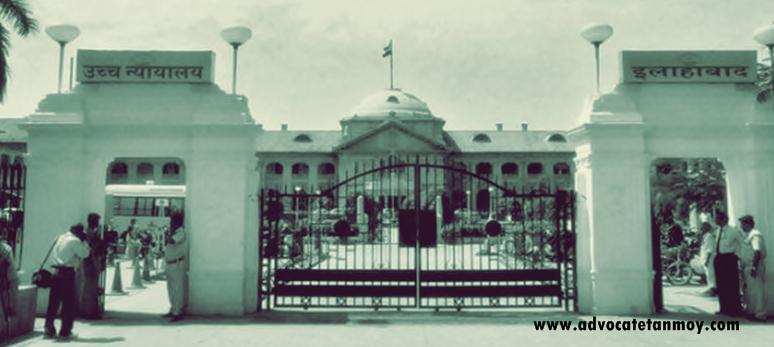
Allahabad High Court

Home » Law Library Updates » Religious freedom is not absolute- Govt can ban Qurbani under COVID lockdown-Allahabad HC-29/7/2020

Dr. Mohammad Ayub vs State Of U.P. And 3 Ors.

Art.25 – Fundamental Rights under Pt.III though transcendental, inalienable and primordial, held, not absolute but subject to reasonable restrictions.

HIGH COURT OF JUDICATURE AT ALLAHABAD

AFR

Court No. – 29

Read Next

  • Law and Governance: History, Principles, and Institutions
  • English Language: Historical Development and Global Impact
  • Cinema and Cinematography: History, Technology, Careers, and Global Film Industry

Case :- PUBLIC INTEREST LITIGATION (PIL) No. – 749 of 2020

Petitioner :- Dr. Mohammad Ayub
Respondent :- State Of U.P. And 3 Ors.
Counsel for Petitioner :- Arvind Kumar,Rahul Chaudhary
Counsel for Respondent :- C.S.C.

Hon’ble Pankaj Mithal,J.
Hon’ble Dr. Yogendra Kumar Srivastava,J.

1- Heard Sri Rahul Chaudhary, learned counsel for the petitioner and the learned Standing Counsel appearing for the State-respondents.

Read Next

  • Law and Governance: History, Principles, and Institutions
  • English Language: Historical Development and Global Impact
  • Cinema and Cinematography: History, Technology, Careers, and Global Film Industry

2. The petitioner is claiming to be a renowned surgeon and a member of Peace Party. He has preferred this writ petition in public interest alleging that Qurbani (sacrifice) is mandatory on the festival of Eid-ul-Adha which is falling on 31.07.2020. He orally submits that the festival is actually on Saturday, 1st of August, 2020. The petitioner, therefore, prays that for the purposes of Qurbani on the said day of festival relaxations may be provided in the guidelines of the State Government dated 12.07.2020 which contemplate for a two days’ lockdown in view of COVID-19 pandemic on every Saturday and Sunday.

3. The submission of the learned counsel for the petitioner is that the lockdown which is applicable on every Saturday and Sunday infringes with the right guaranteed under Articles 21 and 25 of the Constitution of India.

Read Next

  • Law and Governance: History, Principles, and Institutions
  • English Language: Historical Development and Global Impact
  • Cinema and Cinematography: History, Technology, Careers, and Global Film Industry

4- Fundamental Rights as contained under Part III of the Constitution have always enjoyed a special and privileged place in the Constitution and occupy a unique place in the lives of the civilised societies. They have been held to be transcendental, inalienable and primordial. However, the Fundamental Rights under Part III are not of an absolute nature, and the same are subject to reasonable restrictions.

5. Article 25 secures to every person the freedom of conscience and free profession, practice and propagation of religion.

6. The entitlement to freedom of conscience and the right freely to profess, practice and propagate religion is, however, subject to public order, morality and health and to other provisions of Part III.

7. The right to freedom of religion guaranteed under Article 25 of the Constitution thus cannot override the interests of public order, morality and health and is also subject to other provisions contained under Part III.

8. The right under Article 25 guaranteeing freedom of conscience, profession, practice and propagation of religion being subject to “public order, morality and health”, and also “to other provisions” of Part III of the Constitution, the restrictions imposed by the State Government imposing lockdown for two days in a week during the extraordinary situation created due to COVID-19 pandemic, cannot be said to impinge upon any of the Fundamental Rights of the petitioners or members of any religious community.

9. It is pertinent to mention that guarantee of the Fundamental Rights has been made subject to reasonable restrictions which may be imposed by the State. The power to impose reasonable restrictions may be necessary in the interest of public order, morality and health provided the restrictions so imposed are not unreasonable and arbitrary.

10. We, in such a situation, where the restrictions imposed have neither been shown to be arbitrary or unreasonable, find no reason whatsoever for relaxing the conditions contained under the guidelines.

11. The counsel for the petitioner is unable to establish before us as to in what manner the restrictions imposed in terms of the guidelines issued by the State Government in the light of the prevailing COVID-19 pandemic impinge upon any of the fundamental rights of the petitioner or of any person especially in these unprecedented times of COVID-19 pandemic which casts an onerous obligation upon the State to take measures to secure the health and lives of its citizens.

12. Having regard to the aforementioned facts and circumstances, we do not find any element of public interest in the present petition so as to persuade us to exercise our extraordinary jurisdiction under Article 226 of the Constitution of India.

13. The writ petition thus fails and is, accordingly, dismissed.

Order Date :- 29.7.2020
Shahroz


Tags: fundamental rights General HCupdates JuvenileQuestion

Post navigation

Previous: Gravity of offence is not relevant consideration for refusing bail to the juvenile- Allahabad HC-07/08/2020
Next: International Bar Association: Rules on Taking of Evidence in International Commercial Arbitration
Communism
Sarvarthapedia

Manifesto of the Communist Party 1848: History, Context, and Core Concepts

Arrest
Sarvarthapedia

Latin Maxims in Criminal Law: Meaning, Usage, and Courtroom Application

Abolition of Slave Trade Act 1807: Facts, Enforcement, and Historical Context

British Slavery and the Church of England: History, Theology, and the Codrington Estates

United States of America: History, Government, Economy, and Global Power

Biblical Basis for Slavery: Old and New Testament Laws, Narratives, and Interpretations

Rule of Law vs Rule by Law and Rule for Law: History, Meaning, and Global Evolution

IPS Cadre Strength 2025: State-wise Authorised Strength

Uric Acid: From 18th Century Discovery to Modern Medical Science

Christian Approaches to Interfaith Dialogue: Orthodox, Catholic, Protestant, and Pentecostal Views

Origin of Central Banking in India: From Hastings to RBI and the History of Preparatory Years (1773–1934)

Howrah District Environment Plan: Waste Management, Water Quality & Wetland Conservation

Bharatiya Nyaya Sanhita 2023: Sections (1-358), Punishments, and Legal Framework

Bengali Food Culture: History, Traditions, and Class Influences

  • Sarvarthapedia

  • Delhi Law Digest

  • Howrah Law Journal

  • Amit Arya vs Kamlesh Kumari: Doctrine of merger
  • David Vs. Kuruppampady: SLP against rejecting review by HC (2020)
  • Nazim & Ors. v. State of Uttarakhand (2025 INSC 1184)
  • Geeta v. Ajay: Expense for daughter`s marriage allowed in favour of the wife
  • Ram v. Sukhram: Tribal women’s right in ancestral property [2025] 8 SCR 272
  • Naresh vs Aarti: Cheque Bouncing Complaint Filed by POA (02/01/2025)
  • Bharatiya Nagarik Suraksha Sanhita 2023 (BNSS)
  • Bharatiya Sakshya Adhiniyam 2023 (BSA): Indian Rules for Evidence
  • Bharatiya Nyaya Sanhita (BNS) 2023
  • The Code of Civil Procedure (CPC)
  • Supreme Court Daily Digest
  • U.S. Supreme Court Orders
  • U.k. Supreme Court Orders
United Kingdom, UK

Abolition of Slave Trade Act 1807: Facts, Enforcement, and Historical Context

British Slavery and the Church of England: History, Theology, and the Codrington Estates

British Slavery and the Church of England: History, Theology, and the Codrington Estates

USA, America

United States of America: History, Government, Economy, and Global Power

Biblical Basis for Slavery, english slave trade

Biblical Basis for Slavery: Old and New Testament Laws, Narratives, and Interpretations

2026 © Advocatetanmoy Law Library

  • About
  • Global Index
  • Judicial Examinations
  • Indian Statutes
  • Glossary
  • Legal Eagle
  • Subject Guide
  • Journal
  • SCCN
  • Constitutions
  • Legal Brief (SC)
  • MCQs (Indian Laws)
  • Sarvarthapedia (Articles)
  • Contact Us
  • Privacy Policy
  • FAQs
  • Library Updates