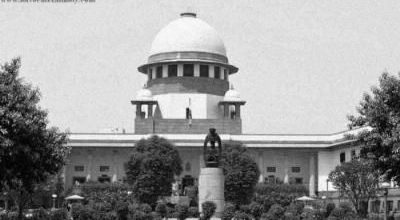
In a shocking turn, India’s top court frees two men once sentenced to death after finding fatal flaws in evidence and investigation.
Akhtar Ali @ Ali Akhtar @ Shamim @ Raja Ustad Versus The State of Uttarakhand
IN THE SUPREME COURT OF INDIA
CRIMINAL APPELLATE JURISDICTION
CRIMINAL APPEAL NO(S). OF 2025
(Arising out of SLP (Criminal) No(s). 14-15 of 2020)
Date of Judgment: September 10, 2025
The present appeals by special leave are preferred on behalf of appellant No. 1, Akhtar Ali alias Ali Akhtar alias Shamim alias Raja Ustad, and appellant No. 2, Prem Pal Verma, assailing the common judgment dated 18th October 2019 passed by the Division Bench of the High Court of Uttarakhand at Nainital in Criminal Appeals, partially upholding the conviction and death sentence awarded to the appellants by the Special Judge (POCSO)/Fast Track Court/Additional District & Sessions Judge, Haldwani, District Nainital, vide judgment and order dated 11th March 2016 in Session Trial Case.
Accused-appellant No. 1, Akhtar Ali, was convicted for offences punishable under Sections 376A, 363, and 201 of the IPC; under Section 3 read with Section 4, Section 5 read with Section 6, and Section 7 read with Section 8 of the POCSO Act; and Section 66C of the IT Act. Accused-appellant No. 2, Prem Pal Verma, was convicted under Section 212 of the IPC and Section 66C of the IT Act, though acquitted of charges under Sections 363, 201, 120-B, 376A IPC, and Sections 16/17 read with Sections 4, 5, 6, 7 of the POCSO Act.
The prosecution case arose from an incident on 20th November 2014, when the victim, a minor girl, went missing from a wedding ceremony in Kathgodam. Her father lodged a missing report the next day, and on 25th November 2014 her body was found near Gaula River. The post-mortem revealed sexual assault and blunt force injuries sufficient to cause death. Investigation implicated Akhtar Ali and Prem Pal Verma, along with one Junior Masih alias Foxy. Based on circumstantial evidence, confessional statements, alleged recovery of articles, and DNA reports, the accused were charge-sheeted for kidnapping, rape, murder, and related offences.
The trial court convicted Akhtar Ali and sentenced him to death, while Prem Pal Verma received imprisonment for his role. The High Court, upon appeal, partially upheld the convictions and the death sentence.
In the present appeals, the Supreme Court examined the prosecution’s case, which rested entirely on circumstantial evidence. It was found that the chain of evidence was incomplete and broken. The prosecution failed to establish motive; witnesses relied upon for the “last seen” theory were introduced belatedly with inconsistent testimonies; and crucial witness Nikhil Chand, who first informed of the body’s location, was not examined. The recovery of evidence was suspicious, and the DNA evidence was found unreliable due to inconsistencies in reports and questions about the expert’s qualifications. Further, the arrest of Akhtar Ali was found dubious, lacking proper documentation, with call records obtained after the arrest rather than before, undermining the prosecution’s narrative.
The Court concluded that guilt was not proved beyond reasonable doubt. The prosecution’s case suffered from serious infirmities, and the benefit of doubt had to go to the appellants. Accordingly, the death penalty and all other convictions were set aside.
Despite being a close relative who first disclosed the location of the victim girl’s dead body, Nikhil Chand was neither examined nor interrogated by the investigating officers. This omission is of grave significance. The utter failure of the Investigating Officer to question Nikhil Chand, in order to ascertain the source of his knowledge about the dead body, reflects gravely tainted and suspicious actions of the investigating agencies. It must be remembered that the victim girl was not traced despite frantic efforts of numerous police teams, and, therefore, it became imperative to determine the manner in which Nikhil Chand came to know about the place where her body was lying.
Had the Investigating Officer acted bona fide, his immediate focus would have been upon Nikhil Chand, to discover whether his knowledge stemmed from innocent circumstances or from direct involvement in the events of the fateful night. The failure to record his statement during investigation and the omission to present him for deposition at trial deprived the Court of the most vital link in the chain of circumstances. This intentional and calculated omission not only undermines the “last seen theory” but also causes serious prejudice, as it deprived both the Court and the defence of the opportunity to test the innocence or otherwise of his knowledge.
In the absence of this crucial testimony, the “last seen” circumstance must be held to have completely collapsed. The non-examination of Nikhil Chand compels the Court to draw an adverse inference against the prosecution.
The appeals were allowed. The judgments of the trial court and the High Court were quashed. Both appellants, Akhtar Ali and Prem Pal Verma, were acquitted of all charges and directed to be released forthwith, if not required in any other case.
This case underlines the principle that conviction in criminal law, particularly where capital punishment is concerned, must be based on a complete and unbroken chain of credible circumstantial evidence, and failure to examine key witnesses or reliance on doubtful evidence fatally undermines the prosecution’s case.