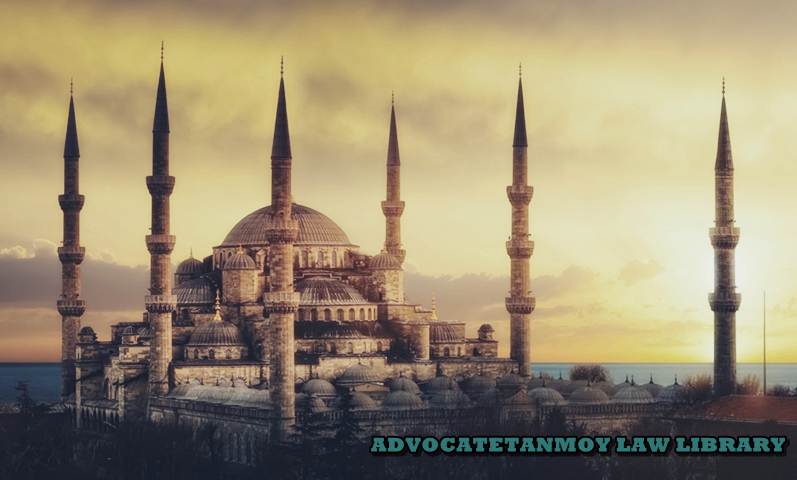
The Blue Mosque in Istanbul during sunset
Islam is a way of life. It integrates man with God, awakens in him with a moral consciousness and invites him to deal with all the problems of life— individual and social, economic and political, national and international—in accord with his commitment to God. Islam does not divide life into domains of the spiritual and the secular. It spiritualizes the entire existence of man and produces a social movement to reconstruct human life in the light of principles revealed by God through His Book. Prayer and worship in Islam are means to prepare man to fulfill temporal existence. Islam aims at changing life and producing a new man and a new society, both committed to God and the welfare of mankind. Islam is not only a religion in the limited sense of the word; rather it is a complete code of life and a culture-producing factor. Muslim culture profits from all available sources, local and international, but its unique characteristic is that it grows from the foundations of the Qur’an and Sunnah.
The Quran describes itself as ‘the discernment’ (al-furqān), ‘the mother book’ (umm al-kitāb), ‘the guide’ (huda), ‘the wisdom’ (hikmah), ‘the remembrance’ (dhikr), and ‘the revelation’ (tanzīl; ‘something sent down’).
Timeline
- 570:
- 600:
- 610:
- 622:
- 628:
- 632:
- 632: Muhammad died
- 662:
- 699:
- 711:
- 748:
- 750:
- 850:
- 934:
- 1095:
- 1174:
- 1220:
- 1273: Jalal al-Din Rumi died
- 1299:
- 1500:
- 1878: The Ottoman Empire
- 1989: Ayatollah Khomeini died[Iran]
- 2015: