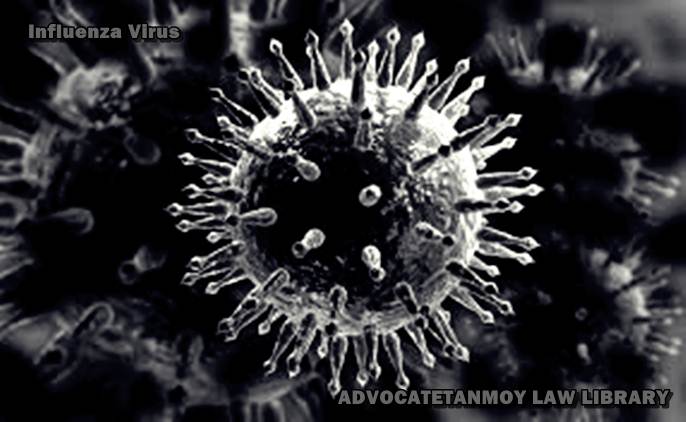
A virus is an obligate intracellular parasite, consists of a single nucleic acid, RNA or DNA, encoding the viral genome surrounded by a protein coat, and is capable of replication only within the living cells of bacteria, animals or plants. Viruses are classified into different orders and families according the type of nucleic acid present.
The word krimi is used in Veda for different macroscopic & microscopic creatures. Right from bacteria, various insects like kita, patanga were nominated as krimi. Two types of krimi viz. Drishta (Visible/Macroscopic) & Adrishta (Invisible / Microscopic) were described in veda. These two categories encompases nearly all krimi (Microbes / pathogens). According to their origin & Habitat they were categorized as pranyashrayee & Anyasthanashrayee. Different sharirika, manasika & adhyatmic vyadhis were thought to be originated from these Krimis. These harmful & debilitates (Pushtinashaka) organisms were recognized by various names based on troubles/sufferings they produce. Sun & Agni (fire) were described as internal source of krimichikitsa. Today science also confirms this fact. That early morning ultraviolet light rays emanating from sun can be used for various krimijanya-vyadhis. Apart from this various treatment modalities by using various natural resources, vegetable drugs. mineral drugs, fumigation, cleansing (Marjan-prokshana) & hymns were described for krimi & diseases caused by them. [Micro-organisms in Vedas – R. K. Jakhmola – 2010 Jan-Mar -An International Quarterly Journal of Research in Ayurveda]
Rishi Agastya in the Rigveda, named two types of poisonous creatures: extremely poisonous and less poisonous. Some of these creatures are visible, live in water where as others are invisible ones and live in water and earth [1]. Perhaps Rishi Agastya was the first person to state that the invisible creatures are also toxin producers. Further in the Atharvaveda, it is reported that whenever there is accumulation of toxins in the body, it results in illness or diseases. The same has been reported by the Germ Theory of disease described around 200 years ago. The theory established by Robert Koch states about the presence of the microorganisms to cause diseases [1]. A similar theory had been already established in our Vedic literature. The Ayurveda, the traditional Vedic literature on Indian medical system encompasses various logical and rational concepts related to human health and diseases which are also being validated by modern scientific texts.
Apart from the contributions of Rishi Agastya and Rishi Kanav and his followers, two eminent Rishis, Charak and Sushruta contributed their knowledge about microbes in the Charak Samhita and Sushruta Samhita [1]. These two ancient Vedic medical treatises of the Vedic period serve as an excellent resource dealing with modern concepts of microbiology in Ayurvedic contributions. Charak (the first physician) presented the concept of digestion, metabolism and immunity and discussed about physiology, etiology and embryology in Charak Samhita. He described illness as a result of imbalance among the three dosha namely, bile, phlegm and wind. Charak Samhita describes the causes of diseases, their diagnosis, treatments, and necessary medicines for controlling them. It also includes sections on the importance of diet, hygiene, prevention, and medical education, the teamwork of physicians, nurses, and patients which are necessary for recovery of health. Rishi Charak has also classified microorganisms in his Charak Samhita as internal and external microorganisms. These microorganisms were further subdivided on the basis of their place of origin such as dirt, phlegm, blood or stool. The literature describes the etiologies, signs and symptoms of different diseases. The knowledge about communicable diseases (Sankramak roga) which are due to microbial invasions has been reported in these Samhitas. [Sukshmjeevanu in Vedas: The Forgotten Past of Microbiology in Indian Vedic Knowledge Urvashi Kuhad, Gunjan Goel, Pawan K. Maurya, and Ramesh C. Kuhad-Indian J Microbiol. 2021 Mar]
- Frend C (2006) Microbiology in the Veda. In: Ravi Prakash Arya (ed) Vedic sciences