Skip to content

ADVOCATETANMOY LAW LIBRARY

Research & Library Database

Primary Menu
  • News
  • Opinion
  • Countries198
    • National Constitutions: History, Purpose, and Key Aspects
  • Judgment
  • Book
  • Legal Brief
    • Legal Eagal
  • LearnToday
  • HLJ
    • Supreme Court Case Notes
    • Daily Digest
  • Sarvarthapedia
    • Sarvarthapedia (Core Areas)
    • Systemic-and-systematic
    • Volume One
05/04/2026
  • Environment and Climate Concern

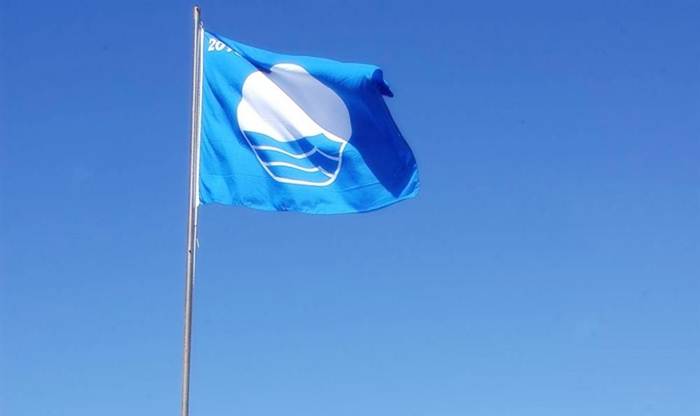
Eight beaches of India tagged with “Blue Flag” International eco-label

Clean beaches are the testimony to environment in the coastal area. He said, the issue of marine litter and oil spilling has caused disturbances to the aquatic life and the Government of India is undertaking various efforts for the sustainable development of coastal regions.
advtanmoy 19/09/2020 4 minutes read

© Advocatetanmoy Law Library

  • Share on WhatsApp (Opens in new window) WhatsApp
  • Share on X (Opens in new window) X
  • Share on Facebook (Opens in new window) Facebook
  • Share on Telegram (Opens in new window) Telegram
Flag

Home » Law Library Updates » Sarvarthapedia » Geo-Political » Diplomacy & Diplomatic Relations » Environment and Climate Concern » Eight beaches of India tagged with “Blue Flag” International eco-label

World Bank applauds India’s coastal zone management efforts and terms India as lighthouse for the countries of the region.

Blue Flag beaches are considered the cleanest beaches of the world.

DATE: 18 SEP 2020

On the eve of International Coastal Clean-Up Day which is celebrated across 100 countries since 1986, Union Ministry of Environment, Forest and Climate Change (MoEFCC) announced at a virtual event that for the first time eight beaches of India are recommended for the coveted International eco-label, the Blue flag certification. The recommendations are done by an independent National Jury composed of eminent environmentalists & scientists. Blue Flag beaches are considered the cleanest beaches of the world. The eight beaches are Shivrajpur in Gujarat, Ghoghla in Daman&Diu, Kasarkod and Padubidri beach in Karnataka, Kappad in Kerala, Rushikonda in Andhra Pradesh, Golden beach of Odisha and Radhanagar beach in Andaman and Nicobar.

Read Next

  • India’s long-term low-carbon development strategy-2022
  • Kyoto Protocol to the UN Framework Convention on Climate Change (1998)
  • Parish Agreement (Text) on Climate Change – 2015

Union Environment Minister, Shri Prakash Javadekar who couldn’t attend the event due to the ongoing parliament session, said through a video message that the government is committed to clean the beaches across the country. He said, clean beaches are the testimony to environment in the coastal area. He said, the issue of marine litter and oil spilling has caused disturbances to the aquatic life and the Government of India is undertaking various efforts for the sustainable development of coastal regions.

The event also saw the launch India’s own eco-label BEAMS by e-hoisting the flag -#IAMSAVINGMYBEACH simultaneously at these eight beaches. SICOM, MoEFCC in pursuit of promoting its policies for sustainable development in coastal regions have embarked upon a highly acclaimed program “BEAMS” (Beach Environment & Aesthetics Management Services) under its ICZM (Integrated Coastal Zone Management) project. This is one of the several other projects of ICZM that Govt of India is undertaking for the sustainable development of coastal regions, striving for globally recognized and the coveted eco-label ‘Blue flag”.

The flag hoisting program was conducted simultaneously at these 08 beaches virtually from MOEFCC and physically at the beaches by respective States/UTs through its MLAs and/or Chairman of Beach Management Committees (BMCs).

Speaking on the occasion, Union Environment Secretary, Shri R.P. Gupta said that high standards are being maintained to clean the beaches to keep environment safe and in the next four to five years 100 more beaches will be cleaned.

Read Next

  • India’s long-term low-carbon development strategy-2022
  • Kyoto Protocol to the UN Framework Convention on Climate Change (1998)
  • Parish Agreement (Text) on Climate Change – 2015

In a video message, World Bank’s country director Mr. Zunaid Khan applauded India’s efforts towards cleaning up the its beaches and said that India with its strategies for sustainable coastal zone management shall act as a lighthouse for other countries in the region.

With a view to protect and conserve the coastal and marine ecosystems and environment through a holistic coastal management, the Ministry of Environment, Forests & Climate Change launched the Integrated Coastal Zone Management (ICZM) activities in India for a holistic approach with an interactive, dynamic, multidisciplinary, and iterative planning process to promote sustainable development & management of coastal zones through its own wing SICOM.

The concept of ICZM was introduced in 1992 during the Earth Summit at Rio de Janeiro and most of the coastal countries in the World have been adopting ICZM principles for managing their coastal zones. Thus, adoption of ICZM principles for managing and sustainably developing our coastal regions is helping India in keeping with its commitments to international agreements on ICZM.

Read Next

  • India’s long-term low-carbon development strategy-2022
  • Kyoto Protocol to the UN Framework Convention on Climate Change (1998)
  • Parish Agreement (Text) on Climate Change – 2015

The objective of BEAMS program is to abate pollution in coastal waters, promote sustainable development of beach facilities, protect & conserve coastal ecosystems & natural resources, and seriously challenge local authorities & stakeholders to strive and maintain high standards of cleanliness, hygiene & safety for beachgoers in accordance with coastal environment & regulations. This program promotes beach recreation in absolute harmony with nature.

International Coastal Cleanup Day got its start in 1986 when Linda Maraniss met Kathy O’Hara while working for Ocean Conservancy. O’Hara had just completed a report called Plastics in the Ocean: More Than a Litter Problem. The two of them reached out to other ocean-lovers and organized a Cleanup for Ocean Conservancy. The first Cleanup consisted of 2,800 volunteers. Since that time, the Cleanup has grown into an international event in more than 100 countries.


Tags: currentaffairs Generalstudies SEA

Post navigation

Previous: Consumer Protection (E-Commerce) Rules 2020
Next: Improved Cultivation And Retting Exercise (Jute-ICARE) programme for jute agriculture in India
Arrest
Sarvarthapedia

Latin Maxims in Criminal Law: Meaning, Usage, and Courtroom Application

Sarvarthapedia
Sarvarthapedia

Research Methodology and Investigation: Concepts, Frameworks, and Emerging Trends

Rule of Law vs Rule by Law and Rule for Law: History, Meaning, and Global Evolution

IPS Cadre Strength 2025: State-wise Authorised Strength

Uric Acid: From 18th Century Discovery to Modern Medical Science

Christian Approaches to Interfaith Dialogue: Orthodox, Catholic, Protestant, and Pentecostal Views

Origin of Central Banking in India: From Hastings to RBI and the History of Preparatory Years (1773–1934)

Howrah District Environment Plan: Waste Management, Water Quality & Wetland Conservation

Bharatiya Nyaya Sanhita 2023: Sections (1-358), Punishments, and Legal Framework

Bengali Food Culture: History, Traditions, and Class Influences

West Bengal Court-Fees Act, 1970: Fees, Schedules, and Procedures

WB Land Reforms Tribunal Act 1997: History, Features, Provisions, Structure, Powers and Functions

Civil Procedure Law of the Democratic People’s Republic of Korea (1976)

Knowledge Management in the Modern Era: From History to Digital Transformation

  • Sarvarthapedia

  • Delhi Law Digest

  • Howrah Law Journal

  • Amit Arya vs Kamlesh Kumari: Doctrine of merger
  • David Vs. Kuruppampady: SLP against rejecting review by HC (2020)
  • Nazim & Ors. v. State of Uttarakhand (2025 INSC 1184)
  • Geeta v. Ajay: Expense for daughter`s marriage allowed in favour of the wife
  • Ram v. Sukhram: Tribal women’s right in ancestral property [2025] 8 SCR 272
  • Naresh vs Aarti: Cheque Bouncing Complaint Filed by POA (02/01/2025)
  • Bharatiya Nagarik Suraksha Sanhita 2023 (BNSS)
  • Bharatiya Sakshya Adhiniyam 2023 (BSA): Indian Rules for Evidence
  • Bharatiya Nyaya Sanhita (BNS) 2023
  • The Code of Civil Procedure (CPC)
  • Supreme Court Daily Digest
  • U.S. Supreme Court Orders
  • U.k. Supreme Court Orders
Sarvarthapedia, Law and Legal Materials

Rule of Law vs Rule by Law and Rule for Law: History, Meaning, and Global Evolution

Indian Government

IPS Cadre Strength 2025: State-wise Authorised Strength

Sarvarthapedia

Uric Acid: From 18th Century Discovery to Modern Medical Science

Christian Education

Christian Approaches to Interfaith Dialogue: Orthodox, Catholic, Protestant, and Pentecostal Views

2026 © Advocatetanmoy Law Library

  • About
  • Global Index
  • Judicial Examinations
  • Indian Statutes
  • Glossary
  • Legal Eagle
  • Subject Guide
  • Journal
  • SCCN
  • Constitutions
  • Legal Brief (SC)
  • MCQs (Indian Laws)
  • Sarvarthapedia (Articles)
  • Contact Us
  • Privacy Policy
  • FAQs
  • Library Updates