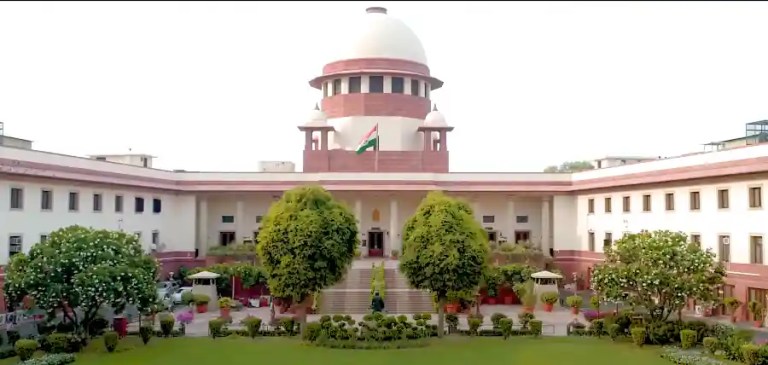
It is also well settled by the catena of judgments of this Court that while deciding the matters of custody of the child, primary and paramount consideration is always the welfare of the child. If the welfare of the child so demands, then technical objections cannot come in the way. However, while deciding the welfare of the child, it is not the view of one spouse alone which has to be taken into consideration. The Courts should decide the issue of custody on a paramount consideration which is in the best interest of the child who is the victim in the custody battle.
SUPREME COURT OF INDIA
Soumitra Kumar Nahar Vs. Parul Nahar
[Civil Appeal No(s). 1670 of 2020 arising out of S.L.P. (Civil) No(s). 6201 of 2016]
[Civil Appeal No(s). 1671 of 2020 arising out of S.L.P. (Civil) No(s). 16032 of 2016]
Ajay Rastogi, J.
1. Leave granted.
2. In a custody battle, no matter which parent wins but the child is always the loser and it is the children who pay the heaviest price as they are shattered when the Court by its judicial process tells 1 them to go with the parent whom he or she deems fit. It is a kind of dispute which has arisen initially from the Family Court and reached to this Court.
3. The husband Soumitra Kumar Nahar assailed the order of the High Court of Delhi dated 4th September, 2015 which partly allowed the appeal with the direction to the wife Parul Nahar to comply with the consent terms qua the visitation rights of the appellant-husband Soumitra Kumar Nahar to meet son Master Shravan. At the same time, visitation rights to meet the daughter Sanjana were declined. It was also observed that if the daughter wishes to meet her father, she can do so at her own desire.
4. Pending Civil Appeal @ Special Leave Petition(Civil) No. 6201 of 2016, a miscellaneous application was filed by the respondent Parul Nahar before the High Court of Delhi of which an order came to be passed on 12th May, 2016 directing Dr. Achal Bhagat (Psychotherapist) to ascertain the background facts regarding the relationship of the children with their father Soumitra Kumar Nahar and paternal grandparents before they joined the sole custody of their mother. It is unfortunate to notice that because of a warpath of the couple, both the paternal grandparents died during pendency of the proceedings.
5. Since the facts arise are almost common in both the appeals, we have noticed the relevant facts for our consideration from Civil Appeal @ SLP (C) No. 6201 of 2016.
6. Appellant Soumitra Kumar Nahar and respondent Parul Nahar married as per Hindu rites and customs on 10th December, 2001. They were blessed with a baby girl “Sanjana” born out of the wedlock on 24th May, 2005 and a baby boy “Shravan” was born on 10th October, 2008. It manifests from the record that some trivial matrimonial differences cropped up after the second child was born in October, 2008 and it was unfortunate that the parties started making personal allegations and counter allegations against each other, that forced the appellant-husband to file Guardianship Petition No. 56 of 2011 on 15th April, 2011 under Sections 7,8,10 & 11 of the Guardian and Wards Act, 1890. Simultaneously, appellant filed a separate Divorce Petition bearing HMA No. 821 of 2011 in September, 2011 on the grounds of cruelty and adultery.
7. The stage reached where the father of the appellant Soumitra Kumar Nahar filed a suit CS(OS) No. 2795 of 2011 before the High Court of Delhi impleading the appellant and respondent as a party praying for mandatory injunction against the respondent wife from entering into his selfacquired property.
8. It is pertinent to mention here that appellant was residing along with his wife Parul Nahar and parents at B197, Greater KailashI, New Delhi but because of compelling reasons, the appellant-husband and respondent-wife had to leave their matrimonial home and they shifted to the rented accommodation at M24, Greater KailashI, New Delhi.
9. The High Court of Delhi, after the matter being heard, passed an Order on 5th February, 2013 granting interim mandatory injunction in favour of the plantifffather directing the defendant no. 1(Parul Nahar) to vacate the subject property being B197, Greater KailashI, New Delhi and handover the peaceful possession of the same to the plaintiff from the date of the order.
The relevant extract of the order is as under:
“Interim mandatory injunction is therefore granted in favour of the petitioner and against the defendant no.1. Defendant No.1 is accordingly directed to vacate the subject property bearing No. B197, Greater Kailash, PartI, New Delhi and hand over peaceful possession of the same to the plaintiff within a period of one month from the date of this order. It is further directed that concerned Court seized with the petition filed by defendant No.1 under Domestic Violence Act shall decide the interim application of defendant No.1 for the grant of maintenance, which will include her right to a residence in the commensurate property as per the financial status of defendant No.2, within a period of one month from the date of this order. Defendant No.1 in the meanwhile is also set at liberty to shift to the rented accommodation as offered by defendant No.2 for her exclusive residence along with her children or to accept an amount of Rs.30,000 towards the amount of rent, pending disposal of her maintenance application before the concerned Metropolitan Magistrate/ Mahila Court.”
10. The order passed by the High Court granting interim mandatory injunction dated 5th February, 2013 came to be challenged by the respondent wife before the Division Bench in FAO(OS) No. 129/2013. After the matter being heard, a consent order came to be passed in terms of settlement recorded under Order dated 1st March, 2013 as follows:” It is thus read as under:
( i) The appellant states that the accommodation occupied by respondent No.2 at present i.e. Second Floor, M24, Greater Kailash – I, New Delhi of two bed rooms fully furnished is acceptable to her for the purpose of her residence and of her children. This course of action being acceptable to respondent No.2, the appellant agrees to move into the accommodation within a period of 15 days from today. The natural sequitor is that respondent no. 2 will move out of that accommodation within the same period of time.
(ii) Respondent No.2 undertakes to this court to continue to pay the rent, electricity and water charges for the aforesaid premises and ensure that accommodation is available to the appellant and the children.
(iii) Respondent No.2 will pay appellant maintenance @ Rs.60,000/per month inclusive of the children and their education expenses. Such payment should be made on or before 7th day of each month. The maintenance will commence from 1st March 2013.
(iv) The appellant and respondent No.2 also agree that the issue of visiting rights be settled. It is thus agreed that the appellant will make available the children to respondent No.2 on every Saturday at 10.00 AM to be brought back at 10.00 AM on the following Sunday.
(v) The appellant gives up her right and claim in the suit property in view of the settlement arrived at.
(vi) It is further agreed that this interim arrangement qua maintenance will continue to prevail during the pendency of the divorce proceedings.”
11. The consent order of the High Court in terms of the settlement dated 1st March, 2013 was not complied with by the respondent-wife and she did not vacate the house of father of the appellant-husband. The application was filed by the father of the appellant wherein the High Court directed the appellant-husband to pay Rs. 1.5 lakhs to respondent-wife to buy household items and also clarified that the object of the consent order is clear that is to bring to rest all other issues other than the divorce proceedings which is to be completed within one year. Issue of maintenance, domestic violence and the matters of custody and visiting rights stands resolved by the consent order dated 1st March, 2013.
12. The appellant-husband thereafter filed an application before the Family Court for implementation of the order of the High Court and in its subsequent order, the High Court observed in its Order dated 5th April, 2013 that if there is some problem in working out of the visitation rights in view of the stated approach of the children, directed the parties to settle the matter qua visitation rights before the Delhi High Court Mediation Centre by taking assistance of the child psychologist.
13. When the order of the Court dated 5th April, 2013 was not carried out by the parties, the appellant-husband approached the Family Court seeking necessary directions of visitation rights which came to be rejected by the Family Court vide Order dated 21st December, 2013 that came to be challenged before the Delhi High Court in Mat App(FC) No. 41/2014 and the High Court disposed of the application vide Order dated 25th September, 2014, the relevant extract reads as under:”
7. In these circumstances, we are compelled to direct as follows:
[ I] The parties shall appear before Ms. Veena Ralli/Mediator on 27th September, 2014 at 11.30 A.M. in the Delhi High Court Mediation and Conciliation Centre to explore the possibility of negotiated settlement by mediation. List for outcome of mediation before court on 20th November, 2014.
[II] The children of the parties shall be produced before Ms. Veena Ralli/Mediator in Samdhan, the Delhi High Court Mediation and Conciliation Centre on 18th of October, 2014 at 11.00 A.M. Ms. Veena Ralli shall facilitate free and healthy meetings between the petitioner/father as well as grandparents of the children keeping in view all the sensibilities and welfare of the children in mind. The respondent shall ensure that there is no obstruction or interference in these meetings.
[III] Ms. Veena Ralli shall request any child psychologist associated with the Centre to separately have conselling sessions with the children and/or parents as she would deem necessary on such date[s] and times as are convenient.
[IV] An assurance is given to us by Mr. Prakash Gautam, learned counsel for the respondent, that the orders of this court shall be complied with in letter and spirit.
[V] A direction is issued to the trial court dealing with HMA No.821/2011 to proceed with the completion of evidence in the case at the earliest, if possible on day to day proceeding. The evidence of the petitioner shall be completed within six months. The evidence of the respondent shall be completed within six months thereafter.
[VI] It is made clear that the pendency of any application, including the application for enhancement of maintenance filed by the respondent, shall not come in the way of recording of the evidence. It is also made clear that the pendency of the mediation shall not interdict the trial of the case. [VII] Let the trial court record be returned forthwith.”
14. After passing of the Order dated 25th September, 2014, the appellant-husband yet moved two applications which are registered as CM No. 3242 of 2015 in Mat App(FC) No. 41 of 2014 and CM No. 8858 of 2015 in Mat App(FC) No. 41 of 2014 and finally the applications were partly allowed vide judgment dated 4th September, 2015, the extract is as under:”
28. Thus in view of the aforesaid discussion, the appellant partly succeeds in his appeal. We accordingly direct the respondent to comply with the terms of the mutual settlement in so far as the visitation rights of the father appellant herein to meet Master Shravan is concerned and in so far as granting visitation rights to meet the daughter Sanjana is concerned, the same cannot be allowed in the light of the aforesaid peculiar circumstances. It is, however, made clear that nothing will come in the way of the daughter, if she wishes to meet her father at any time or even to visit him or stay with him as per her own wish and desire.
29. We are not inclined to delve into the legalities of the case and neither do we feel the need to discuss the judgments relied upon by both the parties as in the facts and circumstances of the present case, a specific issue of visitation rights requires consideration, and thus we are not limiting ourselves to legalistic aspects.”
15. The judgment of the High Court became a subject matter of challenge at the instance of the appellant husband in Civil Appeal arising out of SLP(Civil) No. 6201 of 2016. 16. Pending Civil Appeal arising out of SLP(Civil) No. 6201 of 2016, in Mat App No. 65 of 2015, the High Court of Delhi interacted with the children and took assistance of Dr. Achal Bhagat, Psychotherapist, and thereafter passed an Order dated 12th May, 2016 with a direction to ascertain the background facts regarding the relationship of the children with their father Soumitra Kumar Nahar and paternal grandparents before they joined the sole custody of their mother and observed as follows:”
5. During the course of hearing, with the consent and on the request of the parties, efforts had been made to explore the possibility of resolution of issues relating to visitation of the children of the parties with the respondent father. On the 22nd January, 2016, in order to obtain independent expert opinion with regard to the desirability of such interactions and meetings, we had appointed Dr. Achal Bhagat, Psycho Therapist to make an assessment with regard to the advisability of the compelled visitation in such adversarial atmosphere. We have received a report from Dr. Achal Bhagat in a sealed cover. This report has made a request that the report be kept confidential.
6. Given our above observations, it seems to us that the parties and the children need counselling. We would therefore, request Dr. Bhagat to ascertain some background facts regarding the relationship of the children with their father and grandparents before they joined the sole custody of the mother. If deemed necessary and appropriate, Dr. Bhagat may utilise the services of any other specialist(s). A report be submitted only thereafter.
7. Though at one point, we were inclined to note the report and to defer recording our observations to the next date. However, on further consideration, this course did not seem appropriate keeping in view the concern of this court with the welfare of the children. We have therefore, recorded what we have observed.
8. In view of the above and in deference to the request of Dr. Achal Bhagat, we are returning the report in a sealed cover to him with the request to conduct an assessment afresh after the interaction with the parties and the children and submit the same to this court.
9. The respondent shall bear the expenses of the sessions with the experts. 10. The Registrar (Appellate) shall ensure that the report is returned in seal cover to Dr. Achal Bhagat.”
17. The order passed by the High Court dated 12th May, 2016 came to be challenged by the respondent-wife by way of Civil Appeal arising out of SLP(Civil) No. 16032 of 2016.
18. It reveals from the proceedings of this Court that tireless efforts were made on various sittings to which one of us (A.M. Khanwilkar, J.) was a member, to find out an amicable solution in resolving the inter se dispute regarding the custody of the minor children holding separate and joint session with the parents and also with the minor children and thereafter the interim order dated 29th July, 2016 was passed by this Court is as follows:”
The petitioner wife in SLP (C) No.16032/2016 is directed to produce both children in the Supreme Court Mediation Centre at 110, Lawyers’ Chambers (R.K. Jain Block), Supreme Court Compound, Tilak Marg, New Delhi110001 at 10.30 A.M. on 30.07.2016. The Mediator, Supreme Court Mediation Centre shall see that children are in the exclusive company of their fatherSoumitra Kumar Nahar upto 4.30 P.M. The father will hand over the custody of the children to the mother at 4.30 P.M. It is made clear that in case, any of the children, has any function in the School, the father shall see that the child does not miss the function. Post for further order on 05.08.2016.”
19. Over the hearings, this Court noted the exemplary efforts of Senior Advocate, Mr. Salman Khurshid who appeared for the respondent-wife to enable the children to spend time with their father with a sanguine hope that when the relations will improve, visitation rights may be extended for both the children to the father. It reveals that the efforts made by this Court could not bring any congeniality between the spouse and the Court was constrained to pass an Order keeping in view the paramount interest of the children to place both the children in boarding school as it was not in their best interest to continue with either parent. The order dated 20th March, 2017 passed by this Court is as under:”
Having regard to the strained relationship between the parties, we are of the view that for the time being it is in the interest of the children that they be put up in a boarding school, since, at this stage it is not in their interest to have the exclusive company of either their father or their mother. Learned counsel for the parties have fairly agreed on the following two schools:1. Welhams Boys/Girls School, Dehradun 2. Wynberg Allen School, Mussoorie We permit Mr. Soumitra Kumar Nahar to take the necessary steps for admission of both the children in Welhams Boys/Girls School, Dehradun and if not possible, in the Wynberg Allen School, Mussoorie. We request the Management of the Schools to consider compassionately these two admissions as a special case and. We direct Ms. Parul Nahar, mother of the children, to cooperate with the formalities for the admission of the children in the school. Mr. Soumitra Kumar Nahar, father of the children, has graciously volunteered to bear the entire educational expenses. Report on the steps taken by the parties shall be filed before this Court within three weeks. Post on 18.04.2017 at 1.30 P.M., in Chambers, before the Bench comprising Kurian Joseph and A.M. Khanwilkar, JJ.”
20. This Court had to intervene and appoint four Court Commissioners to facilitate the admission of the children in Sherwood College, Nainital. Apart from the fact that either party when has not complied with the orders, suo motu contempt petition was initiated against the parties and a detailed order was passed as to how the children have to spend their Dussehra, Diwali and winter vacations with each parent vide order dated 7th September, 2017. After interacting with the parents, this Court, on 22nd February, 2018, directed that the arrangements which were made vide order dated 7th September, 2017 to continue and further vide order dated 21st August, 2018, this Court directed the District Judge, Nainital to meet both the children at their respective colleges so as to ascertain their wishes to come to Delhi during Rakshabandhan vacation and with whom they would want to stay with.
Upon receiving the report of the District Judge, order granting custody during the Rakshabandhan vacation was passed on 23rd August, 2018. Orders dated 7th September, 2017 and 21st August, 2018 and 23rd August, 2018 are as follows:
Order dated 7th September, 2017
“With reference to our order dated 25.08.2017, we are happy to note that the learned counsel on both the sides, with due instruction from the parties, have submitted the following plan for all the three vacations i.e. Dussehra, Diwali and Winter Vacation:”
For Dussehra Break – 28.09.2017 (Check out 12.00 noon – 3.00 p.m.) to 03.10.2017 (Check in 10.00 a.m. to 3.00 p.m.)
Mr. Soumitra Kumar Nahar can pick up Ms. Sanjana from the School on 28.09.2017 and she can remain with him till 2 p.m. on 30.09.2017. Thereafter, Mr. Nahar shall give the custody of Ms. Sanjana to Mrs. Parul Nahar at 2 p.m. on 30.09.2017 in New Delhi. Consequently, Ms. Sanjana shall remain with Mrs. Parul Nahar for the remainder of her Dussehra break and she would drop her back to school on 03.10.2017 by 3 p.m.
For Diwali Break – 16.10.2017 (Check out 12.00 noon to 3.00 p.m.) to 23.10.2017 (Check in 10.00 a.m. to 3.00 p.m.)
Mr. Soumitra Kumar Nahar can pick up Ms. Sanjana from the School on 16.10.2017 and she can remain with him till lunch on 19.10.2017. Post lunch on 19.10.2017, Mr. Soumitra Kumar Nahar shall hand over custody of Ms. Sanjana to Mrs. Parul Nahar in New Delhi and thereafter Ms. Sanjana shall ramain with Mrs. Parul Nahar for the remainder of her Diwali break. Mrs. Parul Nahar will drop Ms. Sanjana back to school on 23.10.2017.
Winter Vacation
Mr. Soumitra Kumar Nahar shall pick up Ms. Sanjana from the All Saints School on 12.12.2017 and Shravan from Sherwood College on 23.11.2017 the children shall remain with him till half of the winter vacations respectively. After half of vacation of each child he will handover the children to Mrs. Parul Nahar in New Delhi and thereafter children shall remain with Mrs. Parul Nahar for the remainder of her Winter vacations. Mrs. Parul Nahar shall drop both the children back to respective schools at Nainital after completion of vacations.
Dussehra Break for Shravan
Mr. Soumitra Kumar Nahar will pick up Shravan from Sherwood College on 29.09.2017 and handover Shravan to Mrs. Parul Nahar on 30.09.2017 @ 2 p.m. Mrs. Parul Nahar will drop Shravan to Sherwood School @ 5 p.m. on 30.09.2017. Subject to the approval of Principal of Sherwood College.
Diwali Break for Shravan
Mr. Soumitra Kumar Nahar will pick up Shravan from Sherwood College on 15.10.2017 and handover Shravan to Mrs. Parul Nahar on 19.10.2017 @ 2 p.m. Mrs. Parul Nahar will drop Shravan to Sherwood College @ 2.00 p.m. on 22.10.2017.”
We direct the Principal of both the Schools i.e. All Saints College and Sherwood, Nainital, to inform both the parents, in advance, the events in which the presence of the parents is required. We also direct the Principal of both the Schools to act according to the order, as above, and also facilitate a suitable time for both the children to meet occasionally. For further directions, post on 26.10.2017 at 1.45 p.m. before the same Bench.”
Order dated 21st August, 2018
“We direct the District Judge, Nainital to go and meet both the children, namely, Ms. Sanjana at All Saints’ College, Nainital and Master Shravan at Sherwood College, Nainital and ascertain whether they would like to come to Delhi during the short vacation of Rakshabandhan and if they want to come to Delhi with whom do they want to stay with. The District Judge, Nainital shall ascertain this information tomorrow itself and pass on the same confidentially to Secretary General of this Court, who shall communicate the same confidentially to this Court on 23.08.2018. List before the same Bench on 23.08.2018 at 1.40 P.M.”
Order dated 23rd August, 2018
“We have the relevant inputs from the Report of the District Judge, Nainital. We permit the father of the children to collect them from both the schools during the Raksha Bandhan holidays and drop them back as required by the schools concerned. There shall be no interference by the mother at the time of picking up of the children from their respective schools or while dropping them back. If any of the children wants to visit the mother, they are free to visit and stay also during the period of Raksha Bandhan holidays.
We direct the father to make necessary arrangements in terms of the wish expressed by any of the children, either to visit or to stay with the mother. As far as any other issues are concerned, we make it clear that it will be open to the parties to pursue their grievance, including the criminal complaint, in appropriate jurisdiction. We further make it clear that in case the mother wants to talk to the children on phone, there shall be no interference on the part of the father. It is further made clear that this arrangement is only for the purpose of Raksha Bandhan holidays.”
21. Finally, both the children were shifted to Sherwood College, Nainital as is revealed from Order dated 22nd February, 2019 that the arrangement regarding custody of the minor children during school vacations would continue in terms of earlier order until further orders. 22. Learned counsel for the appellant-husband submits that apart from the substantive Divorce Petition HMA No. 821 of 2011 arising from the wedlock which has been filed at his instance is pending before the competent Court of jurisdiction, no other proceedings in reference to custody of the minor children is pending in any other Court of law at present and both the children are not in custody of either of the parents.
Although the appellant-husband make a request that, in the present facts and circumstances, the guardianship of both the minor children be handed over to him as they are living separately from both the parents for quite some time and if he is unable to persuade this Court in taking the custody of the minor children, liberty may be granted to him to file a separate guardianship petition before the competent authority and the interim arrangement made by this Court may remain subject to the outcome of the stated petition, if any, being filed by either party regarding custody of the minor children.
23. Learned counsel further submits that appropriate provision may be made for safety and security of the children and he may be permitted to take all other measures which are in the interest for upbringing of the children.
24. Learned counsel for the respondent-wife, on the other hand, has opposed the submissions made by the appellant-husband and submits that both the paternal grandparents of the children have recently passed away and there is no one who may have a positive influence on the children and who may contribute and ensure their wellbeing and cultural growth. Further, there is no female member in the house to look after the growing daughter at present and at least she may be permitted by the school administration to have a glimpse of her beloved children to which she is entitled for under the law as their mother.
25. Learned counsel further submits that the respondent-wife may be permitted to withdraw her consent to the settlement which had been reached at one stage between the parties and recorded by the High Court of Delhi in its Order dated 1st March, 2013.
26. At the same time, learned counsel for the respondent-wife made further submission seeking direction to the authorities to the effect that access to the children must be provided to both the parents as per the school rules, and either of the parent must not be arbitrarily denied access to the children and at least her consent must also be obtained for any foreign trips or any other major activities arranged by the school which the children may participate in for which the consent of the parents is required. At the same time, she may also be permitted to see the report cards and other extracurricular accolades which due to the appellanthusband are not available to her.
27. Learned counsel has further tried to persuade this Court that the consent order passed by the High Court of Delhi about determination of the guardianship rights by Order dated 1st March, 2013 and all the issues settled by the consented order may be permitted to be reagitated by the respondent-wife including the issues pertaining to alimony, maintenance, share in ancestral properties(movable and immovable) and right to pursue all the available civil and criminal remedies which are available to her under the law.
28. Learned counsel further submits that contempt notices which have been issued by this Court has caused a great loss to her. At least, that may be withdrawn and specific directions may be given to the subordinate Courts to decide all the pending proceedings independently without being influenced by the observations made by this Court in accordance with law.
29. We have heard learned counsel for the parties at length and also perused the material on record with their assistance of which detailed reference has been made of various Orders passed by the High Court of Delhi and also by this Court in the pending proceedings.
30. It is indisputed that the rights of the child need to be respected as he/she is entitled to the love of both the parents. Even if there is a breakdown of marriage, it does not signify the end of parental responsibility. It is the child who suffers the most in a matrimonial dispute.
31. It is also well settled by the catena of judgments of this Court that while deciding the matters of custody of the child, primary and paramount consideration is always the welfare of the child. If the welfare of the child so demands, then technical objections cannot come in the way. However, while deciding the welfare of the child, it is not the view of one spouse alone which has to be taken into consideration. The Courts should decide the issue of custody on a paramount consideration which is in the best interest of the child who is the victim in the custody battle.
32. At the outset, it may be noticed that the present dispute is nowhere related to the Divorce Petition No. HMA 821 of 2011 which has been filed at the instance of the appellanthusband pending before the competent Court of jurisdiction and indeed may be decided without being influenced by the observations made in the present proceedings independently in accordance with law.
33. So far as the custody of the minor children is concerned, an endeavor was made by the High Court in the first instance to resolve the inter se dispute between the parents keeping in view the paramount interest of the children as they are entitled to the love and affection of both the parents but if the parents are bent upon to lead to a separation or divorce, it is always the children who pay the heaviest price and are the sufferers. If the parents fail to enable themselves to decide their inter se disputes particularly in reference to custody of minor children, the Court, after due scrutiny of the records of the case, reaches to any conclusion that always remain a guess work.
34. All the endeavours are to be made to resolve the matrimonial disputes in the first instance through the process of mediation which is one of the effective mode of alternative mechanism in resolving the personal disputes but if it could not make possible in resolving through the process of mediation, further endeavor must be made by the Court through its judicial process to resolve such personal disputes as expeditiously as possible.
Delay in decision certainly cause a great loss to the individual and deprive him/her of their rights which are protected under the Constitution and with every passing day, the child pays heavy price of being deprived of the love and affection of their parents for which they were never at fault but are always the loser which at no stage could be compensated monetarily or otherwise.
In the peculiar facts of the present case, the High Court of Delhi, in the first instance, made effort after holding a separate and joint session with the parents along with the children but nothing fruitful came forward and when the litigation came to this Court, tireless efforts were made by this Court keeping in view the paramount interest of the children. The orders passed by this Court to which a reference has been made in detail indicates that it would always remain in the interest of the parties to resolve these disputes amicably sitting across the table but unfortunately the ego of the warring parents come forward and the sufferings of the children are shadowed over it.
35. It is an ideal situation where the grandparents remain in the company of their children and also of their grandchildren, but very few are fortunate to have this pleasure in the fag end of their life. In the instant case, the grandparents were not only deprived of love and affection of their children but also of their grandchildren and because of this matrimonial tussle between the parties, they have lost their lives. It is a message to the litigating parties to introspect and take stock of their deeds and find out a reasonable amicable solution of the ongoing matrimonial discord to secure peace and of their better future.
36. After we have heard the parties and after going through the record in its entirety, we are of the view that the interim arrangement which has been made by this Court vide its Order dated 7th September, 2017 and orders passed thereafter shall continue with a liberty to the parties to file independent proceedings for the custody or guardianship of the minor children before the competent Court of jurisdiction which, if instituted, may be decided independently in accordance with law and that alone would be in the best interest of the children.
37. The submission of the learned counsel for the respondentwife seeking permission to withdraw from the consent which was recorded by the High Court of Delhi in its Order dated 1st March, 2013, we would like to observe that it was a trilateral consent which was recorded by the High Court in its Order dated 1st March, 2013 which one party cannot be permitted unilaterally to seek withdrawal of his/her consent and in our considered view, the consented order dated 1st March, 2013 will remain operative until the parties to the consent order jointly move an application for withdrawal of their consent as being recorded in its Order dated 1st March, 2013 or until the Court of competent jurisdiction is pleased to set it aside on permissible grounds and/or absolves the respondent-wife therefrom.
38. The submission made by the learned counsel for the respondent-wife to put certain additional conditions over the school authorities and obtaining her consent for any educational/recreational trip of the children and the financial status of the appellant-husband which is spoiling the habits and upbringing of the children as they are leaving behind the basic etiquettes of life, there may be some substance in the submission made but that issue will have to be examined or tried in the custody proceedings as and when filed by the concerned party. It may not be advisable for this Court to record any finding in this regard which indeed may not be in the interest of the litigating parties. Hence, we leave it open. If such a grievance is raised before the appropriate forum under the law, certainly it may be looked into and may be decided independently without being influenced by the observations being made by this Court expeditiously in accordance with law.
39. To finally conclude, we would like to observe that the interim arrangement made by this Court regarding the custody/visitation rights of the parties vide order dated 7th September, 2017 and further subsequent orders shall continue until further orders with the liberty to the parties to take steps in filing of a custody/guardianship petition for the minor children before the competent Court of jurisdiction and taking note of the interest of the minor children as a paramount consideration being the sufferers of the matrimonial discord, if such an application is filed by either of the party, that may be decided by the Court independently without being influenced/inhibited by the observations made in the instant proceedings expeditiously in accordance with law. At the same time Divorce Petition HMA No. 821 of 2011 shall be decided expeditiously as possible but in no case later than 31st December, 2020.
40. The appeals are disposed of on the terms indicated above.
41. All pending application(s) stand disposed of.
J. (A.M. KHANWILKAR)
J. (AJAY RASTOGI)
NEW DELHI
February 18, 2020