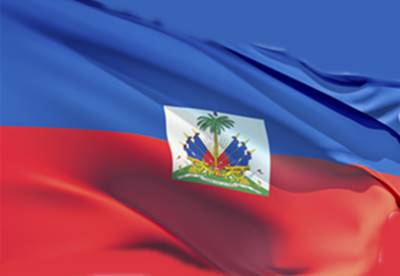
Haiti
The Caribbean country of Haiti has a long and complex history shaped by colonization, revolution, and political change. The island of Hispaniola was first inhabited by the Taíno people before the arrival of Christopher Columbus in 1492, when it became part of the Spanish Empire. In 1697, Spain ceded the western part of the island to France under the Treaty of Ryswick, and the colony was renamed Saint-Domingue. It became one of the richest colonies in the world due to sugar and coffee plantations worked by enslaved Africans. A major slave uprising began in 1791, leading to the Haitian Revolution (1791–1804), the only successful slave revolt in modern history. Haiti declared independence on 1 January 1804, becoming the first independent Black republic and the first country in Latin America and the Caribbean to abolish slavery permanently. During the 19th and 20th centuries, Haiti experienced frequent political instability and foreign intervention, including a military occupation by United States from 1915 to 1934. Haiti’s political system is based on a democratic constitution adopted in 1987, after the fall of the dictatorship of Jean‑Claude Duvalier in 1986. The constitution established a semi-presidential republic and aimed to prevent the return of authoritarian rule by distributing power among different institutions. However, political instability, constitutional crises, and weak institutions have often challenged the functioning of the political system. The government structure includes both a President and a Prime Minister. The President is the head of state and is elected by popular vote for a five-year term, while the Prime Minister serves as head of government and is appointed by the President with approval from the legislature. Legislative power is exercised by the National Assembly, which consists of two chambers: the Chamber of Deputies and the Senate. These bodies are responsible for making laws, approving government policies, and representing the citizens. The legal system of Haiti is mainly based on French civil law, influenced by the Napoleonic Code introduced during the French colonial period. Laws are enacted by the National Assembly and interpreted by an independent judiciary. The highest court in the country is the Court of Cassation, which oversees the interpretation of laws and ensures legal consistency. Despite this framework, the judicial system faces challenges such as limited resources, corruption, and political pressure, which affect the effective enforcement of law and justice in the country.