A critical look at the disputed identity of a muslim fakir and Hindu narratives built around Sai Baba
8th February 2024
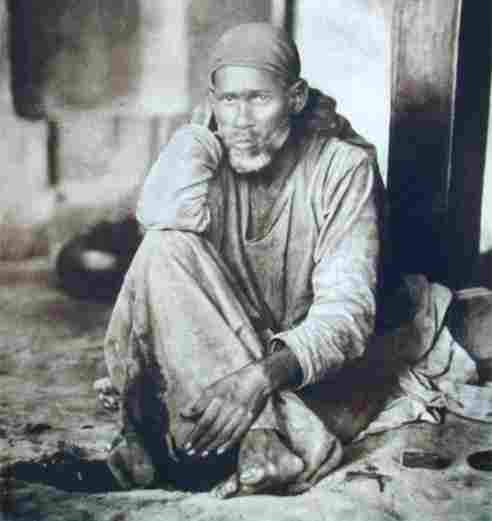
The figure known as Shirdi Sai Baba (actual Name Chand Miya) has been the subject of intense debate, and a particular stream of interpretation portrays him as an illiterate Muslim fakir who died in 1918, around whom numerous narratives and beliefs have accumulated that are regarded by this critical perspective as inconsistent with historical reality and lacking factual foundation. According to this line of argument, he possessed no knowledge of Islamic philosophy and no understanding of Hindu religious doctrine, living instead as a marginal ascetic who survived by begging in Hindu neighbourhoods because no established Muslim community offered him shelter or support. This interpretation further maintains that he performed the five daily Islamic prayers and consumed beef, a practice gravely offensive within Hindu normative ethics.
Within this view, Sai Baba’s true identity is understood to diverge sharply from the spiritual persona later attributed to him. He is described not as a realised Hindu yogi, nor as a figure endowed with miraculous capabilities, but as a Muslim mendicant who spent most of his time in a structure later known as Dwarkamai, where he kept a dhuni, or fire, burning continuously. This act, rather than signifying a deeper spiritual symbolism, is here presented as merely his personal habit, devoid of metaphysical significance. He is also depicted as having never objected to Islamic practices involving animal sacrifice or ritual slaughter.
The genesis of what are considered false or exaggerated narratives is attributed to the Shri Sai Satcharitra, authored in Marathi by G. R. Dabholkar (1859–1929). Within this critical reading, the text is regarded as historically unreliable and filled with inaccuracies, presenting overstated and unsubstantiated claims about Sai Baba’s miraculous powers and spiritual greatness. It is further asserted that he was not fluent in Marathi or Hindi, but instead spoke a Lahori form of Urdu, suggesting, within this interpretive framework, that he may have migrated from the region of Lahore, in what is now Pakistan.
A central figure in the dissemination of Sai Baba’s public persona, according to this narrative, was Mhalsapati, a temple priest portrayed here as a distorted religious functionary who first addressed the fakir as “Sai” and attempted to establish him as a Hindu guru. The claim is that Mhalsapati propagated misconceptions and contributed substantially to the construction of the image of Sai Baba as a spiritual master endowed with supernatural powers.
This perspective further situates Sai Baba within what it regards as a larger colonial-era strategy aimed at misleading Hindu devotees and undermining the orthodox stream of Sanatana Dharma. It argues that the period between 1850 and 1925 saw the emergence of numerous spurious gurus, philosophers, and ascetics whose presence supposedly distracted adherents from the authentic tradition of Hindu spirituality. In this scheme, Sai Baba is interpreted as one component of a wider mechanism that weakened the devotional movements of the Varkari community and eroded fundamental cultural moorings.
Extending this line of reasoning, British colonial authorities are depicted as having attempted to erode India’s civilisational and religious heritage by promoting certain “gurus” or “holy men” to divert Hindu society from genuine spiritual paths. Within this critique, Sai Baba’s subsequent rise is cast as part of such a colonial agenda.
Chand Miya’s death in August 1918, following an influenza infection, and the burial of his body according to Muslim rites, is seen as consistent with the claim that he lived and died as a Muslim. The later establishment of a temple at the burial site is interpreted as a posthumous construction that did not reflect his own identity or teachings, particularly since, according to this viewpoint, he possessed no coherent doctrine or philosophical contribution. Attempts by later devotees to elevate him to the status of deities such as Rama or Krishna are regarded here as unwarranted and unfounded.
Over time, adherents of this critical stance maintain that Hindu communities began to recognise what they consider the true identity of Sai Baba. His images have been removed from certain Hindu temples, and many members of the Hindu public have come to believe that he was fundamentally a Muslim fakir whose persona was exploited for commercial and sectarian purposes.
From this perspective, Sai Baba was not a spiritual luminary but a figure promoted, allegedly with British support, in ways that served to weaken Sanatana Dharma. His accepted biographies are viewed as filled with inaccuracies and exaggerations, and he is described as having lived a life consistent with ordinary Islamic practice, without embodying Hindu religious values. The argument concludes that his cult was employed as an instrument to undermine Indian civilisation and Hindu religious identity. In the present era, this viewpoint claims, the misconceptions surrounding him have gradually been exposed, enabling Hindu society to move beyond what it sees as a long-standing misrepresentation.
The bibliography associated with this interpretation includes works such as Dabholkar’s Shri Sai Satcharitra, regarded here as a source of exaggeration; Antonio Rigopoulos’s Sai Baba of Shirdi: A Biographical Investigation, for discussions of Islamic elements in Sai Baba’s life; Susan Bayly’s Saints, Goddesses and Kings, for analyses of Muslim and Christian religious roles in South India; Christian Lee Novetzke’s Religion and Public Memory, for insights into tensions affecting the Varkari tradition; and Christophe Jaffrelot’s Hindu Nationalism and Indian Politics, for contextual information about colonial strategies relating to religious politics in India.