February 12, 2025
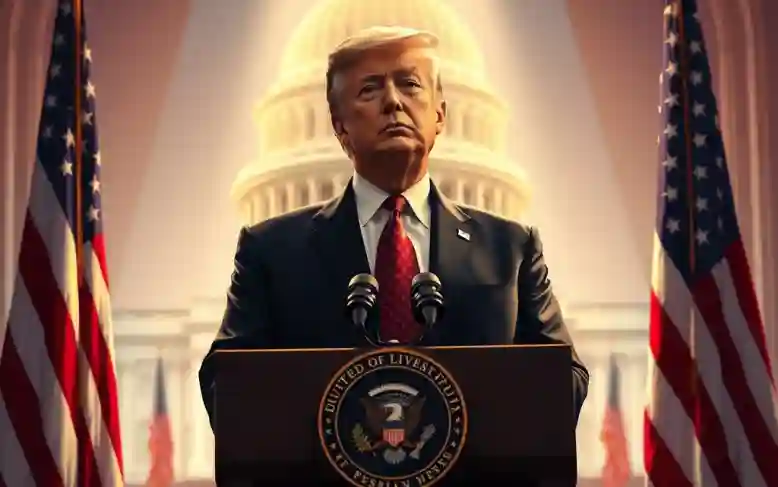
Today, President Donald J. Trump signed an Executive Order establishing one clear, unified voice for America’s foreign relations. The outlines of Executive Order signed by President Donald J. Trump to ensure a unified and consistent approach to U.S. foreign relations, aligning diplomatic actions with the President’s vision and America’s interests.
Here are the key points broken down for clarity:
Establishing a Unified Voice
- Reaffirmation of Authority:
- The Executive Order confirms that all individuals implementing the President’s foreign policy act under his authority and direction.
- It reiterates the Secretary of State’s authority over Foreign Service Officers, Civil Service Officers, and other staff, under the President’s supervision.
Reforms in the Foreign Service
- Mandates for the Secretary of State:
- Reform areas include recruitment, performance evaluation, and retention standards to ensure that only the most capable and dedicated individuals represent the U.S. abroad.
- The Secretary is also tasked with revising or replacing the Foreign Affairs Manual and other procedural documents to align with these reforms.
Prioritizing America’s Interests
- Commitment to America First:
- The Order ensures that U.S. foreign policy serves national interests first, preventing exploitation by foreign nations or entities that compromise sovereignty or security.
- Accountability measures will hold personnel responsible for faithfully implementing the President’s policies.
Peace Through Strength
- Building on Previous Actions:
- President Trump’s “America First Policy Directive” was signed on Day One of his presidency, emphasizing that foreign policy must prioritize the interests of the U.S. and its citizens.
- This new Order reinforces that commitment, ensuring that diplomatic actions consistently reflect U.S. values and security concerns.
Outcome and Vision
- The Executive Order strengthens U.S. foreign policy by emphasizing a clear, unified approach that is efficient, accountable, and resolutely focused on American priorities.
- This move underscores President Trump’s broader agenda of putting America first, ensuring peace, strength, and sovereignty in all international relations.
This policy represents a step toward consolidating and streamlining America’s diplomatic efforts under a cohesive leadership structure.
Bibliography on U.S. foreign policy
1. “Diplomacy” by Henry Kissinger
- Publication Date: 1994
- Why Read It:
This classic work by former Secretary of State Henry Kissinger explores the history of diplomacy and the principles underlying U.S. foreign policy. It provides valuable insights into realpolitik, international relations, and the strategic mindset required for global diplomacy.
2. “The Tragedy of Great Power Politics” by John J. Mearsheimer
- Publication Date: 2001 (Updated Edition: 2014)
- Why Read It:
This book offers a compelling explanation of international relations through the lens of “offensive realism,” where great powers compete for dominance. It’s a critical read for understanding the strategic motives behind U.S. foreign policy in a competitive world.
3. “The Globalization of World Politics: An Introduction to International Relations” by John Baylis, Patricia Owens, and Steve Smith
- Publication Date: 1997 (Latest Edition: 2020)
- Why Read It:
This comprehensive textbook provides an overview of international relations theories and practices, including U.S. foreign policy. It’s ideal for students and readers seeking a foundational understanding of global politics and America’s role.
4. “The Crisis of American Foreign Policy: Wilsonianism in the Twenty-First Century” by G. John Ikenberry, Thomas J. Knock, Anne-Marie Slaughter, and Tony Smith
- Publication Date: 2008
- Why Read It:
This book debates the legacy of Woodrow Wilson’s liberal internationalism and its relevance to contemporary U.S. foreign policy. It’s useful for those interested in the ideological roots of America’s global engagements.
5. “America in the World: A History of U.S. Diplomacy and Foreign Policy” by Robert B. Zoellick
- Publication Date: 2020
- Why Read It:
Written by a former U.S. Trade Representative and World Bank President, this book traces key moments in American foreign policy. It’s a practical guide for understanding how the U.S. has shaped and been shaped by global events.
6. “The Back Channel: A Memoir of American Diplomacy and the Case for Its Renewal” by William J. Burns
- Publication Date: 2019
- Why Read It:
This memoir by one of America’s most respected diplomats provides firsthand accounts of key negotiations and the challenges of U.S. foreign policy in recent decades. It’s insightful for readers looking for behind-the-scenes perspectives on diplomacy.
7. “Present at the Creation: My Years in the State Department” by Dean Acheson
- Publication Date: 1969
- Why Read It:
Acheson’s memoir recounts his role in shaping U.S. foreign policy during the early Cold War, including the Marshall Plan and NATO. It’s a must-read for understanding the foundations of America’s post-WWII global strategy.
8. “American Power and the New Mandarins” by Noam Chomsky
- Publication Date: 1969
- Why Read It:
This seminal critique of U.S. foreign policy examines its imperialistic tendencies and interventions during the Cold War. Chomsky’s analysis is essential for readers seeking a critical perspective on America’s global influence.
9. “The Post-Cold War World” by Michael Cox
- Publication Date: 2014
- Why Read It:
This book provides an analysis of U.S. foreign policy after the Cold War, addressing challenges such as unipolarity, terrorism, and global financial crises. It’s great for readers exploring America’s evolving role in the 21st century.
10. “Hard Choices” by Hillary Rodham Clinton
- Publication Date: 2014
- Why Read It:
This memoir by the former Secretary of State outlines key foreign policy decisions made during her tenure. It’s valuable for understanding recent U.S. diplomacy, including relations with China, Russia, and the Middle East.
Read more:
- Foreign Policy Concept of Russian Federation- Approved by V.Putin (28/06/2000)
- Foreign policy concept of the Russian federation-Approved by Vladimir Putin (2016)
- Chinese FM Qin Gang on China’s foreign policy and external relations (07/03/2023)
- Tajikistan’s domestic and foreign policy explained by President Emomali Rahmon to the Parliament (26.01.2021)
- Indian Foreign Policy: yesterday, today and tomorrow, lecture by Satish C Mehta-28/02/2022
- Chen Yi and Zulfikar Ali Bhutto conversation focusing Soviet Union’s foreign policy regarding India-25/02/1964
- India’s Foreign Policy: An overview of core objectives, Fundamental principles and current priorities
