The London-Damascus Reset: Sanctions, Summits, and Syria’s Political Transition
The relationship between the United Kingdom and Syria under the presidency of Ahmed al-Sharaa represents a historically significant phase in bilateral and multilateral diplomacy, emerging from the complete transformation that followed the collapse of the Assad regime in December 2024. This period marked the beginning of a recalibration of international relations with Syria, particularly by Western states that had previously maintained adversarial or highly conditional engagement. The United Kingdom, which had been deeply involved in diplomatic, humanitarian, and military aspects of the Syrian conflict since its outbreak in 2011, repositioned itself as a constructive partner in Syria’s transition toward stability, reconstruction, and international reintegration. The evolution of this relationship from late 2024 through March 2026 reflects a convergence of strategic interests in security, counter-terrorism, economic recovery, and regional stability, while also being shaped by persistent concerns regarding human rights, accountability, and the fragility of Syria’s internal political transformation.
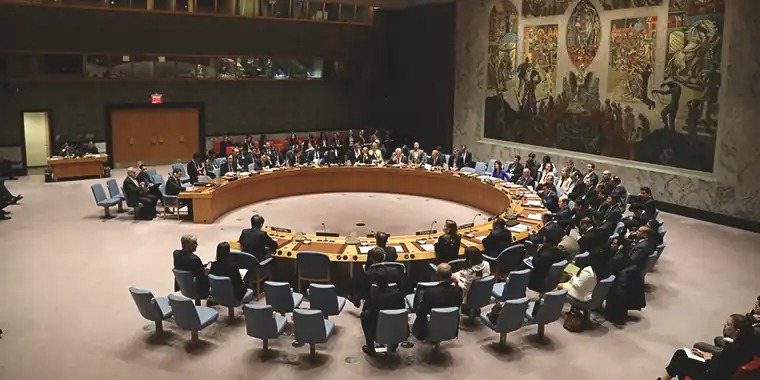
Following the fall of Bashar al-Assad in December 2024, Syria entered what British officials described as a “once-in-a-generation opportunity” for renewal. The emergence of Ahmed al-Sharaa as president symbolized a break with decades of authoritarian governance and international isolation. The United Kingdom responded rapidly to these developments, signaling diplomatic openness while maintaining a framework of conditional engagement. On 6 November 2025, at the United Nations Security Council in New York, the United Kingdom formally supported a resolution recognizing the progress made by the Syrian Government in political transition and counter-terrorism cooperation. This moment was significant as it also followed the delisting of Ahmed al-Sharaa from international sanctions regimes, thereby enabling formal diplomatic engagement and legitimizing his leadership on the global stage.
Throughout late 2025, the United Kingdom’s policy combined support for political transition, accountability for past crimes, and gradual economic normalization. On 19 December 2025, the UK government imposed targeted sanctions against individuals and organizations implicated in violence against civilians during both the Syrian Civil War and post-transition unrest in coastal regions such as Latakia and Tartous. This dual approach—supporting the new Syrian government while sanctioning perpetrators of violence—demonstrated a nuanced strategy aimed at reinforcing rule of law without undermining the legitimacy of the transitional administration. The British Foreign Secretary emphasized that “accountability and justice” were essential foundations for a sustainable political settlement, highlighting the importance of addressing both historical and ongoing abuses.
Simultaneously, the United Kingdom began easing restrictions in key sectors, including finance, trade, and energy production, through amendments to sanctions regulations in April 2025. These changes were intended to facilitate foreign investment and support Syria’s economic recovery. British policymakers identified infrastructure regeneration as a critical priority, recognizing that rebuilding transport networks, energy systems, and urban centers would be essential for economic stabilization. This policy direction laid the groundwork for later discussions in 2026 regarding British business participation in reconstruction projects.
The security dimension of UK-Syria relations remained central throughout this period. The United Kingdom continued its military involvement in counter-terrorism operations against Da’esh, particularly under Operation Shader. On 3 January 2026, Royal Air Force Typhoon aircraft conducted a joint strike with French forces on a Da’esh facility near Palmyra, targeting underground storage infrastructure used for weapons and explosives. This operation illustrated the continuity of British military engagement in Syria, even as diplomatic relations improved. The UK government framed these actions as part of a broader commitment to preventing the resurgence of extremist groups and supporting the Syrian government’s own efforts against terrorism.
By early 2026, diplomatic engagement between the United Kingdom and Syria had intensified significantly, particularly within multilateral institutions such as the United Nations and the United Nations Human Rights Council in Geneva. On 10 March 2026, at the UN Security Council, the United Kingdom reaffirmed its commitment to eradicating chemical weapons in Syria, referencing findings from the Organisation for the Prohibition of Chemical Weapons (OPCW) that attributed past attacks to the Assad regime. The British government welcomed the unprecedented cooperation of the new Syrian authorities with international investigators, describing it as a “crucial step towards truth and justice.” Financial contributions exceeding $3.8 million were allocated to OPCW missions, alongside plans for further technical and logistical support.
The issue of chemical weapons became a cornerstone of UK-Syria cooperation, symbolizing both accountability for past atrocities and a shared commitment to international norms. On 18 March 2026, during the launch of the “Breath of Freedom Task Force” at the United Nations in New York, the United Kingdom announced additional multi-million-pound support packages to assist Syria in the destruction of remaining chemical weapons stockpiles. This initiative involved collaboration with the OPCW and other international partners, reflecting a broader strategy to reintegrate Syria into global governance structures by demonstrating compliance with international law.
Human rights remained a critical dimension of the bilateral relationship, particularly in the context of Syria’s transitional justice processes. On 13 March 2026, at the United Nations Human Rights Council in Geneva, the United Kingdom commended the Syrian government’s engagement with the Commission of Inquiry and its efforts to address issues such as missing persons, transitional justice, and civil society participation. However, British representatives also expressed concern regarding ongoing sectarian violence in regions such as Suwayda and the coastal areas, where nearly 3,000 fatalities had been reported since December 2024. These concerns underscored the fragile nature of Syria’s transition and the challenges facing the new government in establishing security and reconciliation.
On 27 March 2026, the United Kingdom introduced a draft resolution at the Human Rights Council supporting human rights in Syria. Delivered in Geneva by Human Rights Ambassador Eleanor Sanders, the statement highlighted the transformative shift in Syria’s international engagement, noting that cooperation with UN mechanisms had been “utterly unimaginable fifteen months ago.” The resolution emphasized the importance of accountability, justice, and institutional reform, while also renewing the mandate of the Commission of Inquiry. The UK framed these efforts as essential to building a stable and rights-respecting Syrian state, reinforcing the idea that political transition must be accompanied by structural changes in governance and legal accountability.
Parallel to these developments, the United Kingdom played an active role in addressing the broader regional context, particularly the instability affecting the Middle East in early 2026. At the UN Security Council on 18 March 2026, British representatives expressed concern over escalating tensions involving Iran and Hezbollah, as well as the humanitarian impact of displacement into Syria. The UK allocated additional humanitarian funding, including $650,000 specifically for Syria, targeting vulnerable populations such as women and girls. These efforts reflected the interconnected nature of regional security and humanitarian challenges, which directly influenced UK-Syria relations.
The United Kingdom also supported political and security agreements within Syria, particularly those involving the Syrian Democratic Forces (SDF). In January 2026, a ceasefire agreement between the Syrian government and the SDF marked a significant step toward national integration. The UK, alongside France, Germany, and the United States, issued a joint statement on 27 January 2026 welcoming the extension of the ceasefire and emphasizing the importance of protecting civilians and maintaining humanitarian corridors in areas such as Kobane. British officials viewed the integration of Kurdish political and military structures into the Syrian state as a key component of long-term stability.
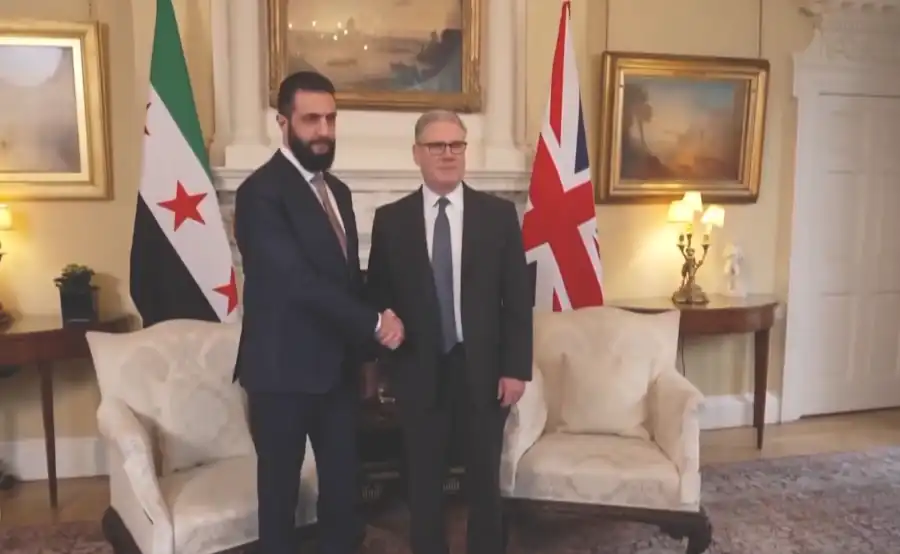
This evolving partnership reached a notable milestone on 31 March 2026, when the British Prime Minister hosted President Ahmed al-Sharaa at Downing Street in London. This meeting symbolized the normalization of bilateral relations at the highest political level. Both leaders described the occasion as an “important moment” in UK-Syria relations, reflecting the progress achieved since 2024. The discussions covered a wide range of issues, including regional security, economic cooperation, migration, and infrastructure development.
On the issue of regional stability, both leaders emphasized the importance of avoiding escalation in the Middle East and restoring stability. They specifically addressed the economic and strategic implications of the closure of the Strait of Hormuz, agreeing to work with international partners to restore freedom of navigation. This discussion highlighted the broader geopolitical dimension of UK-Syria relations, extending beyond bilateral concerns to encompass global trade and energy security.
Counter-terrorism cooperation was another key focus of the meeting. The British Prime Minister welcomed the Syrian government’s actions against Da’esh and acknowledged the progress made in joint efforts to combat terrorism. This cooperation built upon years of British military involvement in Syria and reflected a shared interest in preventing extremist resurgence. The leaders also discussed migration, with the UK seeking closer collaboration on returns, border security, and the disruption of people-smuggling networks. This aspect of the relationship underscored the domestic political relevance of UK-Syria cooperation, particularly in addressing migration challenges in Europe.
Economic reconstruction emerged as a central theme, with both leaders recognizing the importance of infrastructure regeneration for Syria’s transition. They discussed opportunities for British businesses to participate in rebuilding efforts across sectors such as energy, construction, and telecommunications. This marked a significant shift from previous years, when sanctions and political isolation limited economic engagement. By 2026, the United Kingdom was positioning itself as a potential partner in Syria’s economic recovery, leveraging its expertise and investment capacity.
The Downing Street meeting also reflected a broader transformation in diplomatic tone and substance. Whereas earlier interactions were characterized by caution and conditionality, the 2026 engagement demonstrated a growing level of trust and mutual interest. However, this relationship remained contingent upon continued progress in Syria’s political transition and adherence to international norms, particularly in the areas of human rights and accountability.
In historical perspective, the relationship between the United Kingdom and Syria under Ahmed al-Sharaa can be understood as a transition from conflict-era engagement to post-conflict partnership. During the Syrian Civil War (2011–2024), the UK’s involvement was primarily defined by opposition to the Assad regime, humanitarian assistance, and counter-terrorism operations. The post-2024 period introduced a new paradigm, characterized by diplomatic normalization, economic cooperation, and institutional support for state reconstruction.
This transformation was neither linear nor uncontested. Persistent challenges, including sectarian violence, political fragmentation, and economic instability, continued to shape the trajectory of UK-Syria relations. The United Kingdom’s approach sought to balance optimism regarding Syria’s transition with realism about the risks and uncertainties involved. This balance was evident in its simultaneous support for the Syrian government and its insistence on accountability for abuses, as well as in its combination of economic engagement and targeted sanctions.
By April 2026, the UK-Syria relationship had evolved into a multifaceted partnership encompassing diplomacy, security, human rights, and economic development. The meeting between the British Prime Minister and President Ahmed al-Sharaa on 31 March 2026 symbolized this evolution, marking a moment of consolidation in a relationship that had undergone profound change in a relatively short period. The trajectory of this relationship will likely continue to depend on Syria’s internal progress and the broader dynamics of regional and international politics, but the developments of 2024–2026 represent a foundational phase in redefining ties between the two countries in the post-Assad era.
Core Node: United Kingdom–Syria Relations under Ahmed al-Sharaa (2024– )
Foundational Transition Cluster
Fall of the Assad Regime (December 2024)
- Linked to: Political Transition in Syria
- Linked to: International Reintegration of Syria
- Linked to: Transitional Justice Mechanisms
Presidency of Ahmed al-Sharaa
- Linked to: Post-Conflict Governance
- Linked to: Diplomatic Normalization
- Linked to: Security Sector Reform
Syrian Political Transition
- Linked to: Constitutional Reform
- Linked to: Electoral Development (Raqqa, Aleppo, Suwayda)
- Linked to: Inclusion of Minority Groups
Diplomatic Engagement
Bilateral Diplomacy
Downing Street Meeting (31 March 2026)
- Linked to: High-Level Diplomatic Recognition
- Linked to: Strategic Partnership Formation
- Linked to: UK Foreign Policy Shift
UK Foreign, Commonwealth & Development Office Policy
- Linked to: Sanctions Adjustment Framework
- Linked to: Development Assistance Strategy
- Linked to: Middle East Stability Policy
Multilateral Diplomacy (UN System)
- Linked to: UN Security Council Engagement
- Linked to: UN Human Rights Council Participation
- Linked to: International Legitimacy Building
Security and Counter-Terrorism Cluster
Counter-Da’esh Operations
Operation Shader
- Linked to: RAF Air Strikes in Syria
- Linked to: Coalition Warfare Strategy
- Linked to: Counter-Insurgency Stabilization
UK–Syria Counter-Terrorism Cooperation
- Linked to: Intelligence Sharing
- Linked to: Border Security Coordination
- Linked to: Extremism Prevention
Internal Syrian Security
Syrian Democratic Forces Integration
- Linked to: Kurdish Political Rights
- Linked to: Military Integration Policy
- Linked to: Ceasefire Agreements (January 2026)
Post-Conflict Security Sector Reform
- Linked to: Demobilization of Militias
- Linked to: State Monopoly on Force
- Linked to: Anti-Terror Governance
Human Rights and Justice
Transitional Justice
National Commissions on Transitional Justice
- Linked to: Accountability Mechanisms
- Linked to: Truth and Reconciliation
- Linked to: Judicial Reform
Missing Persons Commission
- Linked to: Post-War Reconciliation
- Linked to: Civil Society Participation
- Linked to: Victim Documentation
International Human Rights Oversight
UN Commission of Inquiry on Syria
- Linked to: Evidence Collection
- Linked to: War Crimes Documentation
- Linked to: Legal Accountability
UK Draft Resolution (UNHRC, March 2026)
- Linked to: Human Rights Institutionalization
- Linked to: UN Cooperation Expansion
- Linked to: Governance Legitimacy
Ongoing Challenges
Sectarian Violence (2024–2026)
- Linked to: Coastal Conflict (Latakia, Tartous)
- Linked to: Suwayda Violence
- Linked to: Social Fragmentation
Chemical Weapons and Disarmament
OPCW Cooperation
Chemical Weapons Convention Compliance
- Linked to: Disarmament Verification
- Linked to: International Legal Norms
- Linked to: Security Council Resolution 2118
OPCW Investigation and Identification Team
- Linked to: Attribution of Chemical Attacks
- Linked to: Assad-Era Accountability
- Linked to: Evidence-Based Justice
UK-Supported Initiatives
Breath of Freedom Task Force (March 2026)
- Linked to: Chemical Weapons Destruction
- Linked to: Technical Assistance Programs
- Linked to: Multilateral Security Cooperation
Economic Reconstruction
Infrastructure Regeneration
Energy Sector Development
- Linked to: Post-War Recovery
- Linked to: Foreign Investment Facilitation
- Linked to: Sanctions Relaxation
Transport and Urban Reconstruction
- Linked to: Economic Stabilization
- Linked to: Employment Generation
- Linked to: International Development Finance
UK Economic Engagement
British Business Participation
- Linked to: Public-Private Partnerships
- Linked to: Reconstruction Contracts
- Linked to: Trade Normalization
Sanctions Reform (April 2025)
- Linked to: Financial Sector Liberalization
- Linked to: Investment Incentives
- Linked to: Economic Diplomacy
Migration and Humanitarian
Migration Cooperation
Returns Agreements
- Linked to: Immigration Policy (UK Domestic)
- Linked to: Bilateral Security Cooperation
- Linked to: Refugee Management
Anti-Smuggling Operations
- Linked to: Organized Crime Networks
- Linked to: Border Control Mechanisms
- Linked to: International Policing Cooperation
Humanitarian Assistance
UK Aid Packages (2025–2026)
- Linked to: Women and Children Protection
- Linked to: Emergency Relief Systems
- Linked to: NGO Partnerships
Internal Displacement in Syria
- Linked to: Camp Management (Al Hol, Kobane)
- Linked to: Humanitarian Access Corridors
- Linked to: Post-Conflict Resettlement
Regional and Geopolitical Context
Middle East Conflict Dynamics
Iran and Hezbollah Tensions
- Linked to: Regional Escalation Risks
- Linked to: Proxy Conflict Structures
- Linked to: Supply Chain Disruptions
Israel-Lebanon Conflict Spillover
- Linked to: Refugee Flows into Syria
- Linked to: Humanitarian Burden
- Linked to: Border Instability
Strategic Maritime Concerns
Strait of Hormuz Crisis (2026)
- Linked to: Global Energy Security
- Linked to: Trade Route Stability
- Linked to: UK-Syria Strategic Dialogue
Governance and Political Development
Democratic Development
Elections in Raqqa Governorate
- Linked to: Local Governance
- Linked to: Political Inclusion
- Linked to: Electoral Legitimacy
Parliamentary Formation (2025–2026)
- Linked to: Legislative Representation
- Linked to: Political Pluralism
- Linked to: Institutional Reform
Civil Society Expansion
Civic Space Opening
- Linked to: Freedom of Expression
- Linked to: NGO Participation
- Linked to: Public Accountability
Cross-Cluster Integrative Links
Security–Economy Nexus
- Counter-Terrorism Cooperation ↔ Economic Reconstruction
- Stability Preconditions ↔ Foreign Investment
Justice–Diplomacy Nexus
- Transitional Justice ↔ International Legitimacy
- Human Rights Compliance ↔ Diplomatic Recognition
Regional–Domestic Nexus
- Middle East Conflicts ↔ Syrian Internal Stability
- Migration Flows ↔ UK Domestic Policy
Military–Political Nexus
- Counter-Da’esh Operations ↔ State Authority Consolidation
- Ceasefire Agreements ↔ National Integration
Meta-Conceptual Nodes
Post-Conflict State Building
- Integrates: Governance, Security, Economy, Justice
International Reintegration of Syria
- Integrates: Diplomacy, Trade, Multilateral Engagement
UK Foreign Policy Realignment (Post-2024)
- Integrates: Strategic Engagement, Conditional Support, Regional Stability
Fragility and Transition Risk
- Integrates: Sectarian Violence, Economic Instability, Institutional Weakness