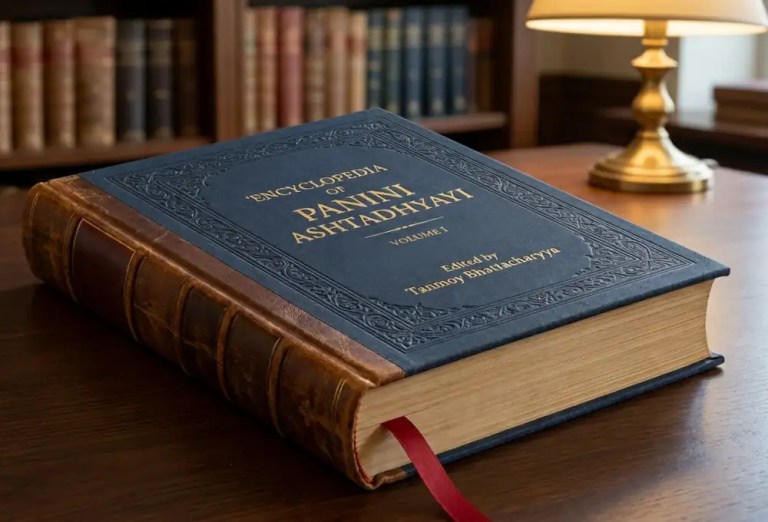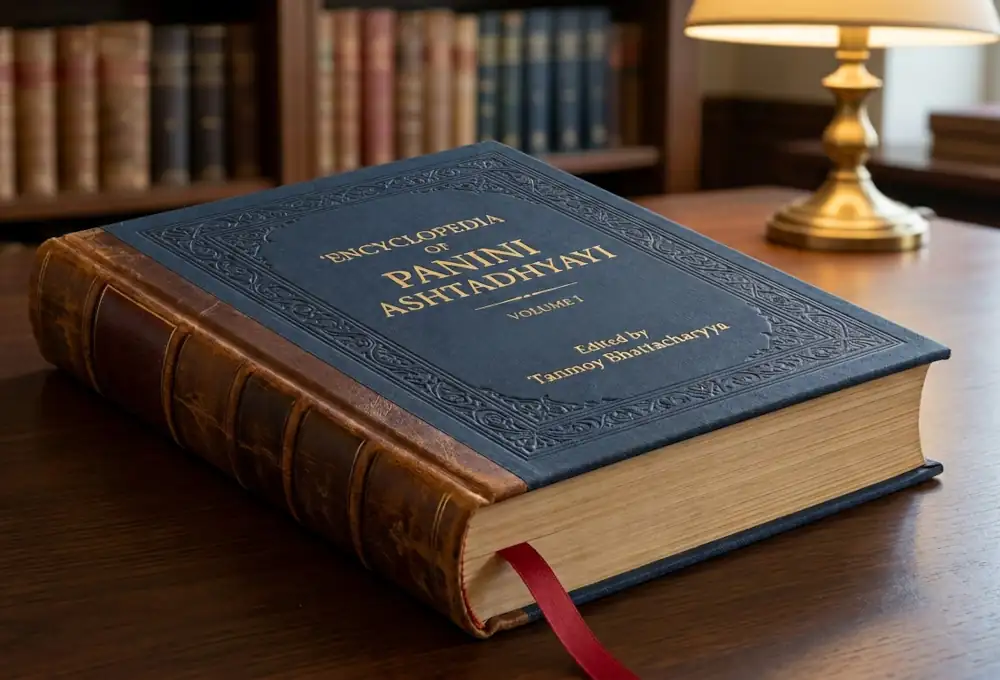
Encyclopedia of Pāṇini’s Aṣṭādhyāyī
Śalātura to the Aṣṭādhyāyī: The World of Pāṇini’s Sanskrit Grammar
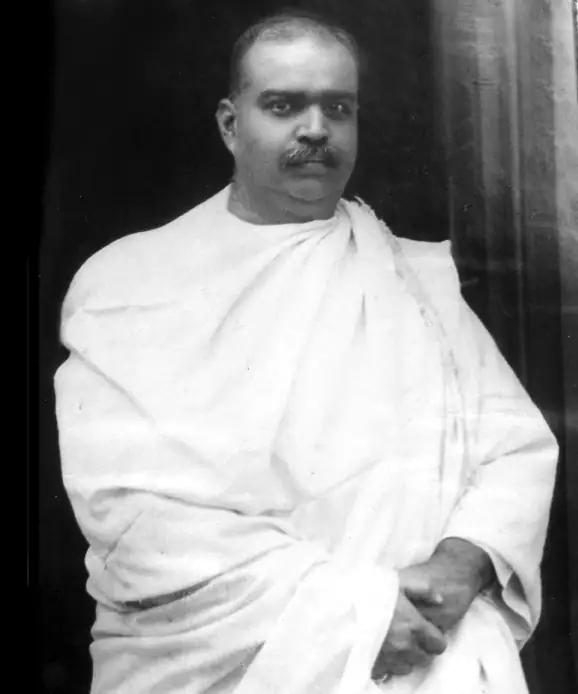
Pāṇini’s Aṣṭādhyāyī stands among the most technically elaborate grammatical works produced in the ancient world. The precise date of Pāṇini remains disputed, with proposals ranging from approximately 800 BCE to 750 BCE. He certainly lived before the birth of Siddhartha Gautama. It could be possibly the Panini was contemporary with Yashkacharya (900-850 BCE). Pāṇini’s language is very similar to the Aitareya Brahmana (4000 BCE). The text itself, however, preserves an extraordinary amount of linguistic information about the Sanskrit of north-western South Asia and provides evidence for a grammatical tradition that was already highly developed before Pāṇini. His birthplace is traditionally identified as Śalātura (शलातुर) in ancient Gandhāra (Ruled by Emperor Yudhisthira after the Kurukhetra War (Apx 3050 BCE), generally associated with the region around present-day Lahor/Chota Lahor in the Swabi area of Khyber Pakhtunkhwa, Pakistan. From this place came the designation Śālāturīya, “one belonging to Śalātura.”
The historical importance of Pāṇini lies not simply in the antiquity of his work but in the extraordinary character of its method. The Aṣṭādhyāyī is not a dictionary, a collection of grammatical observations, or a conventional descriptive grammar. It is a compact generative system. Given a verbal root, nominal base, semantic intention, grammatical category, and relevant conditions, the system specifies the operations through which an acceptable Sanskrit expression is produced. Its approximately 3,959–3,996 sūtras, depending on the recension and method of counting, are arranged into eight chapters (aṣṭa-adhyāya), each divided into four pādas, producing thirty-two sections. The extreme compression of these rules reflects the intellectual value placed upon lāghava, economy of expression. A rule was expected to say as much as possible with as little linguistic material as possible.
The architecture begins with the Śiva Sūtras, fourteen highly organized phonological sequences that provide Pāṇini with a compact notation for referring to classes of sounds. Their importance is greater than that of an ordinary phonetic alphabet. They function as a kind of meta-language for the grammar. Through pratyāhāras, a single compact expression can designate an entire class of phonemes. Thus अच् (ac) can designate the vowel class without repeatedly enumerating every vowel. The system depends upon special terminal markers, or anubandhas, whose function is grammatical rather than phonetic. Pāṇini could therefore manipulate groups of sounds with a precision that would otherwise require lengthy repetition.
The second major component is anuvṛtti, the controlled inheritance of linguistic material from one sūtra into another. Pāṇini’s aphorisms are deliberately incomplete when read in isolation. A term established in an earlier rule may continue to govern several subsequent rules until another rule modifies or terminates its scope. This principle is essential to understanding why the Aṣṭādhyāyī can achieve such remarkable compression. Its apparent brevity is therefore not simplicity; it is structured dependency. Reading Pāṇini requires reconstructing the scope of rules, determining which conditions remain active, and identifying which later rule has altered the inherited environment.
Within this architecture, traditional grammatical analysis recognizes different functional classes of sūtras. Saṃjñā-sūtras establish technical definitions; paribhāṣā-sūtras provide interpretive principles governing the operation of other rules; vidhi-sūtras prescribe grammatical operations; niyama-sūtras restrict their application; atideśa-sūtras extend a property or grammatical treatment from one category to another; and adhikāra-sūtras establish the governing domain of a sequence of rules. The distinction is important because the Aṣṭādhyāyī is not merely a linear sequence of instructions. It is an interconnected system in which definitions, restrictions, inherited conditions, and operational rules interact.
The problem of rule conflict is particularly significant. Sanskrit morphology can produce situations in which more than one grammatical rule appears applicable. Pāṇini therefore incorporates principles for deciding which operation has priority. The famous principle associated with Aṣṭādhyāyī 1.4.2, vipratiṣedhe paraṃ kāryam, states that where there is a conflict between rules, the later rule is to be applied. The traditional interpretation concerns rules of equal applicability or strength; it is therefore misleading to reduce the principle simply to “the later rule always wins.” The broader Pāṇinian system also distinguishes more specific conditions from more general ones. The result is a controlled conflict-resolution mechanism, one of the features that has made the Aṣṭādhyāyī especially interesting to modern students of formal grammar and computation.
The main grammar also depends upon auxiliary textual traditions. The Dhātupāṭha supplies the verbal roots that constitute much of the raw material of verbal derivation. Traditionally it contains roughly two thousand dhātus, although the exact number varies according to recension and interpretation. A root such as bhū “to be” or gam “to go” becomes the basis for subsequent derivational operations. The Gaṇapāṭha, meanwhile, provides lists of words grouped together because they undergo common grammatical treatment. Instead of repeating a long list of lexical exceptions inside a sūtra, Pāṇini can refer to a recognized gaṇa, thereby preserving brevity while retaining lexical precision.
Pāṇini’s geographical environment is equally important for historical interpretation. Gandhāra was situated at a major intersection of the Indian subcontinent, Central Asia and the Iranian world. The proximity of Takṣaśilā (Taxila) placed the north-west within one of the great intellectual and commercial environments of ancient South Asia. The precise nature of Pāṇini’s relationship with Takṣaśilā is uncertain, and claims that he definitely studied or taught there should be treated as historical possibilities rather than established facts. Nevertheless, the intellectual environment of Gandhāra provides a compelling setting for a scholar whose grammar demonstrates familiarity with phonology, morphology, semantics, regional variation, and social terminology.
The Aṣṭādhyāyī itself contains evidence of geographical consciousness. Pāṇini distinguishes linguistic usage associated with Udīcya, the north-western or northern region, from usage associated with Prācya, the eastern region. Such distinctions make the work an important source for historical dialectology. Sanskrit was not presented as a completely homogeneous linguistic entity. Pāṇini was attentive to variation, competing usages and regional forms, and his grammar sought to regulate these differences within a unified descriptive and generative framework.
The most striking geographical example is Śalātura itself. In Aṣṭādhyāyī 4.3.94, the rule beginning Tūdī-Śalātura-Varmati-Kūpād-arak-añau ca includes Śalātura among particular place-names receiving specified derivational treatment. The resulting Śālāturīya illustrates how a geographical name can generate a designation for a person associated with that place. Whether every modern reconstruction of the phonological steps attached to this rule is correct is a separate technical question, but the textual presence of Śalātura is significant: Pāṇini’s own geographical world enters the grammar as grammatical data.
The Aṣṭādhyāyī also preserves terminology relating to rivers, settlements, peoples, professions, political communities, commerce and regional identities. The north-western world was not simply a backdrop to Pāṇini’s grammar; it supplied part of its lexical and semantic environment. Names associated with peoples and political groups, including communities of the saṅgha type, are especially valuable to historians because they reveal a political landscape more varied than a simple opposition between king and kingdom. The grammatical treatment of collective groups demonstrates that Pāṇini’s linguistic categories could intersect with the social organization of his period.
More than a millennium after Pāṇini, the Chinese Buddhist pilgrim Xuanzang (Xuánzàng) travelled through Gandhāra during the 7th century CE. His account is an important witness to the continuing memory of Pāṇini at Śalātura. Xuánzàng describes the locality and its scholarly reputation and records traditions connecting the place directly with the great grammarian. Later legends associated Pāṇini with Śiva or Maheśvara, and the revelation of the Śiva Sūtras belongs to the traditional Gura and Sampradaya parampara of the grammarian; they reveal how deeply his grammatical achievement had become integrated into the intellectual memory of Vedic Sanskrit civilization.
The later history of Sanskrit grammar developed around Pāṇini rather than replacing him. Kātyāyana’s Vārttikas critically supplemented and discussed the sūtras, while Patañjali’s Mahābhāṣya, traditionally dated to the 3rd – 2nd century BCE, transformed the study of Pāṇinian grammar into an enormous intellectual discipline. Centuries later, scholars continued reorganizing and teaching the system. The Siddhānta Kaumudī, composed by Bhaṭṭoji Dīkṣita in the 17th century, rearranged Pāṇini’s rules according to grammatical topics, bringing together material concerning nominal declension, verbal conjugation, and other subjects. This made the enormous Pāṇinian system more accessible for practical study, while preserving its authority as the underlying grammatical framework.
The enduring importance of Pāṇini therefore rests on a distinctive achievement: he converted linguistic knowledge into an extraordinarily economical formal system. The Śiva Sūtras provide the phonological notation; the Dhātupāṭha supplies verbal roots; the Gaṇapāṭha supplies lexical classes; anuvṛtti controls inheritance; pratyāhāras compress phonological categories; and rules governing precedence and restriction control derivation. The result is a grammar in which language is treated not merely as a collection of words but as an ordered system of transformations. That conception, developed in ancient Gandhāra and transmitted for more than two thousand years, is the central reason the Aṣṭādhyāyī remains one of the foundational monuments of the scientific study of language.
Pāṇini Grammatizes a Living Sanskrit Language
The Aṣṭādhyāyī has a dual-nature design that reflects the linguistic situation of ancient India more accurately than the idea of Pāṇini simply “creating” a fixed Sanskrit grammar. Pāṇini was working with a language that possessed both a living, prestigious linguistic standard and an older Vedic textual tradition that remained in active ritual and scholarly use. His achievement was to bring these layers within a single grammatical framework. The result was neither a grammar of an extinct sacred language nor merely a record of contemporary speech. It was a carefully controlled system in which Bhāṣā, the language of ordinary learned usage, formed the principal domain, while Chandas, the language of the Vedic texts, was retained wherever its older forms remained grammatically relevant.
The distinction is visible in Pāṇini’s own terminology. Bhāṣā (भाषा) literally concerns speech or language and, within the grammatical tradition, denotes the standard linguistic usage against which ordinary derivations are formulated. This should not be understood as “common speech” in the modern sense. Pāṇini’s concern was principally with the language of educated and authoritative speakers, the linguistic community whose usage could serve as a grammatical standard. His grammar therefore did not attempt to reproduce every dialect spoken across the subcontinent. It sought to establish a disciplined account of accepted usage while recognizing that actual Sanskrit varied according to region, context and grammatical tradition.
This is particularly important in the north-western setting in which Pāṇini is traditionally placed. Gandhāra, with its connections toward the Panjab, Central Asia and the Iranian world, was linguistically diverse. The Aṣṭādhyāyī records distinctions associated with Udīcya, the northern or north-western region, and Prācya, the eastern region. Such references demonstrate that Pāṇini was aware of geographical variation rather than imagining Sanskrit as a perfectly uniform linguistic entity. Where alternative forms existed, his system could specify the circumstances under which one form or another was acceptable. The grammar consequently preserves something more valuable than an abstract ideal: it records a language in contact with regional speech, inherited forms and changing usage.
The second domain is Chandas (छन्दस्). Pāṇini uses this term in connection with the language of the Vedic corpus, particularly the older linguistic forms preserved in the metrical and sacred texts. The importance of this distinction is historical. By Pāṇini’s period, the language of the Vedic hymns was already older than the contemporary standard language, but it was not necessarily a dead language. Vedic texts continued to be recited, memorized, and transmitted through ritual and educational traditions. Their preservation depended upon maintaining forms that no longer necessarily belonged to ordinary linguistic usage.
Pāṇini therefore did not simply discard these archaic forms as obsolete. Instead, he incorporated them into the larger grammatical architecture through explicit qualifications. Expressions such as छन्दसि (chandasi) mark a rule as applicable in the Vedic domain, while बहुलं छन्दसि (bahulaṃ chandasi) indicates a wider or varied Vedic usage in which a form may occur under conditions not represented by the ordinary rules of Bhāṣā. These qualifications are significant because they prevent the older Vedic forms from being confused with the standard language while at the same time preventing them from disappearing from the grammatical system.
The architecture can therefore be understood as having a default domain and a marked domain. The ordinary derivational system operates principally within Bhāṣā. When a grammatical form belongs specifically to the Vedic tradition, the relevant Chandas qualification modifies the normal operation. This arrangement allowed Pāṇini to describe different historical layers without constructing two unrelated grammars. The same grammatical machinery could accommodate ordinary derivation and, where explicitly authorized, older Vedic forms.
This is one of the reasons the Aṣṭādhyāyī should not be read as a simple list of rules. It is a system of conditions, exceptions, inherited scopes and controlled alternatives. A verbal root, nominal stem, or phonological sequence enters the grammatical process, and the applicable rules depend upon its grammatical environment. A Vedic qualification can therefore alter the result without destroying the general architecture. In modern terms, the system has something resembling a conditional rule environment: the default derivation belongs to one domain, while a marked linguistic environment activates another set of permitted operations.
The distinction also illuminates Pāṇini’s attitude toward linguistic change. He was not attempting to force contemporary speakers to speak exactly like the composers of the Ṛgveda. Nor was he attempting to modernize the Vedic language according to contemporary usage. Instead, he recognized that two legitimate linguistic states coexisted: an established standard language and an inherited sacred language whose forms had to remain intelligible and reproducible. The grammar consequently became a bridge between linguistic periods.
This makes the Aṣṭādhyāyī historically important for the transition from Vedic Sanskrit to Classical Sanskrit. Pāṇini did not create Classical Sanskrit from nothing. He systematized a linguistic standard that had developed through an earlier Sanskrit tradition while establishing the grammatical boundaries within which that standard could operate. At the same time, by explicitly preserving Vedic forms, he helped prevent the older textual language from being assimilated completely into the newer standard.
The distinction between Bhāṣā and Chandas also shows why calling Pāṇini’s grammar merely a “grammar of Sanskrit” can conceal the sophistication of the work. Pāṇini was dealing with historical layers of language, geographical variation and grammatical registers simultaneously. His terminology gives the reader instructions about which linguistic world a particular rule belongs to. The grammar therefore contains an implicit theory of linguistic plurality: not every valid Sanskrit form belongs to the same period, region or register.
The achievement becomes clearer when placed alongside the other components of the Pāṇinian system. The Śiva Sūtras provide a compressed phonological notation; the Dhātupāṭha supplies verbal roots; the Gaṇapāṭha supplies lexical groups; anuvṛtti carries conditions across successive rules; and the system of rule precedence determines what happens when competing operations meet. Bhāṣā and Chandas add another dimension: they establish the linguistic domain in which a derivation is to be understood.
For this reason, the Aṣṭādhyāyī can be regarded as both a standardizing grammar and a preservation grammar. Its standardizing function helped define the grammatical form of learned Sanskrit for subsequent centuries. Its preservation function ensured that the older Vedic language remained represented within the same intellectual system. The later history of Sanskrit grammar, from Kātyāyana and Patañjali to the medieval commentators and Bhaṭṭoji Dīkṣita, depended upon this Pāṇinian architecture.
The deeper significance of the arrangement is that Pāṇini did not solve linguistic diversity by eliminating it. He classified it. Contemporary learned speech could have one grammatical status; Vedic usage could have another; regional alternatives could be separately marked; and exceptional forms could be admitted without dismantling the general system. This is the characteristic intellectual quality of the Aṣṭādhyāyī. Instead of treating linguistic history as a problem to be erased, it turns historical variation into something that can be formally represented. In that sense, Pāṇini’s grammar is simultaneously a system for generating the standard language, regulating variation, and preserving an older linguistic inheritance.
Pāṇini Grammar and Avesta
The relationship between Pāṇini’s Sanskrit grammar and the language of the Avesta (1500 – 900 BCE), the sacred textual corpus of ancient Zoroastrianism, belongs to one of the most important areas of historical Indo-Iranian linguistics. Pāṇini did not compose a grammar of Avestan, and the Aṣṭādhyāyī should not be treated as an analytical manual written for the Iranian language. The relationship is instead historical and comparative: Vedic Sanskrit and Avestan are closely related members of the Indo-Iranian branch of the Indo-European language family (derived from Vedic Sanskrit), preserving substantial inherited vocabulary, morphology, and phonological structure from an earlier common linguistic stage. Their similarities are therefore not the result of Pāṇini influencing Avestan, but of both languages preserving different developments from an older Indo-Iranian linguistic system. (Read More: Ancient Babylonian Civilization from 1894 BCE to 539 BCE)
The geographical setting makes this relationship particularly significant. Pāṇini is traditionally associated with Śalātura in Gandhāra, in the north-western region of the Indian cultural sphere. Gandhāra stood close to the Iranian world (King Vishtaspa was ruling then, who embraced Zoroaster’s teachings) and occupied one of the principal corridors through which peoples, languages, merchants and political traditions moved between the Iranian plateau, Central Asia and the Indian subcontinent. By the first millennium BCE, the north-west was consequently not an isolated linguistic zone. It was a frontier in which Indo-Aryan and Iranian speech communities existed in geographical proximity, although the precise nature and extent of bilingualism during Pāṇini’s lifetime cannot be reconstructed with certainty.
The chronological relationship is equally important. Old Avestan, especially the language of the Gāthās, represents an archaic Iranian linguistic stage, while the language described by Pāṇini preserves an equally ancient Indo-Aryan inheritance. Both ultimately descend from Proto-Indo-Iranian, itself descended from Proto-Indo-European. Their separation therefore predates Pāṇini by centuries. The comparison of Vedic and Avestan is consequently one of the principal methods by which historical linguists reconstruct the earlier Indo-Iranian language.
The most famous evidence is phonological. A characteristic Iranian development changed inherited *s into h in many environments. The relationship between Sanskrit soma and Avestan haoma is a classic illustration. Likewise, Sanskrit sapta sindhu, “seven rivers,” corresponds closely to Avestan hapta həndu. These forms do not represent an arbitrary translation between two languages. They preserve the same ancient linguistic material after it has undergone different historical sound changes. The correspondence between s and h is therefore evidence of common ancestry rather than evidence that Pāṇini’s grammatical rules themselves generated Avestan. (read More: Khorda Avesta)
The religious vocabulary is particularly revealing because linguistic divergence coincided with major differences in the religious histories of India and Iran. Sanskrit deva and Avestan daēva descend from the same Indo-Iranian religious vocabulary, but their later semantic trajectories diverged sharply. In the Zoroastrian tradition, daēva became associated with false or malign supernatural beings, whereas deva retained its divine meaning in Sanskrit. A comparable historical divergence appears in asura and Avestan ahura. Sanskrit preserves asura as an important category of supernatural beings whose meaning changes across different periods and texts, while Ahura becomes a central designation for divinity in Zoroastrianism, most famously in Ahura Mazda. The modern expression “Asura/Ahura inversion” is useful as a shorthand, but the historical process was more complicated than a simple one-time reversal of meanings.
The correspondence becomes even clearer in inherited kinship and social vocabulary. Sanskrit pitṛ corresponds to Avestan pitar, Sanskrit mātṛ to Avestan mātar, and Sanskrit bhrātṛ to Avestan brātar. The differences in their final forms are precisely the sort of evidence historical linguists use to reconstruct older morphology. Sanskrit mitra corresponds to Avestan miθra, while Sanskrit putra has the Avestan counterpart puθra. These are not merely similar-looking words. Their systematic correspondences reveal the operation of historically regular sound changes.
The comparison of aśva and Avestan aspa, “horse,” is especially instructive. The Sanskrit palatal sibilant ś does not simply undergo a universal rule “ś → sp” in Avestan. Rather, the Avestan form reflects a series of historical phonological developments affecting the inherited consonant sequence. The same caution applies to claims that Avestan systematically turns Sanskrit tr into θr in every environment. The correspondence between mitra/miθra and putra/puθra is genuine and historically important, but the linguistic explanation belongs to comparative Indo-Iranian phonology rather than to Pāṇini’s own grammatical rules.
The vocabulary of fire illustrates another kind of relationship. Sanskrit agni and Avestan ātar are not straightforward cognates in the manner of mitra/miθra. Avestan ātar is the principal Zoroastrian sacred designation for fire and belongs to a different historical lexical formation. Sanskrit possesses its own ancient fire vocabulary, including agni, while terms associated with the fire-priestly tradition introduce additional layers of Indo-Iranian religious terminology. Such differences are important because comparative linguistics is not simply a search for identical words. It distinguishes inherited cognates, parallel formations, semantic replacements, and later lexical developments.
Pāṇini’s achievement becomes especially valuable here because the Aṣṭādhyāyī preserves an extraordinarily precise account of the grammatical organization of Indo-Aryan. His system deals with phonology, morphology, nominal declension, verbal formation, derivational suffixes, compounds, sandhi and syntactic relations. The Avestan languages preserve many corresponding Indo-Iranian grammatical categories, including cases, number, grammatical gender, verbal morphology and inherited derivational mechanisms. But it would be inaccurate to say that Pāṇini’s rules can simply be applied to an Avestan sentence and produce an Avestan grammatical form. Pāṇini describes Sanskrit; comparative linguistics uses Sanskrit and Avestan together to reconstruct their common inheritance.
This distinction is crucial when comparing actual passages. Avestan and Vedic can sometimes be aligned remarkably closely in vocabulary and grammatical structure, particularly in archaic religious poetry. Forms such as təm/am, yazatəm/yajatam, miθrəm/mitram and related inflectional patterns demonstrate a shared Indo-Iranian grammatical heritage. Yet the differences in phonology, morphology and syntax are substantial enough that the languages cannot be treated as mechanically interchangeable. The famous Gāthā and Vedic comparisons are therefore best understood as comparative reconstructions, not as word-for-word transformations performed by the Aṣṭādhyāyī.
The same caution applies to the concept of pada. Pāṇinian grammar gives enormous importance to grammatical and phonological word boundaries, and the Vedic tradition developed sophisticated methods for preserving textual recitation. The Avestan ritual tradition likewise transmitted its sacred corpus through highly conservative priestly practices. These similarities reflect a broader Indo-Iranian inheritance of oral textual preservation, but direct claims that Avestan redactors independently reproduced Pāṇini’s technical concept of pada require stronger evidence than simple structural resemblance.
Words such as soma/haoma, sapta/hapta, mitra/miθra, putra/puθra, pitṛ/pitar, mātṛ/mātar and bhrātṛ/brātar are therefore more than vocabulary parallels. They are surviving traces of a linguistic world that existed before the historically recognizable Indo-Aryan and Iranian traditions had fully separated. Pāṇini’s Aṣṭādhyāyī and the Avestan corpus preserve different sides of that inheritance. One provides an exceptionally systematic grammatical analysis of Sanskrit; the other preserves archaic Iranian language embedded in the religious literature of Zoroastrianism. Read together through comparative Indo-Iranian linguistics, they provide an unusually detailed window into the linguistic civilization that preceded both traditions.
Sarvarthapedia Conceptual Network: Pāṇini, Aṣṭādhyāyī, Sanskrit and Indo-Iranian Linguistics
Core Concept: Pāṇini and the Aṣṭādhyāyī
Pāṇini
- See also: Aṣṭādhyāyī
- See also: Sanskrit Grammar
- See also: Śalātura
- See also: Gandhāra
- See also: Pāṇinian Linguistics
- See also: Dhātupāṭha
- See also: Gaṇapāṭha
- See also: Śiva Sūtras
- See also: Patañjali
- See also: Kātyāyana
- See also: Bhaṭṭoji Dīkṣita
Aṣṭādhyāyī
- See also: Pāṇinian Sūtras
- See also: Anuvṛtti
- See also: Pratyāhāra
- See also: Anubandha
- See also: Sandhi
- See also: Samāsa
- See also: Vibhakti
- See also: Dhātu
- See also: Pratyaya
- See also: Rule Hierarchy
- See also: Rule Conflict Resolution
- See also: Generative Grammar
Pāṇinian Grammatical Architecture
- Śiva Sūtras → phonological classification
- Pratyāhāra → compressed sound classes
- Dhātupāṭha → verbal roots
- Gaṇapāṭha → lexical classes
- Anubandha → technical markers
- Anuvṛtti → inheritance of grammatical conditions
- Adhikāra → domain control
- Saṃjñā → technical definitions
- Paribhāṣā → interpretive principles
- Vidhi → grammatical operations
- Niyama → restrictions
- Atideśa → grammatical extension
Linguistic Domain: Bhāṣā and Chandas
Bhāṣā
- See also: Standard Sanskrit
- See also: Learned Speech
- See also: Śiṣṭa Usage
- See also: Classical Sanskrit
- See also: Pāṇinian Standardization
- See also: Regional Sanskrit
Chandas
- See also: Vedic Sanskrit
- See also: Vedic Recitation
- See also: Vedic Literature
- See also: Vedāṅga
- See also: Śruti Tradition
- See also: Vedic Accent
- See also: Archaic Sanskrit
Bhāṣā–Chandas Relationship
- Bhāṣā → contemporary learned linguistic standard
- Chandas → older Vedic linguistic forms
- Bhāṣā → principal grammatical domain
- Chandas → explicitly marked Vedic domain
- Chandasi → Vedic grammatical qualification
- Bahulaṃ Chandasi → broader or variable Vedic usage
- See also: Language Standardization
- See also: Historical Linguistics
- See also: Language Preservation
Phonological Cluster
Śiva Sūtras
- See also: Sanskrit Phonology
- See also: Pratyāhāra System
- See also: Anubandha
- See also: Varṇa
- See also: Sound Classification
Pratyāhāra
- Ac → vowel class
- Hal → consonantal class
- Ik → specified vowel group
- Yaṇ → semivowel group
- See also: Phonological Economy
- See also: Formal Notation
- See also: Lāghava
Sandhi
- See also: Phonological Transformation
- See also: Vowel Sandhi
- See also: Consonant Sandhi
- See also: Vedic Phonology
- See also: Avestan Phonology
- See also: Indo-Iranian Sound Correspondences
Morphological Cluster
Dhātu
- See also: Dhātupāṭha
- See also: Verbal Roots
- See also: Kriyā
- See also: Tense and Mood
- See also: Verbal Derivation
Pratyaya
- See also: Suffixation
- See also: Taddhita
- See also: Kṛt
- See also: Nominal Derivation
- See also: Verbal Derivation
Vibhakti
- See also: Case System
- See also: Nominal Morphology
- See also: Nominative
- See also: Accusative
- See also: Genitive
- See also: Dative
- See also: Instrumental
- See also: Locative
Samāsa
- See also: Sanskrit Compounds
- See also: Nominal Syntax
- See also: Semantic Compression
- See also: Pāṇinian Derivation
Historical Linguistics Cluster
Vedic Sanskrit
- See also: Ṛgveda
- See also: Chandas
- See also: Vedic Phonology
- See also: Vedic Accent
- See also: Indo-Iranian Languages
- See also: Classical Sanskrit
Classical Sanskrit
- See also: Pāṇinian Grammar
- See also: Bhāṣā
- See also: Sanskrit Standardization
- See also: Kāvya
- See also: Sanskrit Literature
Indo-Iranian Linguistic Relationship
- See also: Proto-Indo-Iranian
- See also: Indo-Aryan Languages
- See also: Iranian Languages
- See also: Vedic Sanskrit
- See also: Avestan
- See also: Comparative Linguistics
Avestan–Sanskrit Comparative Cluster
Avestan
- See also: Avesta
- See also: Gāthās
- See also: Old Avestan
- See also: Zoroastrianism
- See also: Iranian Languages
- See also: Proto-Indo-Iranian
Sanskrit–Avestan Cognates
- soma — haoma
- sapta — hapta
- mitra — miθra
- putra — puθra
- pitṛ — pitar
- mātṛ — mātar
- bhrātṛ — brātar
- aśva — aspa
- See also: Cognate Vocabulary
- See also: Sound Change
- See also: Historical Phonology
- See also: Comparative Indo-Iranian Linguistics
Indo-Iranian Sound Change
- s → h in characteristic Iranian developments
- ś / sibilant correspondences
- Consonant cluster developments
- Vowel correspondences
- See also: Proto-Indo-Iranian Reconstruction
- See also: Historical Phonology
- See also: Avestan Phonology
- See also: Vedic Phonology
Religious Vocabulary and Semantic Change
Deva and Daēva
- deva → divine being in Sanskrit traditions
- daēva → negatively characterized supernatural being in Zoroastrian tradition
- See also: Indo-Iranian Religious Vocabulary
- See also: Semantic Change
- See also: Comparative Religion
- See also: Zoroastrian Theology
- See also: Vedic Religion
Asura and Ahura
- asura → historically variable category in Sanskrit literature
- ahura → divine designation in Iranian tradition
- Ahura Mazda → central Zoroastrian divinity
- See also: Indo-Iranian Religious History
- See also: Religious Semantics
- See also: Vedic–Iranian Religious Vocabulary
Geography Cluster
Śalātura
- See also: Pāṇini
- See also: Gandhāra
- See also: North-Western South Asia
- See also: Śālāturīya
- See also: Aṣṭādhyāyī 4.3.94
- See also: Historical Toponymy
Gandhāra
- See also: Śalātura
- See also: Takṣaśilā
- See also: Puṣkalāvatī
- See also: Indus Region
- See also: Indo-Iranian Frontier
- See also: Ancient Trade Routes
Takṣaśilā
- See also: Ancient Education
- See also: Gandhāra
- See also: Pāṇinian Tradition
- See also: Ancient Indian Intellectual History
- See also: North-Western Scholarly Networks
Regional Linguistic Geography
Udīcya
- See also: North-Western Sanskrit
- See also: Gandhāra
- See also: Pāṇini
- See also: Regional Variation
- See also: Prācya
Prācya
- See also: Eastern Sanskrit
- See also: Gangetic Linguistic Region
- See also: Regional Variation
- See also: Udīcya
Udīcya–Prācya Axis
- Udīcya → north-western linguistic usage
- Prācya → eastern linguistic usage
- See also: Historical Dialectology
- See also: Sanskrit Regional Variation
- See also: Pāṇinian Linguistic Geography
Political and Social Vocabulary
Saṅgha
- See also: Gaṇa
- See also: Republican Communities
- See also: Āyudhajīvī Saṅgha
- See also: Ancient Indian Political Institutions
- See also: Pāṇinian Social Vocabulary
Gaṇa
- See also: Gaṇapāṭha
- See also: Political Communities
- See also: Collective Nouns
- See also: Ancient North-Western India
Āyudhajīvī Communities
- See also: Gandhāran Political History
- See also: North-Western Tribal Polities
- See also: Saṅgha
- See also: Gaṇa
- See also: Pāṇinian Political Terminology
Trade and Civilizational Geography
Uttarāpatha
- See also: Ancient Indian Trade Routes
- See also: Gandhāra
- See also: Takṣaśilā
- See also: Central Asian Trade
- See also: Indus Trade Networks
Indus River
- See also: Sindhu
- See also: Sapta Sindhu
- See also: Gandhāra
- See also: Ancient Geography
- See also: Indo-Iranian Geography
Historical Transmission Cluster
Kātyāyana
- See also: Vārttikas
- See also: Aṣṭādhyāyī
- See also: Pāṇinian School
- See also: Patañjali
Patañjali
- See also: Mahābhāṣya
- See also: Kātyāyana
- See also: Pāṇinian Grammar
- See also: Sanskrit Grammatical Tradition
Kāśikā Vṛtti
- See also: Pāṇinian Commentaries
- See also: Aṣṭādhyāyī
- See also: Traditional Sanskrit Scholarship
- See also: Jayāditya
- See also: Vāmana
Siddhānta Kaumudī
- See also: Bhaṭṭoji Dīkṣita
- See also: 17th-Century Sanskrit Scholarship
- See also: Pāṇinian Grammar
- See also: Pedagogical Reorganization
- See also: Sanskrit Education
Intellectual and Scientific Cluster
Pāṇinian Formalism
- See also: Algorithmic Grammar
- See also: Generative Systems
- See also: Formal Linguistics
- See also: Rule-Based Systems
- See also: Computational Linguistics
Lāghava
- See also: Sūtra Style
- See also: Anuvṛtti
- See also: Pratyāhāra
- See also: Anubandha
- See also: Information Compression
- See also: Formal Language Design
Rule Conflict Resolution
- See also: Vipratiṣedha
- See also: Paraṃ Kāryam
- See also: Aṣṭādhyāyī 1.4.2
- See also: Rule Ordering
- See also: Formal Systems
Oral Knowledge and Preservation
Oral Transmission
- See also: Vedic Recitation
- See also: Sūtra Literature
- See also: Memorization
- See also: Śruti
- See also: Pāṇinian Education
Vedāṅga
- See also: Vyākaraṇa
- See also: Śikṣā
- See also: Nirukta
- See also: Chandas
- See also: Jyotiṣa
- See also: Kalpa
Vyākaraṇa
- See also: Pāṇini
- See also: Aṣṭādhyāyī
- See also: Mahābhāṣya
- See also: Sanskrit Intellectual Tradition
- See also: Vedāṅga
Comparative Civilization Cluster
Sanskrit–Avestan Civilizational Interface
- Gandhāra → geographical interface
- Vedic Sanskrit → Indo-Aryan linguistic inheritance
- Avestan → Iranian linguistic inheritance
- Proto-Indo-Iranian → reconstructed common linguistic layer
- Religious vocabulary → shared inheritance and divergent development
- Sound change → evidence of linguistic separation
- Pāṇinian grammar → systematic description of Sanskrit
- Comparative linguistics → reconstruction of earlier linguistic stages
Pāṇini and the Iranian World
- See also: Gandhāra
- See also: Achaemenid Empire
- See also: Indo-Iranian Frontier
- See also: Avestan
- See also: Ancient Iranian Languages
- See also: North-Western South Asia
Central Sarvarthapedia Knowledge Links
Pāṇini → Language
Pāṇini → Aṣṭādhyāyī → Sanskrit → Vedic Sanskrit → Classical Sanskrit → Historical Linguistics
Pāṇini → Sound
Pāṇini → Śiva Sūtras → Pratyāhāra → Phonology → Sandhi → Comparative Indo-Iranian Phonology
Pāṇini → Word Formation
Pāṇini → Dhātu → Pratyaya → Vibhakti → Samāsa → Sanskrit Morphology
Pāṇini → Geography
Pāṇini → Śalātura → Gandhāra → Takṣaśilā → Indus Region → Indo-Iranian Frontier
Pāṇini → Historical Language
Bhāṣā → Standard Learned Sanskrit → Classical Sanskrit
Chandas → Vedic Sanskrit → Vedic Recitation → Sacred Textual Preservation
Sanskrit → Avestan
Vedic Sanskrit ↔ Proto-Indo-Iranian ↔ Avestan
Soma ↔ Haoma
Sapta ↔ Hapta
Mitra ↔ Miθra
Putra ↔ Puθra
Pitṛ ↔ Pitar
Pāṇini → Later Grammar
Pāṇini → Kātyāyana → Patañjali → Kāśikā → Medieval Pāṇinian Scholarship → Siddhānta Kaumudī
Pāṇini → Modern Linguistics
Pāṇinian Formalism → Rule Systems → Generative Analysis → Formal Linguistics → Computational Linguistics
Primary Sarvarthapedia Hub
Pāṇini
Central Node
Connected directly to:
- Aṣṭādhyāyī
- Sanskrit Grammar
- Śiva Sūtras
- Dhātupāṭha
- Gaṇapāṭha
- Bhāṣā
- Chandas
- Vedic Sanskrit
- Classical Sanskrit
- Śalātura
- Gandhāra
- Takṣaśilā
- Udīcya
- Prācya
- Avestan
- Proto-Indo-Iranian
- Comparative Linguistics
- Patañjali
- Mahābhāṣya
- Siddhānta Kaumudī
- Formal Linguistics
- Computational Linguistics
The Larger Sarvarthapedia Chain
Pāṇini → Aṣṭādhyāyī → Sanskrit → Vedic Tradition → Indo-Iranian Linguistic Heritage → Avestan → Proto-Indo-Iranian → Indo-European Reconstruction
Pāṇini → Śalātura → Gandhāra → Takṣaśilā → Indus Frontier → Iranian World → Indo-Iranian Contact Zone
Pāṇini → Śiva Sūtras → Pratyāhāra → Phonological Classification → Sound Change → Sanskrit–Avestan Correspondence → Comparative Historical Linguistics
Pāṇini → Dhātu → Pratyaya → Vibhakti → Samāsa → Morphology → Syntax → Generative Grammar → Computational Linguistics
Pāṇini → Bhāṣā → Learned Standard → Classical Sanskrit
Pāṇini → Chandas → Vedic Sanskrit → Oral Preservation → Vedāṅga → Vedic Civilization
Pāṇini → Kātyāyana → Patañjali → Mahābhāṣya → Medieval Commentaries → Siddhānta Kaumudī → Modern Sanskrit Grammar