Skip to content

ADVOCATETANMOY LAW LIBRARY

Research & Library Database

Primary Menu
  • News
  • Opinion
  • Countries198
    • National Constitutions: History, Purpose, and Key Aspects
  • Judgment
  • Book
  • Legal Brief
    • Legal Eagal
  • LearnToday
  • HLJ
    • Supreme Court Case Notes
    • Daily Digest
  • Sarvarthapedia
    • Sarvarthapedia (Core Areas)
    • Systemic-and-systematic
    • Volume One
10/04/2026
  • Law

A charge of corrupt practice is in the nature of a quasi-criminal charge

advtanmoy 11/08/2018 3 minutes read

© Advocatetanmoy Law Library

  • Share on WhatsApp (Opens in new window) WhatsApp
  • Share on X (Opens in new window) X
  • Share on Facebook (Opens in new window) Facebook
  • Share on Telegram (Opens in new window) Telegram
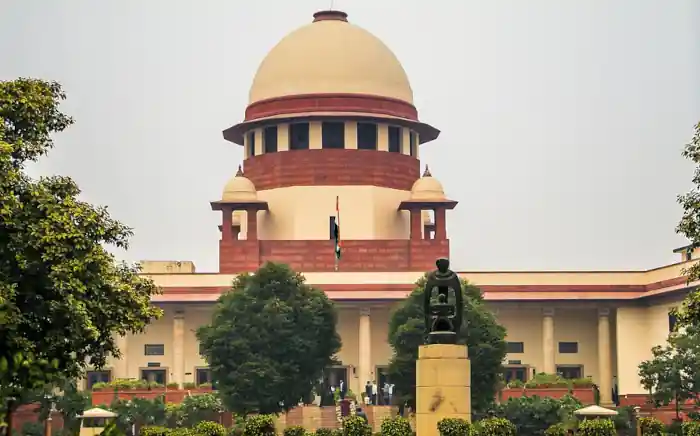
Supreme court of india

Home » Law Library Updates » Sarvarthapedia » Law » A charge of corrupt practice is in the nature of a quasi-criminal charge

 It is well-settled legal position that a charge of corrupt practice is in the nature of a quasi-criminal charge, as its consequence is not only to render the election of the returned candidate void but in some cases (as in the instant one) might incur disqualification from contesting even the next election. The evidence led in support of the corrupt practice must therefore, not only be cogent and definite but if the Election petition has to succeed, it must establish definitely and to the satisfaction of the court, the charge of corrupt practice which the defeated candidate levelled against the returned candidate. The onus lies heavily on the election petitioner to establish the charge of corrupt practice and in case of doubt the benefit goes to the returned candidate. It is well acknowledged that in the case of an election petition, based on allegations of commission of corrupt practice, the standard proof generally speaking is that of a criminal trial, which requires strict proof of the charge beyond reasonable doubt and the burden of proof is on the candidate who alleges corrupt practice and that burden does not shift. This was the view expressed by their Lordships in the case of Gajanan Krishnaji Bapat v. Dattaji Raghobaji Meghe reported in (1995) 5 SCC 360 wherein their Lordships had placed reliance also on the case of Nihal Singh v. Rao Birendra Singh and Anr., (1970) 3 SCC 239, Om Prabha Jain v. Charan Das, (1975) 4 SCC 849, Daulat Ram Chauhan v. Anand Sharma, (1984) 2 SCC 64 and Quamarul Islam v. S.K. Kanta, (1994) 3 Suppl. SCC 5 wherein the same view had been taken. However, the Courts have been cautioned to hold that even though the burden is on the petitioner to prove the charge of corrupt practice, it should not be understood to mean or imply that the returned candidate is absolved from his liability to bringforth the evidence on the record to revert the case of the petitioner and particularly prove such facts which are within the special knowledge of the elected candidate.

It was further held in the case of Surinder Singh v. Hardial Singh, (1985) 1 SCC 91 & 97 : AIR 1985 SC 89 that the charges of corrupt practice are to be equated with criminal charges and proof thereof would not be preponderance of probabilities, as in civil action, but proof beyond reasonable doubt and if after balancing the evidence adduced, there still remains little doubt in proving the charge, its benefit must go to the returned candidate. Various tests have been laid down by the High Courts and by the Supreme Court to determine the burden of proof required to establish a corrupt practice. The most well accepted test however is that the charge must be established fully to the satisfaction of the Court. But while insisting upon the standard of strict proof beyond a reasonable doubt, the courts are not required to extend or stretch the doctrine to such an extreme extent as to make it well nigh impossible to prove any allegation of corrupt practice as was observed in the case of S. Harcharan Singh v. S. Sajjan Singh, (1985) 1 SCC 370: AIR 1985 SC 236 wherein it was held that such approach would defeat and frustrate the very laudable and sacrosanct object of the Act for maintaining purity of the electoral process.
Read Next

  • Law and Governance: History, Principles, and Institutions
  •  Judicial office is essentially a public trust: Supreme Court
  • Supreme Court Daily Digest (26th Jan 2026)
Tags: Corruption

Post navigation

Previous: What would constitute material facts and material particulars
Next: The law relating to proof of corrupt practices under the Representation of People Act
Communism
Sarvarthapedia

Manifesto of the Communist Party 1848: History, Context, and Core Concepts

Arrest
Sarvarthapedia

Latin Maxims in Criminal Law: Meaning, Usage, and Courtroom Application

Abolition of Slave Trade Act 1807: Facts, Enforcement, and Historical Context

British Slavery and the Church of England: History, Theology, and the Codrington Estates

United States of America: History, Government, Economy, and Global Power

Biblical Basis for Slavery: Old and New Testament Laws, Narratives, and Interpretations

Rule of Law vs Rule by Law and Rule for Law: History, Meaning, and Global Evolution

IPS Cadre Strength 2025: State-wise Authorised Strength

Uric Acid: From 18th Century Discovery to Modern Medical Science

Christian Approaches to Interfaith Dialogue: Orthodox, Catholic, Protestant, and Pentecostal Views

Origin of Central Banking in India: From Hastings to RBI and the History of Preparatory Years (1773–1934)

Howrah District Environment Plan: Waste Management, Water Quality & Wetland Conservation

Bharatiya Nyaya Sanhita 2023: Sections (1-358), Punishments, and Legal Framework

Bengali Food Culture: History, Traditions, and Class Influences

  • Sarvarthapedia

  • Delhi Law Digest

  • Howrah Law Journal

  • Amit Arya vs Kamlesh Kumari: Doctrine of merger
  • David Vs. Kuruppampady: SLP against rejecting review by HC (2020)
  • Nazim & Ors. v. State of Uttarakhand (2025 INSC 1184)
  • Geeta v. Ajay: Expense for daughter`s marriage allowed in favour of the wife
  • Ram v. Sukhram: Tribal women’s right in ancestral property [2025] 8 SCR 272
  • Naresh vs Aarti: Cheque Bouncing Complaint Filed by POA (02/01/2025)
  • Bharatiya Nagarik Suraksha Sanhita 2023 (BNSS)
  • Bharatiya Sakshya Adhiniyam 2023 (BSA): Indian Rules for Evidence
  • Bharatiya Nyaya Sanhita (BNS) 2023
  • The Code of Civil Procedure (CPC)
  • Supreme Court Daily Digest
  • U.S. Supreme Court Orders
  • U.k. Supreme Court Orders
United Kingdom, UK

Abolition of Slave Trade Act 1807: Facts, Enforcement, and Historical Context

British Slavery and the Church of England: History, Theology, and the Codrington Estates

British Slavery and the Church of England: History, Theology, and the Codrington Estates

USA, America

United States of America: History, Government, Economy, and Global Power

Biblical Basis for Slavery, english slave trade

Biblical Basis for Slavery: Old and New Testament Laws, Narratives, and Interpretations

2026 © Advocatetanmoy Law Library

  • About
  • Global Index
  • Judicial Examinations
  • Indian Statutes
  • Glossary
  • Legal Eagle
  • Subject Guide
  • Journal
  • SCCN
  • Constitutions
  • Legal Brief (SC)
  • MCQs (Indian Laws)
  • Sarvarthapedia (Articles)
  • Contact Us
  • Privacy Policy
  • FAQs
  • Library Updates