Skip to content

ADVOCATETANMOY LAW LIBRARY

Research & Library Database

Primary Menu
  • News
  • Opinion
  • Countries198
    • National Constitutions: History, Purpose, and Key Aspects
  • Judgment
  • Book
  • Legal Brief
    • Legal Eagal
  • LearnToday
  • HLJ
    • Supreme Court Case Notes
    • Daily Digest
  • Sarvarthapedia
    • Sarvarthapedia (Core Areas)
    • Systemic-and-systematic
    • Volume One
07/04/2026
  • Law

EC (Amendment) Bill 2020- cereals, pulses, edible oils, onion-potatoes are not essential commodities

Legislation will help in more investment in cold storages, modernization of food supply chain, bringing price stability, create competitive market environment and prevent wastage of agri-produce
advtanmoy 23/09/2020 3 minutes read

© Advocatetanmoy Law Library

  • Share on WhatsApp (Opens in new window) WhatsApp
  • Share on X (Opens in new window) X
  • Share on Facebook (Opens in new window) Facebook
  • Share on Telegram (Opens in new window) Telegram

The Essential Commodities (Amendment) Bill 2020

Date: 22/09/2020

The Essential Commodities (Amendment) Bill 2020 with provisions to remove commodities like cereals, pulses, oilseeds, edible oils, onion and potatoes from the list of essential commodities was passed by Rajya Sabha today. Earlier, the bill was introduced by the Minister of State for Consumer Affairs, Food & Public Distribution, Shri Danve Raosaheb Dadarao in the Lok Sabha on 14th September, 2020 to replace ordinances promulgated on 5th June 2020. The bill was passed by Lok Sabha on 15th September, 2020.

Read Next

  •  Judicial office is essentially a public trust: Supreme Court
  • Disclosure of Personal Information under the Right to Information Act, 2005
  • Supreme Court Daily Digest (26th Jan 2026)

The EC (Amendment) Bill 2020 aims to remove fears of private investors of excessive regulatory interference in their business operations. The freedom to produce, hold, move, distribute and supply will lead to harnessing of economies of scale and attract private sector/foreign direct investment into agriculture sector. It will help drive up investment in cold storages and modernization of food supply chain.

The Government, while liberalizing the regulatory environment, has also ensured that interests of consumers are safeguarded. It has been provided in the Amendment, that in situations such as war, famine, extraordinary price rise and natural calamity, such agricultural foodstuff can be regulated. However, the installed capacity of a value chain participant and the export demand of an exporter will remain exempted from such stock limit imposition so as to ensure that investments in agriculture are not discouraged.

Replying to the discussion on the Bill before it was passed by the Rajya Sabha today, Minister of States for Consumer Affairs, Food & Public Distribution Shri Danve Raosaheb Dadarao said that this amendment is required to prevent wastage of agri-produce due to lack of storage facilities. He said this amendment will create a positive environment not only for farmers but also for consumers and investors and will definitely make our country self-reliant. He said that this amendment will strengthen the overall supply chain mechanism of the agriculture sector. This amendment will also help to achieve the government’s promise to double the farmer’s income by promoting investment in this sector and promote ease of doing business.

Background:

Read Next

  •  Judicial office is essentially a public trust: Supreme Court
  • Disclosure of Personal Information under the Right to Information Act, 2005
  • Supreme Court Daily Digest (26th Jan 2026)

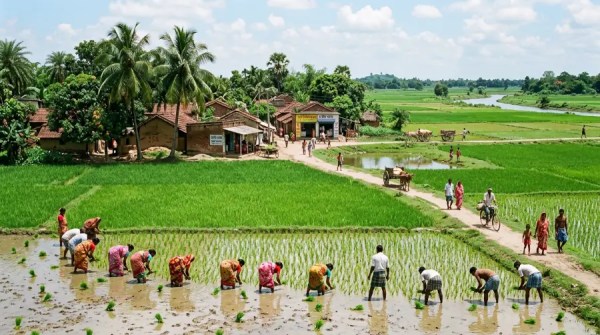
While India has become surplus in most Agri-commodities, farmers have been unable to get better prices due to lack of investment in cold storage, warehouses, processing and export as the entrepreneurial spirit gets dampened due to Essential Commodities Act. Farmers suffer huge losses when there are bumper harvests, especially of perishable commodities. The legislation will help drive up investment in cold storages and modernization of food supply chain. It will help both farmers and consumers while bringing in price stability. It will create competitive market environment and also prevent wastage of agri-produce that happens due to lack of storage facilities.


Tags: FoodIndia Topnews

Post navigation

Previous: DGCA approved 13 new Organisation to provide training for RPAS or Drones
Next: Successful Flight Test of High-speed Expendable Aerial Target (HEAT)- ABHYAS
Communism
Sarvarthapedia

Manifesto of the Communist Party 1848: History, Context, and Core Concepts

Arrest
Sarvarthapedia

Latin Maxims in Criminal Law: Meaning, Usage, and Courtroom Application

Abolition of Slave Trade Act 1807: Facts, Enforcement, and Historical Context

British Slavery and the Church of England: History, Theology, and the Codrington Estates

United States of America: History, Government, Economy, and Global Power

Biblical Basis for Slavery: Old and New Testament Laws, Narratives, and Interpretations

Rule of Law vs Rule by Law and Rule for Law: History, Meaning, and Global Evolution

IPS Cadre Strength 2025: State-wise Authorised Strength

Uric Acid: From 18th Century Discovery to Modern Medical Science

Christian Approaches to Interfaith Dialogue: Orthodox, Catholic, Protestant, and Pentecostal Views

Origin of Central Banking in India: From Hastings to RBI and the History of Preparatory Years (1773–1934)

Howrah District Environment Plan: Waste Management, Water Quality & Wetland Conservation

Bharatiya Nyaya Sanhita 2023: Sections (1-358), Punishments, and Legal Framework

Bengali Food Culture: History, Traditions, and Class Influences

  • Sarvarthapedia

  • Delhi Law Digest

  • Howrah Law Journal

  • Amit Arya vs Kamlesh Kumari: Doctrine of merger
  • David Vs. Kuruppampady: SLP against rejecting review by HC (2020)
  • Nazim & Ors. v. State of Uttarakhand (2025 INSC 1184)
  • Geeta v. Ajay: Expense for daughter`s marriage allowed in favour of the wife
  • Ram v. Sukhram: Tribal women’s right in ancestral property [2025] 8 SCR 272
  • Naresh vs Aarti: Cheque Bouncing Complaint Filed by POA (02/01/2025)
  • Bharatiya Nagarik Suraksha Sanhita 2023 (BNSS)
  • Bharatiya Sakshya Adhiniyam 2023 (BSA): Indian Rules for Evidence
  • Bharatiya Nyaya Sanhita (BNS) 2023
  • The Code of Civil Procedure (CPC)
  • Supreme Court Daily Digest
  • U.S. Supreme Court Orders
  • U.k. Supreme Court Orders
United Kingdom, UK

Abolition of Slave Trade Act 1807: Facts, Enforcement, and Historical Context

British Slavery and the Church of England: History, Theology, and the Codrington Estates

British Slavery and the Church of England: History, Theology, and the Codrington Estates

USA, America

United States of America: History, Government, Economy, and Global Power

Biblical Basis for Slavery, english slave trade

Biblical Basis for Slavery: Old and New Testament Laws, Narratives, and Interpretations

2026 © Advocatetanmoy Law Library

  • About
  • Global Index
  • Judicial Examinations
  • Indian Statutes
  • Glossary
  • Legal Eagle
  • Subject Guide
  • Journal
  • SCCN
  • Constitutions
  • Legal Brief (SC)
  • MCQs (Indian Laws)
  • Sarvarthapedia (Articles)
  • Contact Us
  • Privacy Policy
  • FAQs
  • Library Updates