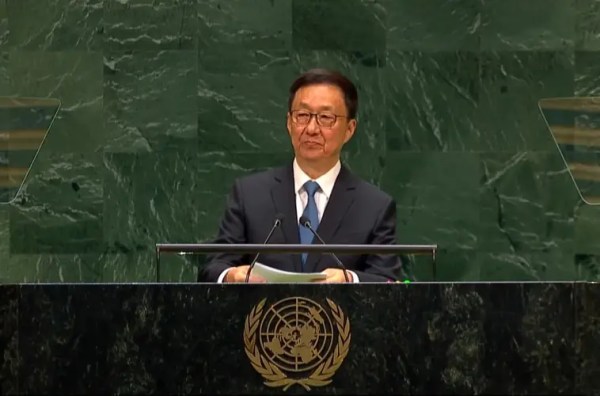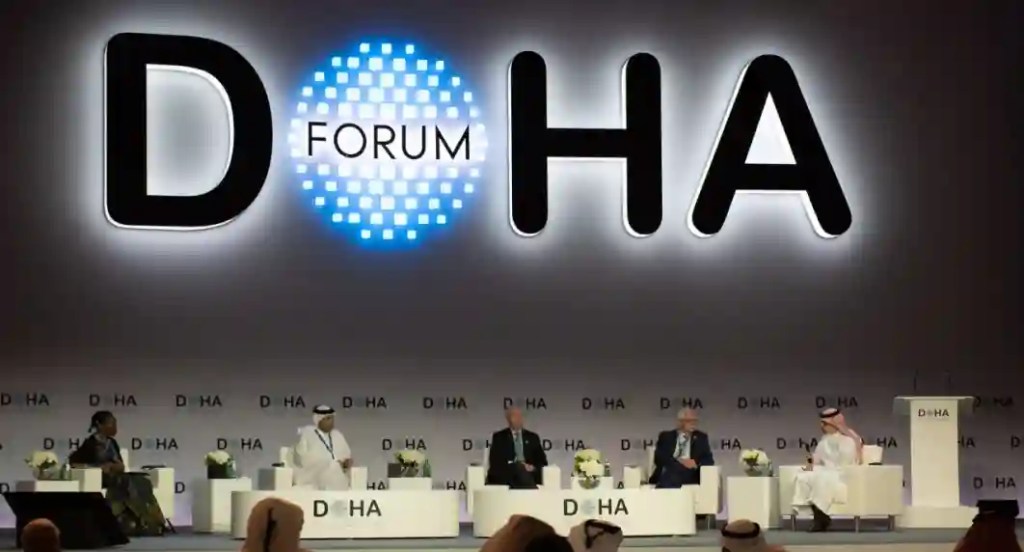
Transcript of remarks by External Affairs Minister, Dr. S. Jaishankar at the Doha Forum 2024 Opening Panel on ‘Conflict Resolution in a New Era’
Jaishankar at Doha Forum: Insights on Conflict Resolution and Diplomacy
December 10, 2024
Anchor: Foreign minister Jaishankar, sitting there in India and this is not necessarily your region, but what’s happening here, how does it affect you? What do you see happening in Syria? And more to the point on the topic of this conference, how does one innovate with dialogue out of let’s just take the Syria situation right now. We can hang the issues of Iran off that, but Syria.
EAM: Well, let me go back to your first question (regarding Syria developments). Is it a surprise? The answer is yes. I would also agree with Sheikh Mohammed in the sense that, you know, the region was in such prolonged ferment that surprises will occur when this goes on for so long. Yes, we are some distance away, but let me just put that in some perspective. You know, we still have about half a million Indians who live in Mediterranean countries. We have a trade of about $80 billion with the Mediterranean. Now that’s the Mediterranean. If I’m looking at the Gulf, we have 10 million Indians here and maybe about $180 billion of trade. Now why do I mention that? Because I think what’s happening in Syria, what’s happening in the larger region, what’s happening in Gaza and Lebanon, and the combination of all of this, there is a larger regional instability, which is actually growing month on month. It is impacting, you know, as a country on that side of Asia, we are feeling the impact of this. I mean, we’re feeling it in shipping costs. We’re feeling it trade disruptions. We could see it in radicalization. I mean, today, instability anywhere actually is a source of concern. There’s no region you can say that’s far away and it doesn’t matter to me anymore. And by the way, this region is not so far away and our interests are there as I spelt out.
Anchor: Foreign minister Jaishankar, it is said that certainly we know Prime Minister Modi had a very close relationship with President Trump in his first term. We know that, the Biden administration also in fact, they were trying to hopefully drive a wedge or attract you awar from China and into the US sphere more.
EAM: We were trying to attract them into the Indian sphere as well.
Anchor: Yeah. Yeah. Okay. I don’t know how it worked out, but right now, you’ve got a threat of tariffs in the whole region and all the rest of it. President-elect Trump has also threatened BRICS of which you are a member with 100% tariffs. What do you expect for India, and for your economy, and your relationship with the United States, and regional implications as well, from that kind of message already from President-elect Trump?
EAM: Look, we had a good relationship, a very solid relationship with the first Trump administration. Yes. There were some issues, mostly trade related issues, but there were a whole lot of issues on which actually President Trump was very international. He was very forward leaning, and I remind people that it was actually under Trump that the Quad was restarted. So if you look at the Indo-Pacific today, I mean, certainly President Biden built on it. But if you look at the Indo-Pacific today, in fact, it’s an area where the United States made new commitments as indeed did all of us. So, I would say, from our perspective, there’s a certain personal relationship between Prime Minister Modi and President Trump. I would say in terms of politics, we don’t really have divisive issues in terms of our political outlook. As two countries, by and large, I think our convergence way outstrips any differences we have. Where the BRICS remark was concerned, I’m not exactly sure what was the trigger for it, but we’ve always said that India has never been for de-dollarization. Right now, there is no proposal to have a BRICS currency. So I’m not quite sure what is the basis for…(that remark)
Anchor: Yeah. He said if you stop pegging it to the dollar, but there wasn’t a threat to do that, was it?
EAM: Well, you know, the BRICS do discuss financial transactions, but certainly, in BRICS, each country doesn’t have an identical position on this. But where India’s concerned, the United States is our largest trade partner and we we have no interest in weakening the dollar at all. But I just want to come back to the Middle East, you know, the core issue undoubtedly is Palestine and Israel’s relationship and how do they reach a modus vivendi. There’s a larger issue side by side, which is the widening of this conflict, which is also a major concern. Today, I don’t want to say we have normalized it, but the fact is, 2 years ago, the prospect of Israel and Iran actually firing at each other would have been appalling as something which we couldn’t have even contemplated, and yet it’s happened. If you look at what’s happening in the Red Sea and the impact for shipping in Asia, it’s huge. So I think there are different sort of challenges, layers of them, but just like the journalists who sat on these chairs before us told us, it’s a tough world, very difficult, but we journalists have to do our job; I think similarly diplomats of the world have to tell themselves it’s a messy world, it’s terrible, there are conflicts, but therefore, there’s all the more reason for diplomats of the world to step forward. And that era which we saw in the ‘60-’70s, which is either the Security Council managed it or a few countries mostly, the major powers did it. I think that era is behind us. I think all of us in different ways need to step forward. for example, what Qatar is doing. There are so many conflicts. We are trying to do something in Ukraine. We see Myanmar as almost a kind of a forgotten conflict where there’s an approach like let’s not invite them and the problem will solve itself. So I think this there is a greater case for more vigorous diplomacy, for more innovative diplomacy, for a more participative diplomacy. I think more countries need to have the boldness to bite that bullet.
Anchor: Foreign Minister Jaishankar, I want to ask you and ask all of you in a moment the major war roiling Europe. So you get a lot of cheap oil still from from Russia.
EAM: Yes, I get oil but it’s not necessarily cheap.
Anchor: But it’s Russian.
EAM: Do you have a better deal? I’m willing to bet.
Anchor: But it’s Russian, and it’s a good deal for you, despite sanctions and all the rest of it. It has been said that Russia, China, North Korea, Iran, etc. are sort of forming or have formed an axis of anti-Americanism. anti-Westernism. And I want to know, does India have a role to play or what do you believe will be the momentum on Russia invasion of Ukraine and the resolution. And I know the Foreign Minister Lavrov is going to speak. What do you think is going to happen, particularly with the Trump administration, who I know they’re not in office, but they have very, very clearly telegraphed that they don’t want to keep helping Ukraine militarily.
EAM: Well, two comments. One, regarding the conflict, the war itself. You know, we have always held to the view that this war is not going to be solved on the battlefield, that at the end of the day people are going to return to some kind of negotiating table. The sooner, the better. Our effort has been to facilitate that to the extent possible. Now, to be honest with you, that’s not always been the most popular thing, at least in some parts of the world. But I do think today the general sort of the needle is moving more towards the reality of a negotiation than the continuation of the war. We are trying to do the bit I told you about, why it’s important for diplomacy to come forward. We are actually doing-going to Moscow, talking to President Putin; going to Kiev, engaging President Zelensky; meeting them in other places; trying to see if we can encourage and find common threads which can be picked up at some point of time when the circumstances are right for it to be developed.
We are not attempting a peace plan. We are not doing a mediation, in that sense. We are doing multiple conversations and are very transparent about telling each party at the end of the conversation, saying,that this is what we’re going to tell the other party. We think that at this point of time (this is) the most useful…We also believe that we articulate the sentiments and the interests of the Global South-125 other countries- who have found their fuel costs, their food costs, their inflation, their fertilizer costs impacted by this war. So there is a constituency out there which says, please do this, please, you know, carry on with this (diplomatic engagement). And quite honestly, in the last few weeks and months, I’ve even seen this sentiment expressed by European leaders, major European leaders, who are actually telling us, please keep engaging Russia and engaging Ukraine. We welcome that. So we do think that things are moving somewhere in that direction. Your second point about, you know, is there such an axis? Look, perhaps in your world it sounds very effective and dramatic to sort of make this, this sort of sweeping assertion.
Anchor: I didn’t make it up.
EAM: Yeah they did. But in my world, that’s not the reality. You know, every country has its interests. On some they agree, some they disagree, some they work, sometimes the same countries work in different combinations on different issues. The reality is much more complicated, much more granular. And I caution people saying, don’t go for these very sweeping generalities because they become self-fulfilling if you actually accept them. I don’t accept that. You know, I do think each one of these is a nation with some history, with certain self regard, and each one of them is in it for themselves.
Read more:
- Israel-Syria Conflict: Netanyahu on the fall of Assad regime
- Syrian Arab Republic | GA Debate 2024 | Bassam Sabbagh’s Speech
- India’s Vision for a Progressive Global South | Jaishankar at UNGA 2024
- Kazakhstan’s Role in SCO: Insights from Dr. Jaishankar Interview
- Speech by Indian FM S. Jaishankar At 77th Session of UN General Assembly (24/09/2022)