Governing the American Government
Eurasian Geopolitics and India’s Search for Energy Security in 2026
The evolving geopolitical landscape of 2026 has underscored the increasingly complex relationship between global security crises, energy markets, and strategic competition among major powers. Developments stretching from the Persian Gulf to Central Asia and the South Caucasus have revealed how regional conflicts can rapidly influence global trade, diplomatic alignments, and energy security calculations. Among the countries most affected by these transformations is India, whose expanding economy, growing energy requirements, and strategic autonomy doctrine have placed it at the center of multiple international developments.
A significant development emerged in June 2026 when the United States and Iran resumed limited military exchanges despite the continuation of diplomatic negotiations. The renewed hostilities occurred after a fragile ceasefire reached in April 2026, following weeks of confrontation linked to broader tensions involving Iran, the United States, and regional partners. The latest exchange began after the downing of a US AH-64 Apache helicopter on 8 June 2026. In response, American forces conducted strikes against military-related targets in southern Iran, including locations on Qeshm Island and in the strategically important port city of Bandar Abbas.
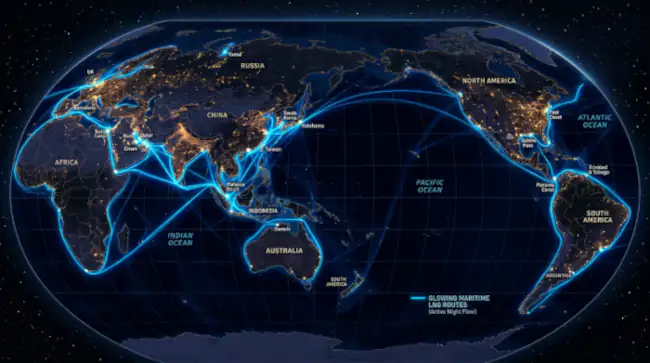
The significance of Bandar Abbas extends far beyond its military value. Located near the entrance to the Strait of Hormuz, the city occupies one of the most important positions in global energy transportation. Since the 1970s, the Strait of Hormuz has functioned as the principal maritime corridor through which a substantial share of internationally traded crude oil and liquefied natural gas passes. Historical disruptions in this region, including those during the Iran-Iraq War (1980–1988) and various crises involving sanctions and naval incidents, have repeatedly demonstrated the vulnerability of global energy markets to regional instability.
Iran responded to the June 2026 strikes by targeting facilities associated with the United States and its regional partners, including installations linked to Qatar, Jordan, and Bahrain. Despite the exchange of military actions, both Washington and Tehran continued diplomatic contacts. This dual-track approach reflected a pattern seen repeatedly throughout modern Middle Eastern history, where military pressure and negotiations often proceed simultaneously.
The roots of US-Iran tensions date back to several critical historical events. The 1953 coup in Iran, supported by Western intelligence services, the 1979 Iranian Revolution, the subsequent Iran hostage crisis (1979–1981), and decades of sanctions and strategic rivalry created a deep reservoir of mistrust. Attempts at rapprochement, including the Joint Comprehensive Plan of Action (JCPOA) signed in Vienna on 14 July 2015, demonstrated the possibility of negotiated compromise but also highlighted the fragility of diplomatic agreements when confronted by domestic political pressures and changing strategic priorities.
The limited military exchanges of June 2026, therefore, represented more than isolated incidents. They reflected a broader contest over regional influence, deterrence, and negotiating leverage. Both sides appeared determined to avoid a full-scale war while simultaneously signaling military readiness. Such calibrated escalation has become a common feature of contemporary conflict management, particularly in regions where direct confrontation carries potentially catastrophic economic consequences.
For India’s energy security, these developments hold profound implications. Since the economic liberalization reforms initiated in 1991, India has experienced sustained industrial growth, urbanization, and rising energy consumption. The country’s expanding manufacturing sector, transportation networks, digital infrastructure, and growing middle class have significantly increased demand for oil, natural gas, and electricity.
Historically, India relied heavily on imported crude oil from the Middle East. Countries such as Saudi Arabia, Iraq, United Arab Emirates, Kuwait, and Qatar became critical suppliers. By the early twenty-first century, the Persian Gulf accounted for a substantial portion of India’s hydrocarbon imports. This dependence created both economic advantages and strategic vulnerabilities.
The closure or disruption of the Strait of Hormuz has long represented one of the most serious threats to India’s energy security. During previous crises, including the First Gulf War (1990–1991), the Iraq War beginning in 2003, and periods of heightened confrontation involving Iran, Indian policymakers repeatedly examined contingency plans for supply interruptions. The events of 2026 revived many of these concerns.
Against this backdrop, discussions regarding the import of Russian liquefied natural gas (LNG) acquired renewed importance. Russia possesses some of the world’s largest natural gas reserves, particularly in Western Siberia, the Yamal Peninsula, and the Arctic region. Since the early 2000s, Moscow has invested heavily in LNG infrastructure to diversify export routes beyond traditional pipeline systems.
Projects such as Yamal LNG, launched in December 2017, transformed Russia into a major global LNG exporter. Located above the Arctic Circle, the project demonstrated Russia’s ability to develop large-scale energy infrastructure in extreme climatic conditions. Additional projects, including Arctic LNG developments, further expanded Russian export capacity.
The prospect of increased Indian purchases of Russian LNG gained momentum due to disruptions affecting traditional Middle Eastern suppliers. Historically, countries along the Persian Gulf supplied the majority of India’s LNG requirements. In some periods, Gulf producers accounted for approximately seventy percent of Indian LNG imports. Any interruption to maritime transportation routes, therefore, creates immediate concerns regarding supply security and price stability.
India’s interest in Russian LNG must be understood within the broader framework of its foreign policy tradition. Since independence in 1947, India has generally pursued a strategy of maintaining diversified international partnerships. During the Cold War, New Delhi championed non-alignment, seeking to preserve strategic flexibility amid superpower rivalry. Although the international system has changed dramatically since the collapse of the Soviet Union in 1991, elements of this strategic culture remain influential.
Energy diversification forms a central component of this approach. Rather than relying excessively on any single supplier or region, India has sought to cultivate relationships with producers across the Middle East, Russia, Africa, North America, and Southeast Asia. This diversification reduces exposure to geopolitical shocks while enhancing bargaining power in commercial negotiations.
The challenge, however, lies in navigating sanctions regimes and competing geopolitical pressures. Since 2022, Russia’s energy exports have increasingly shifted toward Asian markets. Countries such as India and China emerged as major destinations for Russian hydrocarbons after European import patterns changed significantly. The European Union’s decision to phase out Russian LNG imports by 2027 could potentially redirect additional volumes toward Asian consumers.
For India, the economic rationale is compelling. Natural gas plays a critical role in electricity generation, fertilizer production, industrial manufacturing, and urban energy systems. Government initiatives promoting cleaner fuels have also increased demand for gas relative to more carbon-intensive alternatives. Access to competitively priced LNG, therefore, contributes directly to industrial competitiveness and economic growth.
The concept of energy security itself has evolved considerably over time. During the oil shocks of 1973–1974 and 1979, energy security was primarily understood as ensuring reliable physical supplies of oil. By the twenty-first century, the concept expanded to include affordability, diversification, infrastructure resilience, environmental sustainability, and protection against geopolitical disruptions. India’s contemporary energy strategy reflects all of these dimensions.
Parallel to developments in the Middle East, significant geopolitical activity unfolded in Central Asia. The region, comprising Kazakhstan, Uzbekistan, Kyrgyzstan, Tajikistan, and Turkmenistan, occupies a strategically important position between Russia, China, South Asia, and the Middle East. Historically, Central Asia served as a crossroads of civilizations and trade routes, particularly during the era of the Silk Road, which connected East Asia with Europe and the Mediterranean.
Following the dissolution of the Soviet Union in 1991, the newly independent Central Asian states attracted growing international interest. Their vast reserves of hydrocarbons, uranium, rare earth elements, and other strategic minerals transformed the region into an arena of geopolitical competition.
In 2026, the United States intensified efforts to deepen economic engagement with Central Asia through cooperation in critical minerals. This initiative reflects broader global concerns regarding supply chains for materials essential to advanced technologies. Critical minerals, including rare earth elements, lithium, cobalt, and various industrial metals, play indispensable roles in electric vehicles, renewable energy systems, semiconductors, aerospace manufacturing, and defense technologies.
The strategic significance of these resources increased dramatically during the twenty-first century. As governments pursued energy transition policies and technological modernization, access to critical minerals became a matter of national security. Competition among major powers increasingly extended beyond traditional oil and gas resources to encompass the materials required for future industries.
The C5+1 framework, bringing together the United States and the five Central Asian republics, emerged as a platform for advancing these objectives. While previous initiatives often emphasized political dialogue and security cooperation, recent efforts have focused increasingly on investment, infrastructure, and resource development.
For Central Asian governments, engagement with multiple external partners offers opportunities to maximize economic benefits while preserving strategic autonomy. Russia maintains deep historical, cultural, and economic ties with the region. China has become a major investor through the Belt and Road Initiative, announced in Astana, Kazakhstan, in September 2013. The European Union promotes connectivity and sustainable development projects. The United States emphasizes investment, technological cooperation, and supply chain diversification.
This competitive environment creates opportunities but also challenges. Resource-rich states must balance external interests while ensuring that mineral wealth contributes to domestic development rather than merely serving foreign strategic objectives. Historical experience across many parts of the world demonstrates that natural resource abundance does not automatically guarantee economic prosperity.
Meanwhile, developments in the South Caucasus added another layer of regional uncertainty. Parliamentary elections in Armenia during June 2026 altered the domestic political landscape while complicating ongoing peace efforts with Azerbaijan. The origins of tensions between the two countries can be traced to disputes over Nagorno-Karabakh, a region whose status became a source of conflict during the final years of the Soviet Union.
The first major war occurred between 1988 and 1994, resulting in Armenian control over Nagorno-Karabakh and surrounding territories. Renewed hostilities erupted during the Second Nagorno-Karabakh War in September-November 2020, dramatically changing the balance of power. Subsequent military operations and negotiations further transformed regional dynamics.
The 2026 Armenian elections produced a parliament in which the governing party retained authority but lost the constitutional majority necessary for major constitutional amendments. This outcome complicated discussions regarding provisions that Azerbaijan considers obstacles to a comprehensive peace agreement. While large-scale conflict did not appear imminent, unresolved disputes continued to generate uncertainty.
Although geographically distant from India, developments in the South Caucasus affect broader Eurasian connectivity. Trade corridors linking Europe and Asia increasingly traverse the region. Stability in the South Caucasus therefore influences transportation networks, investment flows, and emerging commercial routes connecting India with markets farther west.
Simultaneously, the European Union advanced its twenty-first package of sanctions targeting Russia. Among the proposed measures were restrictions affecting energy exports, maritime transportation, and associated service providers. Since 2022, sanctions have become a central feature of international economic relations, reshaping trade patterns across multiple sectors.
The effectiveness of energy-related sanctions remains a subject of debate. While sanctions can alter commercial behavior and increase transaction costs, global energy markets often adapt through rerouting, alternative financing mechanisms, and new logistical arrangements. Russia’s growing energy relationship with Asian consumers illustrates this adaptability.
For India, these developments highlight the importance of maintaining flexibility in energy procurement. The country’s energy planners must consider not only price and availability but also sanctions risks, transportation routes, geopolitical stability, and long-term strategic interests. Such calculations have become increasingly complex in an international environment characterized by overlapping conflicts, competing sanctions regimes, and shifting alliances.
The interconnected nature of modern geopolitics means that events occurring thousands of kilometers apart can rapidly influence domestic economic conditions. A military exchange near the Strait of Hormuz can affect fuel prices in Indian cities. Political negotiations in Central Asia can influence access to critical minerals required for industrial development. Electoral outcomes in the South Caucasus can shape trade corridors linking continents.
Throughout history, major powers have sought to secure access to strategic resources, transportation routes, and commercial networks. What distinguishes the contemporary era is the unprecedented degree of economic interdependence. Energy markets, supply chains, financial systems, and technological ecosystems are deeply interconnected. As a result, regional crises often generate global consequences.
For India, the pursuit of energy security remains inseparable from broader strategic objectives. Reliable access to hydrocarbons supports economic growth, industrial expansion, food security, and social development. At the same time, diversification of suppliers, investment in infrastructure, expansion of renewable energy, and participation in multiple international partnerships help reduce vulnerability to external shocks.
The events of 2026 demonstrate that energy security is no longer solely an economic concern. It is also a matter of foreign policy, national security, technological development, and geopolitical positioning. The renewed US-Iran exchanges, the prospect of expanded Russian LNG exports to India, the competition for Central Asian critical minerals, and the evolving sanctions environment collectively illustrate the emergence of a world in which energy, diplomacy, and strategic competition are increasingly inseparable. In such an environment, the ability to adapt to shifting circumstances, diversify partnerships, and maintain strategic flexibility will remain among the most important determinants of national resilience and long-term economic stability.
Read more
- UAE Exit from OPEC 2026
- Oil Prices Could Surge 100% as IMF Warns
- Indian Economy and West Asian Instability
Sarvarthapedia Conceptual Network: India’s Energy Security
Core Concepts
- Energy Security
- Liquefied Natural Gas (LNG)
- Crude Oil Imports
- Strategic Autonomy
- Energy Diversification
- Strait of Hormuz
- Russia–India Energy Relations
- Middle East Geopolitics
- Sanctions and Energy Trade
- Economic Growth and Industrialization
See Also
- United States–Iran Conflict (2026)
- Russian LNG Exports
- Yamal LNG Project
- European Union Sanctions on Russia
- Qatar–India Energy Relations
- Persian Gulf Energy Routes
- Strategic Petroleum Reserves
- Indo-Pacific Energy Security
- Global LNG Market
- Energy Transition in India
United States–Iran Conflict (2026)
Core Concepts
- Limited Military Escalation
- Coercive Diplomacy
- Deterrence Strategy
- Ceasefire Violations
- Military Signaling
- Negotiated Conflict Management
- Regional Security Architecture
- Persian Gulf Stability
Related Places
- Bandar Abbas
- Qeshm Island
- Strait of Hormuz
- Persian Gulf
- Qatar
- Bahrain
- Jordan
See Also
- Donald Trump Presidency (Second Term)
- US Central Command
- Iran–US Relations
- Gulf Security Crisis
- Hormuz Maritime Chokepoint
- Energy Market Disruptions
- Regional Proxy Conflicts
- International Crisis Management
Strait of Hormuz
Core Concepts
- Maritime Chokepoints
- Global Energy Trade
- Oil Transportation Routes
- LNG Shipping Lanes
- Strategic Geography
- Naval Security
Historical Connections
- Tanker War (1980s)
- Iran-Iraq War
- Gulf Crises
- US Naval Presence in the Gulf
See Also
- Bandar Abbas
- Persian Gulf
- Global Oil Market
- LNG Transportation
- India’s Energy Security
- Gulf Cooperation Council
- Maritime Security
Russian LNG Exports
Core Concepts
- Arctic Energy Development
- LNG Infrastructure
- Energy Export Diversification
- Asian Energy Markets
- Post-2022 Energy Realignment
Key Projects
- Yamal LNG
- Arctic LNG Development
- Northern Sea Route
See Also
- Russia–India Relations
- European Union LNG Ban
- Global LNG Trade
- Energy Sanctions
- Asian Energy Demand
- Arctic Geopolitics
Yamal LNG Project
Core Concepts
- Arctic Resource Extraction
- LNG Production
- Russian Energy Strategy
- Northern Infrastructure Development
Historical Context
- Launched December 2017
- Located on the Yamal Peninsula
- Designed to expand Russian LNG exports beyond pipelines
See Also
- Russian LNG Exports
- Arctic Energy
- India’s LNG Imports
- Northern Sea Route
- Global Natural Gas Market
European Union Sanctions on Russia
Core Concepts
- Economic Sanctions
- Energy Restrictions
- Price Cap Mechanism
- Maritime Compliance
- Geoeconomic Competition
Components
- Oil Price Cap
- LNG Import Restrictions
- Shadow Fleet Measures
- Secondary Economic Effects
See Also
- Russian Oil Exports
- Russian LNG Exports
- India’s Energy Security
- China–Russia Trade
- Global Commodity Markets
- Geoeconomics
Global LNG Market
Core Concepts
- Energy Interdependence
- Spot Markets
- Long-Term Contracts
- Supply Chain Resilience
- Maritime Energy Trade
Major Suppliers
- Qatar
- Russia
- United States
- Australia
- United Arab Emirates
Major Consumers
- India
- China
- Japan
- South Korea
- European Union
See Also
- LNG Infrastructure
- Energy Security
- Strait of Hormuz
- Russian LNG Exports
- Qatar–India Relations
Russia–India Energy Relations
Core Concepts
- Strategic Partnership
- Energy Cooperation
- Multipolar Diplomacy
- Long-Term Supply Agreements
Historical Milestones
- Soviet-Era Cooperation
- Post-1991 Economic Engagement
- Expansion After 2022
- LNG Discussions in 2026
See Also
- India’s Energy Security
- Russian LNG Exports
- BRICS
- Eurasian Energy Networks
- Strategic Autonomy
Strategic Autonomy
Core Concepts
- Non-Alignment Legacy
- Multi-Vector Diplomacy
- Independent Foreign Policy
- Resource Diversification
Historical Foundations
- Indian Independence (1947)
- Non-Aligned Movement
- Post-Cold War Adaptation
See Also
- India’s Energy Security
- BRICS
- Russia–India Relations
- US–India Relations
- Multipolarity
Central Asia–United States Critical Minerals Dialogue
Core Concepts
- Critical Minerals
- Economic Diplomacy
- Supply Chain Diversification
- Resource Security
- Strategic Competition
Key Actors
- United States
- Kazakhstan
- Uzbekistan
- Kyrgyzstan
- Tajikistan
- Turkmenistan
See Also
- C5+1 Framework
- Rare Earth Elements
- Green Transition
- China’s Belt and Road Initiative
- Resource Geopolitics
Critical Minerals
Core Concepts
- Industrial Modernization
- Technological Sovereignty
- Battery Manufacturing
- Renewable Energy Systems
- Semiconductor Production
Strategic Resources
- Lithium
- Cobalt
- Rare Earth Elements
- Uranium
- Copper
See Also
- Central Asia
- Energy Transition
- Green Technology
- US Economic Strategy
- Supply Chain Security
Central Asia
Core Concepts
- Eurasian Connectivity
- Resource Wealth
- Post-Soviet Development
- Strategic Balancing
States
- Kazakhstan
- Uzbekistan
- Kyrgyzstan
- Tajikistan
- Turkmenistan
Historical Themes
- Silk Road
- Russian Empire Expansion
- Soviet Period
- Post-1991 Independence
See Also
- C5+1 Framework
- Belt and Road Initiative
- Critical Minerals
- Russia–Central Asia Relations
- China–Central Asia Relations
C5+1 Framework
Core Concepts
- Multilateral Diplomacy
- Regional Cooperation
- Economic Engagement
- Strategic Partnerships
Members
- United States
- Kazakhstan
- Uzbekistan
- Kyrgyzstan
- Tajikistan
- Turkmenistan
See Also
- Marco Rubio
- Critical Minerals Dialogue
- Central Asia
- US Foreign Policy
- Eurasian Geopolitics
Belt and Road Initiative
Core Concepts
- Infrastructure Connectivity
- Eurasian Trade Networks
- Chinese Overseas Investment
- Regional Development
Historical Milestone
- Announced in Astana, September 2013
See Also
- Central Asia
- China’s Foreign Policy
- Eurasian Corridors
- Global Infrastructure Competition
- Critical Minerals
Armenia–Azerbaijan Relations
Core Concepts
- Territorial Disputes
- Post-Soviet Conflicts
- Peace Negotiations
- Constitutional Politics
Key Issues
- Nagorno-Karabakh
- Border Delimitation
- Peace Treaty Negotiations
See Also
- Armenian Parliamentary Elections (2026)
- South Caucasus
- Nagorno-Karabakh Conflict
- Regional Security
Armenian Parliamentary Elections (2026)
Core Concepts
- Constitutional Majority
- Parliamentary Governance
- Domestic Political Stability
Outcomes
- Civil Contract Party Retains Power
- Constitutional Majority Lost
- Peace Process Complications
See Also
- Armenia–Azerbaijan Relations
- South Caucasus Politics
- Constitutional Reform
- Nagorno-Karabakh
Nagorno-Karabakh Conflict
Core Concepts
- Ethno-Territorial Conflict
- Self-Determination
- State Sovereignty
- Post-Soviet Security
Historical Timeline
- 1988–1994 First War
- 2020 Second Karabakh War
- Subsequent Peace Negotiations
See Also
- Armenia
- Azerbaijan
- South Caucasus
- Regional Security
- Russian Peacekeeping Efforts
South Caucasus
Core Concepts
- Eurasian Crossroads
- Transit Corridors
- Regional Rivalries
- Strategic Connectivity
States
- Armenia
- Azerbaijan
- Georgia
See Also
- Armenia–Azerbaijan Relations
- Nagorno-Karabakh Conflict
- Middle Corridor
- Eurasian Trade Routes
Global Energy Geopolitics
Core Concepts
- Resource Competition
- Maritime Security
- Economic Statecraft
- Energy Interdependence
- Strategic Chokepoints
Connected Clusters
- India’s Energy Security
- United States–Iran Conflict
- Russian LNG Exports
- European Union Sanctions
- Strait of Hormuz
- Global LNG Market
See Also
- Geoeconomics
- Multipolar World Order
- Energy Diplomacy
- Strategic Resources
- International Security
Multipolar World Order
Core Concepts
- Power Diffusion
- Strategic Competition
- Regional Powers
- Flexible Alignments
Major Actors
- United States
- China
- Russia
- India
- European Union
See Also
- Strategic Autonomy
- BRICS
- Eurasian Geopolitics
- Global Energy Geopolitics
- Resource Diplomacy
Master Knowledge Path
Primary Hub
India’s Energy Security
First-Level Connections
- Strait of Hormuz
- Russian LNG Exports
- Global LNG Market
- Strategic Autonomy
- European Union Sanctions on Russia
- United States–Iran Conflict (2026)
Second-Level Connections
- Central Asia
- Critical Minerals
- C5+1 Framework
- Multipolar World Order
- Global Energy Geopolitics
Third-Level Connections
- Armenia–Azerbaijan Relations
- South Caucasus
- Belt and Road Initiative
- Eurasian Trade Corridors
- Resource Competition
Joint statement on the Strait of Hormuz (19 Mar 2026) by the UK, France, Germany, Italy, etc