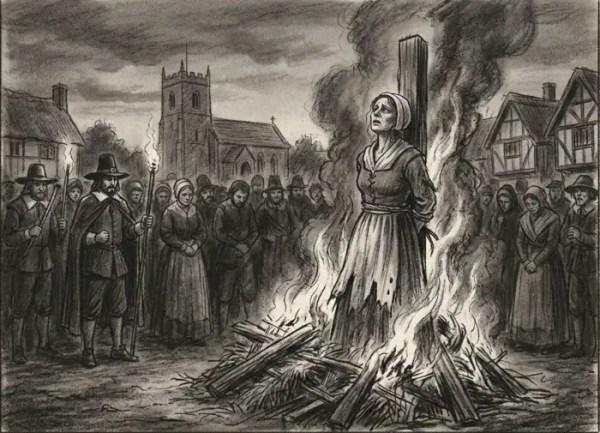
The History of Jesus ben Ananias
The Jews Revolutionary Jesus ben Ananias (ישוע בן חנניה, Yehesua) occupies a striking and often underexamined place within the historical and textual arena of first-century Judea, preserved primarily through the historiographical work of the Jewish priest and historian Flavius Josephus, writing in the aftermath of the catastrophic events of the First Jewish–Roman War (66–73 CE). Josephus’ account in The Jewish War (Book 6, Chapter 5, Section 3), composed in Rome around 75 CE, presents Jesus ben Ananias not as a political revolutionary, but as an apocalyptic prophet, whose repetitive lamentations and symbolic utterances formed part of a broader continuum of Jewish prophetic traditions rooted in earlier biblical and post-biblical models. His life and death must be situated within the volatile socio-political environment of Jerusalem in the 60s CE, a period marked by Roman administrative tension, sectarian division, and increasing eschatological expectation.
The Appearance of a Prophet (circa 62 CE)
According to Josephus, the public emergence of Jesus ben Ananias occurred during the Feast of Tabernacles (Sukkot) in approximately 62 CE, a pilgrimage festival that drew large crowds to Jerusalem, thereby amplifying the visibility of any public figure. His proclamation—“A voice from the east, a voice from the west…”—reflects a formulaic structure reminiscent of biblical prophetic oracles, particularly those found in Jeremiah and Ezekiel, where repetitive and directional language conveys universality and inevitability. The emphasis on “voice” (קול) evokes a tradition in which prophecy is mediated through sound rather than written doctrine, aligning him with oral prophetic performance rather than institutionalized teaching.
“A voice from the east, a voice from the west, a voice from the four winds, a voice against Jerusalem and the temple, a voice against the bridegrooms and the brides, and a voice against this whole people!” (Jewish War 6.5.3)
Josephus’ narrative further emphasizes the seven-year duration of his prophetic activity, a symbolic period consistent with biblical numerology, often associated with completeness or divine cycles. Throughout this period, Jesus ben Ananias persisted in his refrain, despite being subjected to arrest, beating, and interrogation by both Jewish authorities and the Roman governor Lucceius Albinus (procurator of Judea, 62–64 CE). The refusal of the prophet to articulate any political agenda or conspiracy is crucial: it distinguishes him from Zealot insurgents and frames him instead as a non-political apocalyptic voice, a category known within Jewish tradition but difficult for Roman authorities to classify. Josephus’ portrayal of Albinus dismissing him as mad reflects a Roman administrative strategy of neutralizing perceived threats by categorizing them as harmless rather than revolutionary.
The culmination of his prophetic career occurs during the siege of Jerusalem in 70 CE, under the command of Titus, son of Emperor Vespasian. The destruction of the Second Temple—a central event in Jewish history—provides retrospective validation of his warnings. His death, caused by a stone projectile from a Roman siege engine, is recorded by Josephus with a literary symmetry that mirrors his earlier cries: “Woe to the city… and woe to me also.” This narrative closure reinforces his role as a tragic prophetic figure, whose life embodies the convergence of prophecy, suffering, and fulfillment.
Jesus ben Ananias and the Jewish Authorities
The Jewish leaders, disturbed by his proclamations, arrested him and had him severely beaten. Yet, despite the pain and suffering, he refused to change his message. Instead, he continued repeating:
“Woe, woe to Jerusalem!”
Even when scourged to the bone, he would add only:
“Woe to myself also!” (Jewish War 6.5.3)
His Encounter with the Roman Authorities
When the Roman governor Lucceius Albinus was ruling (circa 62-64 CE), Jesus ben Ananias was brought before him and accused of inciting unrest. The Romans, concerned about potential insurrection, sought to interrogate him. However, despite repeated torture, flogging, and questioning, he offered no political statements or conspiracies—only his continued lamentation over Jerusalem’s fate.
Josephus records that the governor eventually dismissed him as a harmless fellow and released him.
The Fulfillment of His Prophecy and His Death (70 CE)
By 70 CE, Jesus ben Ananias’ dire predictions came true. The Romans, under General Titus, besieged Jerusalem, leading to mass slaughter and the eventual destruction of the Second Temple. Amidst the chaos, Jesus ben Ananias was still in the city, continuing his warnings even as death surrounded him.
According to Josephus, during the siege, while he was shouting his usual prophecy on the walls of the city, a Roman projectile—a stone from a catapult—struck him dead.
Josephus describes his final moment:
“He was going about on the walls, crying out in a loud voice: ‘Woe, woe again to the city, and to the people, and to the temple!’ and, as he added at last, ‘And woe to me also!’ a great stone, shot from the engines, smote him, and he died immediately.” (Jewish War 6.5.3)
Parallel to this figure, yet chronologically distinct, stands Jesus ben Pandira (Yehesua ben Pandera, c. 106–79 BCE), a figure preserved primarily within rabbinic and Talmudic literature, including the Tosefta and Babylonian Talmud (Sanhedrin 67a). His historical placement during the reign of Alexander Jannaeus (103–76 BCE) situates him within the Hasmonean period, characterized by internal Jewish conflict between Pharisees and Sadducees, and by the consolidation of both royal and priestly authority. Unlike the Roman-dominated context of the first century CE, this earlier period reflects a native Jewish political structure, albeit one marked by coercion and sectarian violence.
The depiction of Jesus ben Pandira as a teacher, healer, and performer of signs aligns him with the broader category of charismatic holy men (ḥasidim) known in Second Temple Judaism. However, his association with sorcery (kishuf)—a charge explicitly mentioned in Sanhedrin 67a—places him within a contested religious space, where miraculous acts outside Temple-sanctioned authority were viewed with suspicion. The accusation that he “led Israel astray” echoes Deuteronomic legal categories concerning false prophets, indicating that his opposition was framed in legal-theological terms rather than purely political ones.
The account of his execution—“on the eve of Passover, they hanged Yeshu”—is particularly significant. The reference to hanging on a tree corresponds to Deuteronomy 21:23, where such a death signifies divine curse, yet in later interpretation becomes associated with crucifixion under foreign rule. The presence of a forty-day proclamation period before execution is atypical and suggests either a literary elaboration or a reflection of judicial procedure traditions preserved in rabbinic memory. The identification of “Yeshu” with Jesus ben Pandira remains debated within textual criticism, as later manuscript traditions sometimes conflate or obscure references to different figures bearing the name Yehesua.
The History of Jesus ben Pandira (106–79 BCE): A Prophetic Teacher and His Crucifixion
The juxtaposition of these two figures—Jesus ben Ananias and Jesus ben Pandira—reveals a pattern within Jewish history of prophetic individuals who challenge authority, predict catastrophe, and suffer violent ends. Their narratives, though preserved in different textual corpora—Josephus’ historiography and rabbinic literature—share structural elements: public proclamation, conflict with authorities, accusations of deviance, and execution or martyrdom. These shared motifs form part of a broader prophetic archetype extending back to Isaiah, Jeremiah, and other classical prophets, and continuing into the apocalyptic literature of the late Second Temple period.
1. The Life and Teachings of Jesus ben Pandira
Jesus ben Pandira is primarily mentioned in Jewish Talmudic and mystical texts, particularly in the Tosefta and Sanhedrin 67a of the Babylonian Talmud. According to these sources, he was a Jewish teacher during the reign of Alexander Jannaeus (who ruled Judea from 103–76 BCE). This was a turbulent period marked by conflict between different Jewish factions, including the Pharisees and Sadducees.
Like other wandering sages of the time, Jesus ben Pandira was known for performing healings and mystical acts. Some sources suggest that he was associated with esoteric teachings, possibly linked to early Jewish mysticism. His message included critiques of the ruling priesthood and warnings about future disasters, particularly the violent conflicts that would later engulf Judea.
“Woe to the city and woe to the temple, for the days of darkness shall come, and the blood of the innocent shall flow in the streets!”
(Tosefta Hullin 2:22—an apocryphal attribution)
His apocalyptic vision predicted a time of great suffering for the Jewish people, which some later associated with the wars against Rome in the first century CE. Whether these prophecies were specific or later attributed to him remains debated.
2. Opposition from the Authorities
Jesus ben Pandira’s teachings brought him into conflict with the ruling elite. During the reign of Alexander Jannaeus, the Hasmonean dynasty ruled with both royal and high priestly authority, suppressing opposition brutally. The Pharisees, who opposed Jannaeus’ rule, suffered harsh persecution.
Like other radical teachers, Jesus ben Pandira was seen as a threat to both the religious establishment and the political order. Some accounts suggest that he was accused of sorcery—a common charge against those who performed miracles or practiced esoteric teachings outside of official Temple-sanctioned traditions.
“He led astray the people with his signs and wonders, and they brought him before the elders.”
(Sanhedrin 67a)
This passage from the Talmud suggests that Jesus ben Pandira was accused of misleading the people, similar to how Jesus of Nazareth was later charged with blasphemy and sedition.
3. The Crucifixion of Jesus ben Pandira
The most well-known aspect of Jesus ben Pandira’s story is his execution. Unlike most Jewish teachers of his time, he was not merely stoned (the usual punishment for blasphemy) but was hanged on a tree—interpreted by many scholars as a form of crucifixion.
“On the eve of the Passover, they hanged Yeshu, and a herald went before him for forty days, proclaiming: ‘He is going forth to be stoned, because he has practiced sorcery and enticed Israel to apostasy. Let anyone who knows anything in his favor come forward and plead for him.’ But nothing was found in his favor, and they hanged him on the eve of the Passover.”
(Sanhedrin 67a)
Here, “Yeshu” is considered by some scholars to be a reference to Jesus ben Pandira (though later traditions sometimes conflate this with Jesus of Nazareth). The passage describes a public trial and execution, with a period of warning before his death—an unusual detail that implies he was given an opportunity for defense, but no one came forward.
His death likely took place around 79 BCE, during the later years of Alexander Jannaeus’ reign, a period when many perceived religious radicals and political opponents were executed.
4. The Legacy of Jesus ben Pandira
Despite his execution, Jesus ben Pandira’s teachings appear to have survived in mystical traditions. Some later Jewish sects, including early Kabbalists, viewed him as a teacher of hidden wisdom. His apocalyptic warnings may have influenced later messianic movements, including those during the Roman-Jewish wars.
Within the framework of textual criticism and Synoptic Gospel studies, particularly the analysis of the Gospel of Mark (composed c. 70–75 CE), scholars have long noted the presence of literary patterns and motifs that resonate with earlier Jewish traditions. The Synoptic Problem, which examines the relationships between Mark, Matthew, and Luke, often posits Mark as the earliest Gospel, serving as a source for the others. Within this context, the hypothesis that the Markan narrative incorporates elements from figures such as Jesus ben Ananias and Jesus ben Pandira represents an extension of source-critical analysis, suggesting that the Gospel may reflect not only written sources but also oral traditions and historical memories circulating in Judea and the diaspora.
There are also striking parallels between Jesus ben Pandira and Jesus of Nazareth:
| Jesus ben Pandira (106–79 BCE) | Jesus of Nazareth (c. 4 BCE–30 CE) |
|---|---|
| Wandering teacher and healer | Wandering teacher and healer |
| Criticized Jewish authorities | Criticized Jewish authorities |
| Accused of sorcery and misleading the people | Accused of blasphemy and sedition |
| Executed by crucifixion (hanging on a tree) | Executed by crucifixion under Rome |
| Warned of the destruction of the Temple | Warned of destruction of the Temple |
The Markan depiction of Jesus of Nazareth includes several elements that parallel the narratives of these earlier figures: the prediction of the Temple’s destruction (Mark 13:1–2), the arrest and trial before Jewish and Roman authorities (Mark 14–15), the accusations of blasphemy and demonic association (Mark 3:22), and the execution at Passover. These parallels invite consideration of whether the Gospel narrative represents a literary synthesis, integrating diverse traditions into a cohesive theological account. The use of Hebrew Scriptures, particularly Isaiah 53, Psalm 22, and Zechariah 9:9, further demonstrates a process of scriptural reinterpretation, in which earlier texts are recontextualized to explain contemporary events and figures.
Jesus ben Pandira and the Jewish Prophetic Tradition
Jesus ben Pandira stands as an early example of a Jewish apocalyptic teacher who challenged the authorities and was executed for it. His warnings about the coming destruction of Jerusalem eerily foreshadowed later events, and his fate—crucifixion—set a precedent for how radical figures were treated in Judea.
His story, preserved in Jewish rabbinic literature, serves as both a historical record and a theological touchstone, demonstrating the long tradition of prophets and messianic claimants in Jewish history. Whether seen as a forerunner to Jesus of Nazareth or as an independent prophetic figure, Jesus ben Pandira remains a compelling figure in the study of Jewish messianic movements.
The Struggle of Early Christians to Create a Narrative for Jesus of Nazareth: The Amalgamation of Jesus ben Pandira and Jesus ben Ananias in the Gospel of Mark
The formation of the Jesus narrative in early Christianity was not at all a complex process. The earliest Gospel, Mark, appears to have been written in a context where the followers of Jesus (?) were still shaping their understanding of his identity. A compelling hypothesis suggests that Mark’s Gospel was not purely historical but was instead a creative synthesis of multiple earlier Jewish figures—particularly Jesus ben Pandira (106–79 BCE) and Jesus ben Ananias (d. 70 CE)—who were blended together and supplemented with Old Testament prophecies to construct the figure of Jesus of Nazareth.
This hypothesis challenges the traditional view that the Gospel of Mark is an eyewitness account or a purely independent tradition. Instead, it suggests that Mark’s Gospel functioned as an amalgamation of pre-existing Jewish stories, shaped into a cohesive theological and political narrative that aligned with early Christian beliefs.
1. Early Christians and the Need for a Convincing Jesus Narrative
After the destruction of the Jerusalem temple and the plunder of Jerusalem (after 80 CE), messianic communities and followers faced major challenges:
- There were no Christians before 150 CE. There were multiple groups of followers of Jesus without knowing which Jesus they were following.
- There was no written biography of Jesus. The earliest Christian writings (e.g., Paul’s letters 400 CE) speak of Jesus in theological terms rather than historical details.
- A need to establish Jesus as the Messiah. Jewish expectations of the Messiah were varied, but early Christians had to prove that their Jesus fulfilled those expectations (Romans wanted to stop the further political escalation and revolution, Jesus of the Gospel fulfilled the requirement.)
- Competition with other Jewish traditions. Many Jewish sects had their own messianic figures, including Jesus ben Pandira and Jesus ben Ananias, whose stories were well known.
To create a cohesive and compelling narrative, Mark appears to have blended different sources and figures into a singular Jesus—borrowing from historical figures and fitting their stories into a theological framework that aligned with Old Testament prophecies.
2. Jesus ben Pandira as the Markan Q Source
The concept of a “Q source”, a hypothetical collection of sayings used by Matthew and Luke, has traditionally been invoked to explain shared material absent from Mark. However, alternative theories propose that such material may derive from pre-existing traditions associated with figures like Jesus ben Pandira, whose teachings and narratives were already embedded within Jewish discourse. This perspective shifts the focus from lost documents to living traditions, emphasizing the role of oral transmission, communal memory, and interpretive adaptation.
Evidence of Jesus ben Pandira in Mark’s Gospel:
- Execution on the Eve of Passover
- Sanhedrin 67a: Jesus ben Pandira was executed on the eve of Passover after a public proclamation of his guilt.
- Mark 14:1-2: Jesus of Nazareth is arrested and executed at Passover, fulfilling a similar narrative pattern.
- Charges of Sorcery and False Prophecy
- Jesus ben Pandira was accused of practicing magic and misleading Israel (Sanhedrin 67a).
- In Mark 3:22, Jesus of Nazareth is accused by the Pharisees of casting out demons by the power of Beelzebub.
- Connection to John the Baptist
- Jesus ben Pandira was a Jewish teacher who criticized the religious elite and warned of divine judgment.
- In Mark, John the Baptist plays a similar role as the forerunner of Jesus.
- The early Christian tradition may have remolded Jesus ben Pandira as John the Baptist, making him the one who prepares the way for the new Jesus figure.
- Old Testament Prophecies Already Fitted to Jesus ben Pandira
- Many of the Old Testament verses that Mark applies to Jesus (e.g., Isaiah’s suffering servant, Psalm 22) were already used in Jewish mystical traditions about Jesus ben Pandira.
- This suggests that Mark may have simply adopted an existing prophetic template rather than creating a new one.
3. Jesus ben Ananias as Mark’s Apocalyptic Jesus
If Jesus ben Pandira provided the mystical and prophetic framework for Jesus of Nazareth, Jesus ben Ananias provided the revolutionary and apocalyptic elements.
Evidence of Jesus ben Ananias in Mark’s Gospel:
- Prophecy of the Temple’s Destruction
- Jesus ben Ananias repeatedly shouted: “Woe to Jerusalem! Woe to the Temple!” (Jewish War 6.5.3).
- Jesus of Nazareth in Mark 13:1-2 predicts: “Not one stone will be left upon another.”
- Persecution and Beatings by Authorities
- Jesus ben Ananias was arrested by Jewish leaders, beaten, and brought before the Roman governor, who dismissed him as mad.
- In Mark’s Gospel, Jesus is arrested by the Jewish leaders, beaten, and brought before Pilate, who is hesitant to convict him (Mark 14:53-65).
- Public Trial and Execution
- Jesus ben Ananias was mocked and eventually killed during the Roman siege.
- Jesus of Nazareth undergoes public trial, mockery, and crucifixion.
- Mark shapes Jesus ben Ananias’ fate into a more structured Roman execution, making it a deliberate crucifixion rather than a random act of war.
The Significance of This Borrowing
By incorporating Jesus ben Ananias’ apocalyptic warnings into the Markan narrative, early Christians gave Jesus of Nazareth a clear prophetic mission that justified his suffering and execution.
4. The Old Testament as a Ready-Made Script for Jesus
In addition to borrowing from Jesus ben Pandira and Jesus ben Ananias, Mark extensively uses Old Testament prophecies to retroactively shape Jesus’ life story:
- Isaiah 53: “He was despised and rejected… he was pierced for our transgressions.” → Used to explain Jesus’ suffering.
- Psalm 22: “My God, my God, why have you forsaken me?” → Jesus’ words on the cross (Mark 15:34).
- Zechariah 9:9: The prophecy of a king riding on a donkey → Used in Jesus’ triumphal entry into Jerusalem (Mark 11:1-10).
Since many of these passages were already associated with Jewish suffering figures like Jesus ben Pandira, Mark did not need to create new prophetic links—he simply repurposed existing traditions.
5. The Markan Jesus as a Constructed Figure
The Gospel of Mark, rather than being an original biography, appears to be a carefully crafted synthesis of multiple earlier traditions:
- Jesus ben Pandira provided the mystical and prophetic template, including a Passover execution and accusations of sorcery.
- Jesus ben Ananias provided the apocalyptic warnings and trial narrative.
- The Old Testament provided a ready-made script that gave theological significance to Jesus’ suffering.
By combining these elements, Mark created the foundational story of Jesus of Nazareth—a story that was later expanded and refined by Matthew, Luke, and John.
The study of Jesus ben Ananias and Jesus ben Pandira within their respective historical and textual contexts provides valuable insight into the continuity and Jewish prophetic traditions, as well as into the processes of narrative formation and reinterpretation in the late Second Temple period. Their stories, preserved in Josephus and rabbinic literature, intersect with the development of the Synoptic Gospels, particularly the Gospel of Mark, inviting ongoing examination through the lenses of textual criticism, historiography, and comparative analysis.
This theory suggests that the earliest Christians struggled to define who Jesus was, leading them to adapt existing Jewish traditions rather than starting from scratch. The Markan Jesus is therefore not a single historical figure but a composite of multiple Jewish prophets and teachers, molded into a messianic figure that could serve as the foundation of a new faith.
Sarvarthapedia Conceptual Network: Composite Construction of Jesus Traditions
A conceptual framework proposing that the Gospel figure of Jesus emerges as a synthesis of earlier Jewish prophetic, apocalyptic, and mystical traditions.
See also
- Apocalyptic Prophecy in Second Temple Judaism
- Messianic Expectation Diversity
- Narrative Synthesis in Religious Text Formation
- Temple Destruction Theology
Cluster 1: Jesus ben Ananias (Apocalyptic Prophet Archetype)
Core Concept
A prophetic figure embodying doom proclamation, repetitive lamentation, and non-political martyrdom during crisis.
Key Linked Concepts
- Continuous Prophetic Lamentation
- Nonviolent Apocalyptic Warning
- Ritual Calendar Trigger (Feast of Tabernacles)
- Embodied Prophecy through Suffering
- Fatalistic Fulfillment Pattern
Interconnections
- Links to Temple Destruction Theology through fulfilled prophecy
- Connects to Roman-Judean Conflict as historical backdrop
- Interfaces with Narrative Martyrdom Archetypes
- Bridges to Gospel Passion Motifs (trial, suffering, death)
See also
- Siege of Jerusalem (70 CE)
- Roman Provincial Governance and Prophetic Movements
- Tragic Prophet Motif
Cluster 2: Jesus ben Pandira (Mystical-Prophetic Teacher Archetype)
Core Concept
An earlier figure representing a synthesis of healing, esoteric teaching, and anti-establishment critique.
Key Linked Concepts
- Charismatic Healing Tradition
- Accusation of Sorcery as Social Control Mechanism
- Esoteric Knowledge Transmission
- Pre-Roman Messianic Dissent
- Trial and Execution Precedent
Interconnections
- Connects to Rabbinic Literature Preservation Systems
- Links to Early Jewish Mysticism and Proto-Kabbalistic Thought
- Parallels with later Gospel accusations (blasphemy, demonic power)
- Serves as template for Passion Narrative Elements
See also
- Hasmonean Political Theology
- Pharisee–Sadducee Conflict
- Judicial Rituals and Execution Practices
Cluster 3: Gospel of Mark (Narrative Synthesis Engine)
Core Concept
A literary construct integrating multiple traditions into a cohesive theological biography.
Key Linked Concepts
- Narrative Harmonization
- Theological Retrofitting
- Scriptural Fulfillment Framework
- Passion Narrative Structuring
- Identity Consolidation Mechanism
Interconnections
- Draws prophetic motifs from Jesus ben Ananias
- Incorporates execution and accusation motifs from Jesus ben Pandira
- Anchors narrative in Hebrew Scriptures reinterpretation
- Influences subsequent Gospel expansions (Matthew, Luke, John)
See also
- Synoptic Problem
- Q Source Hypothesis (Alternative Interpretations)
- Midrashic Narrative Techniques
Cluster 4: Temple Destruction as Central Theological Axis
Core Concept
The destruction of Jerusalem (70 CE) as the interpretive lens shaping prophetic and messianic narratives.
Key Linked Concepts
- Catastrophic Fulfillment Theology
- Divine Judgment Paradigm
- Historical Trauma Encoding
- Sacred Space Loss and Narrative Response
Interconnections
- Validates Jesus ben Ananias’ prophecy retrospectively
- Reinforces apocalyptic urgency in Gospel narratives
- Serves as anchor for messianic reinterpretation
- Links to diaspora identity formation
See also
- Second Temple Judaism Collapse
- Roman Military Theology
- Crisis-Driven Religious Innovation
Cluster 5: Prophetic Archetypes in Judean Tradition
Core Concept
Recurring roles of prophets as critics, warners, and sufferers within Jewish historical consciousness.
Key Linked Concepts
- Woe-Oracles Tradition
- Social Critique through Religious Authority
- Martyrdom as Validation
- Repetition and Oral Transmission
Interconnections
- Shared patterns between Jesus ben Pandira and Jesus ben Ananias
- Continuity with Hebrew prophetic tradition (Isaiah, Jeremiah motifs)
- Adapted into Gospel narrative structures
- Reinforces legitimacy of suffering figures
See also
- Classical Hebrew Prophecy Models
- Oral Tradition Preservation
- Apocalyptic Literature Evolution
Cluster 6: Early Christian Identity Formation
Core Concept
The process by which diverse traditions were unified into a single authoritative figure.
Key Linked Concepts
- Post-Temple Narrative Consolidation
- Competing Messianic Claims
- Theological Standardization
- Community Identity Construction
Interconnections
- Requires synthesis of multiple Jesus traditions
- Uses Gospel of Mark as foundational narrative
- Integrates prophetic, mystical, and apocalyptic elements
- Responds to Roman political constraints
See also
- Pauline Theology vs Narrative Gospels
- Sectarian Diversity in Early Christianity
- Canon Formation Processes
Cross-Link Matrix (Key Intersections)
Jesus ben Pandira ↔ Jesus ben Ananias
- Shared: prophetic warning, conflict with authority
- Divergence: mystical teaching vs apocalyptic repetition
- Convergence in later narrative synthesis
Jesus ben Pandira ↔ Gospel of Mark
- Execution narrative structure
- Accusation patterns (sorcery/blasphemy)
- Passover-centered death motif
Jesus ben Ananias ↔ Gospel of Mark
- Temple destruction prophecy
- Trial and suffering motifs
- Public lamentation transformed into structured passion
All Clusters ↔ Temple Destruction Axis
- Central interpretive anchor
- Retroactive validation of prophecy
- Catalyst for narrative creation
Meta-Concept: Narrative Convergence Theory
A higher-order concept proposing that religious figures emerge through convergence of memory, text, prophecy, and historical trauma rather than singular biography.
See also
- Mythmaking Processes in Antiquity
- Collective Memory Theory
- Textual Layering in Sacred Literature
This network forms a web rather than a linear argument, allowing each figure and concept to function both independently and as part of a larger system of interdependent meanings.
Bibliography
1. Primary Historical Sources (Jewish & Roman Accounts)
These sources provide firsthand or near-contemporary historical accounts of figures like Jesus ben Pandira, Jesus ben Ananias, and the socio-political climate of early Judea.
Josephus, Flavius
- Title: The Jewish War
- Date: c. 75 CE
- Why Read It? This is our primary historical source for Jesus ben Ananias. Josephus, a Jewish historian writing under Roman patronage, records his prophecies, his trial, and his eventual death during the Roman siege of Jerusalem.
- Edition & Translation: Josephus, Flavius. The Jewish War, trans. G.A. Williamson, Penguin Classics, 1981.
- Title: Antiquities of the Jews
- Date: c. 93 CE
- Why Read It? Provides a broader historical and political context for Jewish messianic movements, including figures like John the Baptist and other prophetic figures executed by Jewish or Roman authorities.
- Edition: Josephus, Flavius. Jewish Antiquities, trans. William Whiston, Harvard University Press, 1930.
Talmudic Sources
- Title: Babylonian Talmud – Sanhedrin 67a
- Date: Compiled c. 200–500 CE (but preserves earlier traditions)
- Why Read It? This passage details the execution of Jesus ben Pandira and his trial for sorcery and misleading the people. Some scholars argue that this passage preserves an older Jewish tradition about a Jesus-like figure before the rise of Christianity.
- Edition: Neusner, Jacob (ed.). The Babylonian Talmud: A Translation and Commentary. Hendrickson Publishers, 2011.
- Title: Tosefta Hullin 2:22
- Date: c. 200 CE
- Why Read It? Contains a reference to Jesus ben Pandira’s prophetic warnings about destruction, which align with later Christian traditions about Jesus’ apocalyptic prophecies.
- Edition: The Tosefta: Translated from the Hebrew with a New Introduction, by Jacob Neusner, Hendrickson Publishers, 2002.
2. The Gospel of Mark and the Evolution of Jesus’ Story
Crossan, John Dominic
- Title: The Historical Jesus: The Life of a Mediterranean Jewish Peasant
- Date: 1991
- Why Read It? Crossan argues that the Gospels, especially Mark, are not straightforward biographies but instead theological constructions built from multiple sources. He proposes that many stories attributed to Jesus of Nazareth were common tropes applied to various figures in Jewish tradition.
- Edition: HarperOne, 1993.
Mack, Burton L.
- Title: The Lost Gospel: The Book of Q and Christian Origins
- Date: 1993
- Why Read It? A key argument for Q as an early source of Jesus’ sayings, which Mack believes shaped the Gospel of Mark. If Q was derived from Jesus ben Pandira’s teachings, then Mark may have simply adapted pre-existing Jewish traditions rather than recording an entirely new figure.
- Edition: Harper San Francisco, 1994.
Ehrman, Bart D.
- Title: Jesus Before the Gospels: How the Earliest Christians Remembered, Changed, and Invented Their Stories of the Savior
- Date: 2016
- Why Read It? Discusses how oral traditions evolved into written Gospels and how different elements (such as Jesus’ apocalyptic teachings) may have been borrowed from figures like Jesus ben Ananias.
- Edition: HarperOne, 2016.
Brody, Robert
- Title: The Tosefta: Translated from the Hebrew with a New Introduction
- Date: 2002
- Why Read It? Discusses Jewish texts that reference figures like Jesus ben Pandira and how early Christian writers may have borrowed from these traditions.
- Edition: Hendrickson Publishers, 2002.
3. Jewish Messianic Figures and the Political Climate of Early Christianity
Horsley, Richard A. & Hanson, John S.
- Title: Bandits, Prophets, and Messiahs: Popular Movements in the Time of Jesus
- Date: 1985
- Why Read It? Examines the political turmoil of first-century Judea and how various prophetic and revolutionary figures—such as Jesus ben Ananias—became models for later messianic interpretations.
- Edition: Harper & Row, 1985.
Eisenman, Robert
- Title: James the Brother of Jesus: The Key to Unlocking the Secrets of Early Christianity and the Dead Sea Scrolls
- Date: 1997
- Why Read It? Argues that early Christianity was deeply influenced by Jewish sectarian movements, including those that followed figures like Jesus ben Pandira and Jesus ben Ananias.
- Edition: Viking Press, 1997.
Vermes, Geza
- Title: Jesus the Jew: A Historian’s Reading of the Gospels
- Date: 1973
- Why Read It? One of the earliest modern works to analyze Jesus within the Jewish prophetic tradition, exploring how Gospel narratives may have borrowed from earlier Jewish sources.
- Edition: Fortress Press, 1973.
4. Old Testament Prophecies and Their Role in Constructing Jesus’ Story
Boyarin, Daniel
- Title: The Jewish Gospels: The Story of the Jewish Christ
- Date: 2012
- Why Read It? Boyarin argues that many of the so-called Christian ideas about Jesus were actually pre-existing Jewish ideas, including those attributed to figures like Jesus ben Pandira.
- Edition: The New Press, 2012.
Helms, Randel McCraw
- Title: Gospel Fictions
- Date: 1988
- Why Read It? Examines how the Gospel writers used Old Testament stories and prophecies to construct a narrative about Jesus that would appear to fulfill Jewish expectations.
- Edition: Prometheus Books, 1988.
Richard Carrier
- Title: On the Historicity of Jesus: Why We Might Have Reason for Doubt
- Date: 2014
- Why Read It? Carrier argues that Jesus of Nazareth may be a mythic figure, influenced by Jewish traditions like those of Jesus ben Pandira.
- Edition: Sheffield Phoenix Press, 2014.
Robert M. Price
- Title: The Incredible Shrinking Son of Man: How Reliable is the Gospel Tradition?
- Date: 2003
- Why Read It? Explores how Mark’s Gospel was a composite of different Jesus figures, including those from earlier Jewish traditions.
- Edition: Prometheus Books, 2003.
Thomas L. Brodie
- Title: The Birthing of the New Testament: The Intertextual Development of the New Testament Writings
- Date: 2004
- Why Read It? Shows how Mark’s Gospel was influenced by earlier Jewish literature rather than a single historical figure.
- Edition: Sheffield Phoenix Press, 2004.
David Trobisch
- Title: The First Edition of the New Testament
- Date: 2000
- Why Read It? Discusses how the New Testament was redacted to unify different Jesus traditions.
- Edition: Oxford University Press, 2000.
Gerd Lüdemann
- Title: Virgin Birth? The Real Story of Mary and Her Son Jesus
- Date: 1998
- Why Read It? Investigates how Mark borrowed Old Testament prophecies to create the virgin birth story, something not found in earlier Jewish messianic figures.
- Edition: Trinity Press International, 1998.