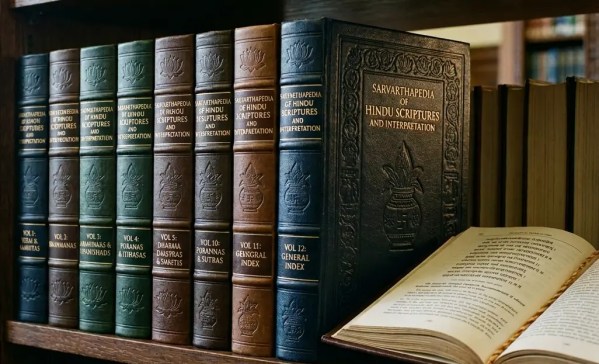
Rig Veda (ऋग्वेदः) Scholastic Commentary
Philosophy and Religion of Rigveda
Rigveda and Vedic Ritual Science: Yajna, Dharma and Spiritual Heritage
The Rigveda (ऋग्वेद) is the oldest and most revered of the Chaturveda (चतुर्वेद), the fourfold corpus of sacred Vedic knowledge consisting of the Rigveda, Yajurveda, Samaveda, and Atharvaveda. The word “Rigveda” is formed from Ṛc (ऋच्/ऋक्) and Veda (वेद). Traditional Sanskrit lexicons define it as “ऋच्यते स्तूयते इति ऋक्”, meaning “that by which praise is offered” or “that through which the deities are glorified.” The root idea of Ṛc is praise, eulogy, sacred utterance, or hymn, while Veda means knowledge, wisdom, revelation, or sacred learning. Thus, Rigveda literally signifies the “Knowledge embodied in sacred hymns of praise.” (See also: Rigveda (ऋग्वेदः, ऋक्, ऋच्): Meaning, Structure and Vedic Interpretation)
Ancient scholars described it as “मन्त्रब्राह्मणोभयात्मकः”, possessing both the character of Mantra (मन्त्र) and Brāhmaṇa (ब्राह्मण). In its most recognized form, however, the Rigveda refers to the Ṛksaṃhitā (ऋक्संहिता), the collection of sacred hymns revealed to ancient Ṛṣis (ऋषि) through divine insight (दृष्टि). Unlike ordinary literature, Vedic tradition regards these hymns as Apauruṣeya (अपौरुषेय)—not composed by human beings but perceived by enlightened seers in states of spiritual realization.
Historically, the Rigveda occupies a unique position among the literary monuments of humanity. Most scholars place the earliest layers of the text between approximately 4500 BCE and 4200 BCE, while some traditional and alternative chronologies propose much earlier dates. The geographical setting of the Rigvedic civilization was the region known as Sapta-Sindhu (सप्तसिन्धु), the land of the seven rivers, encompassing areas of present-day northwestern India and Pakistan. The hymns mention rivers such as Sindhu (Indus), Sarasvatī, Vipāśā (Beas), Śutudrī (Sutlej), Paruṣṇī (Ravi), Asiknī (Chenab), Yamunā, and occasionally Gaṅgā, preserving valuable evidence about the geography of ancient Vedic society.
The significance of the Rigveda begins with its status as the earliest surviving text of the Vedic-Aryan Civilization and one of the oldest continuously preserved literary traditions on earth. It is simultaneously a scripture, historical source, linguistic archive, ritual handbook, philosophical document, and cultural foundation. Every later development in Hindu thought—whether Vedānta, Mīmāṃsā, Yoga, Sāṅkhya, Purāṇic religion, or classical Sanskrit literature—can trace part of its intellectual ancestry to the Rigveda.
The Rigveda is arranged into ten Maṇḍalas (मण्डल), containing a traditional total of 1,028 Sūktas (सूक्त) and approximately 10,552 Ṛcas (ऋचः). Traditional authorities note that excluding the Bālakhilya (बालखिल्य) hymns reduces the total number of Sūktas to 1,017. The text is also divided into 64 Adhyāyas (अध्याय) and approximately 2,006 Vargas (वर्ग) according to another system of classification preserved in the Caraṇavyūha (चरणव्यूह) tradition.
The First Maṇḍala contains 191 Sūktas arranged in 24 Anuvākas (अनुवाक). It begins with the famous opening hymn:
“अग्निमीळे पुरोहितं यज्ञस्य देवम् ऋत्विजम्।”
This opening verse is of immense symbolic significance. Agni is invoked first because he is the Purohita (पुरोहित), the divine priest, messenger, and mediator between humans and gods. Agni occupies a central position in Vedic ritual and theology, serving as the mouth of the gods (देवानां मुखम्) through which sacrificial offerings reach the celestial realm.
The Second Maṇḍala, containing 43 Sūktas in four Anuvākas, is traditionally attributed to Gṛtsamada Śaunaka (गृत्समद शौनक). Ancient tradition records that Gṛtsamada belonged originally to the Āṅgirasa (आङ्गिरस) lineage and later became associated with the Bhṛgu (भृगु) lineage. The hymns of this Maṇḍala are predominantly dedicated to Agni and Indra and preserve some of the oldest ritual traditions of Vedic culture.
The Third Maṇḍala, comprising 62 Sūktas, belongs primarily to the sage Viśvāmitra (विश्वामित्र). Its enduring contribution is the celebrated Gāyatrī Mantra:
“तत्सवितुर्वरेण्यं भर्गो देवस्य धीमहि। धियो यो नः प्रचोदयात्॥”
This mantra became the most sacred prayer of Hindu civilization and remains central to Sandhyāvandana, Upanayana, and daily spiritual practice. Through this single verse, the Rigveda influenced countless generations over more than three millennia.
The Fourth Maṇḍala, attributed to Vāmadeva Gautama (वामदेव गौतम), contains 58 hymns exploring themes of divine power, cosmic sovereignty, and ritual efficacy. The language of these hymns often displays remarkable poetic sophistication and theological depth.
The Fifth Maṇḍala, consisting of 87 hymns, belongs largely to the descendants of the sage Atri (अत्रि). The hymns praise Agni, Indra, Mitra, Varuṇa, the Aśvins, and Savitṛ, reflecting the rich diversity of Vedic worship.
The Sixth Maṇḍala, attributed to Bharadvāja (भरद्वाज), contains 75 hymns. These verses are particularly important for understanding sacrificial ritual (यज्ञकर्म) and the social institutions of the Vedic tribes.
The Seventh Maṇḍala, revealed to Vasiṣṭha (वसिष्ठ), contains 104 hymns and possesses exceptional historical value. It includes references to the famous Daśarājña Yuddha (दशराज्ञ युद्ध)—the Battle of Ten Kings. This conflict, generally dated to the late second millennium BCE, provides the earliest detailed glimpse of political alliances, tribal warfare, kingship, and state formation in ancient India.
The Eighth Maṇḍala, associated with the Kaṇva (कण्व) tradition and related seers, contains 103 hymns. These hymns are rich in ritual symbolism and devotional fervor, particularly toward Indra.
The Ninth Maṇḍala is entirely devoted to Soma Pavamāna (सोम पवमान). Its 114 hymns celebrate Soma as a sacred drink, divine power, purifier, and source of immortality (अमृतत्व). No other section of the Rigveda is so completely unified around a single theological theme.
The Tenth Maṇḍala, containing 191 hymns, represents one of the greatest achievements of ancient human thought. Here appear the celebrated Puruṣa Sūkta (पुरुषसूक्त), Nāsadīya Sūkta (नासदीयसूक्त), Hiraṇyagarbha Sūkta (हिरण्यगर्भसूक्त), and Devī Sūkta (देवीसूक्त). These hymns move beyond ritual concerns into profound reflections on cosmology, metaphysics, creation, existence, and consciousness.
The Nāsadīya Sūkta (10.129) is especially remarkable. It asks whether anyone truly knows how the universe came into existence and concludes with philosophical humility regarding ultimate origins. Such speculative inquiry places the Rigveda among the earliest philosophical texts in world history.
One of the central concepts of the Rigveda is Ṛta (ऋत). This term signifies cosmic order, truth, harmony, and the underlying principle governing both nature and morality. The gods themselves are guardians of Ṛta, particularly Varuṇa, who is described as the upholder of universal law. Later Hindu concepts such as Dharma (धर्म) derive significantly from this Rigvedic notion of cosmic order.
The Rigveda’s Dharmik-Karmik worldview is often misunderstood as simple polytheism. The famous declaration:
“एकं सद्विप्रा बहुधा वदन्ति”
(“Truth is One; sages describe it in many ways”)
reveals a remarkable openness and philosophical inclusiveness that would shape Indian spirituality for millennia.
Among the principal deities of the Rigveda are Agni, Indra, Varuṇa, Mitra, Soma, Sūrya, Savitṛ, Uṣas, Maruts, Aśvins, Pūṣan, Rudra, and Viṣṇu. Each represents not merely a natural force but a cosmic principle. Agni embodies transformation, Indra heroic power, Varuṇa moral sovereignty, Soma divine inspiration, and Uṣas the renewal of life through dawn.
The significance of the Rigveda in relation to Yajña (यज्ञ) cannot be overstated. Traditional authorities declare:
“वेदा हि यज्ञार्थम् अभिप्रवृत्ताः”
“The Vedas are indeed directed toward sacrifice.”
The hymns of the Rigveda form the verbal component of Vedic sacrifice. During ritual performances, priests known as Hotṛ (होतृ) recited Rigvedic verses while offerings were made into the sacred fire. The entire sacrificial system rested upon the correct recitation of these mantras.
Vedic tradition recognizes two forms of sacrificial offering. One consists of oblations placed into the sacred fire (अग्नौ हूयमानाः), while the other consists of offerings made through sacred recitation and study. This latter form became known as Brahmayajña (ब्रह्मयज्ञ). According to Gṛhyasūtra traditions, every recitation of a Vedic verse nourishes the gods, ancestors (पितृ), and cosmic powers. Thus, study itself becomes an act of worship.
The Rigveda is equally important because of the extraordinary methods developed for its preservation. Long before widespread manuscript culture, the text was transmitted orally through complex systems designed to prevent corruption. The most basic forms were Saṃhitāpāṭha (संहितापाठ) and Padapāṭha (पदपाठ). More advanced methods included Kramapāṭha (क्रमपाठ), Jaṭāpāṭha (जटापाठ), and Ghanapāṭha (घनपाठ).
Ancient authorities enumerate eight major Vikṛtis (विकृतयः):
“जटा माला शिखा लेखा ध्वजो दण्डो रथो घनः।”
These methods involved intricate forward and backward combinations of words. For example, Jaṭāpāṭha repeats words in interwoven patterns, while Ghanapāṭha creates even more elaborate recitation sequences. Such techniques ensured that every syllable, accent, and phonetic detail remained unchanged for centuries.
The significance of this oral tradition is recognized worldwide. Linguists and textual scholars often regard Vedic preservation as one of the most precise systems of oral transmission ever devised. The survival of a text over three thousand years with such accuracy is one of humanity’s greatest intellectual achievements.
The Rigveda was transmitted through numerous Śākhās (शाखा) or recensional schools. Traditional accounts mention five principal branches:
Āśvalāyana (आश्वलायन)
Sāṅkhāyana (साङ्खायन)
Śākala (शाकल)
Bāṣkala (बाष्कल)
Māṇḍūkāyana (माण्डूकायन)
The traditional history of the Rigveda is inseparable from Vedavyāsa (वेदव्यास). According to Purāṇic accounts, the original Veda existed as a unified body of sacred knowledge. Seeing the decline of human memory and lifespan at the end of the Dvāpara Yuga, Vyāsa divided the Veda into four parts. The Rigveda was entrusted to Paila (पैल), who transmitted it through successive generations of disciples. Later teachers such as Indrapramati, Māṇḍūkeya, Śākalya, and Bāṣkala developed distinct recensional traditions.
The Rigveda is also indispensable for understanding ancient Indian society. Its hymns reveal a civilization based on pastoralism, agriculture, cattle wealth, and clan organization. Terms such as गो (cow), अश्व (horse), रथ (chariot), and धेनु (milch cow) occur frequently, demonstrating their economic importance. The prosperity of tribes was measured largely in cattle and horses.
Political institutions are reflected in terms such as Rājan (राजन्), Sabhā (सभा), and Samiti (समिति). These indicate that early Vedic society possessed organized assemblies and consultative institutions alongside hereditary leadership. Such references provide valuable evidence for the evolution of governance in ancient India.
The Rigveda shaped the later development of Saṃskṛta (संस्कृत) language and grammar. The linguistic tradition culminating in the work of Panini was built upon the preservation and interpretation of Vedic speech. Without the Rigveda, much of the history of Sanskrit and Indo-European linguistics would remain inaccessible.
Traditional texts assign additional symbolic significance to the Rigveda. It is described as “देवदैवत्य”, especially associated with divine powers, and is connected with Gāyatrī Chandas (गायत्री छन्दस्), one of the most sacred Vedic metres. Certain ritual manuals prescribe special observances connected with its recitation, while astrological traditions associate it with Bṛhaspati (बृहस्पति) and auspicious ritual timings.
For the Vedic tradition, however, the greatest significance of the Rigveda lies not merely in its antiquity but in its role as Śruti (श्रुति)—that which is heard from the divine source. It is regarded as eternal knowledge perceived by the Ṛṣis and transmitted through an unbroken lineage of teachers and students. The study of the Rigveda was therefore not considered an academic exercise alone but a sacred discipline leading to spiritual refinement, preservation of Dharma, and participation in the cosmic order established by Ṛta.
Rig-Veda as interpreted by Caraṇavyūha (चरणव्यूह)
The Caraṇavyūha (चरणव्यूह), preserves ancient information concerning the divisions of the Vedas, the methods of Vedic study (अध्ययन), the systems of recitation (पारायण), the development of Vedic schools (शाखा), and the genealogies of teachers who transmitted the Rigvedic corpus from generation to generation.
The text begins with the statement:
“चातुर्वेद्यं चत्वारो वेदा विज्ञाता भवन्ति—ऋग्वेदो यजुर्वेदः सामवेदोऽथर्ववेदश्च।”
This means that true mastery of sacred learning (चातुर्वेद्य) consists in the knowledge of the four Vedas—Rigveda (ऋग्वेद), Yajurveda (यजुर्वेद), Samaveda (सामवेद), and Atharvaveda (अथर्ववेद). Although Vedic revelation is ultimately one, it came to be organized into four principal collections for purposes of preservation and ritual application.
The text then proceeds to discuss the Rigveda specifically and states:
“तत्र ऋग्वेदस्याष्टभेदा भवन्ति”
The expression here refers to the various modes of Rigvedic study, transmission, and recitational preservation. The tradition identifies systems such as चर्चा (Charcā), श्रावक (Śrāvaka), चर्चक (Charchaka), श्रवणीयपार (Śravaṇīyapāra), क्रमपार (Kramapāra), क्रमजटा (Kramajaṭā), and क्रमदण्ड (Kramadaṇḍa). These are not separate texts but pedagogical and recitational methods through which the sacred sound of the Veda is preserved.
The term चर्चा denotes oral repetition and recitation under the guidance of a teacher. The श्रावक is the preceptor who recites, while the चर्चक is the disciple who repeats and memorizes. Through this teacher–student transmission, known as गुरु-शिष्य-परम्परा, the Veda was preserved long before written manuscripts became common.
The passage next speaks of चतुष्पारायण (four forms of recitational completion). These include:
- संहितापाठ (Saṃhitāpāṭha) – continuous recitation.
- पदपाठ (Padapāṭha) – word-by-word recitation.
- क्रमपाठ (Kramapāṭha) – sequential recitation.
- Advanced recitations such as जटा (Jaṭā) and दण्ड (Daṇḍa).
These methods collectively ensured the absolute accuracy of Vedic transmission.
The चरणव्यूह then names five principal branches (शाखाः) of the Rigveda:
आश्वलायनी, सांख्यायनी, शाकला, बाष्कला, माण्डूका।
These five schools represent the principal traditions through which the Rigveda was preserved and studied.
Āśvalāyana Śākhā (आश्वलायन शाखा)
The Āśvalāyana tradition became associated with the Aitareya Brāhmaṇa, Aitareya Āraṇyaka, and the Āśvalāyana Sūtra. It played an important role in preserving ritual traditions and remains one of the most influential Rigvedic schools known from surviving literature.
Sāṅkhāyana Śākhā (साङ्खायन शाखा)
The Sāṅkhāyana lineage is closely connected with the Kauṣītaki Brāhmaṇa, Kauṣītaki Āraṇyaka, and Sāṅkhāyana Sūtra. This branch preserves distinctive ritual interpretations and textual traditions.
Śākala Śākhā (शाकल शाखा)
The Śākala recension is the only complete recension of the Rigveda surviving today. Nearly all modern printed editions of the Rigveda are based upon the Śākala tradition. It became the dominant vehicle for transmitting the Rigvedic Saṃhitā.
Bāṣkala Śākhā (बाष्कल शाखा)
The Bāṣkala recension preserved additional hymns known as the Bālakhilya Sūktas (बालखिल्यसूक्तानि). Ancient authorities frequently compare the Śākala and Bāṣkala traditions to understand textual variations within the Rigveda.
Māṇḍūkāyana Śākhā (माण्डूकायन शाखा)
Though now largely extinct, the Māṇḍūkāyana tradition is remembered in Vedic genealogies and was once an important branch of Rigvedic learning.
The Caraṇavyūha further provides numerical details about the Rigveda:
“अध्यायानां चतुःषष्टिः”
The Rigveda contains 64 Adhyāyas (chapters).
“मण्डलानि दशैव तु”
It consists of ten Maṇḍalas (Books).
“वर्गाणां परिसंख्यातं द्वे सहस्रे षडुत्तरे”
The number of Vargas (sections) is given as 2,006.
“सहस्रमेकं सूक्तानां निर्विशङ्कं विकल्पितम् । दश सप्त च पठ्यन्ते”
The number of hymns is traditionally counted as 1,017 excluding the Bālakhilya hymns and 1,028 when they are included.
The चरणव्यूह also records traditional calculations of the number of Ṛcas (verses), Padas (metrical quarters), and recitational units. Such calculations were not merely statistical exercises. They functioned as safeguards against textual corruption. If even a single syllable were lost, altered, or added, the traditional numerical counts would immediately reveal the discrepancy.
Particularly significant is the statement:
“ऋचां दश सहस्राणि ऋचां पञ्चशतानि च”
This refers to the traditional reckoning of approximately 10,500 verses within the Rigveda.
The Caraṇavyūha (चरणव्यूह) also discusses different categories of hymns according to the number of verses they contain. It counts one-verse hymns (एकर्च), two-verse hymns (द्विऋच), three-verse hymns (त्रिऋच), and so on. Such classification demonstrates the extraordinary analytical precision of Vedic scholarship.
A major theme of the passage is the concept of चरण (Charaṇa). The word literally means a Vedic school or recensional lineage. The text explains:
“वेदपारायणचतुर्विभागात् चरण उच्यते”
A Charaṇa is a tradition organized around a specific method of Vedic recitation and study. The collective arrangement of these schools is called Caraṇavyūha/चरणव्यूह, meaning the systematic grouping of Vedic traditions.
The चरणव्यूह then raises a philosophical question: If there are four Vedas, how can Vedic revelation be fundamentally one?
The answer is given through an Āraṇyaka statement:
“सर्वे वेदाः सर्वे घोषाः एकैव व्याहृतिः”
“All the Vedas, all sacred sounds, are ultimately one sacred utterance.”
This reflects the Vedic belief that the four Vedas are manifestations of a single divine revelation. Their division is practical rather than essential.
The passage next turns to the famous account preserved in the Bhāgavata Purāṇa (12.6) concerning the division of the Vedas by Vedavyāsa (वेदव्यास).
According to the narrative, human beings gradually experienced:
- क्षीणायु (shortened lifespan)
- क्षीणसत्य (decline of truthfulness)
- दुर्मेधा (weakening of memory and intellect)
Recognizing these changes, the divine sage Vyāsa divided the original Veda into four parts to ensure its preservation.
The Bhāgavata states:
“ऋगथर्वयजुःसाम्नोराशीनुद्धृत्य वर्गशः । चतस्रः संहिताश्चक्रे मन्त्रैर्मणिगणा इव ॥”
Gathering the collections of Rig, Yajus, Sāman, and Atharvan mantras, Vyāsa arranged them into four Saṃhitās, just as jewels are arranged into a necklace.
Vyāsa then entrusted each Veda to a principal disciple:
| Veda | Disciple |
|---|---|
| ऋग्वेद | पैल (Paila) |
| यजुर्वेद | वैशम्पायन (Vaiśampāyana) |
| सामवेद | जैमिनि (Jaimini) |
| अथर्ववेद | सुमन्तु (Sumantu) |
For Rigvedic history, Paila (पैल) occupies a central place. He became the first great transmitter of the Rigvedic Saṃhitā after Vyāsa.
The Bhāgavata of Bopa Deva further explains that Paila taught the Rigveda to Indrapramati (इन्द्रप्रमति) and Bāṣkala (बाष्कल).
Indrapramati transmitted the tradition to Māṇḍūkeya (माण्डूकेय).
Māṇḍūkeya transmitted it to Śākalya (शाकल्य).
Śākalya subsequently divided the Saṃhitā into five branches and instructed disciples such as:
- वात्स्य (Vātsya)
- मुद्गल (Mudgala)
- शालीय (Śālīya)
- गोखल्य (Gokhalya)
- शिशिर (Śiśira)
Another disciple, Jātūkarṇa (जातूकर्ण), prepared a recension incorporating Nirukta (etymological explanations) and taught it to:
- बालाक (Bālāka)
- पैङ्ग्य (Paiṅgya)
- वेताल (Vetāla)
- विरज (Viraja)
The Bāṣkala tradition preserved the Bālakhilya Saṃhitā, which was transmitted through additional teachers.
The Purāṇa concludes by praising these sages as preservers of the Bahvṛca Saṃhitā (बह्वृचसंहिता), another traditional name for the Rigveda because of its abundance of Ṛks (rigs).
The same tradition appears in the Viṣṇu Purāṇa, which states:
“ऋग्वेदश्रावकं पैलं सञ्जग्राह महामतिः”
Vyāsa selected Paila as the principal exponent of the Rigveda.
The passage also provides valuable information concerning the later Vedic schools. The Māṇḍūkāyana, Sāṅkhāyana, and Āśvalāyana lineages are traced through long genealogical successions. Their associated texts include:
- Aitareya Brāhmaṇa
- Aitareya Āraṇyaka
- Āśvalāyana Sūtra
- Kauṣītaki Brāhmaṇa
- Kauṣītaki Āraṇyaka
- Sāṅkhāyana Sūtra
Together these works form the ritual, theological, and philosophical literature attached to the Rigveda.
The significance of this entire tradition is profound. It demonstrates that the Rigveda was never regarded as merely a collection of ancient hymns. It was understood as a living sacred revelation preserved through carefully organized Caraṇas, transmitted by illustrious Ṛṣis, protected through sophisticated Pāṭhas, and interpreted through Brāhmaṇas, Āraṇyakas, Sūtras, and later commentarial traditions.
Recitation Style of Rid Veda Samhita
One of the most important traditional discussions concerning the ritual significance of the Rigveda (ऋग्वेद), the concept of Brahmayajña (ब्रह्मयज्ञ), the systems of Vedic recitation (पारायण), the methods of preserving Vedic texts through Prakṛti (प्रकृति) and Vikṛti (विकृति) recitations, and the numerical structure and branch traditions of the Rigveda. It demonstrates that the Rigveda was not merely a collection of hymns but a living ritual corpus whose study itself constituted a sacred act of worship.
The discussion could begins with the foundational Vedic principle:
“वेदा हि यज्ञार्थम् अभिप्रवृत्ताः”
“The Vedas are indeed directed toward Yajña.”
This statement encapsulates the classical Vedic understanding that the primary purpose of Vedic revelation is the performance of Yajña (यज्ञ), the sacrificial act through which cosmic order (ऋत) is maintained and communication between humans and the divine realm is established. The Vedas provide the mantras, procedures, and theological framework that make sacrifice effective.
Yajñas are divided in two categories:
“ते यज्ञाः द्विविधाः । अग्नौ हूयमाना, अनग्नौ प्रहुताः।”
Yajñas are of two kinds:
- Agnau Hūyamānāḥ (अग्नौ हूयमानाः) – sacrifices in which offerings are placed into the sacred fire.
- Anagnau Prahutāḥ (अनग्नौ प्रहुताः) – sacrifices performed without a physical fire.
The first category includes the great Śrauta sacrifices, such as Agnihotra, Darśapūrṇamāsa, Somayāga, Vājapeya, and Aśvamedha. The second category includes forms of sacred learning and recitation, particularly Brahmayajña, in which the daily study of the Veda itself becomes a sacrificial offering.
Thus
“अनग्नौ प्रहुता नित्याभ्यासो ब्रह्मयज्ञः पारायणं च”
Daily Vedic study (नित्याभ्यास) and recitation (पारायण) are themselves forms of Brahmayajña.
This idea is central to Vedic culture. The act of reciting sacred mantras is not regarded merely as education but as a ritual offering equal in sanctity to oblations poured into the sacrificial fire.
The authority for this doctrine is drawn from the Gṛhyasūtra, which states:
“यदृचोऽधीते स्वधा अस्य पितॄन् उपक्षरन्ति”
“When one studies the Rigvedic hymns, the ancestors are nourished by Svadhā.”
It explains the ritual value of each Veda:
- Rigvedic recitation satisfies the ancestors (पितृ).
- Yajurvedic recitation is equivalent to offering clarified butter (घृताहुति).
- Sāmavedic recitation corresponds to offerings of honey (मध्वाहुति).
- Atharvavedic recitation corresponds to offerings of Soma (सोमाहुति).
Thus the Veda itself becomes a form of sacrifice. Every recited mantra is regarded as an offering, and every act of study becomes participation in the cosmic order established by the gods.
We may mention here the eightfold divisions (अष्टभेदाः) of the Rigveda. A variant reading refers to eight locations or textual traditions (अष्टस्थानानि). These include:
- शाकल (Śākala)
- बाष्कल (Bāṣkala)
- ऐतरेय ब्राह्मण (Aitareya Brāhmaṇa)
- ऐतरेय आरण्यक (Aitareya Āraṇyaka)
- साङ्खायन (Sāṅkhāyana)
- माण्डूक (Māṇḍūka)
- कौषीतकि ब्राह्मण (Kauṣītaki Brāhmaṇa)
- कौषीतकि आरण्यक (Kauṣītaki Āraṇyaka)
Together these constitute the principal textual framework through which Rigvedic tradition was transmitted and interpreted.
“तस्मात् ब्रह्मयज्ञार्थे पारायणार्थे च ऋग्वेदस्य अध्ययनं कर्त्तव्यम्”
Therefore the study of the Rigveda is necessary both for Brahmayajña and for Vedic recitation.
This statement reflects the ancient conviction that Vedic learning was itself a religious duty (धर्म), not merely an intellectual pursuit.
The Caraṇavyūha discusses the process of Vedic learning through four related concepts:
- चर्चा (Carcā)
- श्रावक (Śrāvaka)
- चर्चक (Carcaka)
- श्रवणीयपार (Śravaṇīyapāra)
Carcā refers to the oral repetition of Vedic sounds. The text explains that Vedic pronunciation is produced through the coordinated action of the palate, lips, and vocal organs (ताल्वोष्ठपुटव्यापार).
The Śrāvaka is the teacher who recites the text.
The Carcaka is the disciple who repeats it.
The completion of the entire recitation constitutes Śravaṇīyapāra, the successful mastery of the text.
These terms illustrate the oral character of Vedic education. Knowledge was transmitted directly from teacher to student through sound rather than writing.
The Caraṇavyūha then turns to the doctrine of Pārāyaṇa (पारायण). It explains that recitation exists in two fundamental forms:
- Prakṛti (प्रकृति) recitation.
- Vikṛti (विकृति) recitation.
Prakṛti Pāṭha
The passage defines:
“प्रकृतिः संहिता”
The natural or original form is the Saṃhitā.
This occurs in two forms:
- Rūḍha Saṃhitā (रूढा संहिता)
Example:
“अग्निमीळे पुरोहितम्”
- Yogā Saṃhitā (योगा संहिता)
Example:
“अग्निम् ईळे पुरोहितम्”
The first preserves the phonetic sandhi, while the second separates the words analytically.
These two forms represent the foundation of all Vedic recitation.
The passage then enumerates the four principal forms of Pārāyaṇa:
क्रमपारः, क्रमपदः, क्रमजटा, क्रमदण्डः
These are advanced methods of preserving the Vedic text through systematic repetition.
Kramapāṭha (क्रमपाठ)
The text cites:
“अनुलोमविलोमाभ्यां द्विवारं हि पठेत् क्रमम्”
In Kramapāṭha, words are recited sequentially, both forward and backward, creating a chain that preserves textual accuracy.
Example:
- अग्निम् ईळे
- ईळे पुरोहितम्
- पुरोहितम् यज्ञस्य
and so forth.
This method protects the continuity of the text and reveals the relationship between adjacent words.
Vikṛti Recitations
The passage then introduces the famous eight Vikṛtis:
“जटा माला शिखा लेखा ध्वजो दण्डो रथो घनः”
These eight are:
- जटा (Jaṭā)
- माला (Mālā)
- शिखा (Śikhā)
- लेखा (Lekhā)
- ध्वज (Dhvaja)
- दण्ड (Daṇḍa)
- रथ (Ratha)
- घन (Ghana)
These complex recitations are among the greatest achievements of ancient oral scholarship.
Jaṭāpāṭha
The text explains:
“क्रमे यथोक्ते पदजातमेव द्विरभ्यसेत्”
Words are recited in forward and reverse combinations.
For example:
- अग्निमीळे
- ईळेऽग्निम्
- अग्निमीळे
This creates a woven pattern resembling braided hair (जटा), hence the name.
Jaṭāpāṭha is one of the most powerful safeguards against textual corruption.
Daṇḍapāṭha
The text defines:
“क्रममुक्तं विपर्यस्य पुनश्च क्रममुत्तरम्”
The recitation proceeds forward, backward, and forward again in a linear sequence resembling a staff (दण्ड).
Mālāpāṭha
Like a garland (माला), words are linked together in circular arrangements.
Śikhāpāṭha
A recitation pattern resembling a crest or topknot (शिखा).
Lekhāpāṭha
Words are written, as it were, through structured forward and reverse arrangements.
Dhvajapāṭha
The arrangement resembles a banner (ध्वज) extending from beginning to end.
Rathapāṭha
The recitation advances and returns like the movement of a chariot (रथ).
Ghanapāṭha
The most elaborate of all recitations.
The Caraṇavyūha says:
“जटामुक्त्वा विपर्यस्य घनमाहुर्मनीषिणः”
The wise regard Ghanapāṭha as an even more advanced form built upon Jaṭā recitation.
To this day, Ghanapāṭhins are regarded as among the most accomplished Vedic scholars.
The passage summarizes:
“जटाशिखाघनाः प्रोक्ता क्रमपूर्वा मनीषिभिः”
All these advanced forms are rooted in Kramapāṭha.
The text then explains that proper Vedic study consists of four major recitational accomplishments:
- संहितापारायण
- पदपारायण
- जटापारायण
- क्रमदण्डपारायण
Mastery of these constituted the highest level of Vedic scholarship.
The discussion then returns to the five principal Rigvedic branches:
आश्वलायनी, सांख्यायनी, शाकला, बाष्कला, माण्डूका
These five traditions preserved the Rigveda through different lineages and methods of recitation.
The passage also records traditional numerical statistics of the Rigveda:
- 64 Adhyāyas (अध्यायाः)
- 10 Maṇḍalas (मण्डलानि)
- 2006 Vargas (वर्गाः)
- 1017 Sūktas without Bālakhilyas
- 1028 Sūktas including Bālakhilyas
- Approximately 10,552 Ṛcas
Such calculations served as textual safeguards. Any loss, addition, or alteration could be detected through these numerical systems.
The cCaraṇavyūha records detailed counts of Padas, Ṛcas, and Vargas for different recensions such as the Śākala, Āśvalāyana, and Sāṅkhāyana traditions. These elaborate calculations demonstrate the extraordinary precision with which Vedic scholars monitored every aspect of the text.
The passage then discusses the Bālakhilya Sūktas, eleven supplementary hymns preserved in certain traditions. Although they are included in some counts, they are often excluded from standard Pārāyaṇa calculations.
The Muktikopaniṣad states:
“ऋग्वेदस्य तु शाखाः स्युरेकविंशतिसंख्यकाः”
“The Rigveda possesses twenty-one branches.”
Most of these are now lost, surviving only through references in later literature.
A famous verse declares:
“ऋग्वेदो देवदैवत्यो यजुर्वेदस्तु मानुषः । सामवेदः स्मृतः पैत्रः…”
Here the Rigveda is described as particularly connected with the divine realm (देवदैवत्य).
Jyotiṣa traditions further state:
“ऋग्वेदाधिपतिर्जीवः”
Bṛhaspati (Jupiter), known as Jīva, is regarded as the presiding planetary deity of the Rigveda.
Another traditional description portrays the Rigveda symbolically:
“ऋग्वेदः पद्मपत्राक्षो गायत्रः सोमदैवतः । आत्रेयगोत्रः”
The Rigveda is envisioned as lotus-eyed (पद्मपत्राक्ष), associated with the Gāyatrī metre (गायत्री छन्दस्) and the deity Soma (सोम).
Read More: Rig Veda (ऋग्वेदः) Shakala Samhita: (1028-Volume) Scholastic Commentary
Rig-Vedic Connected Vocabulary
ऋग्वेदः, बह्वृचः, मन्त्रसंहिता, श्रुतिप्रधानः, वेदभेदः, ऋच्यते, स्तूयते, ऋक्, मन्त्रः, ब्राह्मणम्, मन्त्रब्राह्मणात्मकः, संहितारूपः, ग्रन्थराजः, अपौरुषेयः, श्रुतिस्वरूपः, ऋषिदृष्टः, देवतामयः, छन्दोमयः, यज्ञप्रधानः, ब्रह्मविद्यागर्भितः, धर्ममूलम्, वैदिकपरम्परायाः प्राचीनतमः निधिः।
दशमण्डलात्मकः, चतुर्विंशत्यानुवाकयुक्तः प्रथममण्डलः, “अग्निमीळे” इत्यारभ्य अग्निदेवताप्रधानसूक्तसमूहः, एकनवतिशतसूक्तसमन्वितः, शतर्चिकर्षिदृष्टः, अध्यायोपाकरणोत्सर्गविनियुक्तः, वैदिककर्मप्रवर्तकः, अग्निस्तुतिपरः, ऋत्विग्वन्दितः, देवयजनस्य प्रारम्भबिन्दुः।
द्वितीयमण्डलम्, शौनकगृत्समददृष्टम्, चतुर्थानुवाकात्मकम्, “त्वमग्ने” इत्यादिसूक्तसमन्वितम्, त्रिचत्वारिंशत्सूक्तयुक्तम्, आग्नेयप्रधानम्, उपाकरणोत्सर्गविनियुक्तम्, आङ्गिरसपरम्परासम्बद्धम्, भार्गवपरम्परासंश्रितम्। गृत्समदः, शौनहोत्रपुत्रः, आङ्गिरसकुलसम्भूतः, इन्द्रेण मोचितः, पश्चात् भार्गवत्वं प्राप्तः, द्वितीयमण्डलद्रष्टा, ऋषिप्रवरः, मन्त्रद्रष्टा, देवसंवादस्य साक्षी।
तृतीयमण्डलम्, विश्वामित्रदृष्टम्, पञ्चानुवाकयुक्तम्, “सोमस्य मे” इत्यादिसूक्तसमूहयुक्तम्, द्विषष्टिसूक्तात्मकम्, आग्नेयदेवतासम्बद्धम्, त्रैष्टुभछन्दोयुक्तम्, प्रातरनुवाकविनियुक्तम्, अश्विनशस्त्रसम्बद्धम्, गायत्रीमन्त्रस्य प्रतिष्ठानभूमिः, विश्वामित्रब्रह्मर्षेः तपोवैभवस्य द्योतकः।
चतुर्थमण्डलम्, वामदेवर्षिदृष्टम्, पञ्चानुवाकात्मकम्, “त्वां ह्यग्ने” इत्यादिसूक्तसमन्वितम्, अष्टपञ्चाशत्सूक्तयुक्तम्, अग्निस्तुतिप्रधानम्, आद्याध्यायोपाकरणविनियुक्तम्, मण्डलहोमसम्बद्धम्, ऋषिज्ञानस्य, देवबोधस्य, मन्त्रदर्शनस्य च गौरवप्रकाशकः।
पञ्चममण्डलम्, आत्रेयबुधगविष्ठिराद्यृषिदृष्टम्, षडनुवाकात्मकम्, “अबोध्यग्निः” इत्यादिसूक्तसमूहयुक्तम्, सप्ताशीतिसूक्तात्मकम्, आग्नेयदेवतामयम्, त्रैष्टुभछन्दोविशिष्टम्, अश्विनशस्त्रविनियुक्तम्, अध्यायोत्सर्जन्युपाकरणसम्बद्धम्, आत्रेयपरम्परायाः वैदिकवैभवप्रकाशकः।
षष्ठमण्डलम्, भरद्वाजदृष्टम्, षडनुवाकात्मकम्, “त्वं ह्यग्ने प्रथमः” इत्यादिसूक्तसमन्वितम्, पञ्चसप्ततिसूक्तयुक्तम्, अग्निक्रतुविशिष्टम्, त्रैष्टुभछन्दोमयम्, प्रातरनुवाकविनियुक्तम्, आद्योपाकरणसम्बद्धम्, भरद्वाजगोत्रीयवैदिकपरम्परायाः प्रमुखप्रमाणम्।
सप्तममण्डलम्, वसिष्ठदृष्टम्, षडनुवाकयुक्तम्, “अग्निं नरः” इत्यादिसूक्तात्मकम्, चतुर्धिकशतसूक्तसमन्वितम्, आग्नेयप्रधानम्, बहुविनियोगयुक्तम्, राजर्षि-संवादसम्बद्धम्, दशराज्ञयुद्धसन्दर्भसंकेतकम्, वसिष्ठब्रह्मर्षेः आध्यात्मिकप्रतिभायाः प्रकाशकः।
अष्टममण्डलम्, मेधातिथिमेध्यातिथ्यादिनानर्षिदृष्टम्, दशानुवाकात्मकम्, “मा चिदन्यत्” इत्यादिसूक्तयुक्तम्, त्र्यधिकशतसूक्तसमन्वितम्, इन्द्रादिदैवत्यमयम्, महाव्रतविनियुक्तम्, स्तोत्रप्रधानम्, ऋत्विग्वेदपरम्परासम्पोषकम्।
नवममण्डलम्, पावमानमण्डलम्, वैश्वामित्रमधुच्छन्दआद्यृषिदृष्टम्, सप्तानुवाकयुक्तम्, “स्वादिष्ठया” इत्यादिसूक्तसमन्वितम्, चतुर्दशाधिकशतसूक्तात्मकम्, सोमदेवताप्रधानम्, पवमानस्तोत्रमयम्, उपाकर्मविनियुक्तम्, सोमयागस्य, सोमसंस्कारस्य, सोमदैवत्यस्य च वैदिकहृदयम्।
दशममण्डलम्, आप्त्यत्रिताद्यृषिदृष्टम्, द्वादशानुवाकात्मकम्, “अश्वे वृहन्” इत्यादिसूक्तयुक्तम्, एकनवतिशतसूक्तसमन्वितम्, आग्नेयादिदेवतामयम्, प्रातरनुवाकविनियुक्तम्, पुरुषसूक्तस्य, नासदीयसूक्तस्य, हिरण्यगर्भसूक्तस्य, मृत्युतत्त्वचिन्तनस्य, सृष्टिदर्शनस्य च प्रमुखस्रोतः।
दशसु मण्डलेषु, प्रथमे १९१, द्वितीये ४३, तृतीये ६२, चतुर्थे ५८, पञ्चमे ८७, षष्ठे ७५, सप्तमे १०४, अष्टमे १०३, नवमे ११४, दशमे १९१ सूक्तानि, समष्टितः १०२८ सूक्तानि, बालखिल्यसहितानि, तद्व्यतिरिक्तानि १०१७ सूक्तानि, ऋषिदृष्टानि, देवताप्रणीतानि, छन्दोबद्धानि, श्रुतिसम्प्रदायसंरक्षितानि।
अष्टाष्टकात्मकविभागः, प्रत्येकाष्टके अष्टाध्यायाः, चतुःषष्ट्यध्यायसमन्वितः, द्विसहस्रषट्वर्गपरिमितः, चरणव्यूहोक्तसंख्यायुक्तः, पदपाठक्रमपाठसंरक्षितः, शाखापरम्परासमन्वितः, वेदाङ्गाधारितः, गुरुमुखपरम्परापालितः।
चातुर्वेद्ये, ऋग्वेदः, यजुर्वेदः, सामवेदः, अथर्ववेदः, एते चत्वारः वेदाः, ऋग्वेदस्य चर्चा, श्रावकः, चर्चकः, श्रवणीयपारः, क्रमपारः, क्रमजटा, क्रमदण्डः, इति पारायणभेदाः, वैदिकाध्ययनस्य, श्रुतिसंरक्षणस्य, स्वरपरम्परायाः च आधारभूताः।
आश्वलायनी, सांख्यायनी, शाकला, बाष्कला, माण्डूका, इति पञ्चशाखाः, ऋग्वैदिकपरम्परायाः मुख्यप्रवाहाः, मन्त्रसंरक्षणकर्तारः, ब्राह्मणारण्यकसूत्रपरम्पराधाराः, गुरुपरम्परासंवर्धकाः, श्रौतगृह्यकर्मप्रवर्तकाः।
व्यासः, पराशरपुत्रः, सत्यवत्याः सुतः, वेदविभाजकः, चतुर्वेदसंहिताकर्ता, पैलाय ऋग्वेदम्, वैशम्पायनाय यजुर्वेदम्, जैमिनये सामवेदम्, सुमन्तवे अथर्ववेदम् अददात्, इति वैदिकपरम्परायाः महत्त्वपूर्णः प्रसंगः, श्रुतिसंरक्षणस्य दिव्यव्यवस्था, धर्मगुप्तेः महानुपायः।
पैलः, इन्द्रप्रमतिः, बाष्कलिः, माण्डूकेयः, शाकल्यः, देवमित्रः, जातूकर्णः, वात्स्यः, मुद्गलः, शालीयः, गोखलः, शिशिरः, एते ऋग्वैदिकाचार्याः, शाखाप्रवर्तकाः, संहिताव्याख्यातारः, श्रुतिपरम्परायाः धारकाः, वेदविद्यायाः अमरसंरक्षकाः।
वेदाः, यज्ञार्थमभिप्रवृत्ताः, यज्ञः, द्विविधः, अग्नौ हूयमानः, अनग्नौ प्रहुतः, वैतानिकः, ब्रह्मयज्ञः, नित्याध्ययनम्, पारायणम्, मन्त्रजपः, ऋचापाठः, एते सर्वे यज्ञस्वरूपाः, धर्ममार्गप्रवर्तकाः, देवतृप्तिकराः, पितृतर्पणहेतवः।
“यदृचोऽधीते स्वधा अस्य पितॄन् उपक्षरन्ति” इति श्रुतिवचनम्, ऋग्वेदाध्ययनस्य पितृतर्पणरूपत्वम्, देवपूजारूपत्वम्, ब्रह्मयज्ञस्वरूपत्वम्, नित्यकर्मत्वम्, मोक्षोपायत्वम् च प्रतिपादयति।
संहिता, पदपाठः, क्रमपाठः, जटापाठः, मालापाठः, शिखापाठः, लेखापाठः, ध्वजपाठः, दण्डपाठः, रथपाठः, घनपाठः, एते पाठभेदाः, श्रुतिसंरक्षणस्य अद्भुतविज्ञानम्, शब्दरक्षणस्य अनुपमपद्धतिः, वैदिकस्मृतिशक्तेः विश्वविख्यातप्रमाणम्।
ऋग्वेदः, देवदैवत्यः, गायत्रीछन्दोमयः, सोमदैवत्यः, पद्मपत्राक्षः, आत्रेयगोत्रसम्बद्धः, जीवाधिपत्यविशिष्टः, मन्त्रब्रह्मस्वरूपः, यज्ञस्य प्राणः, श्रुतेः मूलम्, धर्मस्य आधारः, भारतीयसंस्कृतेः आद्यग्रन्थः, सनातनपरम्परायाः अमरप्रदीपः।
Rig Veda Samhita
- Rig Veda First Mandala [ऋग्वेद ]
- Rig Veda Second Mandala ऋग्वेद
- Rig Veda Third Mandala [ऋग्वेद]
- Rig Veda Forth Mandala[ऋग्वेद]
- Rig Veda Fifth Mandala [ऋग्वेद]
- Rig Veda Sixth Mandala [ऋग्वेद]
- Rig Veda Seventh Mandala[ऋग्वेद]
- Rig Veda Eighth Mandala [ऋग्वेद]
- Rig Veda Ninth Mandala [ऋग्वेद]
- Rig Veda Tenth Mandala [ऋग्वेद]