Skip to content

ADVOCATETANMOY LAW LIBRARY

Research & Library Database

Primary Menu
  • News
  • Opinion
  • Countries198
    • National Constitutions: History, Purpose, and Key Aspects
  • Judgment
  • Book
  • Legal Brief
    • Legal Eagal
  • LearnToday
  • HLJ
    • Supreme Court Case Notes
    • Daily Digest
  • Sarvarthapedia
    • Sarvarthapedia (Core Areas)
    • Systemic-and-systematic
    • Volume One
05/04/2026

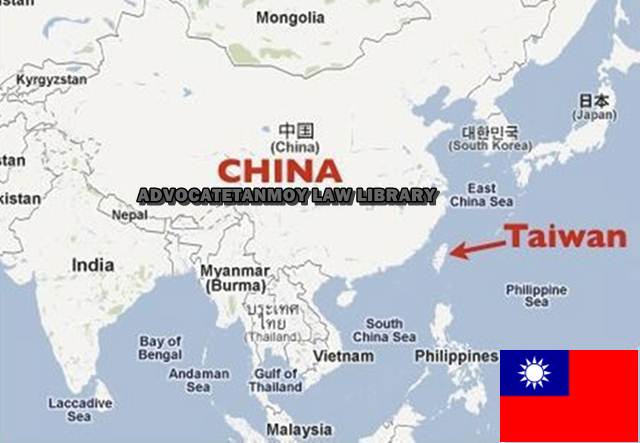
Taiwan Travel Act-2018

The United States considers any effort to determine the future of Taiwan by other than peaceful means, including by boycotts or embargoes, a threat to the peace and security of the Western Pacific area and of grave concern to the United States.
advtanmoy 02/07/2020 3 minutes read

© Advocatetanmoy Law Library

  • Share on WhatsApp (Opens in new window) WhatsApp
  • Share on X (Opens in new window) X
  • Share on Facebook (Opens in new window) Facebook
  • Share on Telegram (Opens in new window) Telegram
china-taiwan

Home » Law Library Updates » Taiwan Travel Act-2018

The US Law

One Hundred Fifteenth Congress of the United States of America

At the Second Session

Read Next

  • Art 72 of the COI: Presidential Power of Pardon, Remission and Commutation
  • Biblical Basis for Slavery: Old and New Testament Laws, Narratives, and Interpretations
  • America’s Defence Preparedness in April 2026: Hypersonic Missiles, Iran War, and Defense Strategy

Begun and held at the City of Washington on Wednesday, the third day of January, two thousand and eighteen

H. R. 535

Signed into law by President Donald Trump on March 16, 2018

Read Next

  • Art 72 of the COI: Presidential Power of Pardon, Remission and Commutation
  • Biblical Basis for Slavery: Old and New Testament Laws, Narratives, and Interpretations
  • America’s Defence Preparedness in April 2026: Hypersonic Missiles, Iran War, and Defense Strategy


AN ACT

To encourage visits between the United States and Taiwan at all levels, and for other purposes.

1.Short title

Read Next

  • Art 72 of the COI: Presidential Power of Pardon, Remission and Commutation
  • Biblical Basis for Slavery: Old and New Testament Laws, Narratives, and Interpretations
  • America’s Defence Preparedness in April 2026: Hypersonic Missiles, Iran War, and Defense Strategy

This Act may be cited as the Taiwan Travel Act.

2.Findings

Congress finds the following:

(1)The Taiwan Relations Act (22 U.S.C. 3301 et seq.), enacted in 1979, has continued for 37 years to be a cornerstone of relations between the United States and Taiwan and has served as an anchor for peace and security in the Western Pacific area.

(2)The Taiwan Relations Act declares that peace and stability in the Western Pacific area are in the political, security, and economic interests of the United States and are matters of international concern.

(3)The United States considers any effort to determine the future of Taiwan by other than peaceful means, including by boycotts or embargoes, a threat to the peace and security of the Western Pacific area and of grave concern to the United States.

(4)Taiwan has succeeded in a momentous transition to democracy beginning in the late 1980s and has been a beacon of democracy in Asia, and Taiwan’s democratic achievements inspire many countries and people in the region.

(5)Visits to a country by United States Cabinet members and other high-ranking officials are an indicator of the breadth and depth of ties between the United States and such country.

(6)Since the enactment of the Taiwan Relations Act, relations between the United States and Taiwan have suffered from insufficient high-level communication due to the self-imposed restrictions that the United States maintains on high-level visits with Taiwan.

3.Sense of Congress; Statement of policy

(a)Sense of congress

It is the sense of Congress that the United States Government should encourage visits between officials from the United States and Taiwan at all levels.

(b)Statement of policy

It should be the policy of the United States to—

(1)allow officials at all levels of the United States Government, including Cabinet-level national security officials, general officers, and other executive branch officials, to travel to Taiwan to meet their Taiwanese counterparts;

(2)allow high-level officials of Taiwan to enter the United States, under conditions which demonstrate appropriate respect for the dignity of such officials, and to meet with officials of the United States, including officials from the Department of State and the Department of Defense and other Cabinet agencies; and

(3)encourage the Taipei Economic and Cultural Representative Office, and any other instrumentality established by Taiwan, to conduct business in the United States, including activities which involve participation by Members of Congress, officials of Federal, State, or local governments of the United States, or any high-level official of Taiwan.


CONGRESSIONAL RECORD, Vol. 164 (2018):
Jan. 9, considered and passed House.
Feb. 28, considered and passed Senate.
Tags: America China GlobalUpdates Taiwan USA Laws

Post navigation

Previous: Hong Kong residents got immigration right from UK
Next: राघवयादवीयम्-श्रीवेङ्कटाध्वरि Raghabayadaviym
Communism
Sarvarthapedia

Manifesto of the Communist Party 1848: History, Context, and Core Concepts

Arrest
Sarvarthapedia

Latin Maxims in Criminal Law: Meaning, Usage, and Courtroom Application

Biblical Basis for Slavery: Old and New Testament Laws, Narratives, and Interpretations

Rule of Law vs Rule by Law and Rule for Law: History, Meaning, and Global Evolution

IPS Cadre Strength 2025: State-wise Authorised Strength

Uric Acid: From 18th Century Discovery to Modern Medical Science

Christian Approaches to Interfaith Dialogue: Orthodox, Catholic, Protestant, and Pentecostal Views

Origin of Central Banking in India: From Hastings to RBI and the History of Preparatory Years (1773–1934)

Howrah District Environment Plan: Waste Management, Water Quality & Wetland Conservation

Bharatiya Nyaya Sanhita 2023: Sections (1-358), Punishments, and Legal Framework

Bengali Food Culture: History, Traditions, and Class Influences

West Bengal Court-Fees Act, 1970: Fees, Schedules, and Procedures

WB Land Reforms Tribunal Act 1997: History, Features, Provisions, Structure, Powers and Functions

Civil Procedure Law of the Democratic People’s Republic of Korea (1976)

  • Sarvarthapedia

  • Delhi Law Digest

  • Howrah Law Journal

  • Amit Arya vs Kamlesh Kumari: Doctrine of merger
  • David Vs. Kuruppampady: SLP against rejecting review by HC (2020)
  • Nazim & Ors. v. State of Uttarakhand (2025 INSC 1184)
  • Geeta v. Ajay: Expense for daughter`s marriage allowed in favour of the wife
  • Ram v. Sukhram: Tribal women’s right in ancestral property [2025] 8 SCR 272
  • Naresh vs Aarti: Cheque Bouncing Complaint Filed by POA (02/01/2025)
  • Bharatiya Nagarik Suraksha Sanhita 2023 (BNSS)
  • Bharatiya Sakshya Adhiniyam 2023 (BSA): Indian Rules for Evidence
  • Bharatiya Nyaya Sanhita (BNS) 2023
  • The Code of Civil Procedure (CPC)
  • Supreme Court Daily Digest
  • U.S. Supreme Court Orders
  • U.k. Supreme Court Orders
Biblical Basis for Slavery

Biblical Basis for Slavery: Old and New Testament Laws, Narratives, and Interpretations

Sarvarthapedia, Law and Legal Materials

Rule of Law vs Rule by Law and Rule for Law: History, Meaning, and Global Evolution

Indian Government

IPS Cadre Strength 2025: State-wise Authorised Strength

Sarvarthapedia

Uric Acid: From 18th Century Discovery to Modern Medical Science

2026 © Advocatetanmoy Law Library

  • About
  • Global Index
  • Judicial Examinations
  • Indian Statutes
  • Glossary
  • Legal Eagle
  • Subject Guide
  • Journal
  • SCCN
  • Constitutions
  • Legal Brief (SC)
  • MCQs (Indian Laws)
  • Sarvarthapedia (Articles)
  • Contact Us
  • Privacy Policy
  • FAQs
  • Library Updates