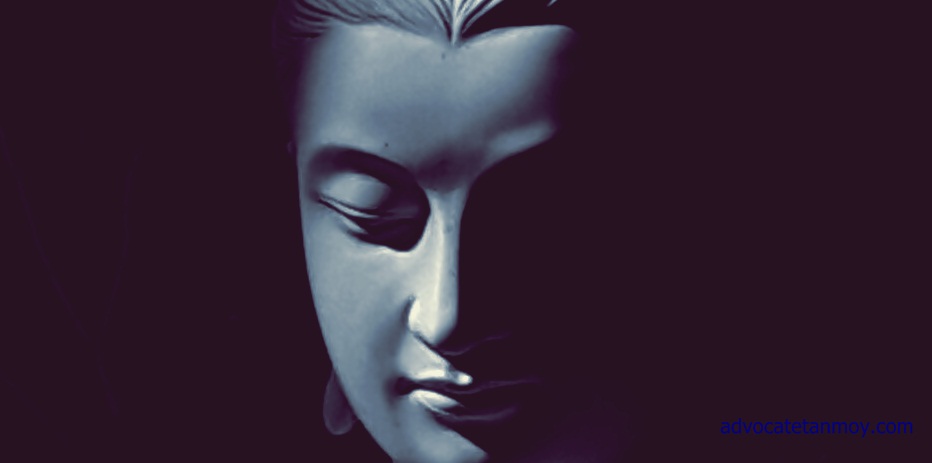
If you have no desires, if you do not live in extremes, you will see the dharma of all teachings. If you strive in this direction, you will be freed from the prison of samsara. If you meditate like this, you will burn away the veil of impurity of karma.
The term Kung-fu means work of a man, the man who works with art, to exercise one’s self bodily, the art of the exercise of the body applied in the prevention or treatment of disease and to gain energy[Chi].
“It is the object of Kung-fu to make its practitioner almost immortal; at least, if immortality be not gained, it is claimed that it tends greatly to lengthen the span of life, to increase the body’s power of resistance to disease, to make life happier, and to make the muscles and bones insensible to fatigue and the severest injury, accidents, fire, etc. The benefit, too, the soul derives from such exercises and the merit accruing to the individual are not to be lightly esteemed “
Kung-fu consists in two things, the posture of the body, and the manner of respiration. There are three principal postures, standing, sitting, lying. The priests of Tao enter into the greatest detail of all the attitudes, in which they vary and blend the different postures. As these, however, have more connexion with their doctrines than the medical part of Kung-fu, it will be enough to indicate the general principles. The different modes, in the three principal positions, of stretching, folding, raising, lowering, bending, extending, abducting, adducting the arms and legs, form a variety of numerous
attitudes. The head, the eyes, and the tongue, have each their movements and positions. The tongue is charged to make in the mouth such operations as balancing, pulsating, rubbing, shooting, etc., in order to excite salivation. The eyes close, open, turn, fix, and wink. The Tauists pretend, when they have gazed for a long time, first on one side then on the other, in regarding the root of the nose, that the torrent of thought is suspended, that a profound calm envelopes the soul, and a preparation for a doing-nothing inertia which is the beginning of the communication with spirits.
There are the two essential principles of Kung-fu, the posture of the body, and the mode in which respiration :
If We look at the circulation of the blood, lymph, and spirits, on the side of the obstacles which the weight opposes to it, and of the friction which retards it, it is evident that the mode in which the body is straight or bent, lying or raised, the feet and hands stretched or bent, raised, lowered or twisted, ought to work in the hydraulic mechanism a physical change which facilitates or impedes it. The horizontal situation, being that which diminishes the greatest obstacle of the weight, is that also which is most favourable to the circulation. That of being upright, on the contrary, leaving all its resistance to the action of the weight, ought necessarily to render the circulation more difficult. For the same reason, according as one holds the arms, the feet, and the “head, raised, or inclined, or bent, it ought to become more or less easy for it. This is not all; that which retards it, in one place, gives it more force, where it does not find any obstacle; and, from that time, it assists the lymph and the blood to overcome the engorgements which obstruct their passage there. One can further add that, the more it has been impeded in one place, the more its impetuosity brings it back there with force when the obstacle is removed.
It follows from this that the different postures of Kung-fu, well directed, ought to operate in a salutary disengagement in all the maladies which spring from an embarrassed, retarded, or even interrupted circulation. The heart is the prime mover of the circulation, and the force which it has to produce and conserve it is one of the grand marvels of the world. It is further certain that there is a sensible and continual correspondence between the beatings of the heart, which fills and empties itself of blood,
and the movements of dilatation and contraction of the lungs, which empty and fill themselves with air by inspiration and expiration. This correspondence is so evident that the beating of the heart increases and diminishes immediately, in proportion to the acceleration or retardment of the respiration.
Now, if we inspire more air than we expire of it, or vice versa, its- volume ought to diminish or augment the total mass of blood and lymph, and ought to invigorate more or less the blood which is in the lungs. If one hurries or retards the respiration, one ought to hurry or weaken the beatings of the heart. The bearing of this on Kung-fu is self-evident, and need not further be illustrated. It is evident that, in accelerating or retarding the respiration, we accelerate or retard the circulation, and by a necessary consequence that of the lymph; and that, in the case of inspiring. more air than we expire, we diminish or augment the volume of the air which is therein contained. Now, all this mechanism being assisted by the posture of the body, by the combined and assorted position of the members, it is evident that it ought to produce a sensible and immediate effect upon the circulation of the blood and lymph, an effect physical, necessary, and intimate, linked to the mechanism of the body, an effect so much the more certain as the repose of the night has rendered the organs more supple, as the diet of the evening has diminished the plenitude of the arteries, of the veins, and of the canals of the absorbents and lacteals.
While performing the exercise must first rest the mind, cease from all thought, banish all grief, anger and suchlike and give up all the animal propensities, in order to keep and not disperse the vital essence.