Skip to content

ADVOCATETANMOY LAW LIBRARY

Research & Library Database

Primary Menu
  • News
  • Opinion
  • Countries198
    • National Constitutions: History, Purpose, and Key Aspects
  • Judgment
  • Book
  • Legal Brief
    • Legal Eagal
  • LearnToday
  • HLJ
    • Supreme Court Case Notes
    • Daily Digest
  • Sarvarthapedia
    • Sarvarthapedia (Core Areas)
    • Systemic-and-systematic
    • Volume One
07/04/2026

Cheques Act 1957 [UK]

Where a banker in good faith and in the ordinary course of business pays a cheque drawn on him which is not indorsed or is irregularly indorsed, he does not, in doing so, incur any liability by reason only of the absence of, or irregularity in, indorsement, and he is deemed to have paid it in due course.
advtanmoy 03/09/2018 4 minutes read

© Advocatetanmoy Law Library

  • Share on WhatsApp (Opens in new window) WhatsApp
  • Share on X (Opens in new window) X
  • Share on Facebook (Opens in new window) Facebook
  • Share on Telegram (Opens in new window) Telegram
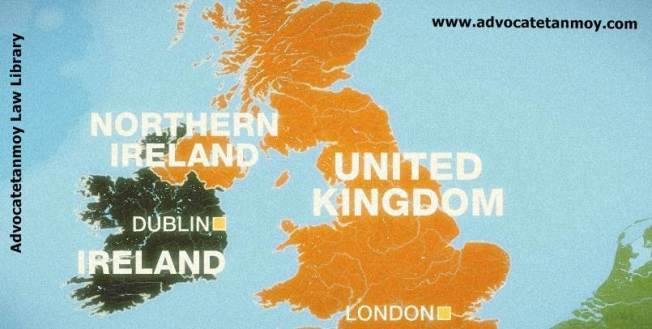
United Kingdom

Home » Law Library Updates » Cheques Act 1957 [UK]

Edition: 2018

1957 CHAPTER 36 5 and 6 Eliz 2

An Act to amend the law relating to cheques and certain other instruments.

[17th July, 1957]

Commencement Information

Read Next

  • Biblical Basis for Slavery: Old and New Testament Laws, Narratives, and Interpretations
  • Abolition of Slave Trade Act 1807: Facts, Enforcement, and Historical Context
  • America’s Defence Preparedness in April 2026: Hypersonic Missiles, Iran War, and Defense Strategy

Act wholly in force 17.10.1957, 

1-Protection of bankers paying unindorsed or irregularly indorsed cheques, &c.

(1)Where a banker in good faith and in the ordinary course of business pays a cheque drawn on him which is not indorsed or is irregularly indorsed, he does not, in doing so, incur any liability by reason only of the absence of, or irregularity in, indorsement, and he is deemed to have paid it in due course.

(2)Where a banker in good faith and in the ordinary course of business pays any such instrument as the following, namely,—

Read Next

  • Biblical Basis for Slavery: Old and New Testament Laws, Narratives, and Interpretations
  • Abolition of Slave Trade Act 1807: Facts, Enforcement, and Historical Context
  • America’s Defence Preparedness in April 2026: Hypersonic Missiles, Iran War, and Defense Strategy

(a)a document issued by a customer of his which, though not a bill of exchange, is intended to enable a person to obtain payment from him of the sum mentioned in the document;

(b)a draft payable on demand drawn by him upon himself, whether payable at the head office or some other office of his bank;

he does not, in doing so, incur any liability by reason only of the absence of, or irregularity in, indorsement, and the payment discharges the instrument.

Read Next

  • Biblical Basis for Slavery: Old and New Testament Laws, Narratives, and Interpretations
  • Abolition of Slave Trade Act 1807: Facts, Enforcement, and Historical Context
  • America’s Defence Preparedness in April 2026: Hypersonic Missiles, Iran War, and Defense Strategy

2-Rights of bankers collecting cheques not indorsed by holders.

A banker who gives value for, or has a lien on, a cheque payable to order which the holder delivers to him for collection without indorsing it, has such (if any) rights as he would have had if, upon delivery, the holder had indorsed it in blank.

3-Unindorsed cheques as evidence of payment.

(1)] An unindorsed cheque which appears to have been paid by the banker on whom it is drawn is evidence of the receipt by the payee of the sum payable by the cheque.

(2)For the purposes of subsection (1) above, a copy of a cheque to which that subsection applies is evidence of the cheque if—

(a)the copy is made by the banker in whose possession the cheque is after presentment and,

(b)it is certified by him to be a true copy of the original.]

4-Protection of bankers collecting payment of cheques, &c.

(1)Where a banker, in good faith and without negligence,—

(a)receives payment for a customer of an instrument to which this section applies; or

(b)having credited a customer’s account with the amount of such an instrument, receives payment thereof for himself;

and the customer has no title, or a defective title, to the instrument, the banker does not incur any liability to the true owner of the instrument by reason only of having received payment thereof.

(2)This section applies to the following instruments, namely,—

(a)cheques (including cheques which under section 81A(1) of the Bills of Exchange Act 1882 or otherwise are not transferable);

(b)any document issued by a customer of a banker which, though not a bill of exchange, is intended to enable a person to obtain payment from that banker of the sum mentioned in the document;

(c)any document issued by a public officer which is intended to enable a person to obtain payment from the Paymaster General or the Queen’s and Lord Treasurer’s Remembrancer of the sum mentioned in the document but is not a bill of exchange;

(d)any draft payable on demand drawn by a banker upon himself, whether payable at the head office or some other office of his bank.

(3)A banker is not to be treated for the purposes of this section as having been negligent by reason only of his failure to concern himself with absence of, or irregularity in, indorsement of an instrument.

5-Application of certain provisions of Bills of Exchange Act, 1882, to instruments not being bills of exchange.

The provisions of the Bills of Exchange Act 1882 relating to crossed cheques shall, so far as applicable, have effect in relation to instruments (other than cheques) to which the last foregoing section applies as they have effect in relation to cheques.

6-Construction, saving and repeal.

(1)This Act shall be construed as one with the Bills of Exchange Act 1882.

(2)The foregoing provisions of this Act do not make negotiable any instrument which, apart from them, is not negotiable.

(3). . . . . . . . . . . . . . . . . . . . . . . . . . . . . . . . F4S. 6(3) repealed by Statute Law (Repeals) Act 1974 (c. 22), Sch. Pt.XI

7-Provisions as to Northern Ireland.

This Act extends to Northern Ireland, . . .

8-Short title and commencement.

(1)This Act may be cited as the Cheques Act 1957.

(2)This Act shall come into operation at the expiration of a period of three months beginning with the day on which it is passed.

SCHEDULE

F6S. 6(3) repealed by Statute Law (Repeals) Act 1974 (c. 22), Sch. Pt.XI

______________

Contains public sector information licensed under the Open Government Licence v3.0.
Tags: Cheque Protection of bankers UK

Post navigation

Previous: Justice A B Singh of Jharkhand HC allowed Bail on condition of donation to Kerala Relief Fund
Next: Bills of Exchange Act 1882 [UK]
Communism
Sarvarthapedia

Manifesto of the Communist Party 1848: History, Context, and Core Concepts

Arrest
Sarvarthapedia

Latin Maxims in Criminal Law: Meaning, Usage, and Courtroom Application

Abolition of Slave Trade Act 1807: Facts, Enforcement, and Historical Context

British Slavery and the Church of England: History, Theology, and the Codrington Estates

United States of America: History, Government, Economy, and Global Power

Biblical Basis for Slavery: Old and New Testament Laws, Narratives, and Interpretations

Rule of Law vs Rule by Law and Rule for Law: History, Meaning, and Global Evolution

IPS Cadre Strength 2025: State-wise Authorised Strength

Uric Acid: From 18th Century Discovery to Modern Medical Science

Christian Approaches to Interfaith Dialogue: Orthodox, Catholic, Protestant, and Pentecostal Views

Origin of Central Banking in India: From Hastings to RBI and the History of Preparatory Years (1773–1934)

Howrah District Environment Plan: Waste Management, Water Quality & Wetland Conservation

Bharatiya Nyaya Sanhita 2023: Sections (1-358), Punishments, and Legal Framework

Bengali Food Culture: History, Traditions, and Class Influences

  • Sarvarthapedia

  • Delhi Law Digest

  • Howrah Law Journal

  • Amit Arya vs Kamlesh Kumari: Doctrine of merger
  • David Vs. Kuruppampady: SLP against rejecting review by HC (2020)
  • Nazim & Ors. v. State of Uttarakhand (2025 INSC 1184)
  • Geeta v. Ajay: Expense for daughter`s marriage allowed in favour of the wife
  • Ram v. Sukhram: Tribal women’s right in ancestral property [2025] 8 SCR 272
  • Naresh vs Aarti: Cheque Bouncing Complaint Filed by POA (02/01/2025)
  • Bharatiya Nagarik Suraksha Sanhita 2023 (BNSS)
  • Bharatiya Sakshya Adhiniyam 2023 (BSA): Indian Rules for Evidence
  • Bharatiya Nyaya Sanhita (BNS) 2023
  • The Code of Civil Procedure (CPC)
  • Supreme Court Daily Digest
  • U.S. Supreme Court Orders
  • U.k. Supreme Court Orders
United Kingdom, UK

Abolition of Slave Trade Act 1807: Facts, Enforcement, and Historical Context

British Slavery and the Church of England: History, Theology, and the Codrington Estates

British Slavery and the Church of England: History, Theology, and the Codrington Estates

USA, America

United States of America: History, Government, Economy, and Global Power

Biblical Basis for Slavery, english slave trade

Biblical Basis for Slavery: Old and New Testament Laws, Narratives, and Interpretations

2026 © Advocatetanmoy Law Library

  • About
  • Global Index
  • Judicial Examinations
  • Indian Statutes
  • Glossary
  • Legal Eagle
  • Subject Guide
  • Journal
  • SCCN
  • Constitutions
  • Legal Brief (SC)
  • MCQs (Indian Laws)
  • Sarvarthapedia (Articles)
  • Contact Us
  • Privacy Policy
  • FAQs
  • Library Updates