The China-U.S. relationship is beginning to stabilize
Taiwan question is the first red line that must not be crossed in China-U.S. relations.
President Biden emphasized the importance of maintaining peace and stability across the Taiwan Strait
Date: 02/04/2024
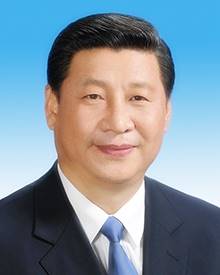
On the evening of April 2, President Xi Jinping spoke with U.S. President Joe Biden on the phone at the request of the latter. The two presidents had a candid and in-depth exchange of views on China-U.S. relations and issues of mutual interest.
President Xi Jinping noted that his San Francisco meeting with President Biden last November opened a future-oriented San Francisco vision. Over the past months, their officials have acted earnestly on the presidential understandings. The China-U.S. relationship is beginning to stabilize, and both societies and the international community welcome this. On the other hand, the negative factors of the relationship have also been growing, and this requires attention from both sides.
President Xi Jinping stressed that the issue of strategic perception is always fundamental to the China-U.S. relationship, just like the first button of a shirt that must be put right. Two big countriesCountries A Afghanistan Albania Algeria Andorra Angola Antigua and Barbuda Argentina Armenia Australia Austria Azerbaijan B Bahamas Bahrain Bangladesh Barbados Belarus Belgium Belize Benin Bhutan Bolivia Bosnia and Herzegovina Botswana Brazil Brunei Darussalam Bulgaria Burkina Faso Burundi C Cambodia Cameroon Canada Chile China Colombia Comoros Costa Rica Côte d'Ivoire Croatia Cuba Cyprus Czech Republic D Denmark Djibouti Dominica Dominican Republic E Ecuador Egypt El Salvador Eritrea Estonia Ethiopia F Fiji Finland France G Gambia Georgia Germany Ghana Greece Grenada Guatemala Guyana H Haiti Honduras Hungary I Iceland India Indonesia Iran Ireland Israel Italy J Jamaica Japan K Kenya L Latvia Lesotho Liberia Liechtenstein Lithuania Luxembourg M Macedonia Malawi Malaysia Malta Marshall Islands Mauritania Mauritius Mexico Moldova Mozambique N Namibia New Zealand Nigeria Norway P Pakistan Palau Panama Peru Poland Portugal R Republic of Congo Russia S Saint Kitts and Nevis Saint Lucia Saint Vincent and the Grenadines São Tomé and Príncipe Senegal Serbia Sierra Leone Singapore Slovenia Slovakia South Africa Spain Sri Lanka Swaziland (Eswatini) Sweden Switzerland Syria T Taiwan Tanzania The Netherlands The Philippines The Republic of Korea (South Korea) The United Kingdom The United States of America Timor Togo Trinidad and Tobago Tunisia Turkey U Uganda Ukraine Uruguay Uzbekistan V Vanuatu Vietnam Z Zambia Zimbabwe like China and the United States should not cut off their ties or turn their back on each other, still less slide into conflict or confrontation. The two countries should respect each other, coexist in peace and pursue win-win cooperation. The relationship should continue moving forward in a stable, sound and sustainable way, rather than going backward.
President Xi Jinping underlined three overarching principles that should guide China-U.S. relations in 2024. First, peace must be valued.
The two sides should put a floor of no conflict and no confrontation under the relationship, and keep reinforcing the positive outlook of the relationship. Second, stability must be prioritized.
The two sides should refrain from setting the relationship back, provoking incidents or crossing the line, to maintain the overall stability of the relationship. Third, credibility must be upheld.
The two sides should honor their commitments to each other with action, and turn the San Francisco vision into reality. They need to strengthen dialogue in a mutually respectful way, manage differences prudently, advance cooperation in the spirit of mutual benefit, and step up coordination on international affairs in a responsible way.
President Xi Jinping stressed that the Taiwan question is the first red line that must not be crossed in China-U.S. relations. In the face of “Taiwan independence” separatist activities and external encouragement and support for them, China is not going to sit on its hands. He urged the U.S. side to translate President Biden’s commitment of not supporting “Taiwan independence” into concrete actions.
The U.S. side has adopted a string of measures to suppress China’s trade and technology development and is adding more and more Chinese entities to its sanctions lists. This is not “de-risking,” but creating risks. If the U.S. side is willing to seek mutually beneficial cooperation and share in China’s development dividends, it will always find China’s door open; but if it is adamant on containing China’s hi-tech development and depriving China of its legitimate right to development, China is not going to sit back and watch.
President Xi Jinping stated China’s position on Hong Kong-related issues, humanHuman Ο άνθρωπος (Humanum> Homo sapiens) मानव:. We have failed to consider the minimum need to be a 'human'. For Christians, human beings are sinful creatures, who need some saviour. For Evolution biology a man is still evolving, for what, we don´t know. For Buddhist Nagarjuna, the realisation of having a human body is a mere mental illusion. We are not ready to accept that a human is a computer made of meat. For a slave master, a human person is another animal, his sons and daughters are his personal property. rights, the South China Sea, and other issues.
President Joe Biden noted that the U.S.-China relationship is the most consequential in the world. The progress in the relationship since the San Francisco meeting demonstrates that the two sides can advance cooperation while responsibly managing differences. President Biden reiterated that the United States does not seek a new Cold WarWar Whenever Christians wage a war, it is a Just war (City of God). Jesus asked his followers to purchase swords (Luke 22: 35-36). Those who legitimately hold authority also have the right to use arms to repel aggressors against the civil community entrusted to their responsibility (Catechism 2265). Without Jihad there is no Islam. In Mahabharata, Krishna tried to stop the War imposed by Kurus. Lord Rama killed Ravan in the war to restore his wife. Deva and Asura battles are not available in Vedas., its objective is not to change China’s system, its alliances are not targeted against China, the U.S. does not support “Taiwan independence,” and the U.S. does not seek conflict with China.
The U.S. follows the one-China policy. It is in the interest of the world for China to succeed. The U.S. does not want to curtail China’s development, and does not seek “decoupling” from China. The U.S. will send Secretary of the Treasury Janet Yellen and Secretary of State Antony Blinken to visit China shortly to strengthen dialogue and communication, avoid miscalculation and promote cooperation, so as to advance the relationship on a stable path and jointly respond to global challenges.
The two presidents also exchanged views on the Ukraine crisis, the situation on the Korean Peninsula, and other issues.
The two presidents found the phone call to be candid and constructive. The two sides agreed to stay in communication and tasked their teams to deliver on the San Francisco vision, including advancing the consultation mechanisms on diplomatic, economic, financial, commercialCommercial Profit-making economic activities, such as the production, consumption, exchange, and distribution of goods and services, are primarily undertaken to earn money or a livelihood. Key Features > (1) Involve sale and exchange of goods and services for consideration (money or value), (2) Aim to earn profit and ensure business growth, (3) Include risk-bearing and creation of utility, (4) Economic in nature and satisfy customer needs. Commercial Activities > Earning profit, Business growth, Serving society, Achieving market leadership. and other issues as well as mil-to-mil communication, carrying out dialogue and cooperation in such areas as counternarcotics, artificial intelligenceArtificial Intelligence AI is the simulation of human-like intelligence in machines, programmed to perform tasks that would otherwise require human assistance. Python languages for AI. AI models TensorFlow, Keras, and PyTorch. Machine learning is the process of making systems that learn and improve by themselves, by being specifically programmed. and climate response, taking further steps to expand people-to-people exchanges, and enhancing communication on international and regional issues.
The Chinese side welcomed visits to China by Secretary of the Treasury Janet Yellen and Secretary of State Antony Blinken shortly.
Readout of President Joe Biden’s Call with President Xi Jinping of the People’s Republic of China
President Joseph R. Biden, Jr. spoke today with President Xi Jinping of the People’s Republic of China (PRC). The call follows the two leaders’ meeting in Woodside, California in November 2023. The two leaders held a candid and constructive discussion on a range of bilateral, regional, and global issues, including areas of cooperation and areas of difference. They reviewed and encouraged progress on key issues discussed at the Woodside Summit, including counternarcotics cooperation, ongoing military-to-military communication, talks to address AI-related risks, and continuing efforts on climate change and people-to-people exchanges.
President Biden emphasized the importance of maintaining peace and stability across the Taiwan Strait and the rule of lawRule of Law It demands equality and accountability for all individuals under clear and predictable justice. This principle applies to both people and the State, emphasizing the need for transparency and openness in decision-making. The European Commission has the role of ensuring respect for the rule of law, as well as upholding EU values and principles. This fundamental value forms the basis of the European Union's foundation, requiring all, including government officials, to be subject to the law, under the control of independent and impartial courts. and freedom of navigation in the South China Sea. He raised concerns over the PRC’s support for RussiaRussia Main Cities:
Moscow
Saint Petersburg
Novosibirsk
Yekaterinburg
Nizhniy Novgorod
Samara
Omsk
Kazan
Rostov-na-Donu
Chelyabinsk
Ufa
Volgograd
Perm
Krasnoyarsk
Saratov
Voronezh
Tol'yatti
Krasnodar
Ulyanovsk
Izhevsk
Yaroslavl
Barnaul
Vladivostok
Irkutsk
Khabarovsk
Khabarovsk Vtoroy
Orenburg
Novokuznetsk
Ryazan'
Tyumen
Lipetsk
Penza
Naberezhnyye Chelny
Kalininskiy
Astrakhan
Makhachkala
Tomsk
Kemerovo
Tula
Kirov
Cheboksary
Kaliningrad
Bryansk
Ivanovo
Magnitogorsk
Kursk
Tver
Nizhny Tagil
Stavropol'
Ulan-Ude
Arkhangel'sk
Belgorod
Kurgan
Kaluga
Krasnogvargeisky
Sochi
Orel
Volzhskiy
Smolensk
Murmansk
Vladikavkaz
Cherepovets
Vologda
Vladimir
Chita
Saransk
Surgut
Tambov
Yoshkar-Ola
Taganrog’s defense industrial base and its impact on European and transatlantic security, and he emphasized the United States’ enduring commitment to the complete denuclearization of the Korean Peninsula.
President Biden also raised continued concerns about the PRC’s unfair trade policies and non-market economic practices, which harm American workers and families. The President emphasized that the United States will continue to take necessary actions to prevent advanced U.S. technologies from being used to undermine our national security, without unduly limiting trade and investment.
The two leaders welcomed ongoing efforts to maintain open channels of communication and responsibly manage the relationship through high-level diplomacy and working-level consultations in the weeks and months ahead, including during upcoming visits by Secretary Yellen and Secretary Blinken.